
BeerDroid Weissbier vs Porter vs Lager
Three 10 L Batches, Three Fermentation Profiles
Same BeerDroid, same 10 L (2.6 gal) batch size—yet German Weissbier, Ruby Porter, and Thomas Coopers Artisan Reserve looked very different when I brewed them back to back, and the conditioned beers ended up in very different flavor directions too. This article lines up the fermentation behavior, completion time, and tasting notes from all three logs.
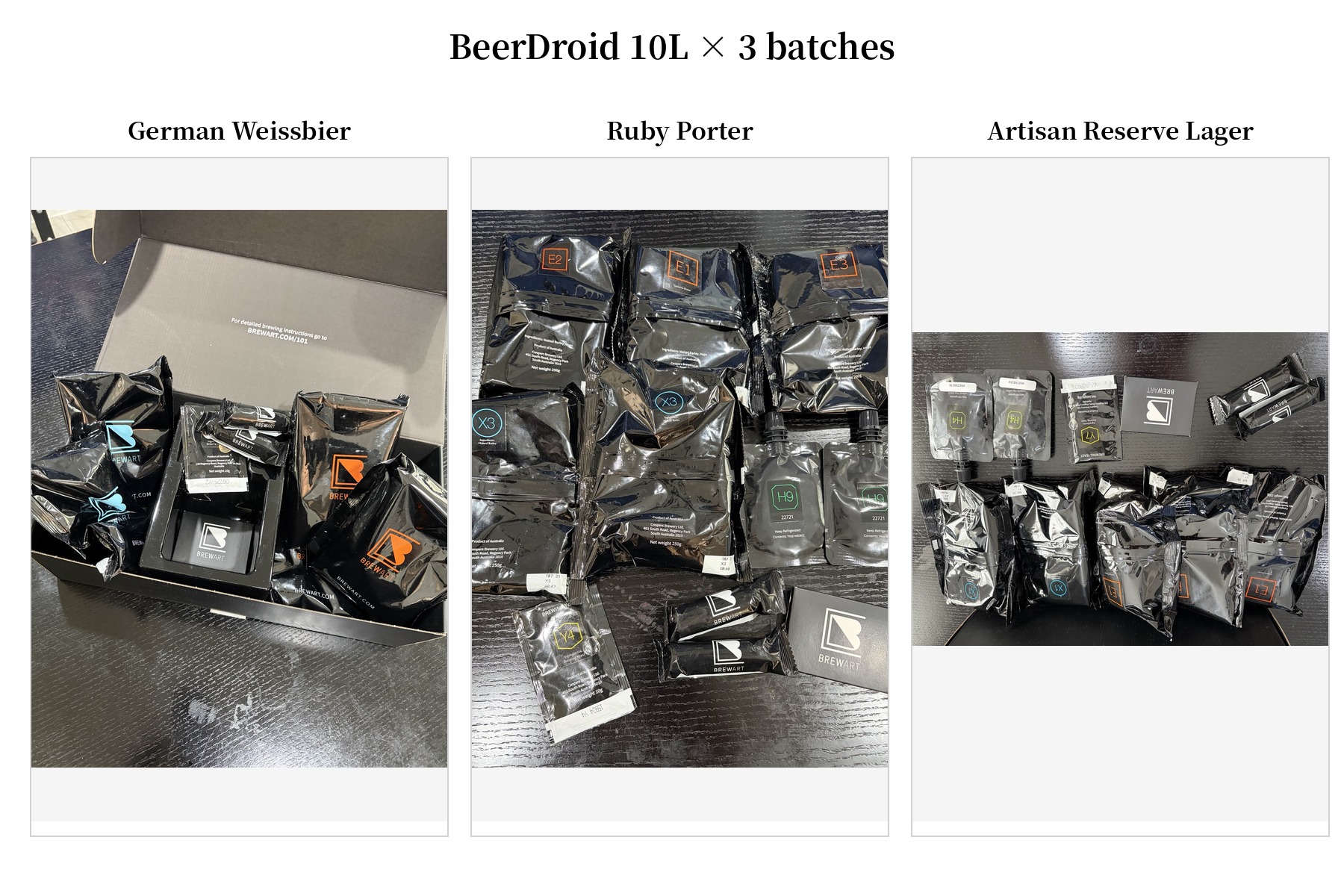
The short version: elapsed days were only part of the story
| Item | German Weissbier | Ruby Porter | Artisan Reserve Lager |
|---|---|---|---|
| Batch size | 10 L (2.6 gal) | 10 L (2.6 gal) | 10 L (2.6 gal) |
| Propagate | 21°C (70°F) | 19°C (66°F) | 22°C (72°F), first 12 h |
| Main Ferment target | Started at 17°C, then changed to 19°C (63→66°F) | 16°C (61°F) | 12°C (54°F) |
| Early visual behavior | Fine bubbles were obvious on days 1–2 | Vent overflow at about 34 h | Reached the 12°C range at about 37 h; visually calmer |
| Late stage | Very quiet by days 4–5 but still in Ferment | Quieter at 4 d 19 h → Cleanup at about 5 d 1 h | Quieter at 4 d 13 h → Cleanup around day 5 |
| EOF / Ready to Keg | ~6 days | ~8 days | 8 days 4 h |
| Conditioned tasting | Richer body, stronger banana aroma; carbonation slightly weak | Coffee/cacao-like bitterness with rich chocolate-like body and sweetness | Bright green-apple-like character, low bitterness, clean and crisp |
Gear and supplies used in this comparison
BrewArt BeerDroid
The same 10 L (2.6 gal) automated brewer was used for all three batches. It manages the Propagate, Ferment, Keg, and Store temperature stages and reports status through the BrewArt app.
View the BrewArt BeerDroid on the official site →
German Weissbier BrewPrint
The BeerDroid ingredient pack used for the Weissbier batch. Ferment started at 17°C (63°F) and was later changed to 19°C (66°F).
View the German Weissbier BrewPrint on the official site →
Ruby Porter BrewPrint
The ingredient pack used for the Porter batch. Its standout behavior was vent overflow at about 34 hours while Ferment centered on 16°C (61°F).
View the Ruby Porter BrewPrint on the official site →
Thomas Coopers Artisan Reserve BrewPrint
The ingredient pack used for the lager batch. The program moved from a 22°C (72°F) Propagate stage to 12°C (54°F) Ferment, then stepped up to 15°C and 17°C (59°F and 63°F) late in the run.
View Thomas Coopers Artisan Reserve on the official site →
BrewArt 5 L Kegs
Each 10 L batch was split between two 5 L (1.3 gal) PET kegs for secondary fermentation and conditioning.
View BrewArt 5 L Kegs on the official site →
Five Star Star San Sanitizer
A common consumable across these batches for sanitizing beer-contact kegging parts such as kegs, caps, and spears.
The Porter and lager finished on almost the same calendar, but they did not follow the same fermentation path. The Porter centered on a 16°C (61°F) Ferment stage; the lager moved through 22→12→15→17°C (72→54→59→63°F). Looking at the window, temperature path, and BeerDroid phase together told a much richer story than elapsed days alone.
This is a real-world comparison of one batch of each style, not a controlled experiment. The recipes, yeasts, and programs were different. The tastings were not simultaneous or blind and the conditioning conditions were not perfectly matched, so the flavor section compares recorded batch impressions rather than ranking the beers.
Same BeerDroid, very different starts
Weissbier: fine bubbles were easy to see on days one and two
The German Weissbier used here is my second batch. Propagate ran at 21°C (70°F). Ferment began at 17°C (63°F), and I later changed the target to 19°C (66°F). On days one and two, fine bubbles were continuously visible through the front window, making this the easiest of the three batches to visually identify as “active.”[1]
Porter: vent overflow at about 34 hours
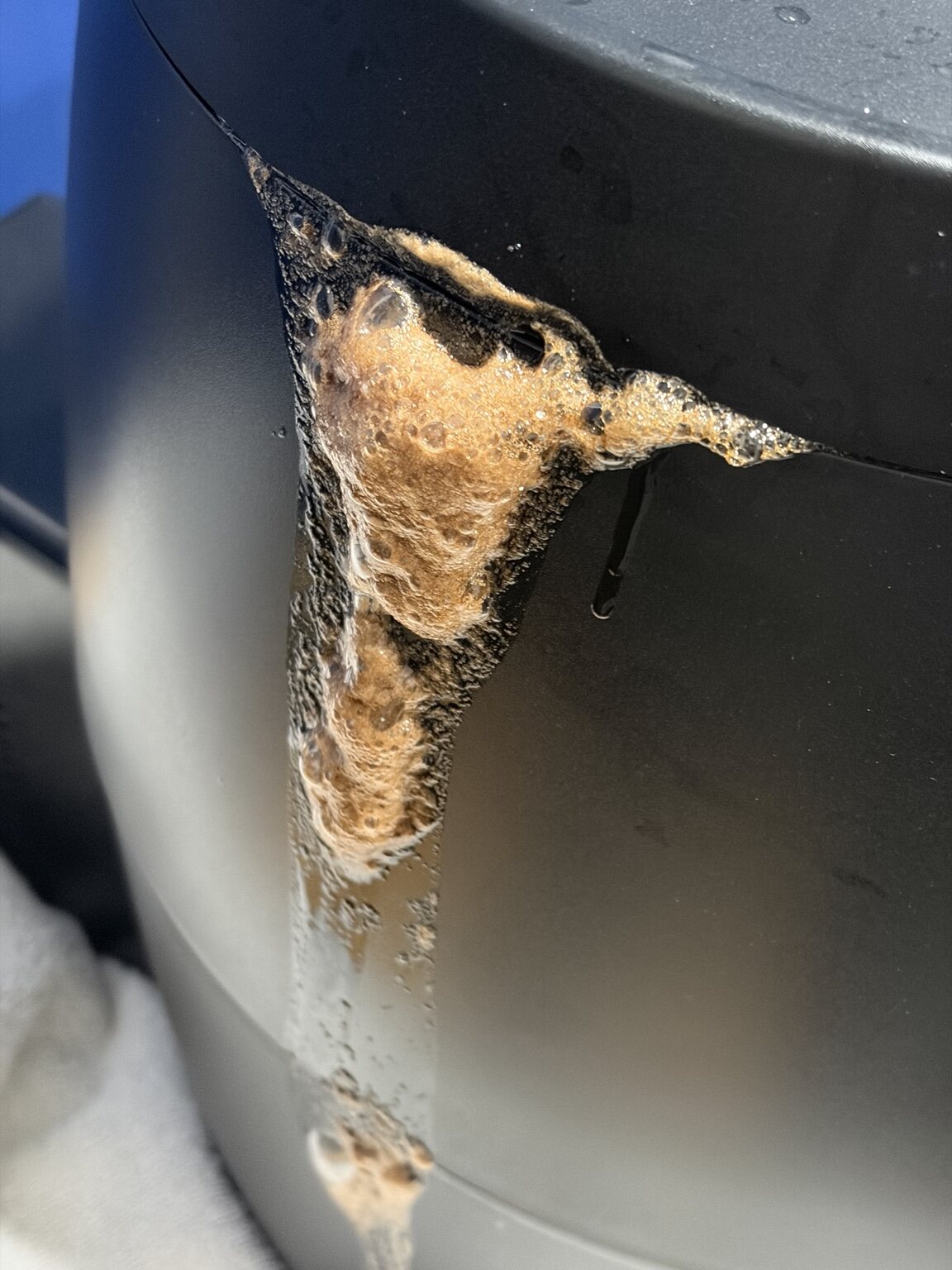
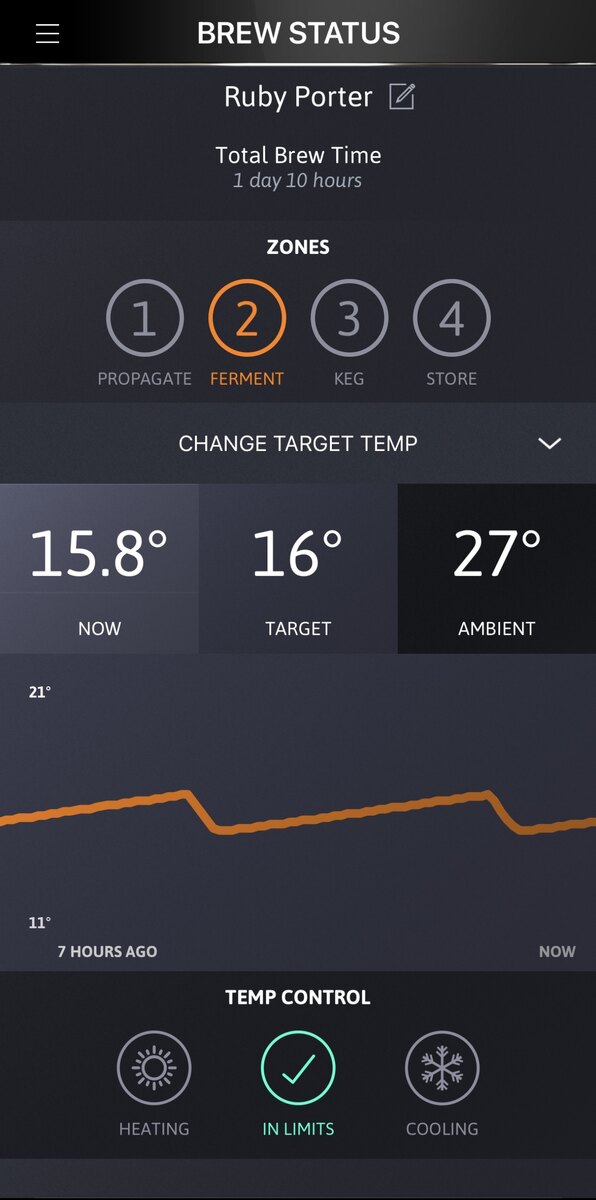
Ruby Porter used a 19°C (66°F) Propagate stage and a 16°C (61°F) Ferment target. At roughly 34 hours, foam pushed out through the top vent and ran down the side of the BeerDroid. The app was still near the 16°C target. BrewArt also notes that vigorous fermentation may overflow through the vent during the first 48 hours.[2]
Lager: part of the process was simply getting down to 12°C
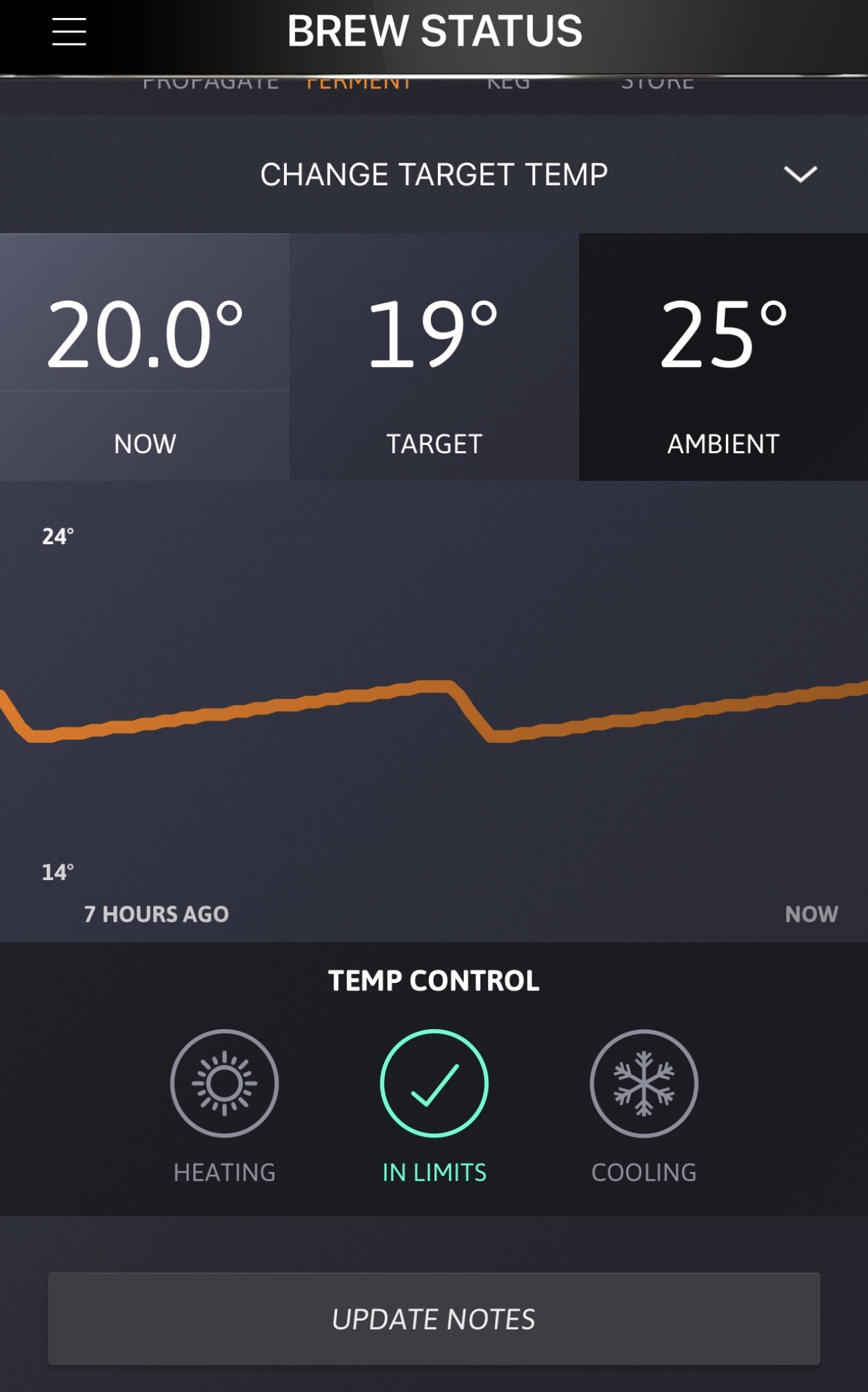
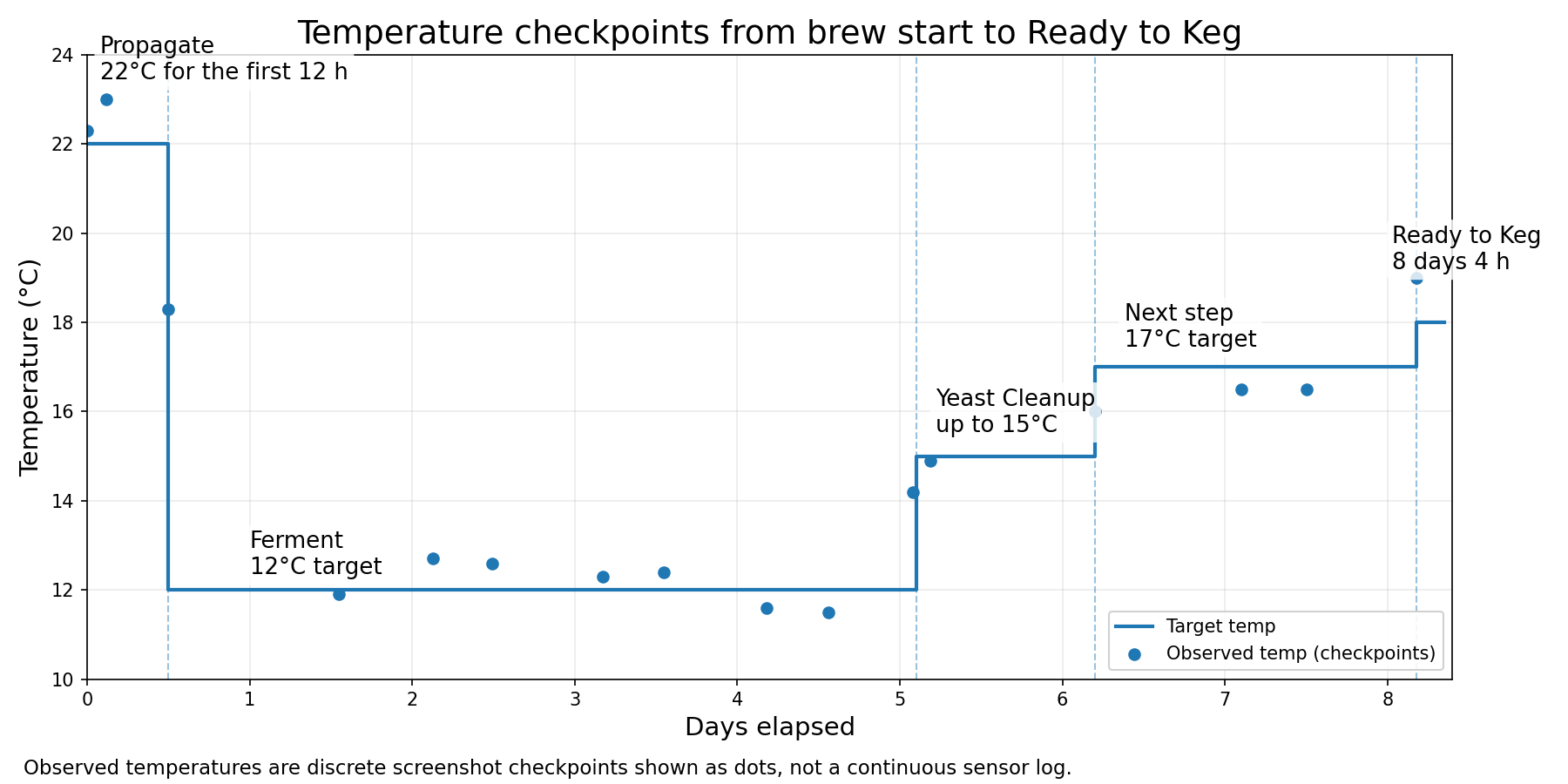
Thomas Coopers Artisan Reserve uses a lager program: the first 12 hours are Propagate at 22°C (72°F), followed by Ferment at 12°C (54°F).[3][4] From my brew-start temperature, it took about 37 hours to settle into the 12°C range. In other words, it was not sitting at 12°C from the moment I pressed Start.
Fewer bubbles did not mean “finished”
The most useful lesson from these three consecutive batches was that the sight window made more sense when I looked at it together with the BeerDroid temperature graph and brewing phase.
The BeerDroid cools the batch to hold its target. After cooling stops, ambient heat can raise the measured temperature again, so I cannot treat a post-cooling rise as a direct measurement of fermentation heat. The app temperature is also not gravity data and does not directly measure fermentation rate.
I compared three things together: (1) bubbles and liquid movement in the window, (2) how temperature recovered after cooling, and (3) the BeerDroid phase—Ferment, Cleanup, or Keg. The rebound is only a qualitative clue, not a gravity substitute.
Weissbier: Day 1 versus Day 5
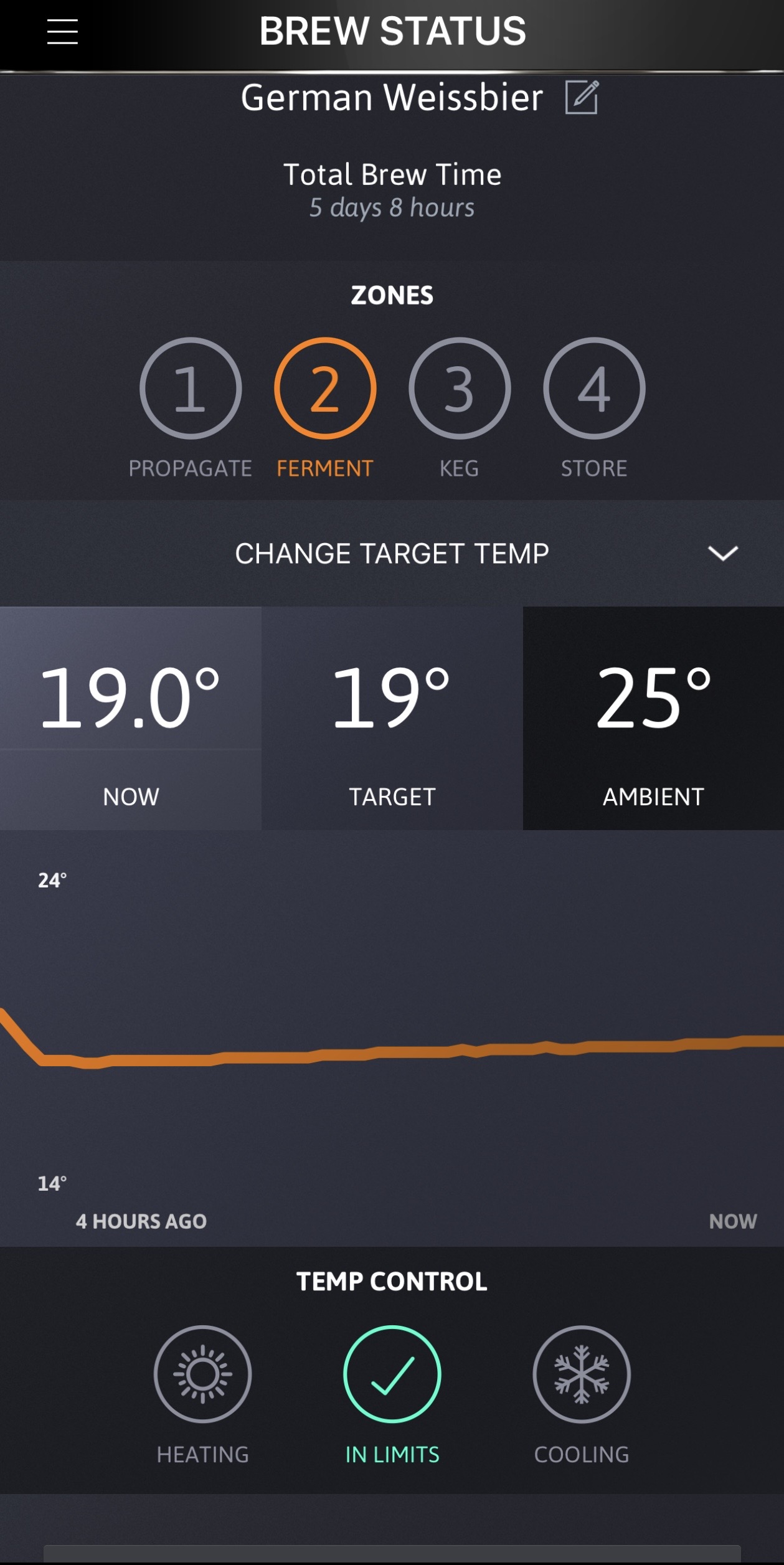
On Day 1, fine bubbles were active and the graph showed temperature climbing again after cooling. By Day 5, visible movement was much quieter, the batch was at 19.0°C against a 19°C target, and the graph was flatter than it had been early in fermentation. Yet the BeerDroid was still in Ferment and EOF had not arrived.
Porter: still active after the overflow, then quieter by days four to five
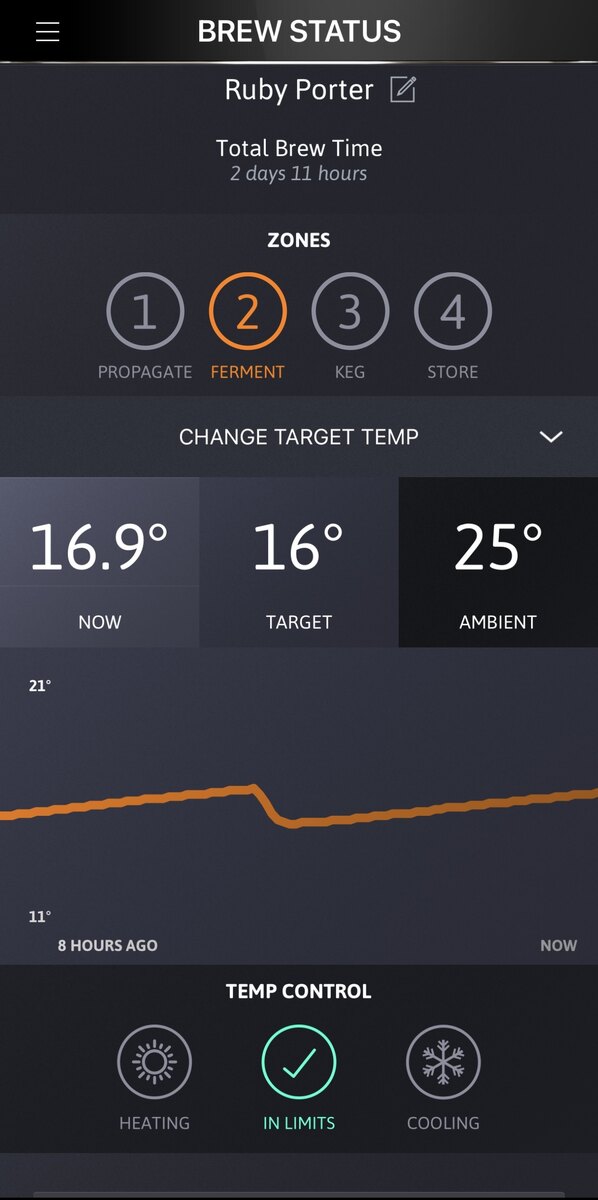
At about 2 days 11 hours, the external overflow had stopped, but fine internal movement was still visible. At about 4 days 19 hours, both the visible motion and the temperature rebound looked gentler. Roughly six hours later—about 5 days 1 hour—the BeerDroid entered Yeast Cleanup and raised the target from 16°C to 17°C (61→63°F).
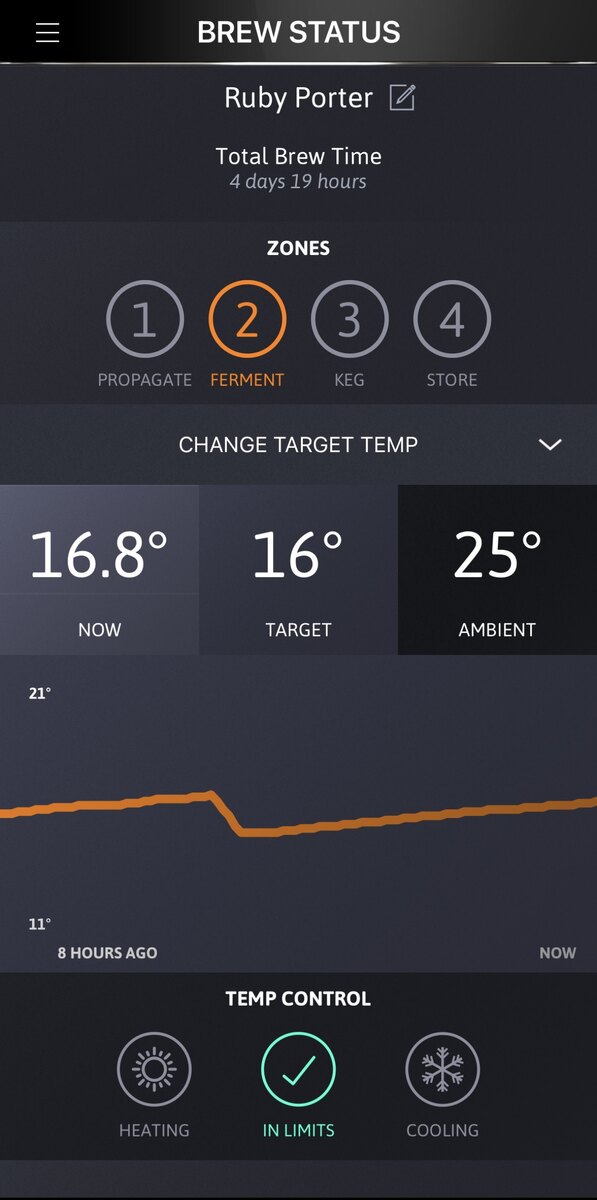
From Cleanup onward, part of the temperature rise is programmed. That is different from the natural rebound after a cooling cycle during the main Ferment stage and should not be read as evidence that fermentation suddenly became stronger.
Lager: quieter by day four, then a programmed 12→15→17°C finish
At about 2 days 12 hours, the lager was at its 12°C target and the temperature rebound after cooling was still relatively clear. Fine suspended material and internal movement remained visible. At 4 days 13 hours, both the rebound and the window activity looked gentler. Around Day 5, Yeast Cleanup began and the target moved from 12°C to 15°C (54→59°F), then to 17°C (63°F).
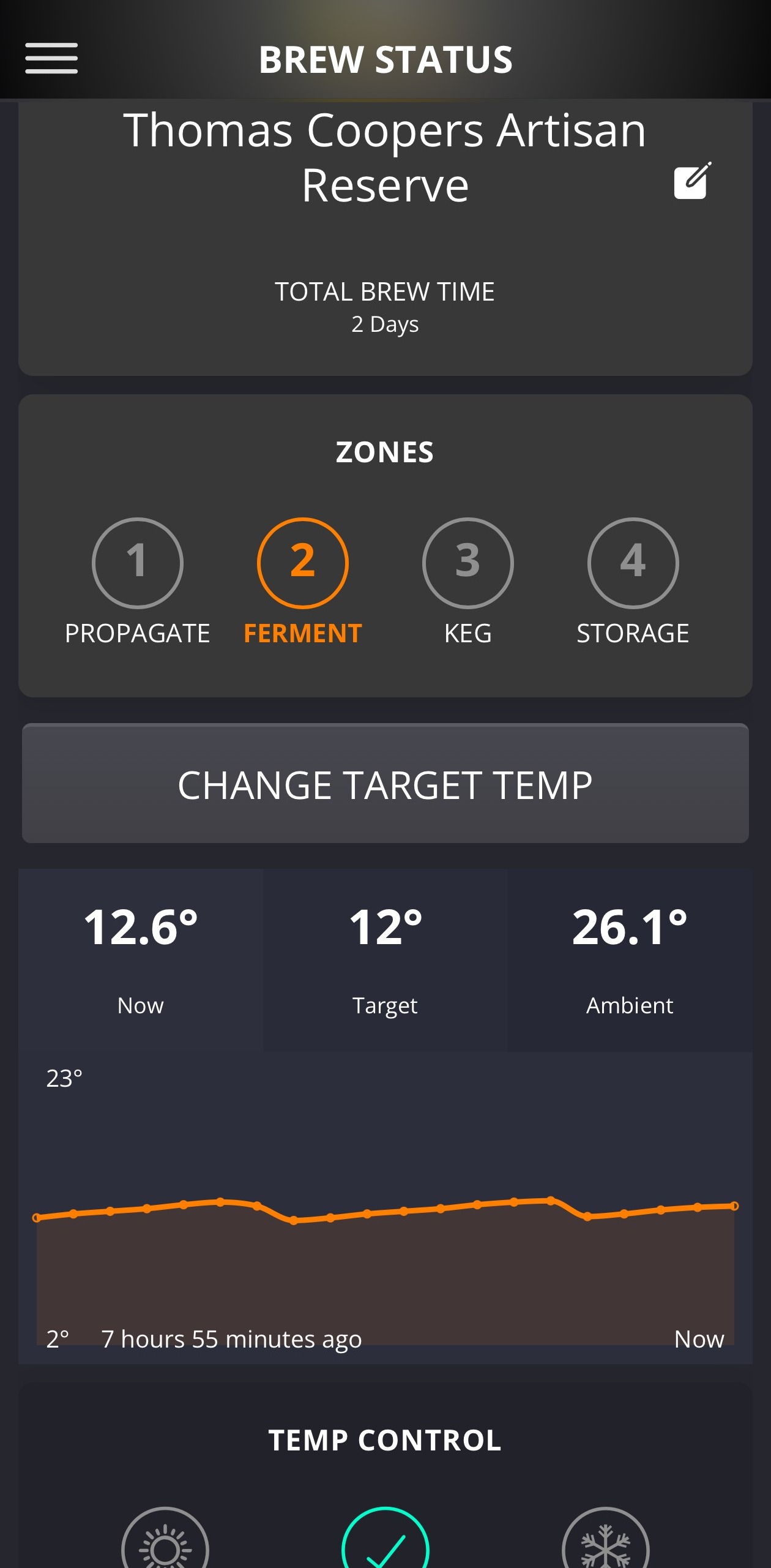
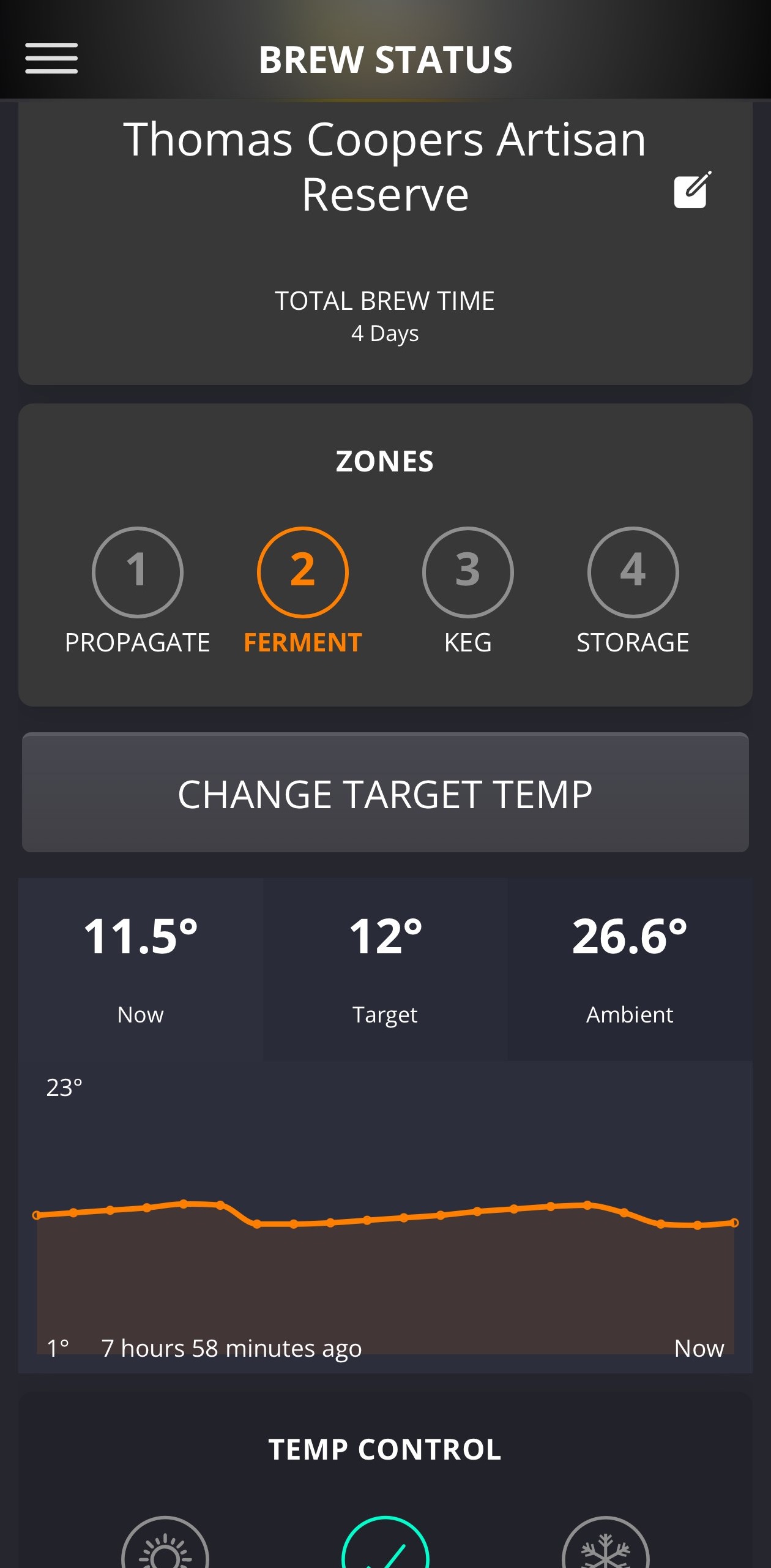
The later 12→15→17°C rise is the BeerDroid program itself. Once the setpoint is moving, the upward temperature slope cannot be used as a fermentation-heat comparison.
The surprising number: ~6 days, ~8 days, 8 days 4 hours
My observed EOF / Ready-to-Keg times were about 6 days for the Weissbier, about 8 days for the Porter, and 8 days 4 hours for the Artisan Reserve lager.
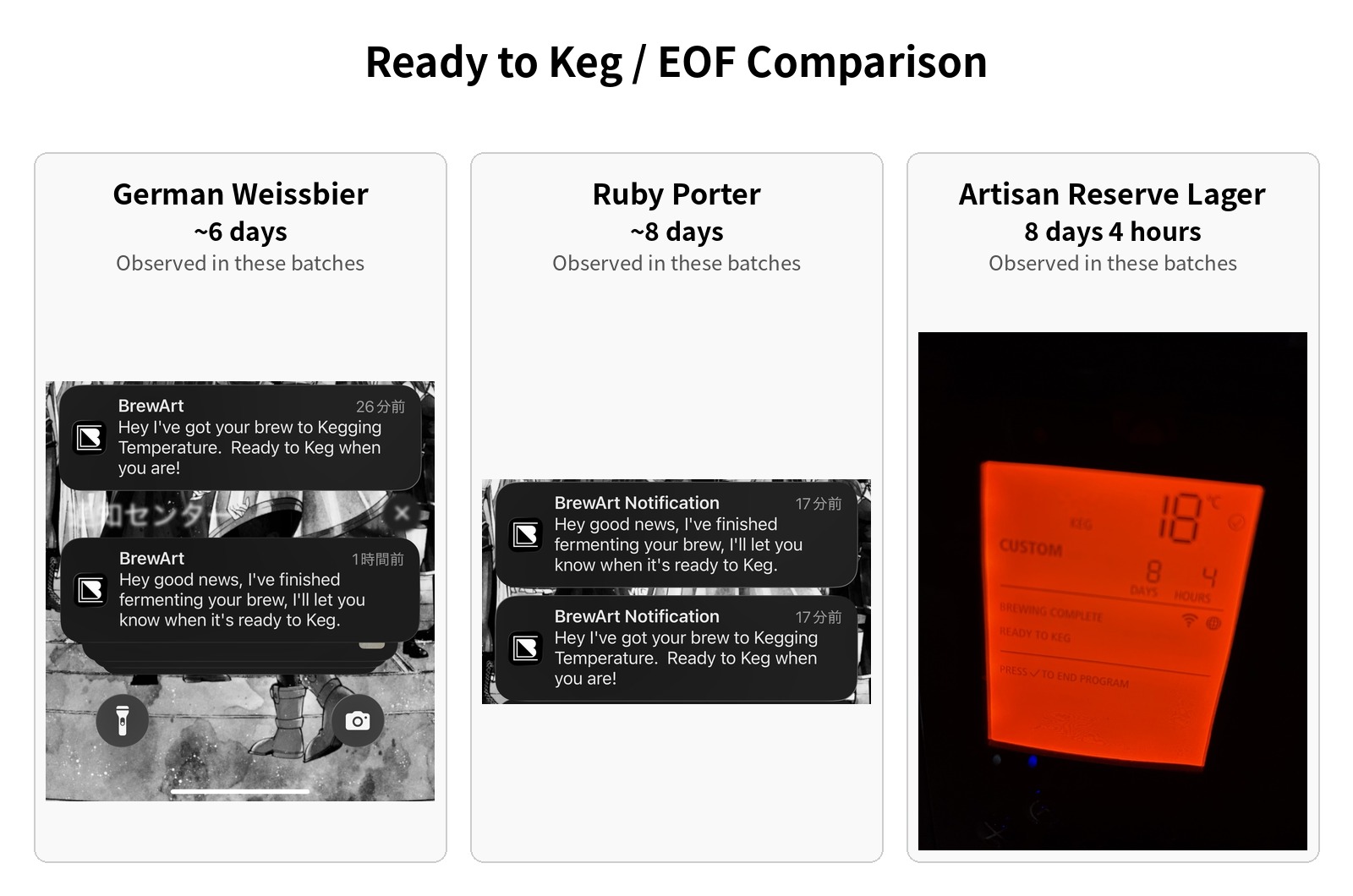
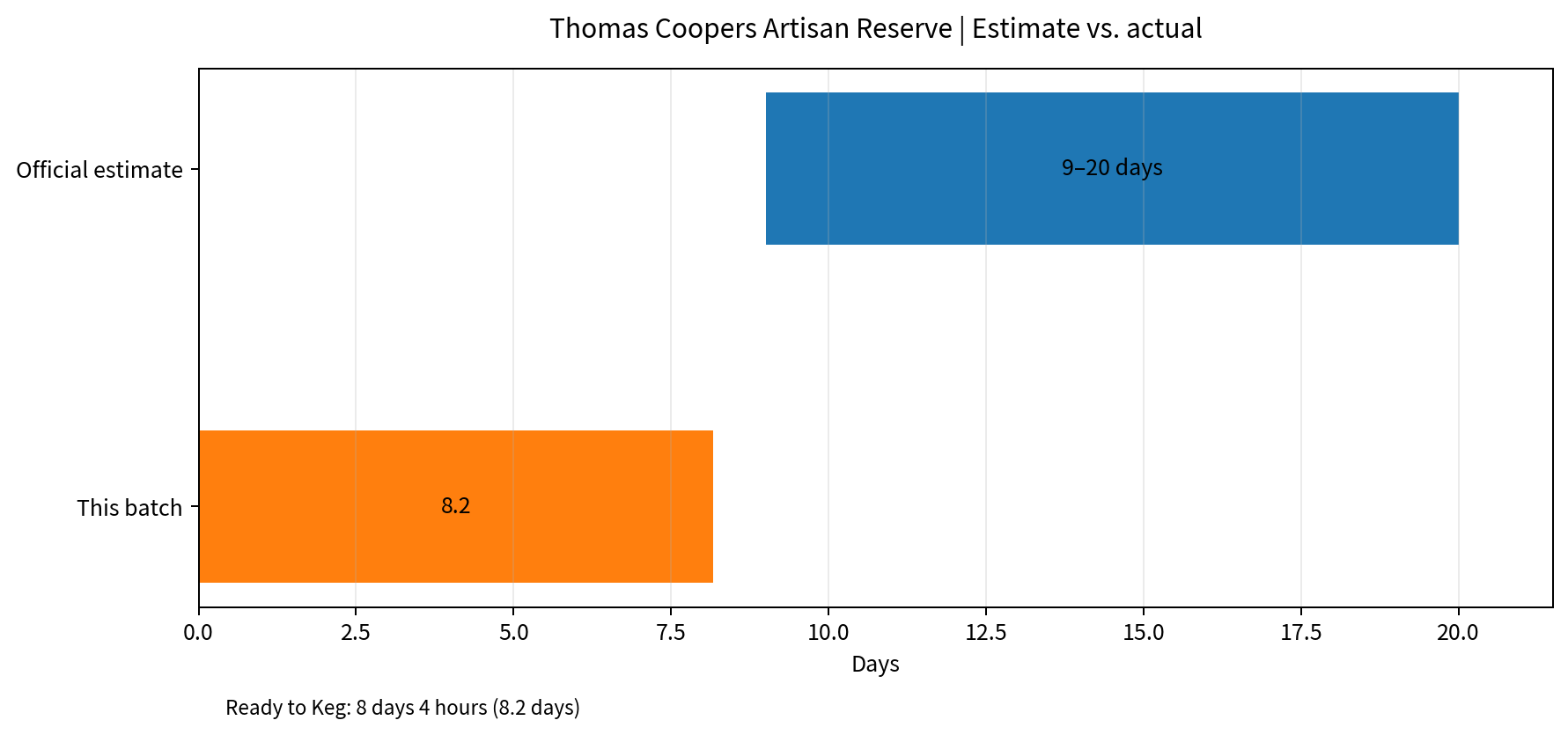
BrewArt lists a 9–20 day brewing estimate for Thomas Coopers Artisan Reserve.[3] I had planned around the possibility that the lager would occupy the BeerDroid for close to three weeks. Instead, this batch reached Ready to Keg at 8 days 4 hours.
Similar day counts, very different temperature paths
The Porter and lager both finished around day eight, but the environment the BeerDroid created during those eight days was very different. That became the main takeaway from this comparison: the route to the finish line was more informative than the finish date by itself.
Once conditioned, the three glasses diverged even more
Now that all three individual batch logs include conditioned tasting notes, I can compare the finished beers as well as the fermentation behavior. This was not a simultaneous blind tasting, and the conditioning conditions were not perfectly matched, so this is not a ranking. It is a side-by-side comparison of the tasting notes recorded for each batch.
German Weissbier
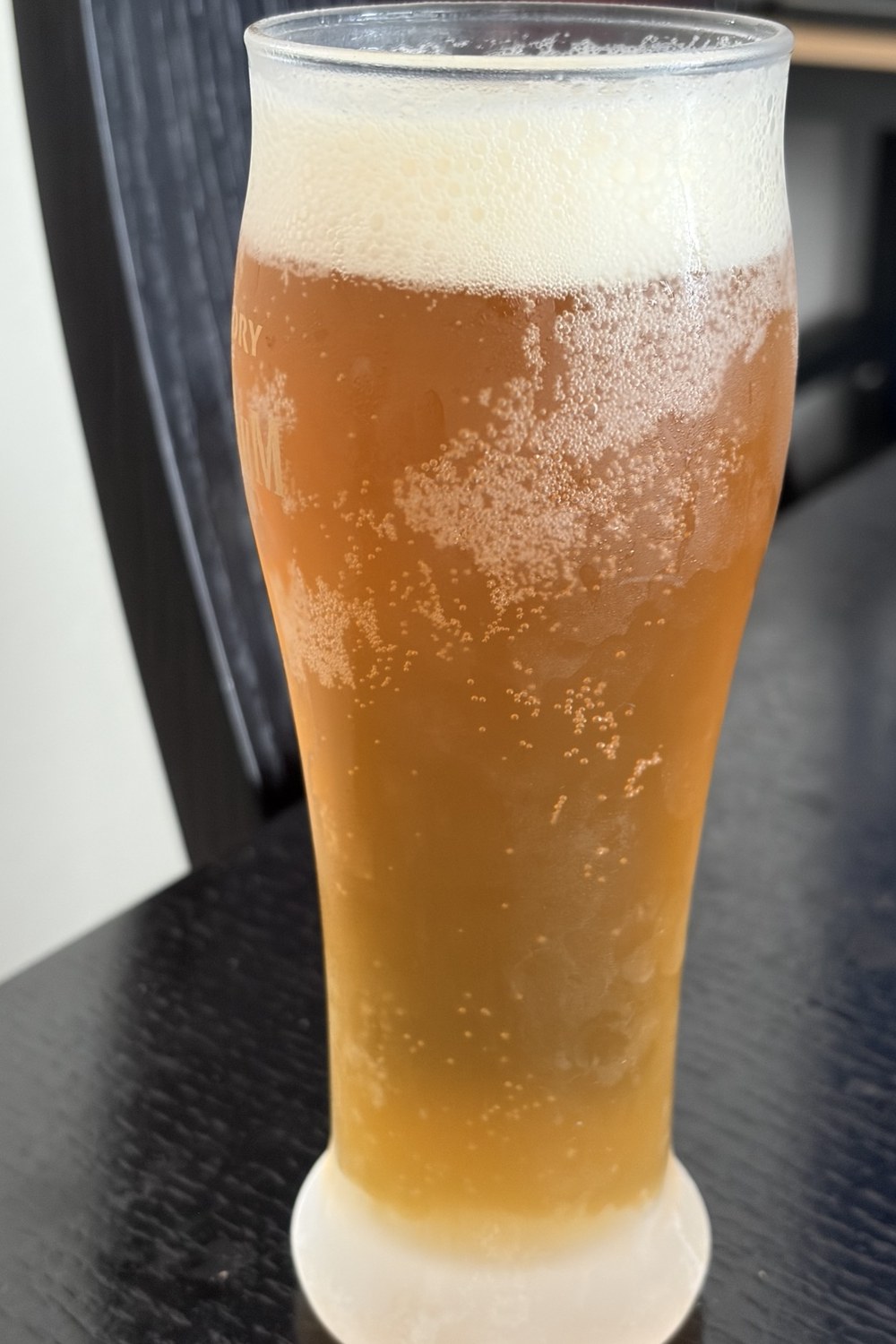
Compared with my earlier 17°C / 63°F batch, the 17→19°C / 63→66°F batch tasted richer, with a stronger classic banana aroma. Carbonation was still slightly weak.
Ruby Porter
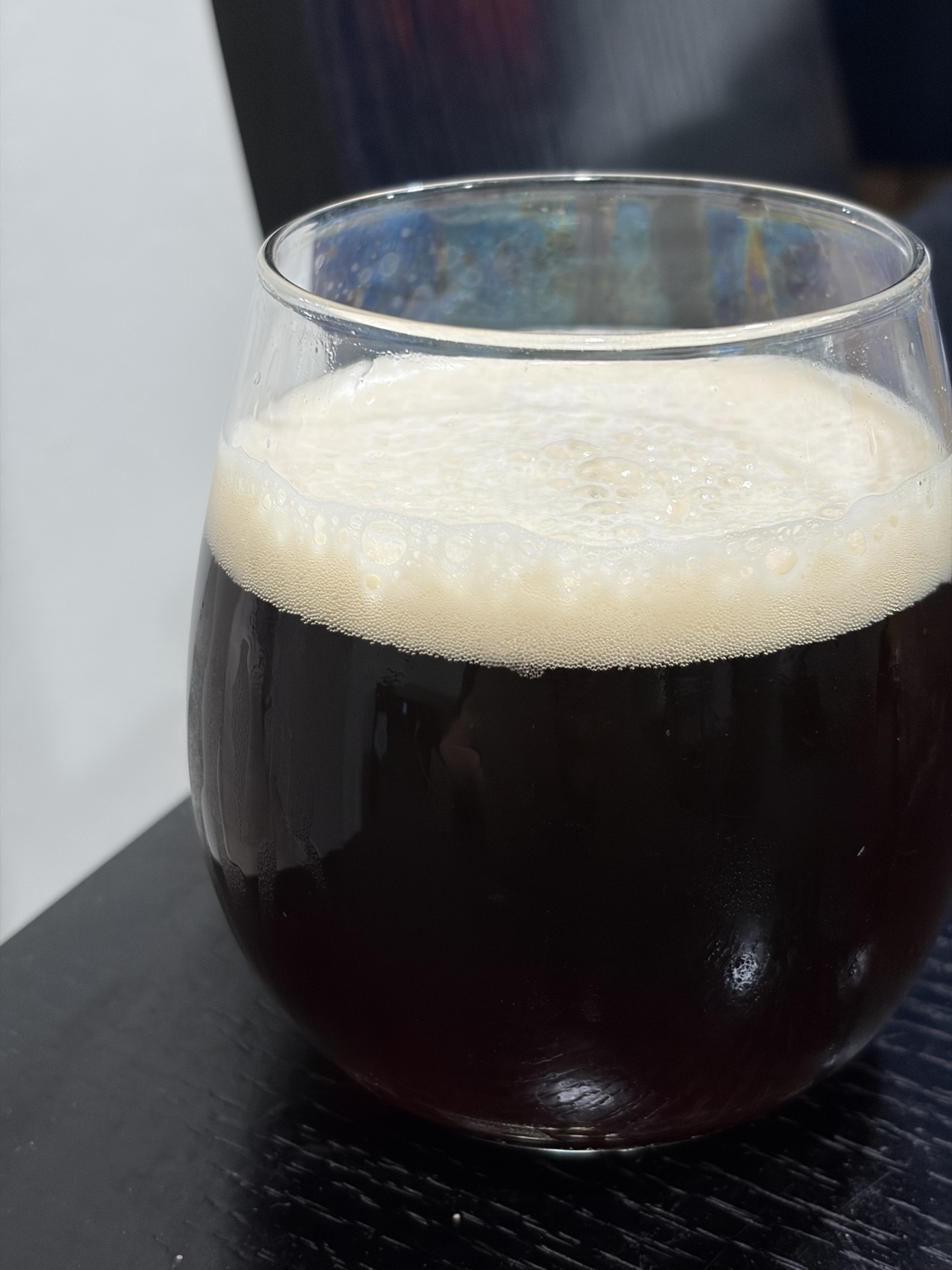
The standout notes were coffee- and cacao-like bitterness plus rich, chocolate-like body and sweetness. It was a completely different direction from the Weissbier.
Artisan Reserve Lager
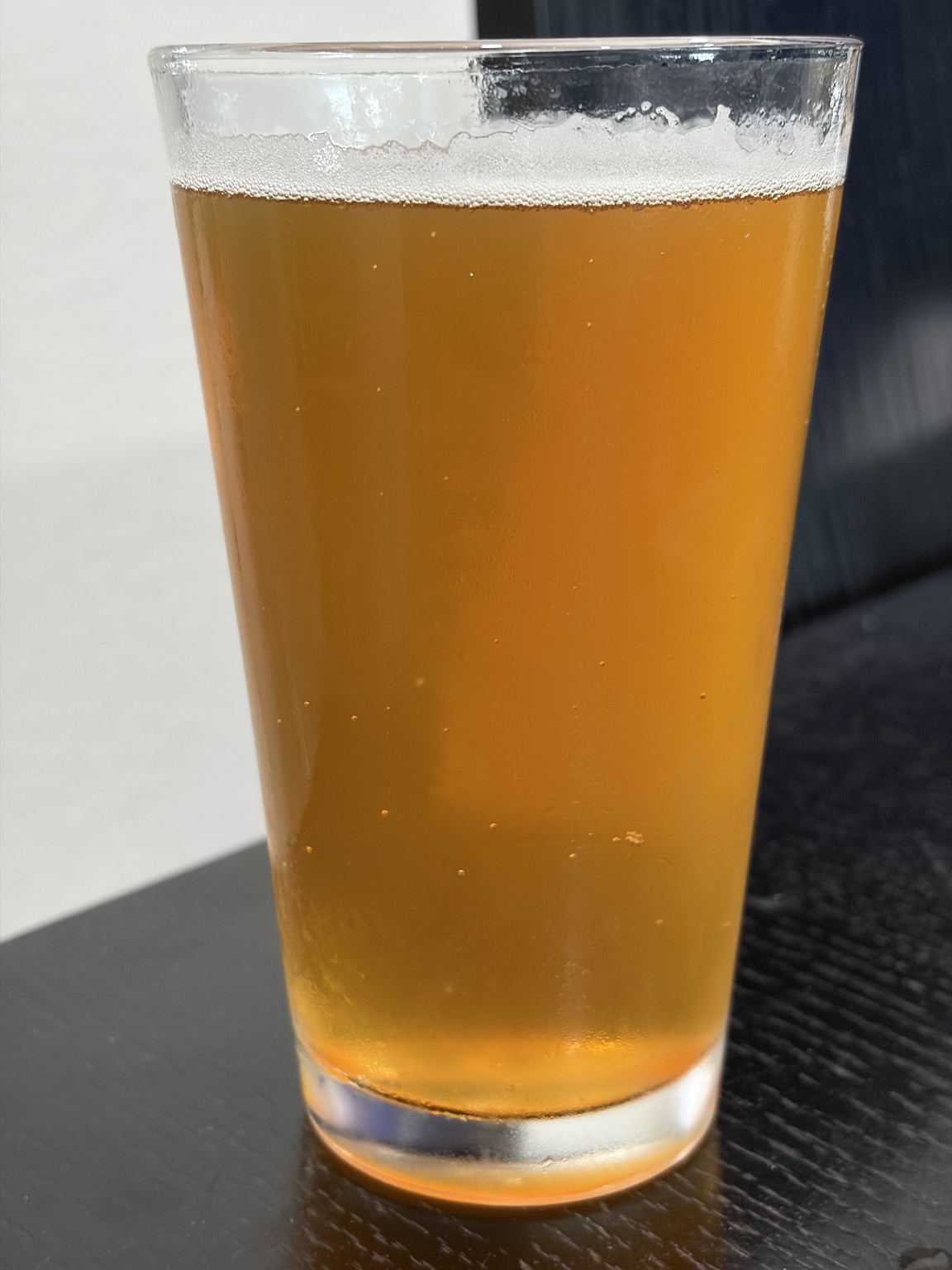
The lager showed a bright, green-apple-like character, low bitterness, a clean palate, and a crisp finish. It felt light and was very easy to keep drinking.
| Attribute | German Weissbier | Ruby Porter | Artisan Reserve Lager |
|---|---|---|---|
| Main flavor impression | Stronger banana aroma | Coffee/cacao-like bitterness with chocolate-like richness | Bright green-apple-like fruitiness |
| Body / palate | Richer than the earlier 17°C batch | Rich body and sweetness | Clean, with very little heaviness |
| Bitterness | Not a primary tasting metric in the individual log | Noticeable coffee/cacao-like bitterness | Low |
| Finish / carbonation | Carbonation slightly weak | Not a primary tasting metric in the individual log | Crisp and refreshing |
The Weissbier leaned toward banana and richer body, the Porter toward roasted-style bitterness and chocolate-like richness, and the lager toward green-apple brightness and a clean, crisp finish. These are the recorded impressions from the three batches; this comparison does not isolate temperature profile as the cause of those flavor differences.
What this comparison can—and cannot—show
These batches shared the same BeerDroid and 10 L batch size, but this was not a controlled experiment.
What these runs show
The early visual behavior differed dramatically. Visible motion and post-cooling rebound generally became gentler late in the run. The Porter and lager finished on similar calendars while following very different temperature profiles.
What they do not prove
I cannot generalize that every Weissbier takes six days or every lager takes eight. The recipe, yeast, and program differed, and the Weissbier target was manually changed mid-Ferment.
What I want to add next
Gravity data. A RAPT Pill or another SG logger would let me line up window movement, temperature, and specific gravity on the same timeline.
The three full batch logs
German Weissbier
Ferment began at 17°C and was later changed to 19°C. The full log includes days 1–5, EOF at about six days, kegging, conditioning, and a later tasting comparison against my earlier 17°C batch.
Ruby Porter
A 16°C fermentation with vent overflow at about 34 hours, window and temperature checkpoints through day four, Cleanup at about 5 days 1 hour, EOF at around eight days, and the later conditioned tasting.
Artisan Reserve Lager
A 22°C Propagate stage followed by 12°C Ferment, about 37 hours to reach the 12°C range, Cleanup around day five, a 15→17°C late ramp, Ready to Keg at 8 days 4 hours, and the later clean, green-apple-like conditioned tasting.
Conclusion: nearly the same number of days, very different fermentation stories
Three batches, one BeerDroid, 10 L each. The headline numbers were about six days for the Weissbier, about eight days for the Porter, and 8 days 4 hours for the lager. The obvious surprise was that the lager did not take dramatically longer.
The more interesting part was everything between start and finish. The Weissbier showed easy-to-see fine bubbling. The Porter fermented hard enough to overflow the vent. The lager had to cool into a true low-temperature stage and later stepped through 12→15→17°C before Keg.
Across these three runs, the late-stage window activity and post-cooling temperature rebound generally became gentler. Looking at the window, temperature graph, and BeerDroid phase together was more informative than relying on bubbles or the day counter alone.
The conditioned glasses separated just as clearly: banana aroma and richer body in the Weissbier, coffee/cacao-like bitterness and chocolate-like richness in the Porter, and bright green-apple character with a clean, crisp finish in the lager. Keeping both fermentation logs and tasting notes made the recipe-to-recipe differences much easier to see.
Research. Brew. Watch. Compare. Learn.
References
- BrewArt, German Weissbier. BrewPrint product information. BrewArt
- BrewArt, Ruby Porter. Product information, fermentation timing, and first-48-hour overflow note. BrewArt
- BrewArt, Thomas Coopers Artisan Reserve. Lager program and 9–20 day brewing estimate. BrewArt
- BrewArt, BeerDroid Instruction Manual. Lager Propagate 22°C, Ferment 12°C, Keg 18°C and BeerDroid phase information. PDF
The timings, temperatures, and visual observations above are from these specific batches. The BeerDroid temperature graph is not a hydrometer and does not directly measure fermentation rate.
Questions or comments about this article?
If you want to compare BeerDroid fermentation behavior, temperature graphs, or the three batches, feel free to send a note.
The website pulls the three individual brew logs together; X keeps the comparison process and shorter observations as they happened.