
Brewing Thomas Coopers Artisan Reserve in a BeerDroid
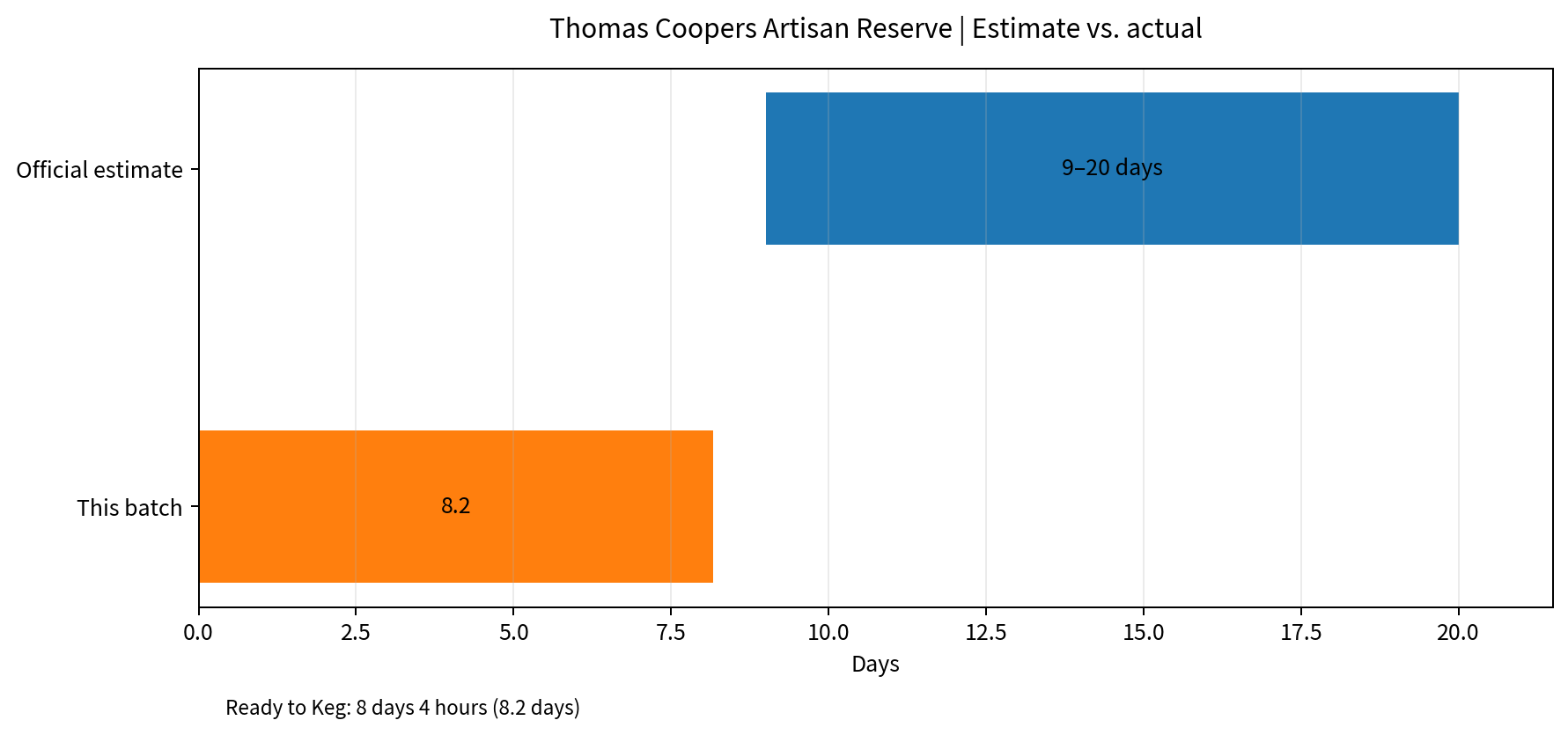
I expected this lager to tie up the BeerDroid for close to three weeks, so I built that extra time into my brewing schedule. Instead, Thomas Coopers Artisan Reserve moved through 12°C (54°F) fermentation, Yeast Cleanup, and staged warming before reaching Ready to Keg in 8 days 4 hours—faster than BrewArt's published 9–20 day estimate. This is the full log from cleanup after the previous batch through transfer into two 5 L (1.3 gal) kegs, the young post-keg sample, and the later conditioned tasting.
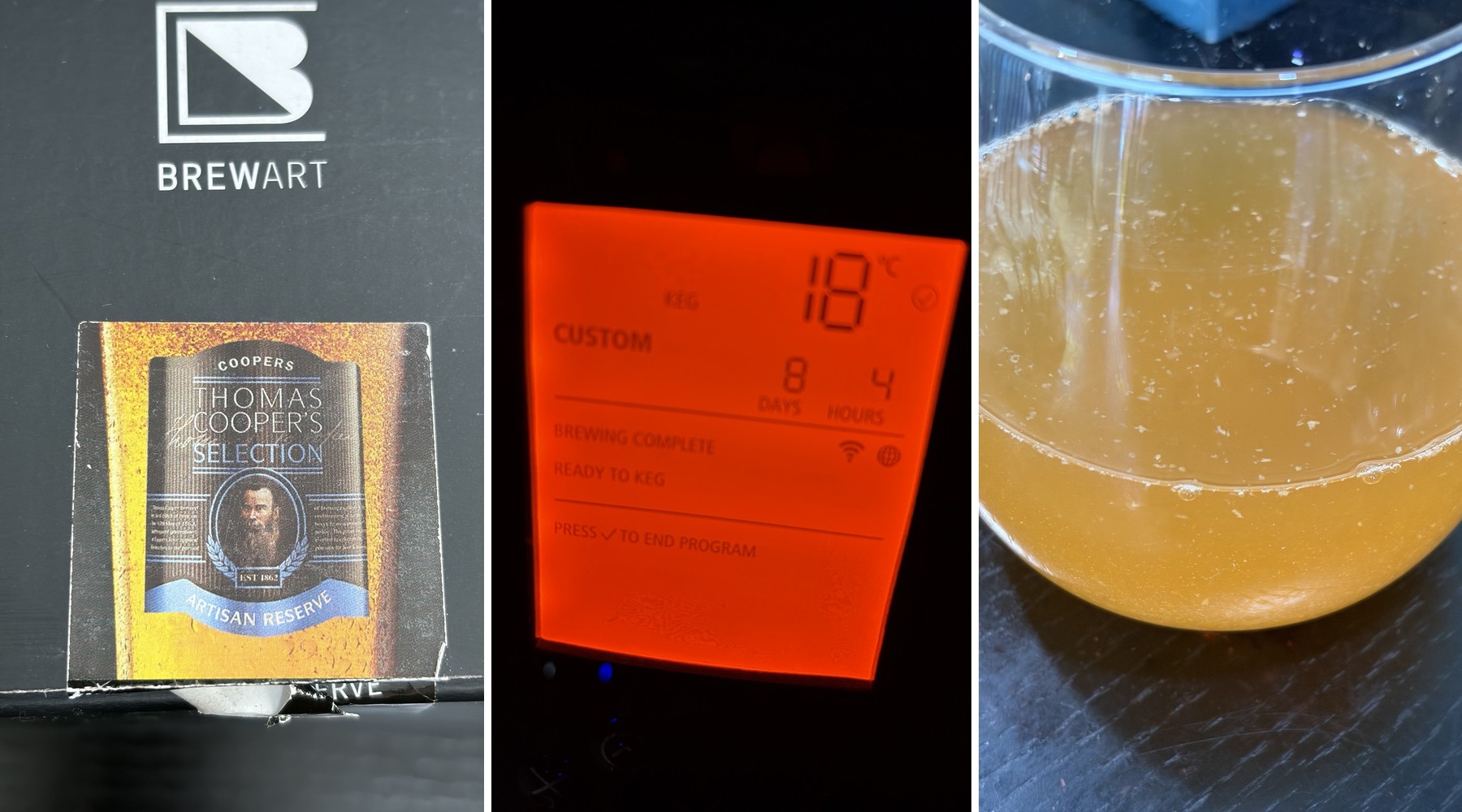
Batch at a glance
| Batch | Thomas Coopers Artisan Reserve |
|---|---|
| Brewer | BrewArt BeerDroid |
| Batch size | 10 L (2.6 gal) |
| Published brew-time estimate | 9–20 days, excluding secondary fermentation after kegging[1] |
| Standard lager program | Propagate 22°C (72°F) → Ferment 12°C (54°F) → Keg 18°C (64°F) → Store 4°C (39°F)[2] |
| Yeast Cleanup | Notification around day 5; target moved from 12°C to 15°C, then later to 17°C (63°F) |
| Ready to Keg | 8 days 4 hours |
| Progress log | Temperature checkpoints and BeerDroid sight-window video from days 1–7 |
| Kegging order | H4 in each keg → transfer beer → add primer |
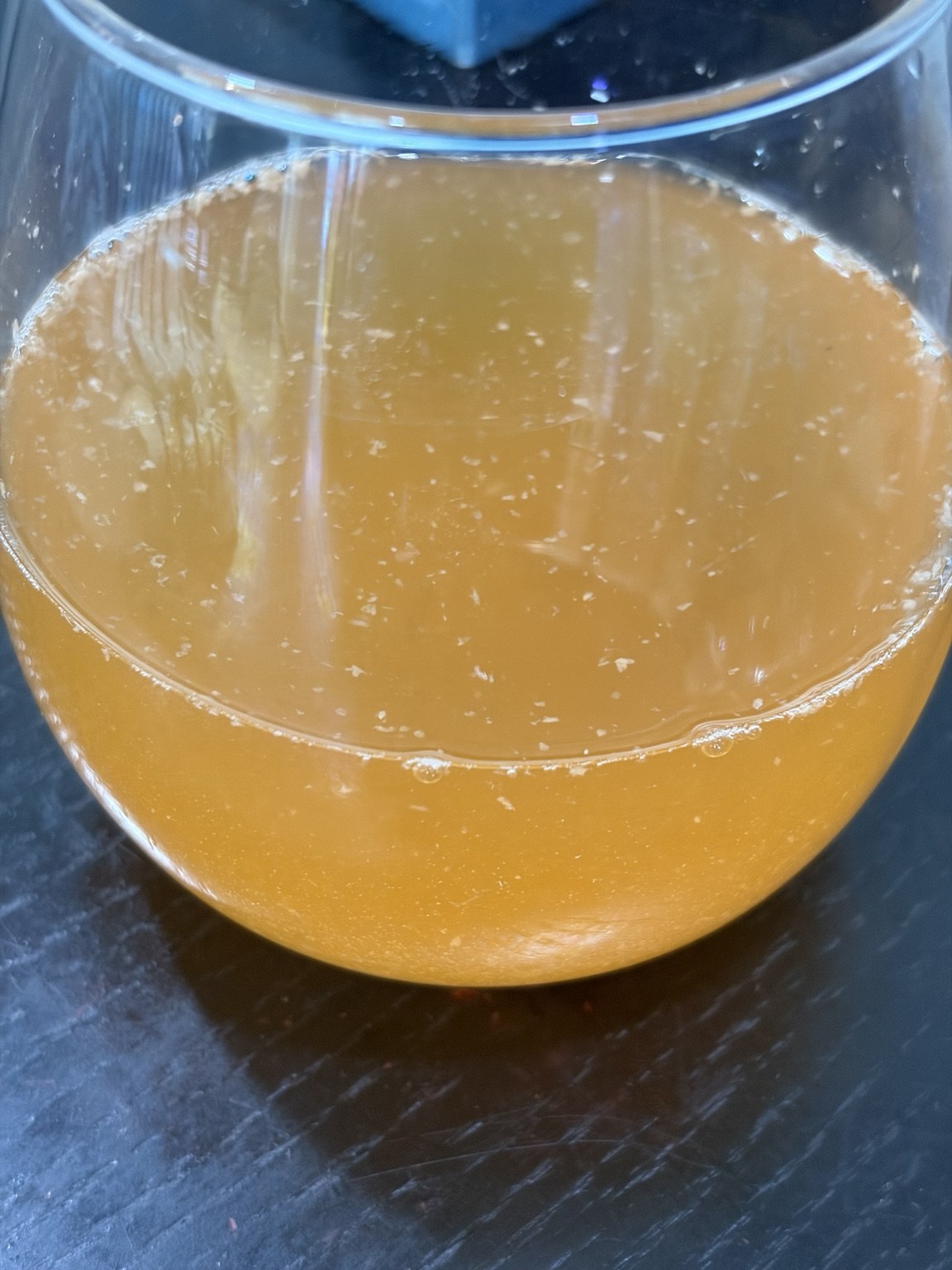
| Post-keg sample | Checked by drawing the small amount left in the BeerDroid through the tap. Bright gold with light citrus/fruity notes; because it came from the bottom, suspended residue looked a bit heavier. |
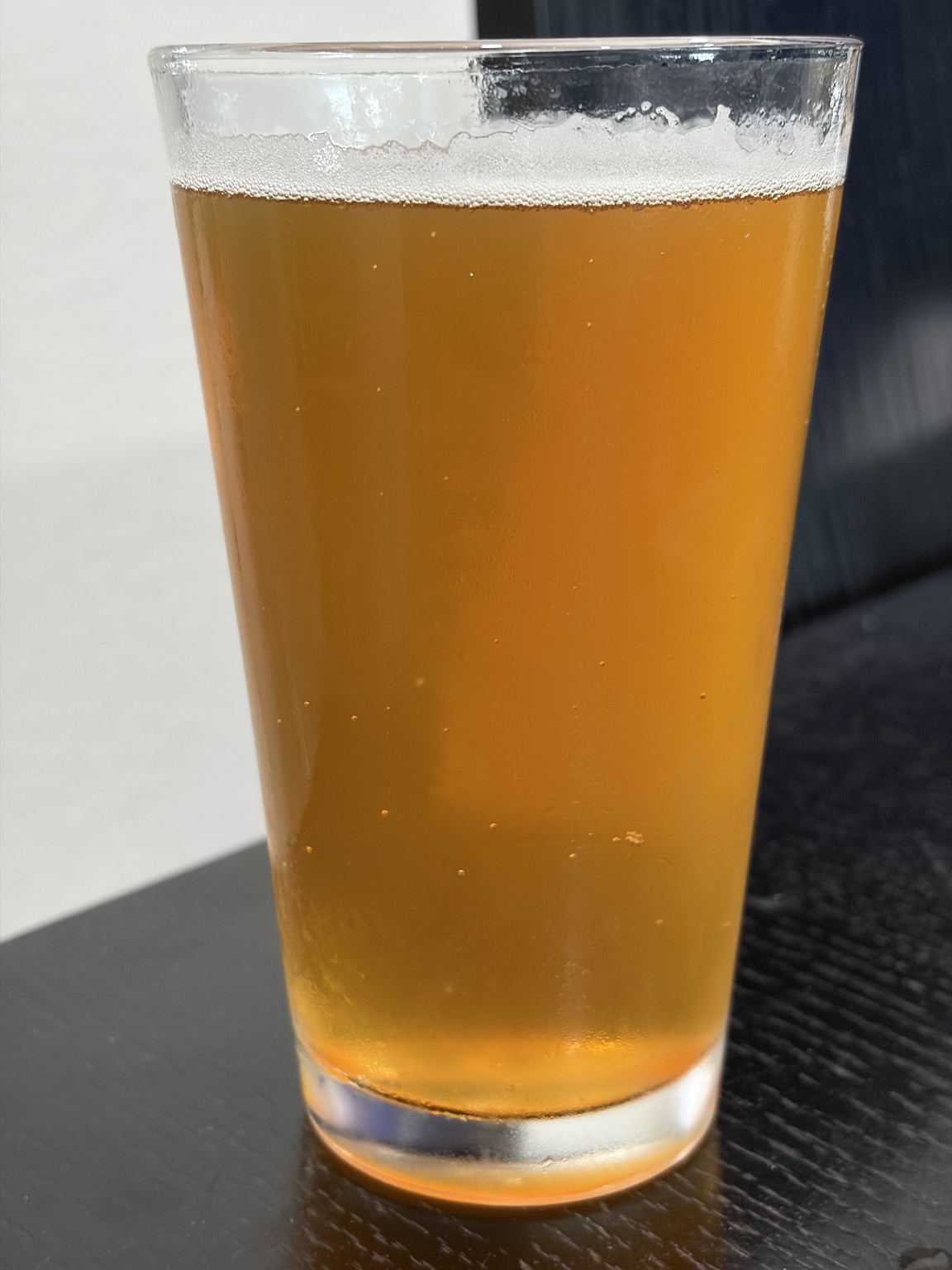
| Conditioned tasting | Bright green-apple-like character, low bitterness, a clean palate, and a crisp finish. Very easy to keep drinking. |
I budgeted almost three weeks for this lager
BrewArt lists Thomas Coopers Artisan Reserve as a lager program with an approximate brewing time of 9–20 days. The published targets are 5.5% ABV, color 11, and bitterness 18. BrewArt describes a bright golden-yellow beer with fresh-cut lime and orange-peel aroma, balanced malt, and a crisp Pilsner-style finish.[1]
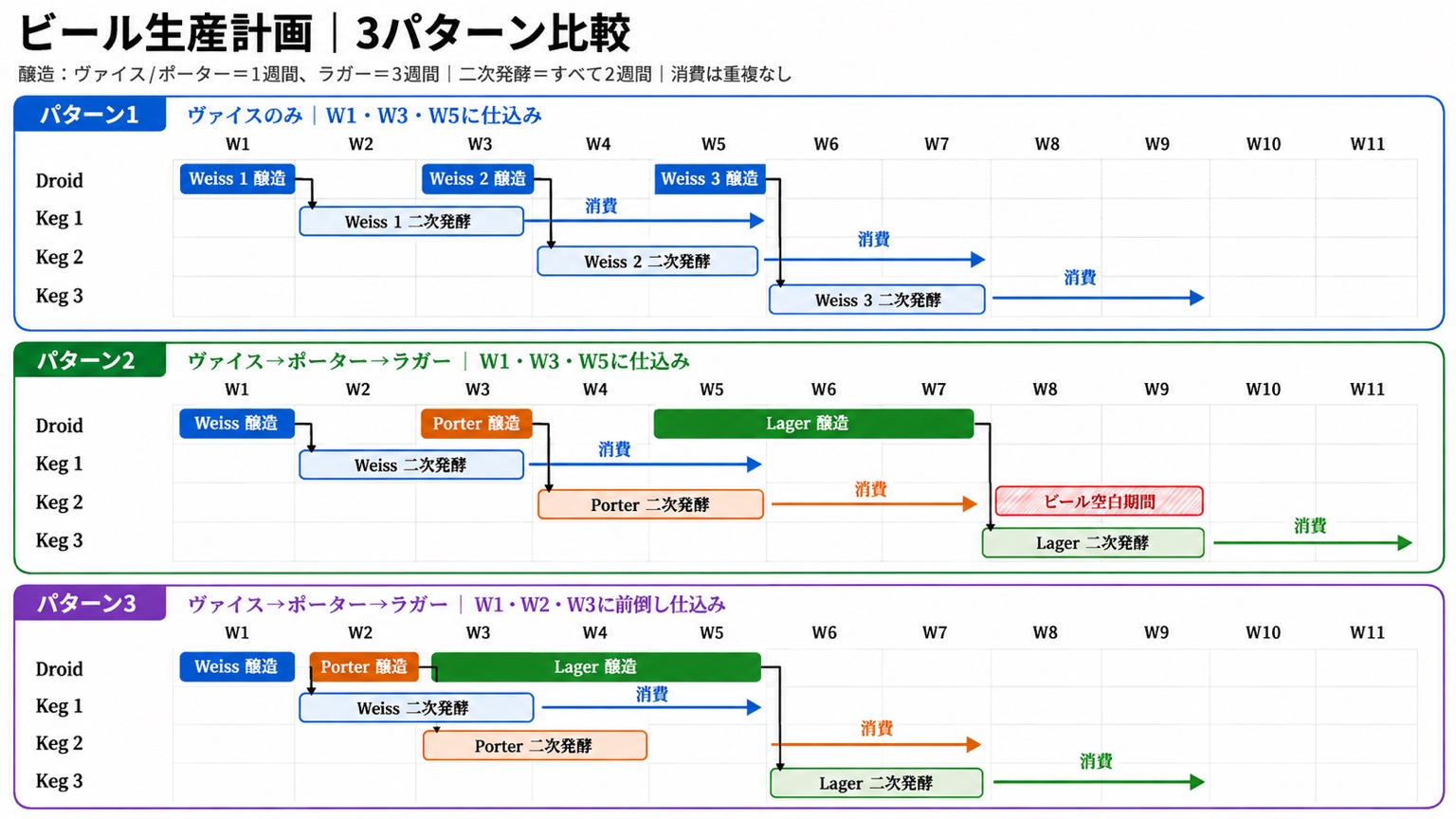
Compared with the Weissbier and Porter I had brewed immediately before it, I expected this one to be the long run. I therefore left nearly three weeks open in my production plan. Actual Ready-to-Keg time: 8 days 4 hours.
Gear and supplies used in this article
BrewArt BeerDroid
A 10 L automated brewer that manages the Propagate, Ferment, Keg, and Store temperature stages.
View the BrewArt BeerDroid on the official site →
Thomas Coopers Artisan Reserve BrewPrint
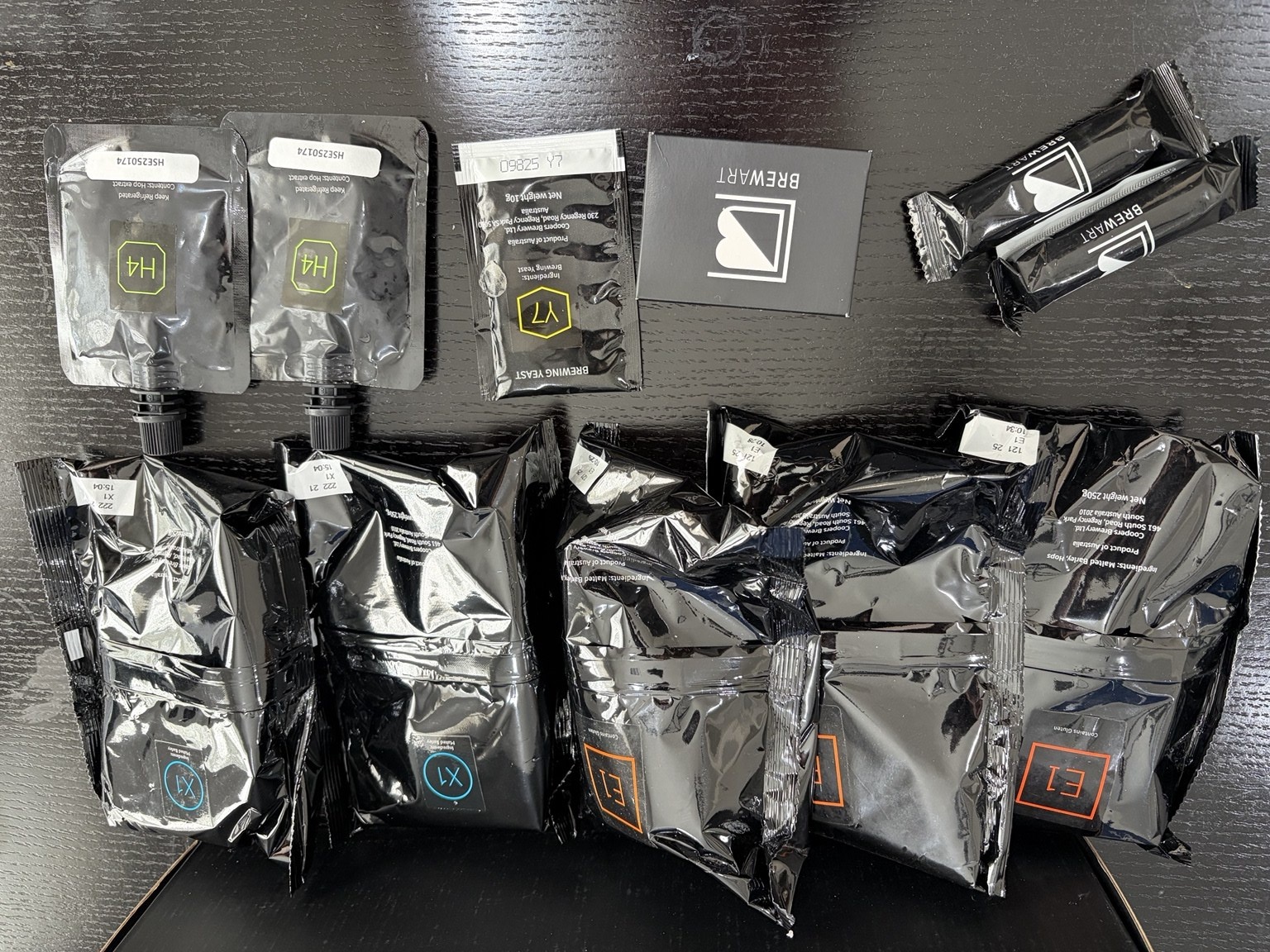
The pack used here contains 3× E1, 2× X1, 2× H4, Y7 yeast, two primers, and Droid Cleanse.[1]
View Thomas Coopers Artisan Reserve on the official site →
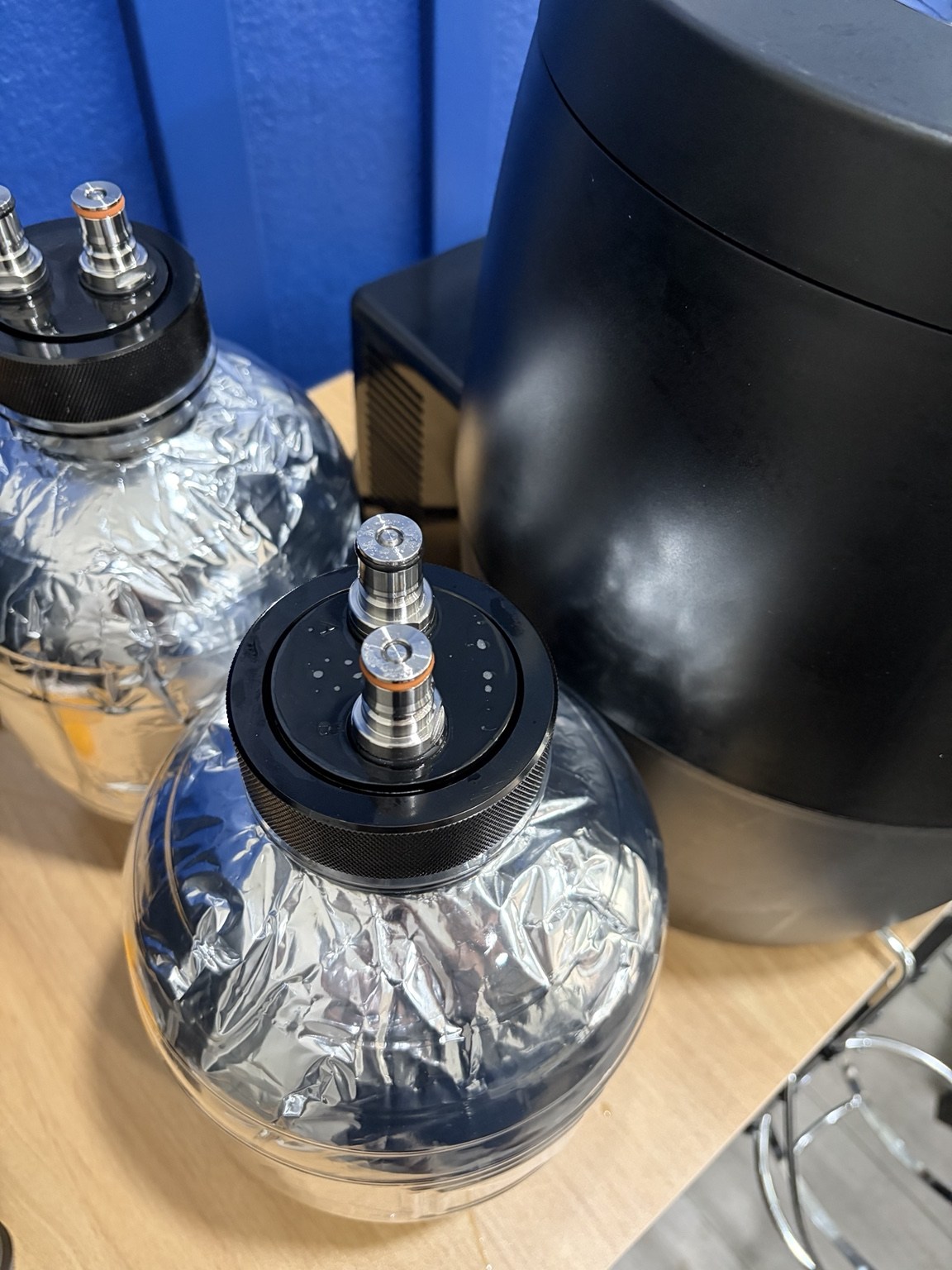
BrewArt 5 L Kegs
The 10 L batch was split between two 5 L (1.3 gal) PET kegs for secondary fermentation and conditioning.[5]
View BrewArt 5 L Kegs on the official site →
Five Star Star San Sanitizer
I used it to sanitize the 5 L kegs, caps, spears, and other beer-contact parts at kegging. The BeerDroid itself was sanitized with the Droid Cleanse included in the BrewPrint.
First job: clean up after the Porter
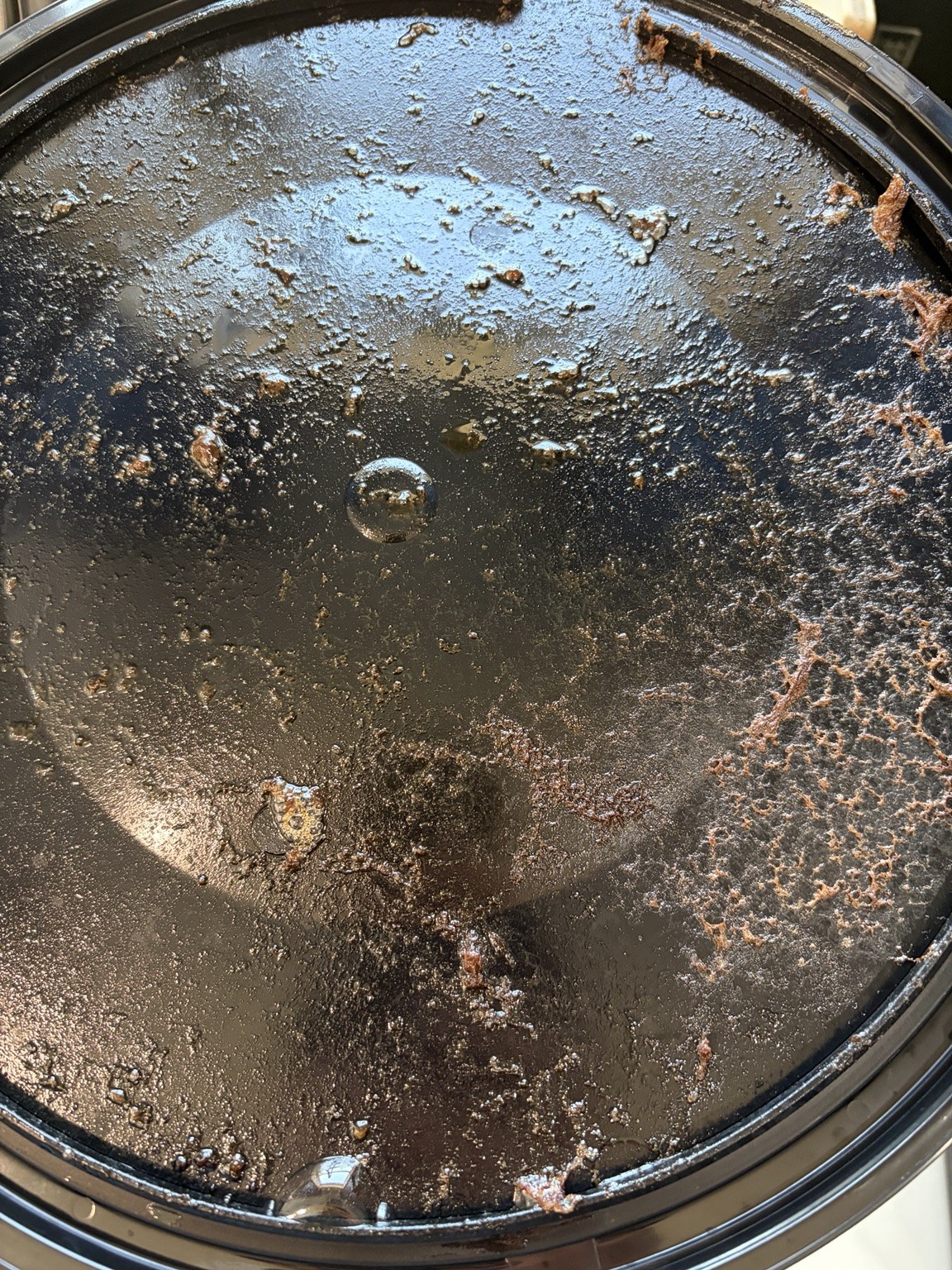
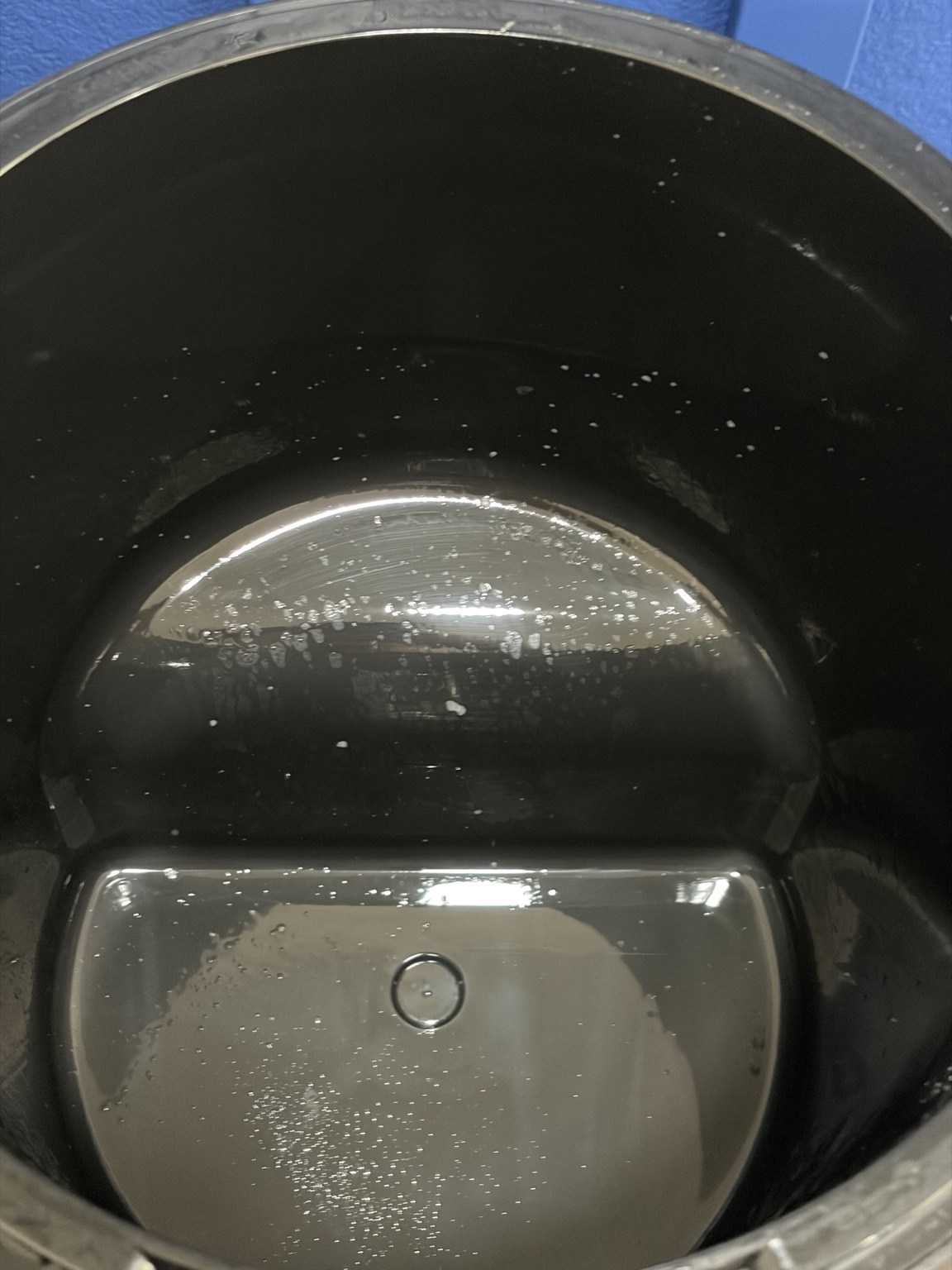
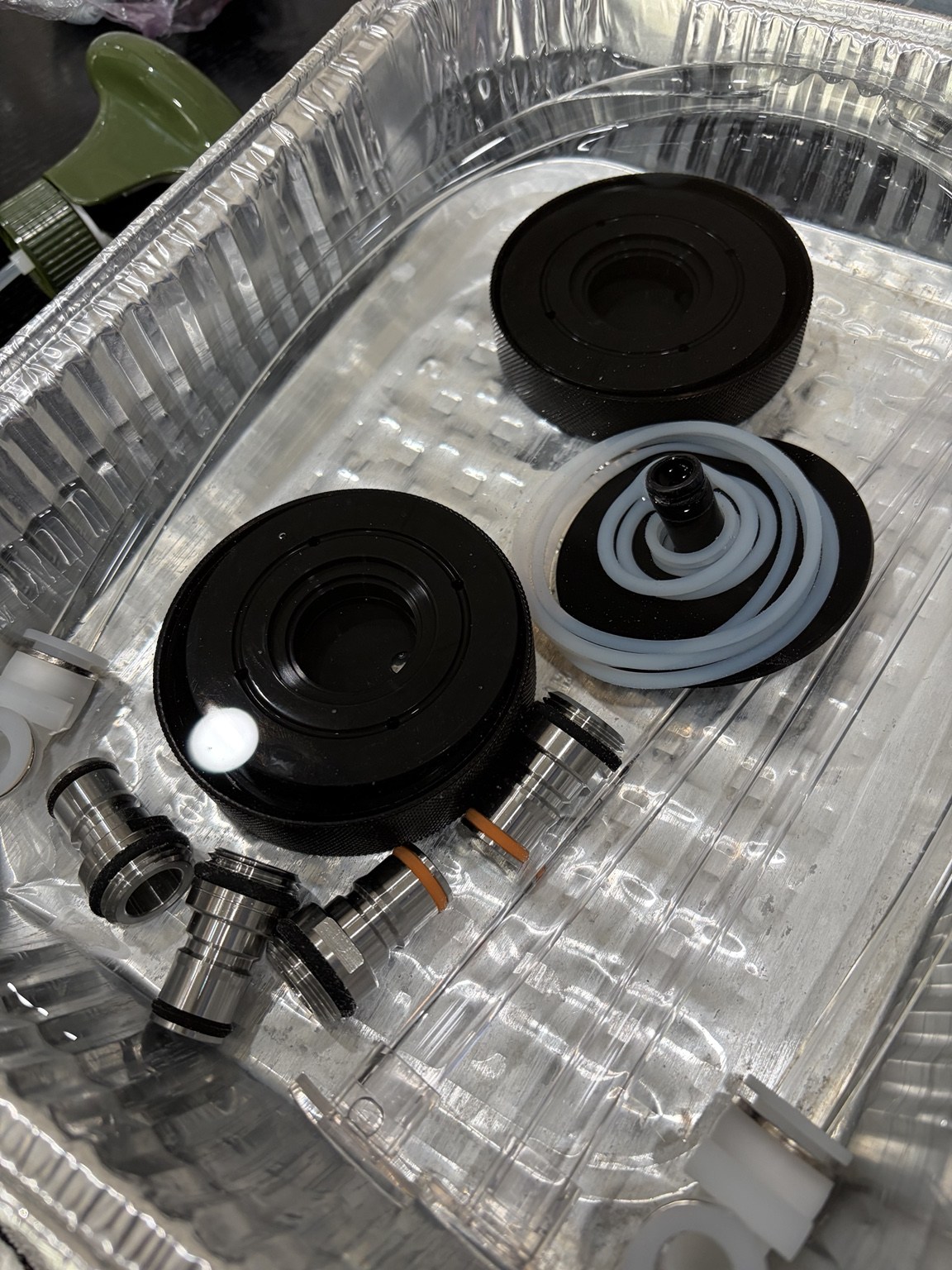
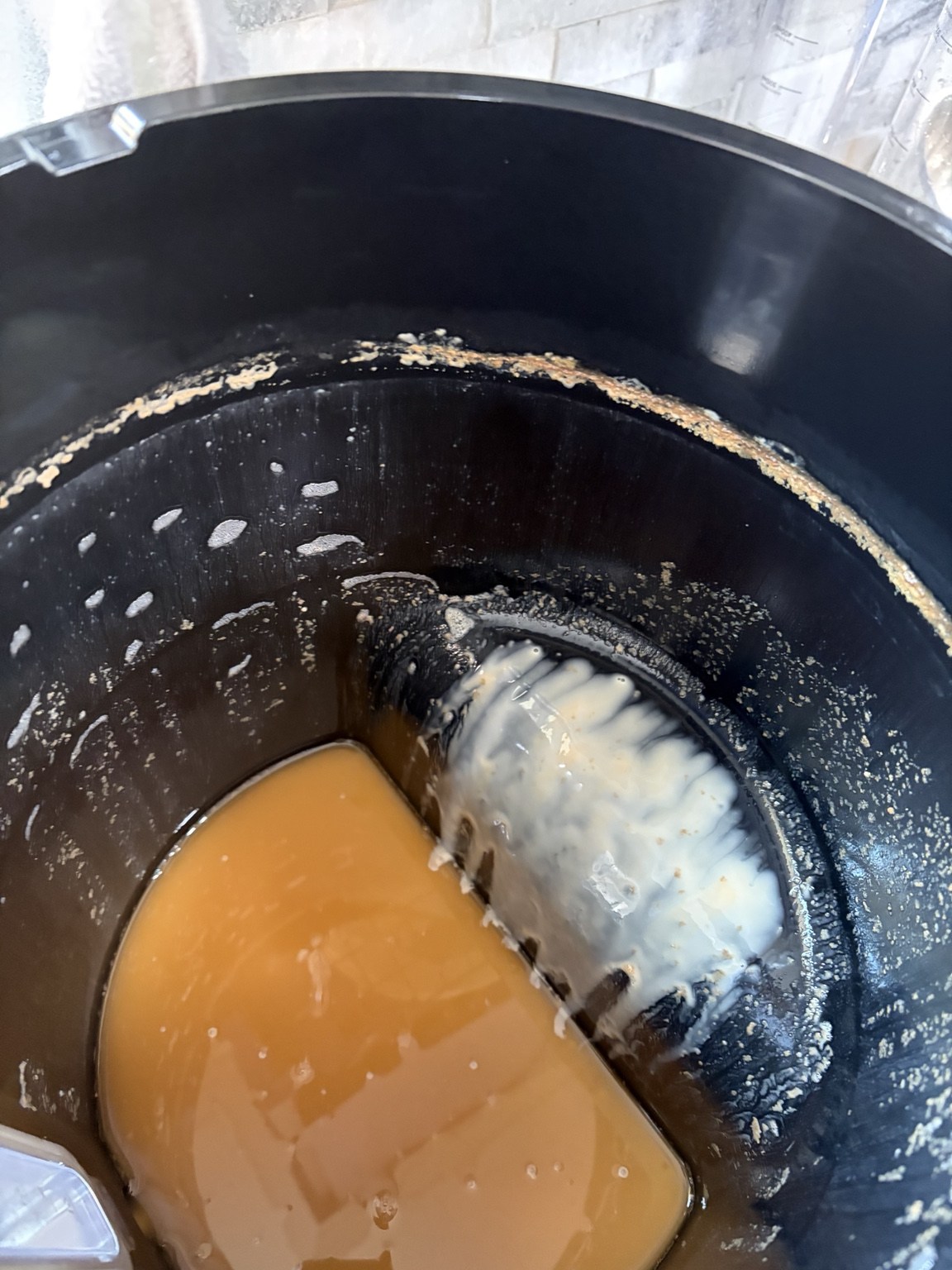
The previous batch was Ruby Porter. After kegging it, the BeerDroid lid and interior were still coated in sticky fermentation residue. Before starting the lager, I cleaned the vessel and removable parts, then sanitized for the next batch.
Inside the Artisan Reserve BrewPrint
The official pack contains 3× E1, 2× X1, 2× H4, 1× Y7, two primers, and one Droid Cleanse.[1] E1 supplies a pale, grainy-malt base; X1 adds grainy sweet malt character and body with minimal color. BrewArt describes H4 as herbal and spicy for classic Pilsner character, while Y7 is a clean-fermenting yeast intended to finish clear.[3][4]
Load the ingredients and start the lager program
After cleaning and sanitizing, I filled the BeerDroid, pitched the Y7 yeast, then added the E1 and X1 dry ingredients. With the lid back on, I started the standard lager program.
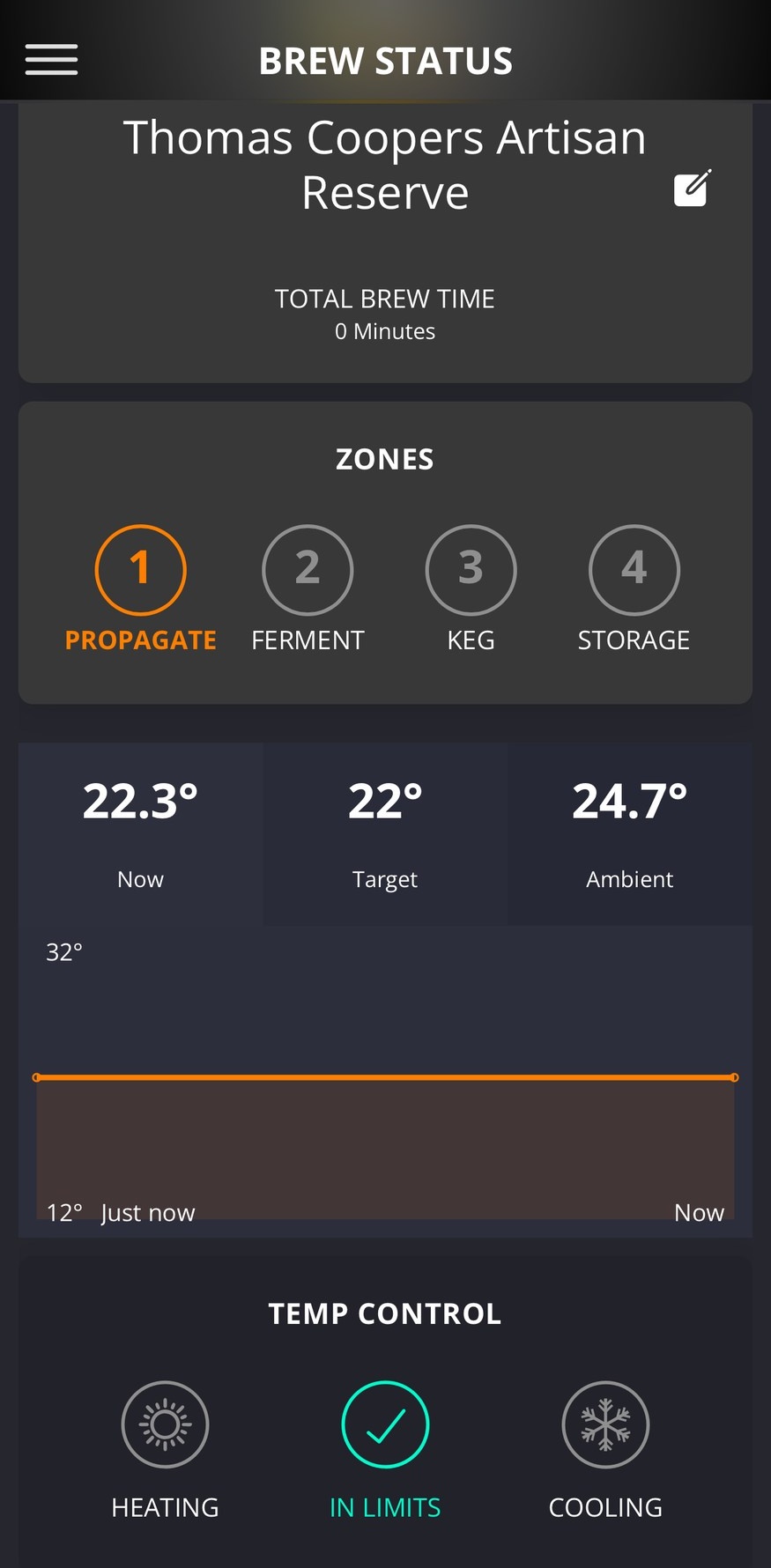
In the standard BeerDroid lager program, Propagate lasts 12 hours at a 22°C (72°F) target. Only after that does the BeerDroid switch into Ferment and start working down toward a 12°C (54°F) target. Keg then targets 18°C (64°F), followed by Store at 4°C (39°F).[2]
A 12°C target does not mean the beer is instantly at 12°C
The photos let me follow the cooling process after brew start. At three hours, the beer was still 23°C (73°F). At 12 hours it was 18.3°C (65°F) even though the Ferment target had already switched to 12°C. The batch continued cooling and reached 11.9°C (53°F) at about 1 day 13 hours.
So in this batch, moving to “12°C fermentation” meant a real cooling transition from near-room temperature. It took about 37 hours from brew start to settle into the 12°C range.
The temperature profile, reconstructed from my checkpoints
The chart below is not continuous sensor telemetry. It connects the temperatures shown in the app screenshots I took at specific checkpoints. That is enough to show the stage changes, but values between those points should not be read as measured data.
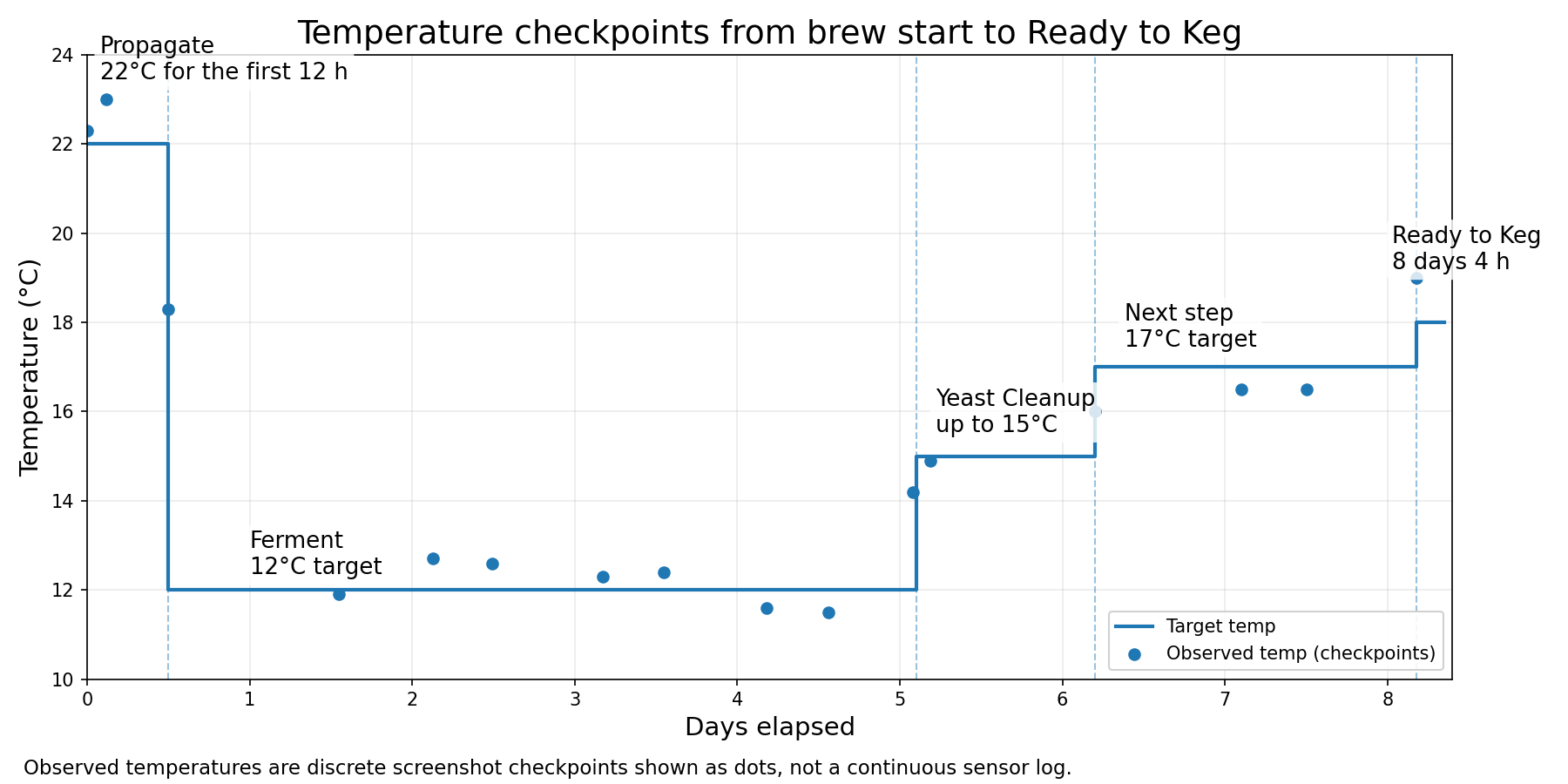
Once it reached the 12°C range, the checkpoint readings stayed roughly between 11.5 and 12.7°C (52.7–54.9°F) through day four. With the BeerDroid expected to control around the setpoint within roughly ±1°C, those readings are consistent with a 12°C target, even with room temperatures around 25–27°C (77–81°F).
Days 1–4: reading the temperature graph and sight-window video together
I recorded the BeerDroid sight window as well as the app. To make this useful for a later Weissbier vs. Porter vs. Lager comparison, I am keeping the same set of checkpoints: elapsed time, stage, measured temperature, target temperature, the eight-hour app graph, and the sight-window video.
Fermentation generates heat. So I also watched how quickly the beer warmed again after the BeerDroid cooled it. With the same 10 L batch size, the same machine, and room temperature staying roughly in the 25–27°C (77–81°F) range, a faster rebound after cooling can be consistent with a larger contribution from fermentation heat. A slower rebound, especially when the sight-window motion also becomes quieter, can be consistent with late fermentation.
This is not a direct fermentation-rate measurement. Room heat, the BeerDroid control cycle, and the graph's time and temperature resolution all affect the line. After Yeast Cleanup, the program intentionally changes the target from 12°C to 15°C and later 17°C, so that programmed rise must not be mistaken for stronger fermentation. I use the graph only as a qualitative clue, together with what is visible through the window.
Comparison checkpoints
| 3 hours | Propagate | 23°C / target 22°C |
|---|---|
| 12 hours | Transition to Ferment | 18.3°C / target 12°C |
| 1 day 4 hours | Ferment | 13.0°C / target 12°C (still cooling) |
| 1 day 13 hours | Ferment | 11.9°C / target 12°C (12°C range reached) |
| 2 days 12 hours | Ferment | 12.6°C / target 12°C (clear rebound after cooling) |
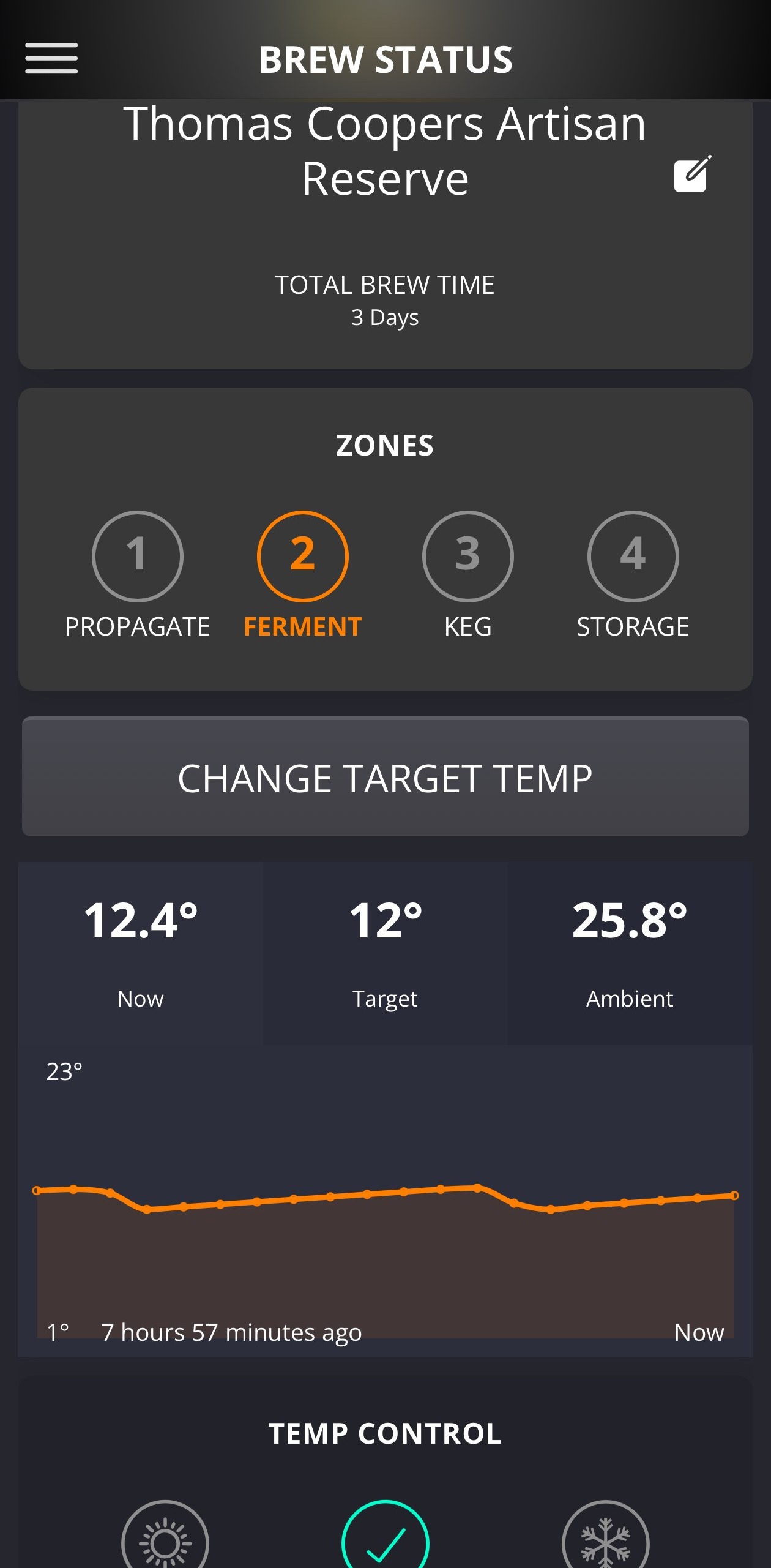
| 3 days 13 hours | Ferment | 12.4°C / target 12°C (rebound cycle continues) |
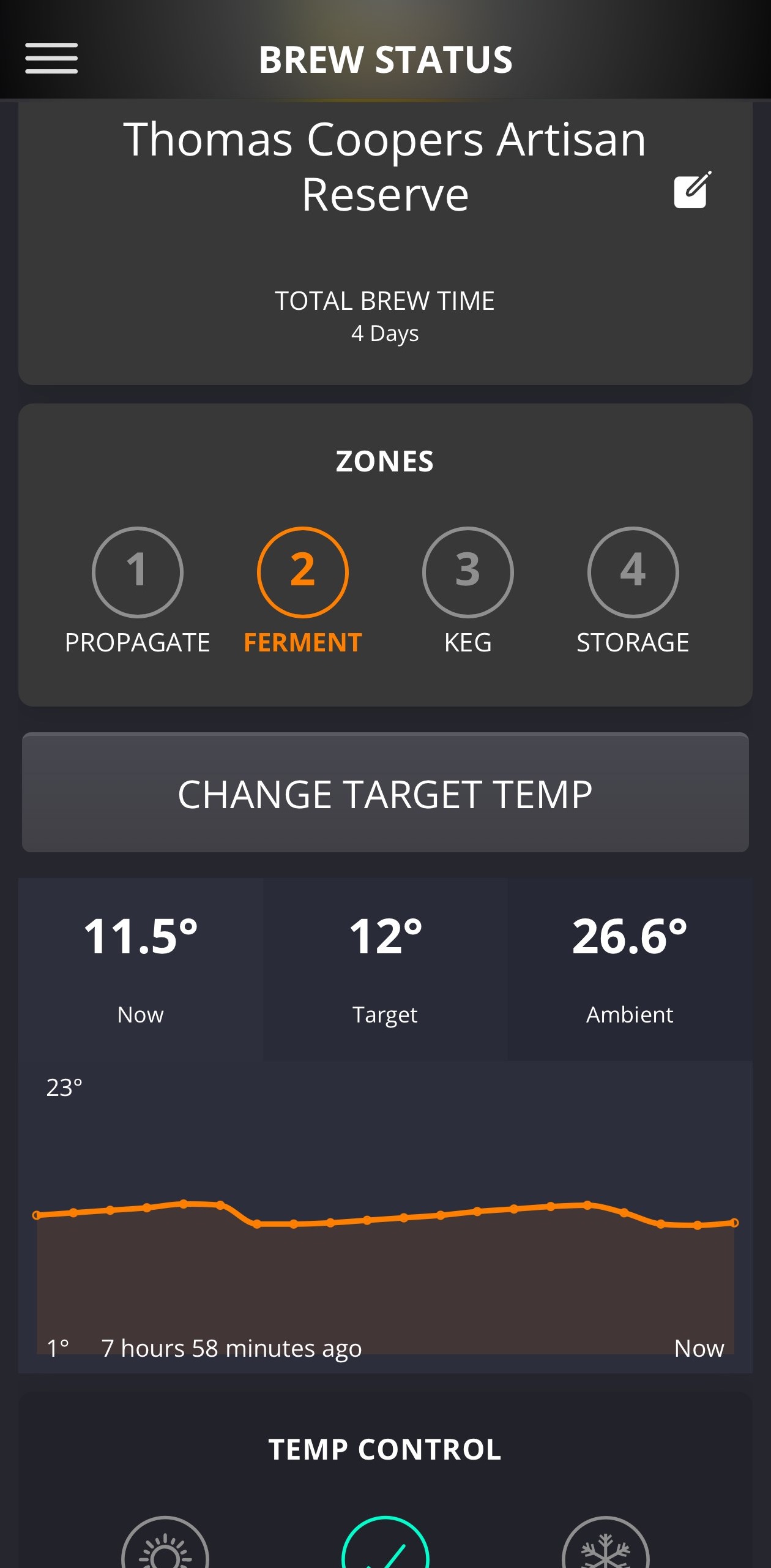
| 4 days 13 hours | Ferment | 11.5°C / target 12°C (gentler rebound) |
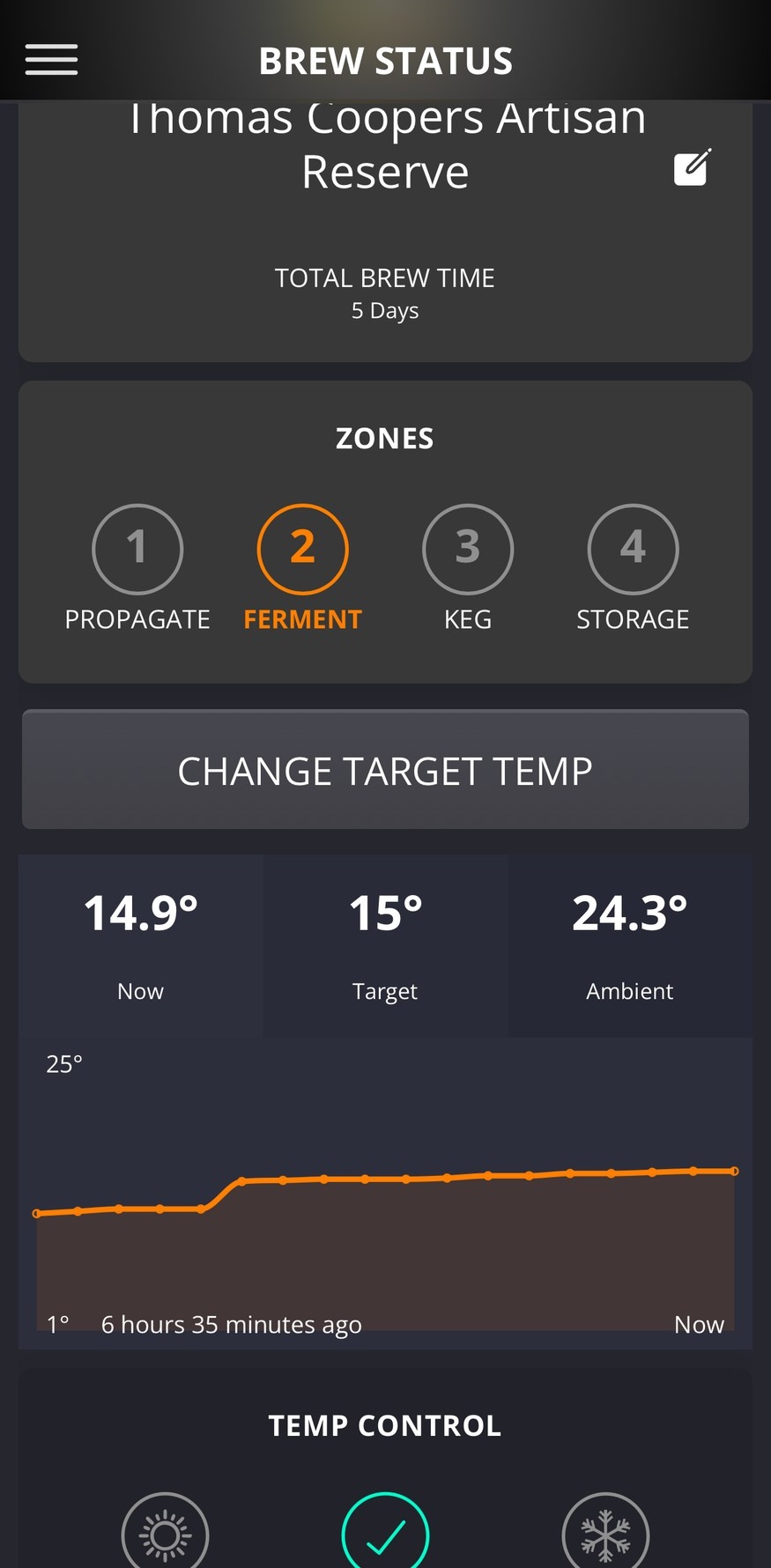
| 5 days 5 hours | Yeast Cleanup | into the 15°C range (programmed ramp) |
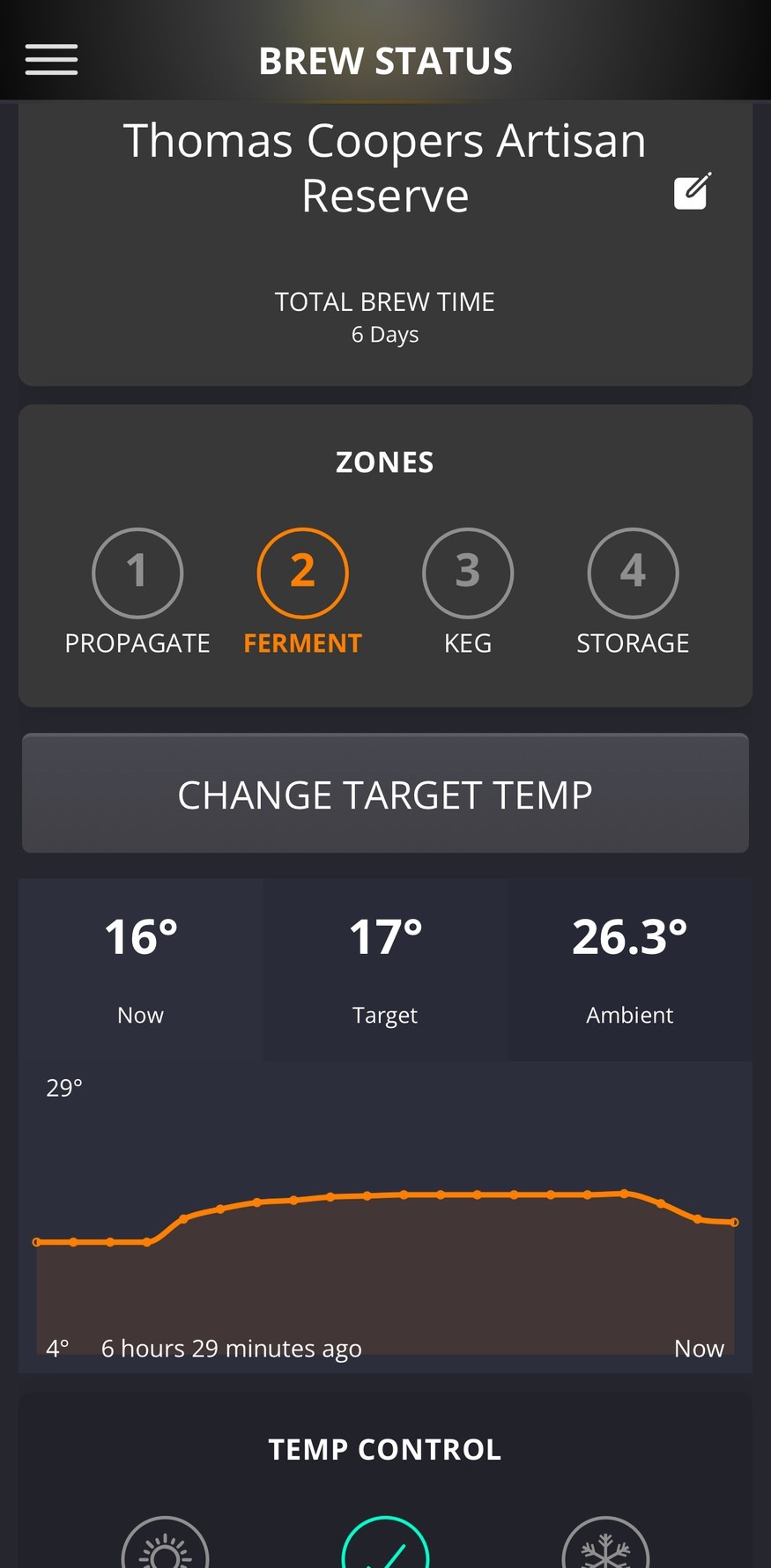
| 6 days 12 hours | Ferment | 17.9°C / target 17°C (late programmed ramp) |
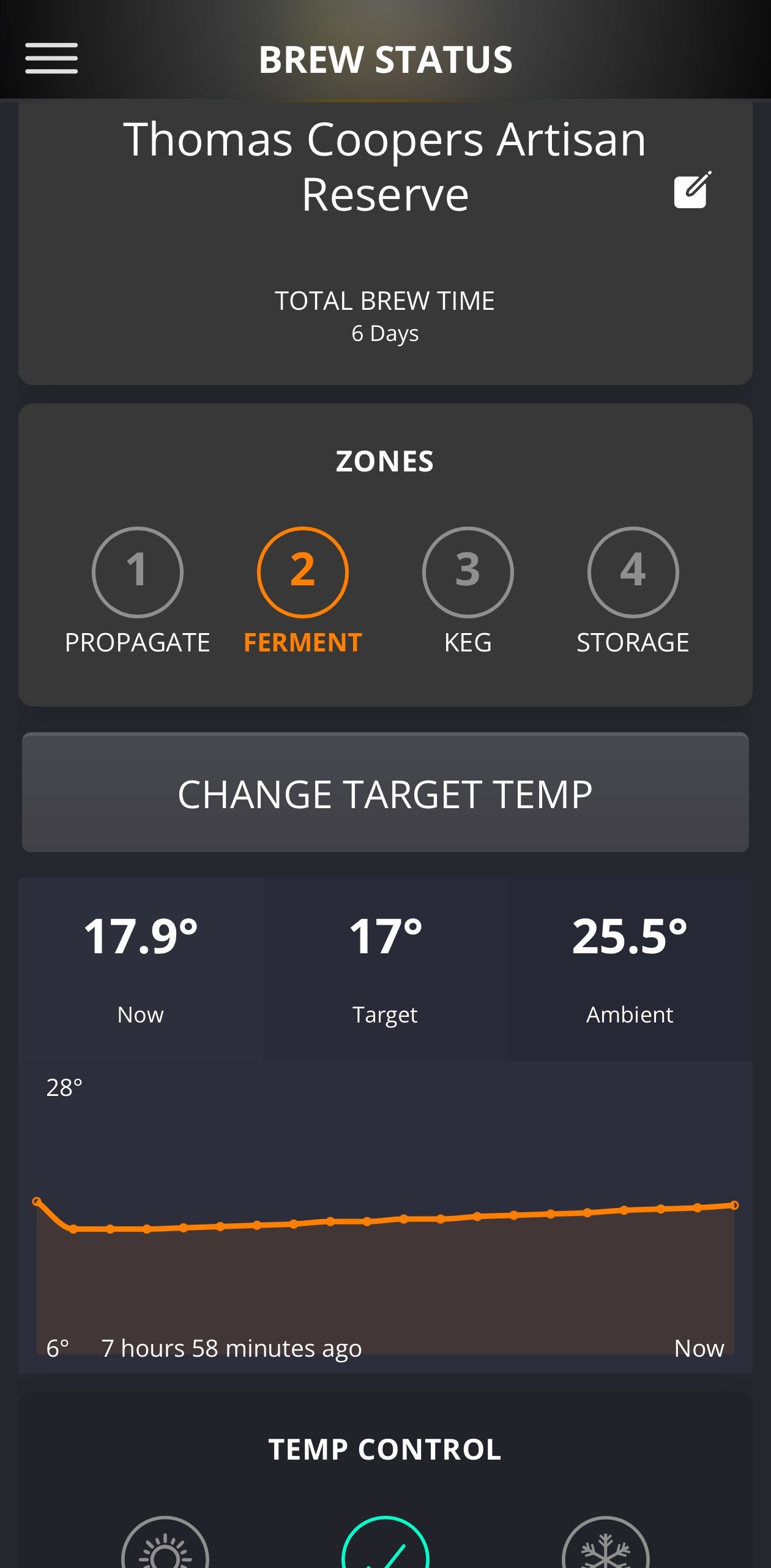
| 7 days 12 hours | Ferment | 16.5°C / target 17°C (quiet pre-EOF stage) |
| 8 days 4 hours | Keg | BeerDroid 18°C, Ready to Keg |
1 day 4 hours: down to 13°C
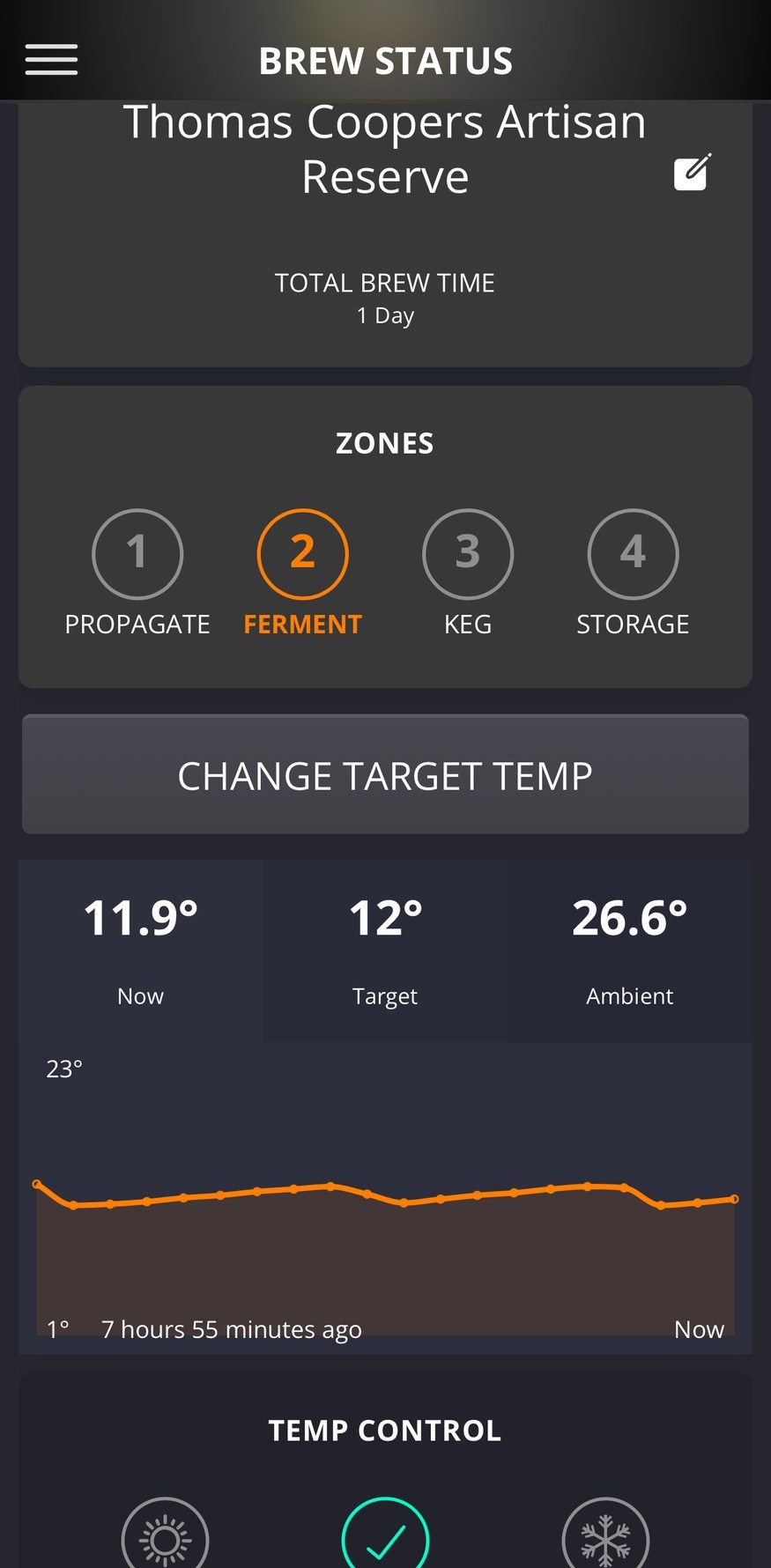
At about 28 hours, Ferment was underway and the app showed 13.0°C (55°F) against a 12°C (54°F) target. This was still a large programmed cooling ramp, so the slope here is dominated by temperature control rather than being useful as a fermentation-intensity clue.
The beer was still visibly cloudy through the window, with fine suspended material. I kept this video mainly as the baseline for the later checkpoints.
2 days 12 hours: a clear rebound after cooling
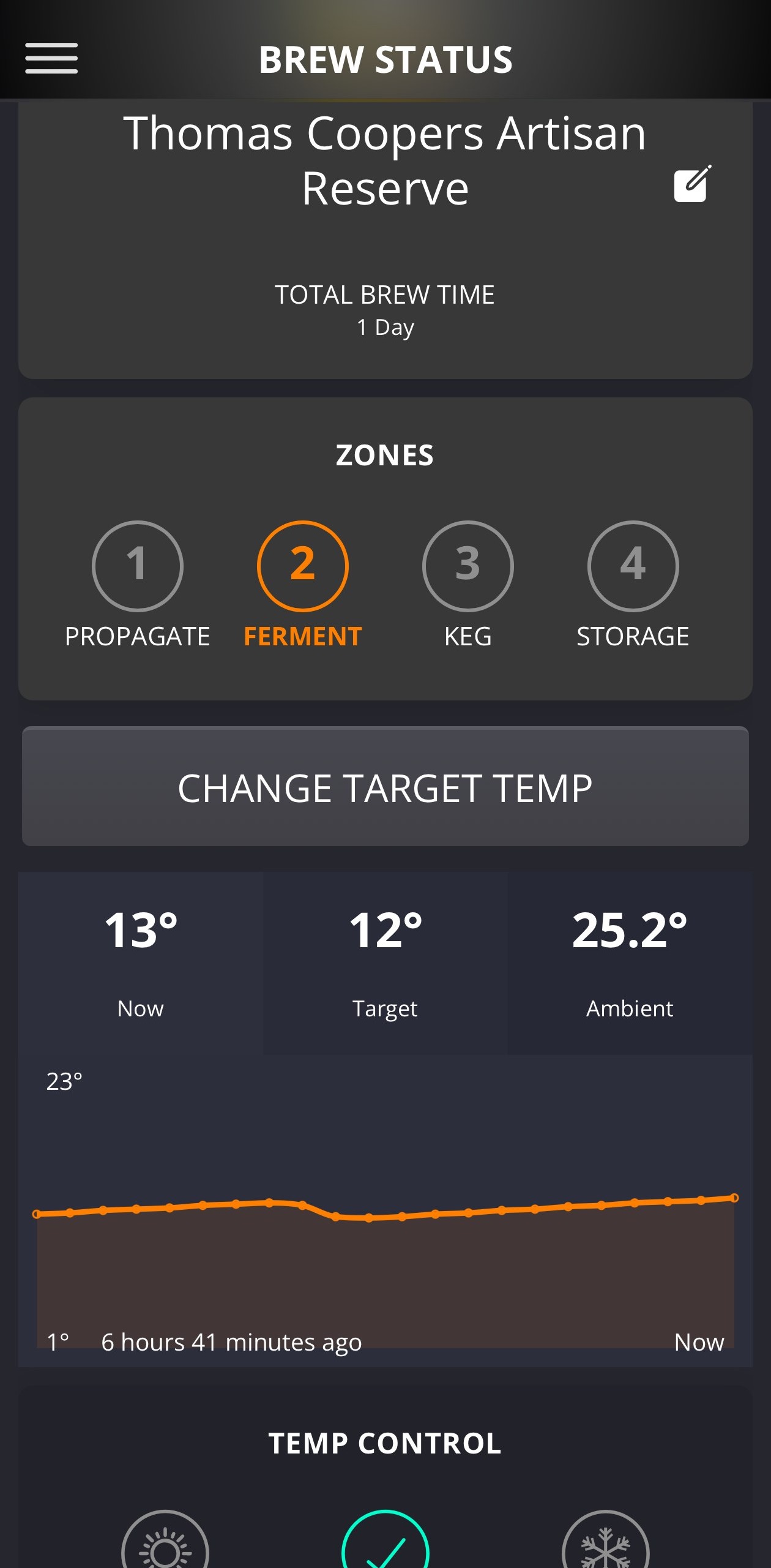
At 60 hours, the measured temperature was 12.6°C (54.7°F) with a 12°C target. The eight-hour graph shows a clear pattern: after the BeerDroid cools the batch, the temperature rises back toward the 12°C range relatively quickly.
Room temperature was around 26°C (79°F), so ambient heat is part of that rebound. Still, the sight-window video also shows fine suspended material and ongoing internal movement. Taken together, the two observations are consistent with an actively fermenting stage in which fermentation heat was still contributing.
3 days 13 hours: still active, probably past the peak
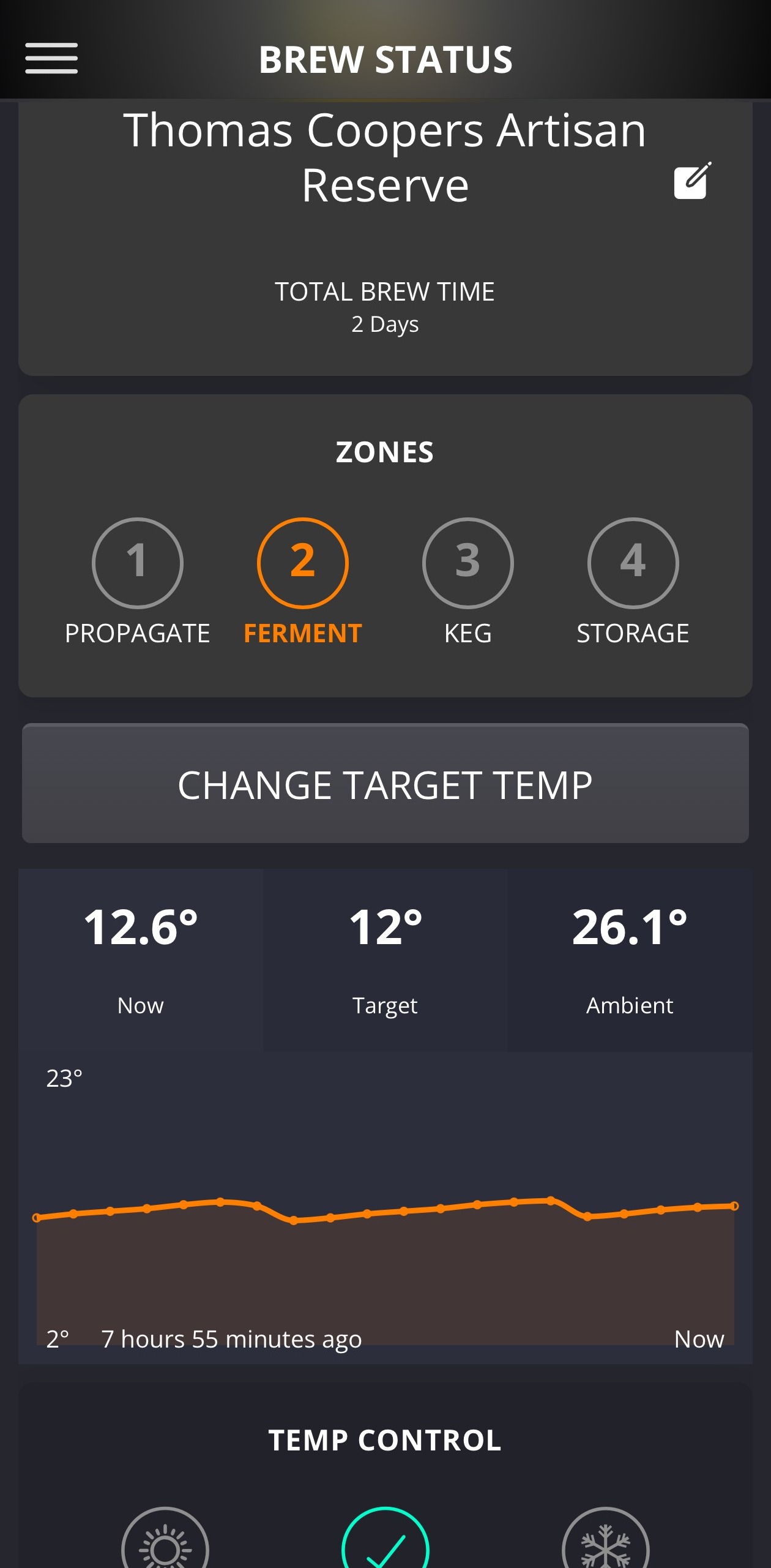
At 85 hours, the BeerDroid was still in Ferment at 12.4°C (54.3°F) against the 12°C target. The temperature still rises again after cooling, so this does not look like a completely flat, finished fermentation.
Through the window, fine particles are still visible, but there is no obvious heavy foaming or strong churning. My interpretation is that fermentation was continuing, while the most vigorous phase was probably already behind it.
4 days 13 hours: both the rebound and the visible motion are gentler
At 4 days 13 hours, the app showed 11.5°C (52.7°F) with a 12°C target. The temperature still recovers after cooling, but the rise looks somewhat gentler than the day-two and day-three checkpoints. The sight-window video also looks quieter, with much less obvious motion.
Yeast Cleanup arrived only a few hours later. Looking back with that result in hand, the gentler graph and quieter appearance are consistent with the main fermentation moving into its late stage. They are not precise enough to predict EOF on their own.
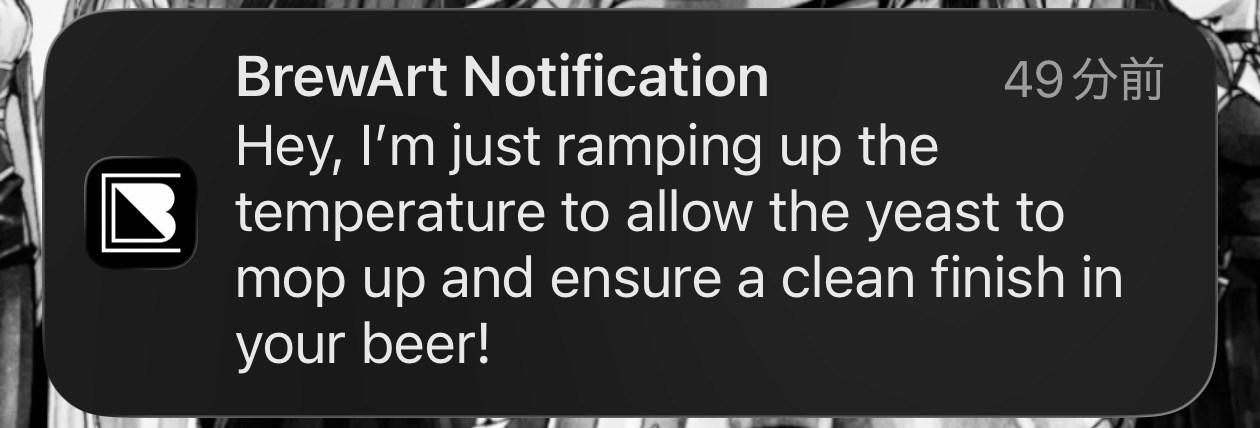
Day 5: Yeast Cleanup, 12°C → 15°C
At roughly day five, the app sent a Yeast Cleanup notification explaining that the BeerDroid was raising the temperature so the yeast could finish its remaining work and leave a cleaner beer. Since I had expected a near-three-week run, seeing a late-fermentation stage this early was a surprise.
From this point on, the temperature rise is not evidence that fermentation suddenly became stronger. The BeerDroid itself changed the target from 12°C to 15°C. For the later comparison article, I will keep this programmed ramp separate from the natural post-cooling rebound seen during the main Ferment stage.
Days 6–7: the target climbed again to 17°C
The 15°C step was not the end of the ramp. By the next day, the app showed a 17°C (63°F) target. At 6 days 5 hours, the beer was 16.0°C; at 6 days 12 hours, it was 17.9°C. It then remained around the 17°C range.
From my observed data, the late-fermentation profile was therefore 12°C → 15°C → 17°C. That was a useful correction to my original mental picture of a lager simply sitting at 12°C all the way to the finish.
Because the setpoint itself is moving in this section, I do not use the upward graph slope as a fermentation-intensity comparison. The more useful observation is that the sight-window motion did not become stronger during the ramp; the beer continued to look relatively calm, which fits a finishing stage better than a renewed main fermentation.
6 days 12 hours: in the 17°C range
At 6 days 12 hours, the app showed 17.9°C (64.2°F) against a 17°C (63°F) target. The eight-hour line rises gradually, but the programmed 17°C target makes that slope unsuitable as a fermentation-heat comparison. Through the window, fine suspended material remains, while obvious bulk motion is limited.
7 days 12 hours: still in Ferment, shortly before Ready to Keg
At 7 days 12 hours, the batch was still in Zone 2 Ferment at 16.5°C (61.7°F) against a 17°C target. The eight-hour graph shows only a modest rebound after a cooling dip and includes an almost-flat stretch. The sight-window video is also comparatively quiet.
Ready to Keg arrived about 16 hours later. In retrospect, this batch therefore ended with a useful pattern: gentler temperature rebound plus quieter visible motion shortly before EOF. I want to see whether the Weissbier and Porter show the same pattern when I compare all three batches.
Day 8: Ready to Keg at 8 days 4 hours
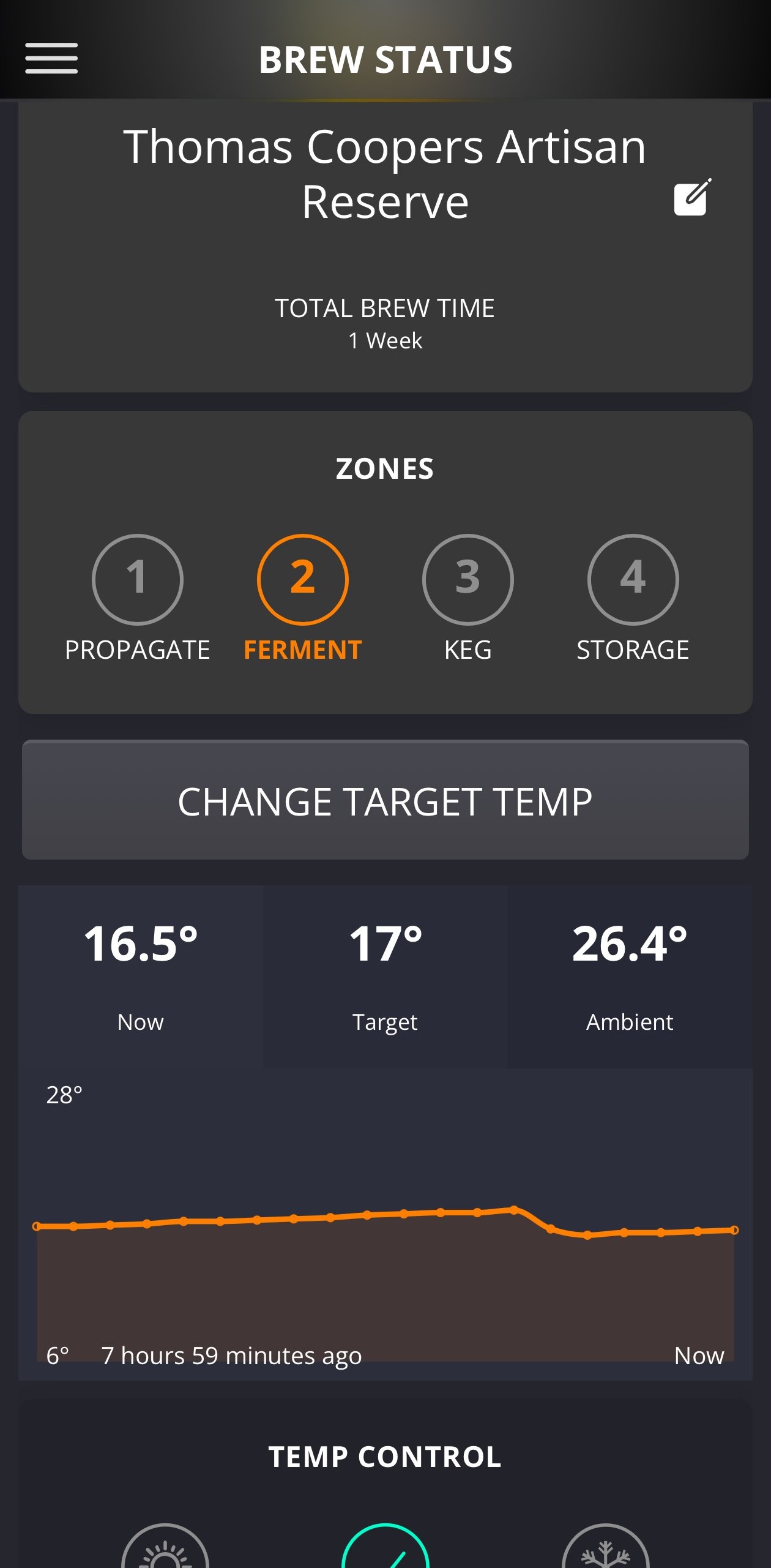
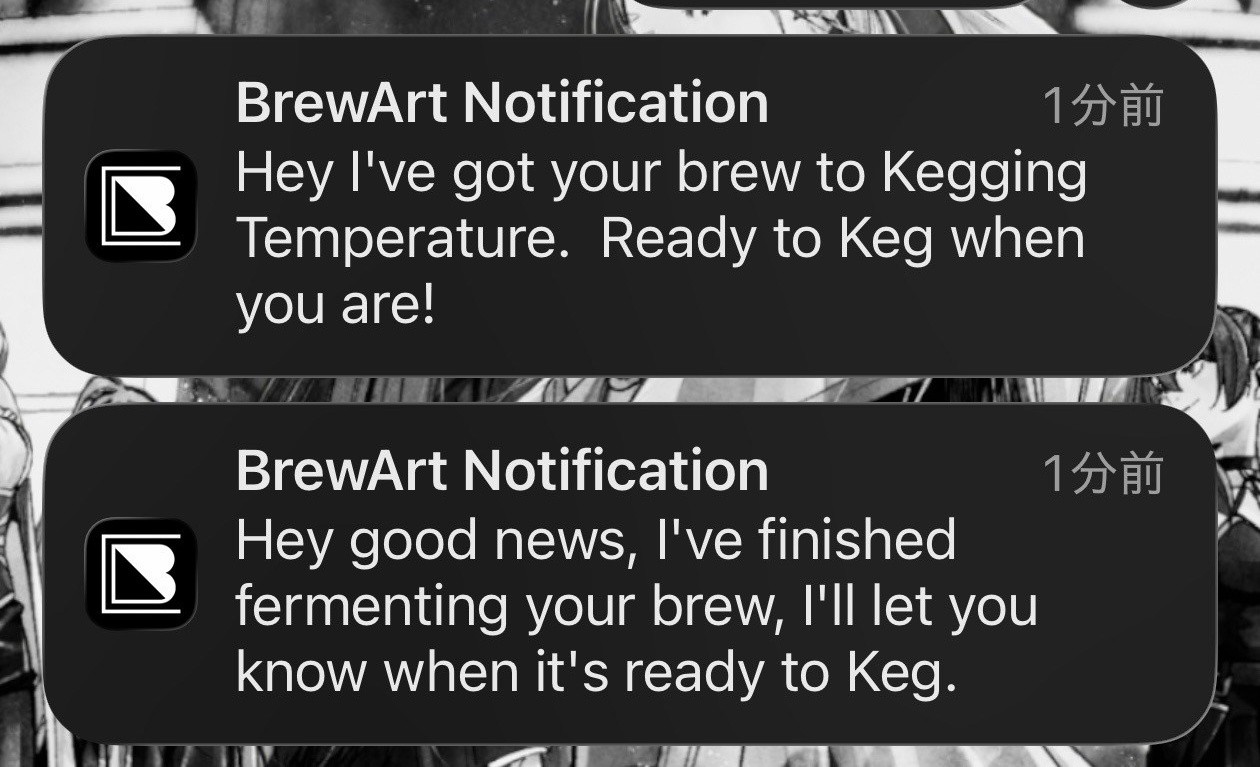
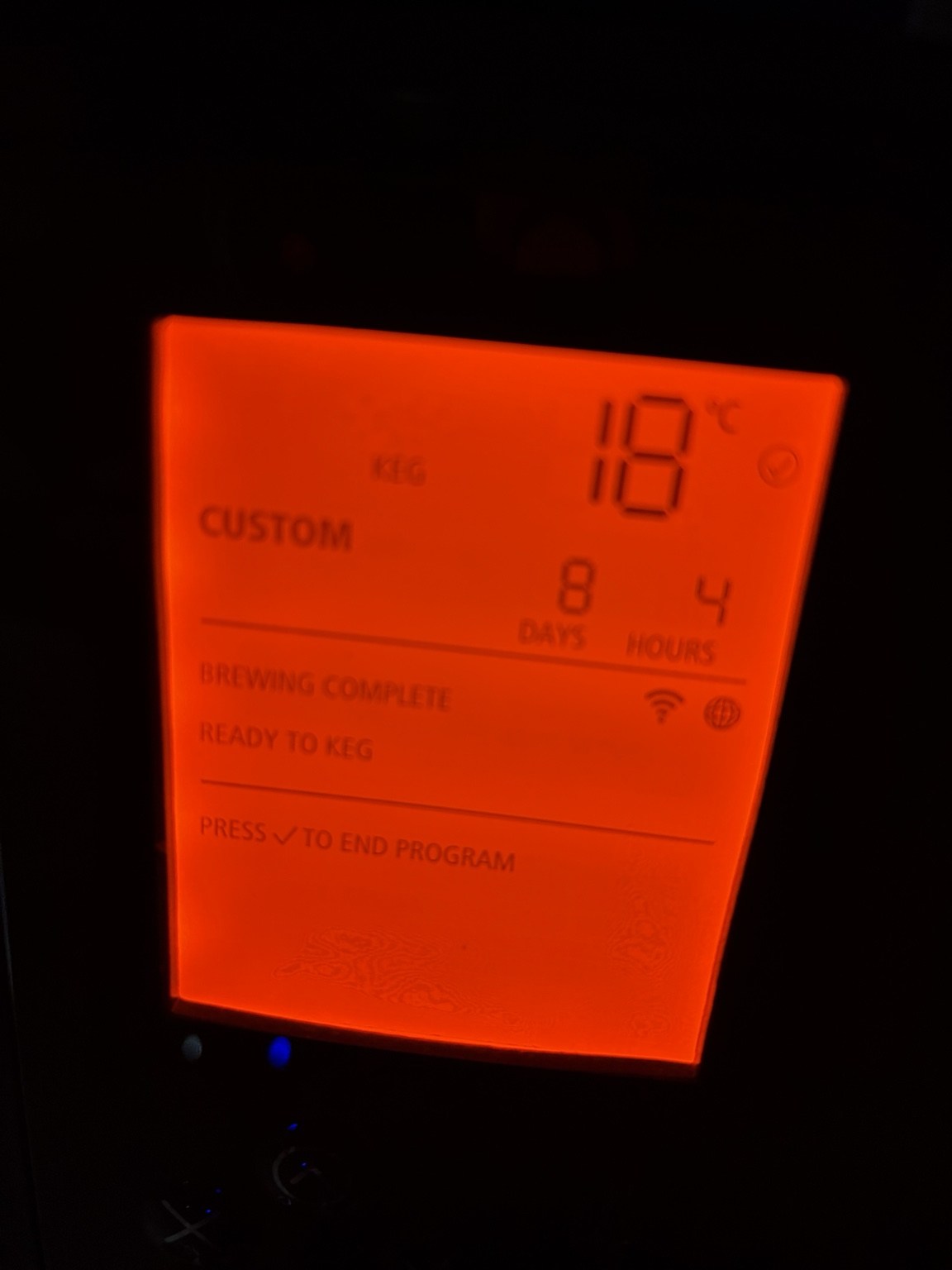
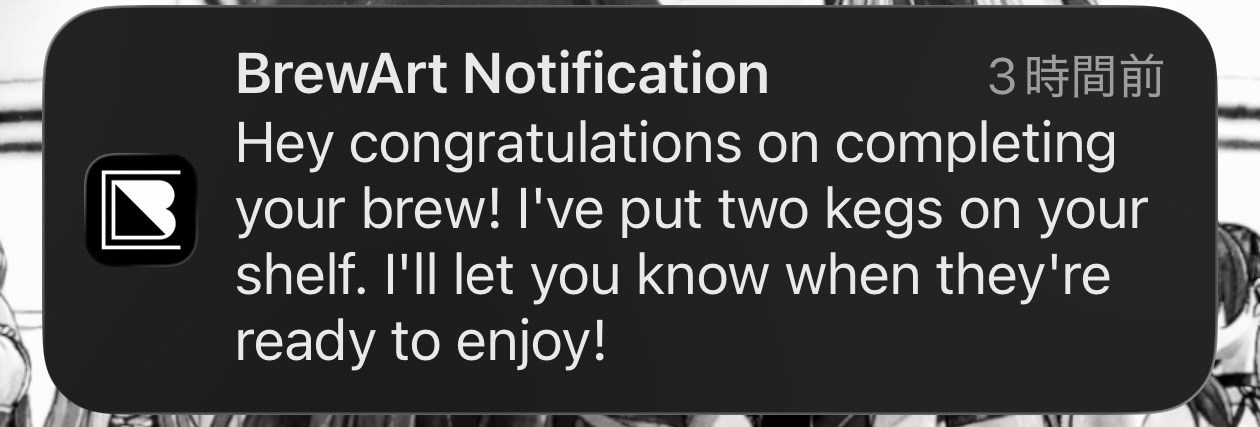
At 7 days 12 hours, the batch was still in Ferment. Later, the BrewArt app sent both the fermentation-complete and Ready-to-Keg notifications. The BeerDroid itself showed BREWING COMPLETE / READY TO KEG, 18°C (64°F), and an elapsed time of 8 DAYS 4 HOURS.
That was earlier than the published 9–20 day estimate. My recent BeerDroid results were six days for the Weissbier, about eight days for Ruby Porter, and just over eight days for this lager. In this run, the lager was not dramatically slower than the porter.
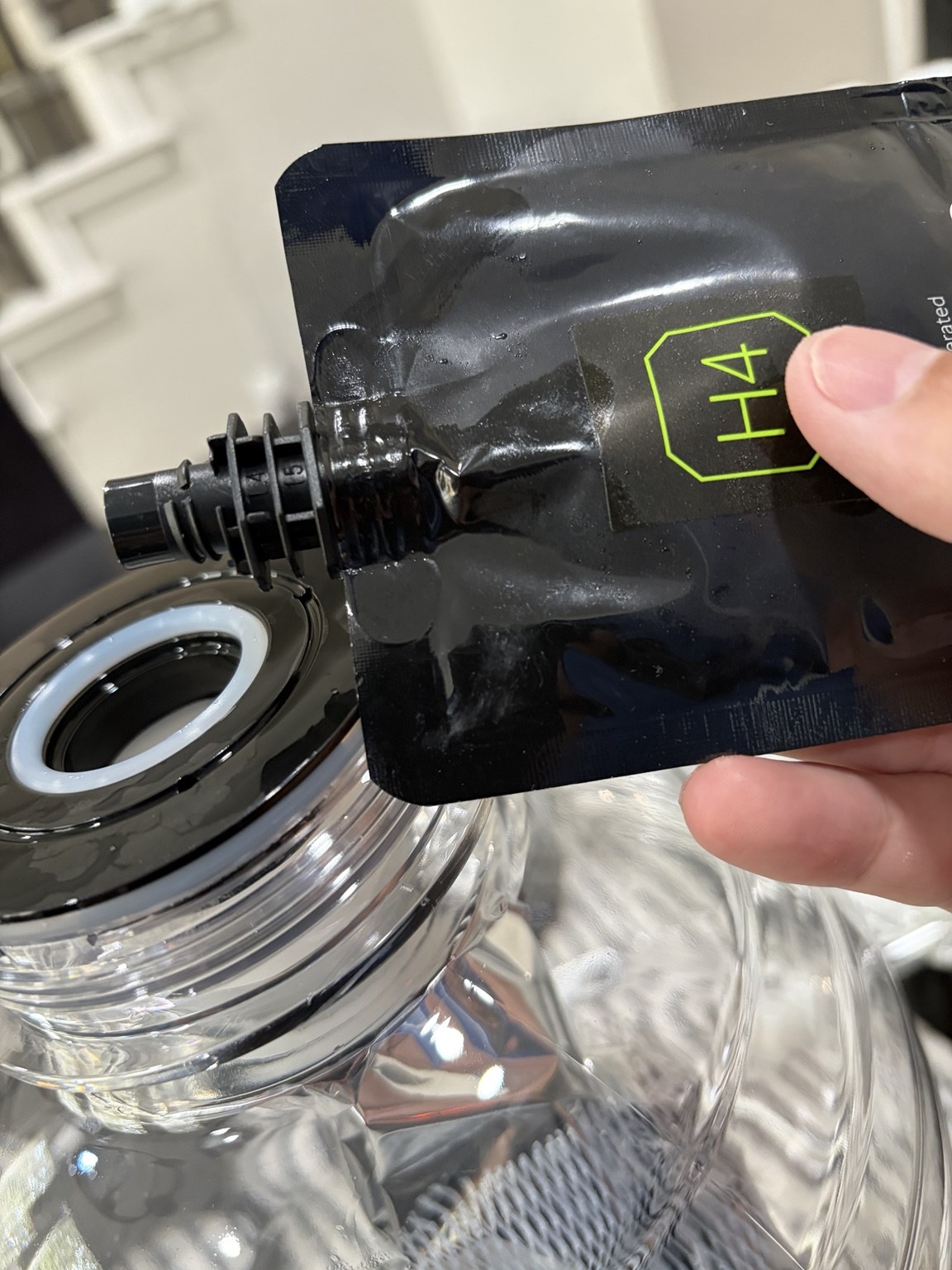
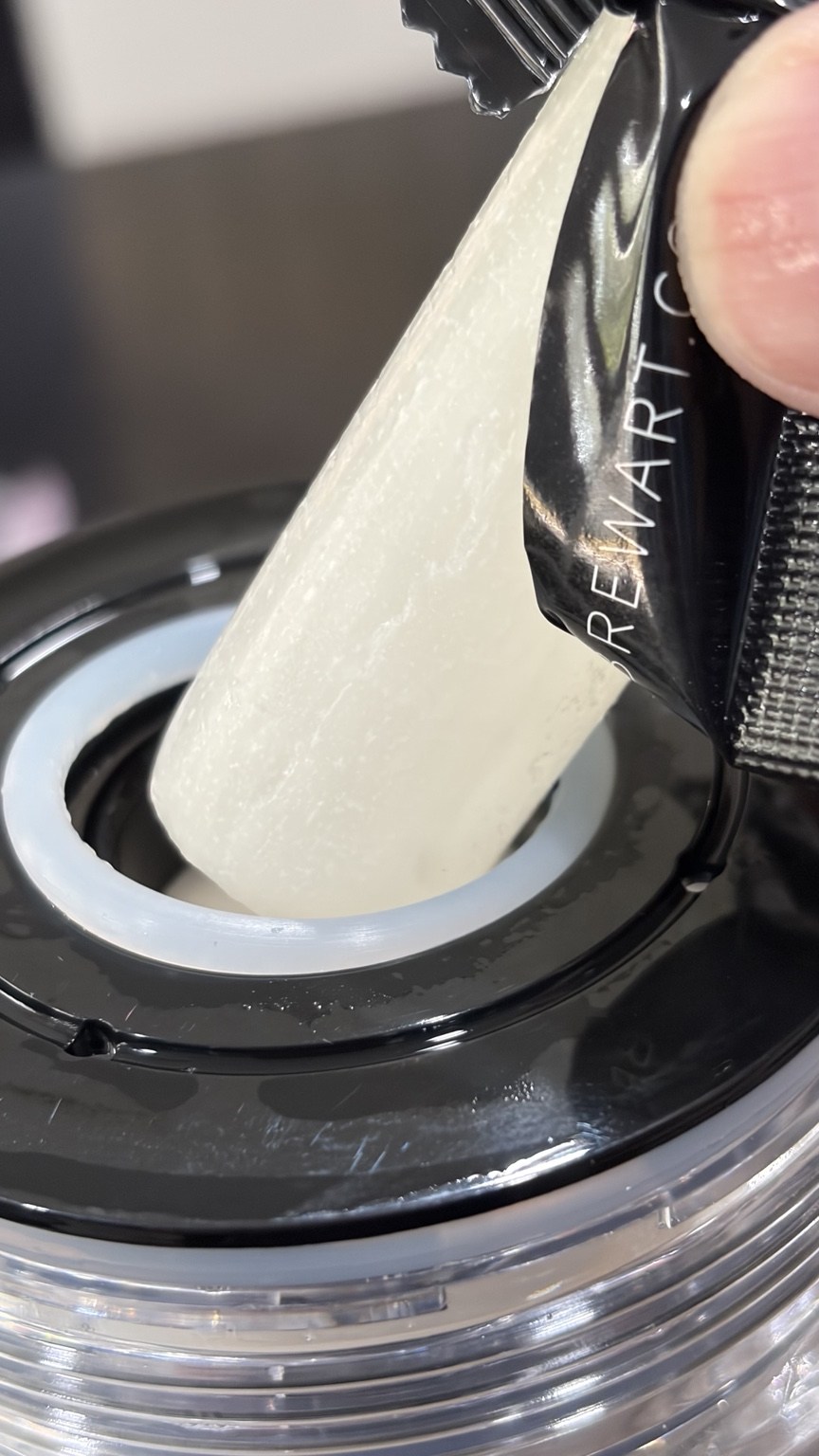
H4 → transfer → primer into two 5 L kegs
I sanitized the parts for two 5 L (1.3 gal) kegs with Star San, then added one H4 pouch to each liner before transferring the beer. BrewArt describes H4 as herbal and spicy, supporting classic Pilsner grain, malt, and bitterness.[3]
After the beer transfer, I added primer to each keg and sealed them. BrewArt specifies at least 14 days of secondary fermentation after kegging for this BrewPrint.[1]
A quick post-keg sample: beer left in the BeerDroid tap
After transferring the batch into the two 5 L kegs, I drew a small amount from the beer left inside the BeerDroid through the tap. Because this was what remained low in the vessel after kegging, the sample showed a bit more yeast and fine residue, but the color was still a bright gold. The flavor was clearly young, yet I still picked up a light citrus/fruity impression.
BrewArt's description mentions bright golden-yellow color, fresh-cut lime and orange peel, and a crisp finish.[1] This quick post-keg check seemed to be pointing in that direction, but the beer still had conditioning ahead of it in the kegs, so I am not treating this as the final tasting result.
Conditioned tasting: bright green-apple character, clean and crisp
When I came back to the beer later and poured it from the keg, the flavor had settled into a much cleaner profile than the young post-keg sample. The first thing that stood out was a bright, green-apple-like character. Bitterness was low, the palate was clean, and the finish was crisp. There was very little heaviness, making this the kind of lager that was extremely easy to keep drinking.
The appearance had changed noticeably from the young sample drawn from the bottom of the BeerDroid after kegging. The conditioned beer poured a gold-to-amber color with much less visible suspended material. From the BrewFlo tap, fine bubbles built into a white layer of foam at the top of the glass.
- Character: bright, green-apple-like fruitiness
- Bitterness: low
- Palate: clean
- Finish: crisp and refreshing
- Drinkability: very easy to keep drinking
BrewArt describes this BrewPrint with lime and orange-peel notes and a crisp finish.[1] My own glass leaned more toward green apple than citrus, but the clean, crisp direction matched the overall profile well.
What was left inside the BeerDroid
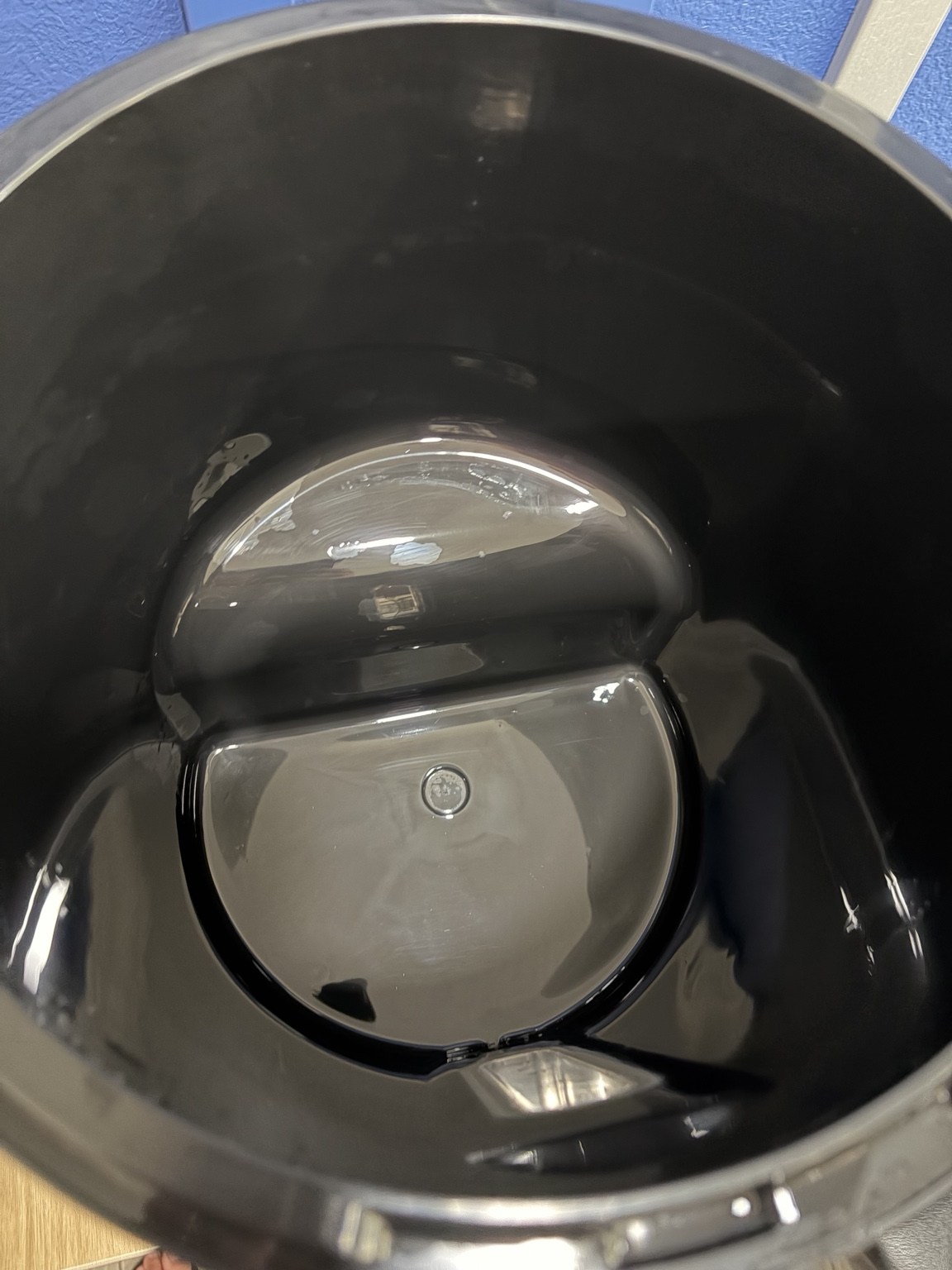
After transfer, a ring of fermentation residue remained around the old liquid line and near the cooling section. It was less sticky than the Porter residue, but the fermentation trail was easy to see. I cleaned the BeerDroid the same day so it would be ready for the next batch.
What this batch showed
- BrewArt's published estimate is 9–20 days, but this batch reached Ready to Keg in 8 days 4 hours.
- The standard lager program starts with 12 hours of Propagate at 22°C (72°F), then shifts into Ferment with a 12°C (54°F) target.[2]
- From my brew-start temperature, it took about 37 hours to settle into the 12°C range.
- On days two and three, the temperature rebounded clearly after cooling and fine motion remained visible through the window. By days four through seven, both the rebound and the visible motion became gentler, consistent with a batch moving toward late fermentation.
- Yeast Cleanup began around day five, with the target stepping from 12°C to 15°C and later to 17°C (63°F). Those programmed ramps must be separated from fermentation-heat interpretation.
- The young post-keg sample was bright gold with a light citrus/fruity character. In the later conditioned tasting, the beer had settled into bright green-apple-like fruitiness, low bitterness, and a clean, crisp finish.
- I added H4 before the beer transfer and primer after transfer, then split the batch between two 5 L kegs.
- My recent BeerDroid runs were about six days for Weissbier, eight days for Porter, and just over eight days for this lager—so this lager was not the long outlier I expected.
Conclusion
I planned Thomas Coopers Artisan Reserve as the long lager slot in my brewing schedule. Instead, it reached Ready to Keg in 8 days 4 hours—earlier than BrewArt's 9–20 day estimate and roughly in line with my Porter.
The short calendar time did not mean it behaved like one of my ale-program batches, such as the porter. The BeerDroid spent the first 12 hours in Propagate at 22°C, then cooled into a 12°C fermentation range, held there for several days, and finally stepped up through 15°C and 17°C before the 18°C kegging stage. Following those checkpoints made the lager-program process much more visible than simply watching the day counter.
The young post-keg sample started with a light citrus/fruity impression. When I returned to the conditioned beer later, it had become much more defined: a bright green-apple-like character, low bitterness, a clean palate, and a crisp finish. For a lager I expected to be the slowest batch, the final beer ended up feeling surprisingly light and easy to drink.
References
- BrewArt, Thomas Coopers Artisan Reserve (BrewPrint contents, ABV, color, bitterness, lager program, 9–20 day estimate, minimum secondary-fermentation time, and product description)
- BrewArt, BeerDroid Instruction Manual (lager Propagate 22°C, Ferment 12°C, Keg 18°C, Store 4°C, and brewing-zone operation)
- BrewArt, Hops 4 (herbal and spicy Pilsner-oriented hop description)
- BrewArt, Brewing Ingredients (Yeast 7 clean aroma/flavor and clear finish)
- BrewArt, Keg Refill Pack V1 (5 L PET kegs with caps and spears)
Questions or comments about this article?
If you have tried the same thing or noticed something different, feel free to send a message. Add your email address only if you would like a reply.
I use the website for complete write-ups after an experiment reaches a stopping point. In-progress observations are posted on X at @ConyDIYHouston.