
I Brewed a Hoegaarden-Style Witbier in a BeerDroid — With RAPT Pill Data
Could I make a refreshing, citrus-and-spice Hoegaarden-style Belgian witbier at home? I brewed 10 L (2.6 US gal) with BrewArt ingredients, added coriander and bitter orange peel, controlled fermentation temperature using a BeerDroid, and tracked specific gravity and temperature with a separate RAPT Pill. After EOF, my sample at kegging tasted refreshingly sweet and genuinely good. The orange aroma was a little faint and a mild bitterness lingered. Here's the process, along with the photos, videos, and numbers.
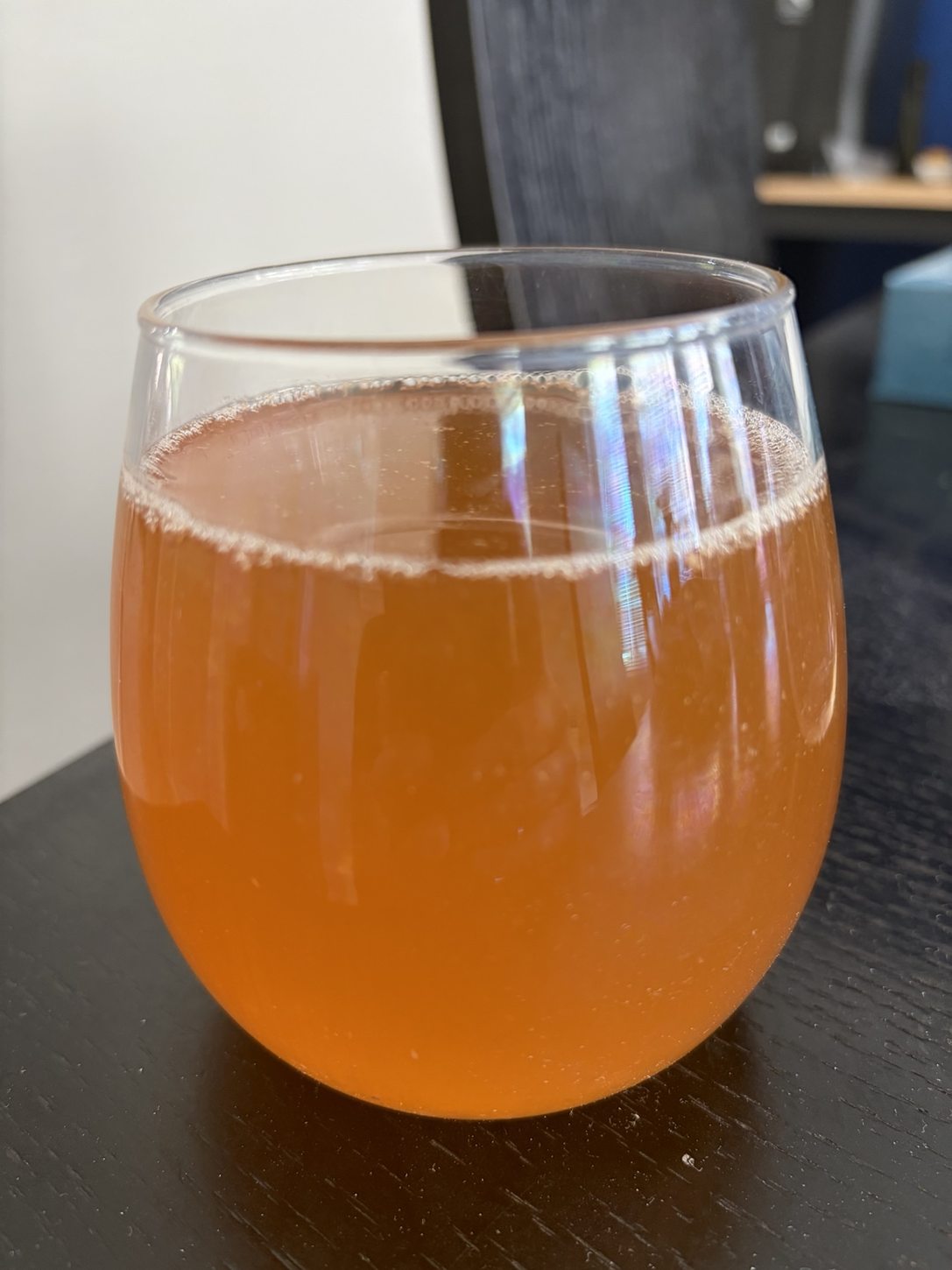
The result at a glance
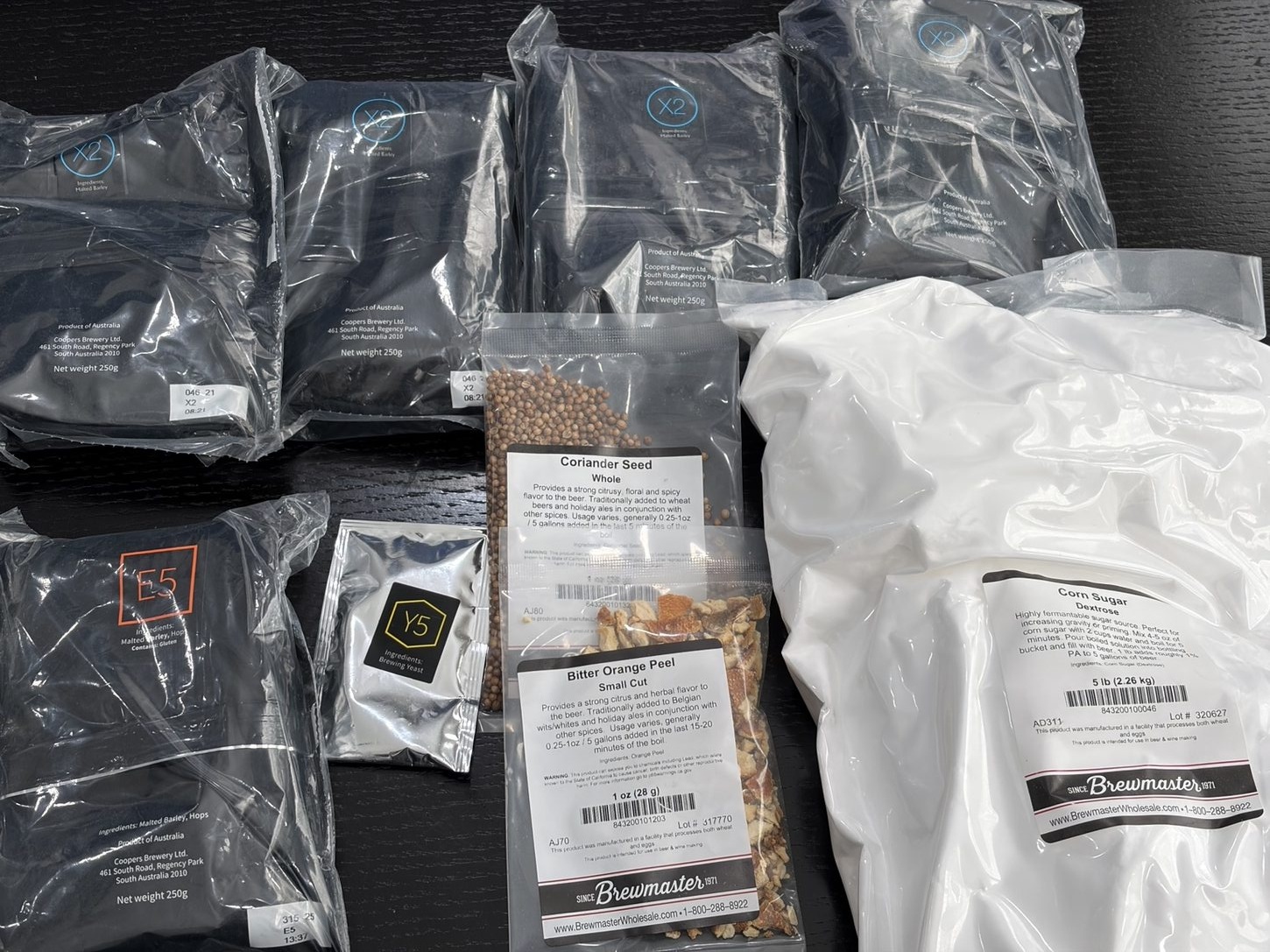
| Batch | 10 L (2.6 US gal) made with BrewArt X2 × 4 / E5 × 1 / Y5 × 1 |
|---|---|
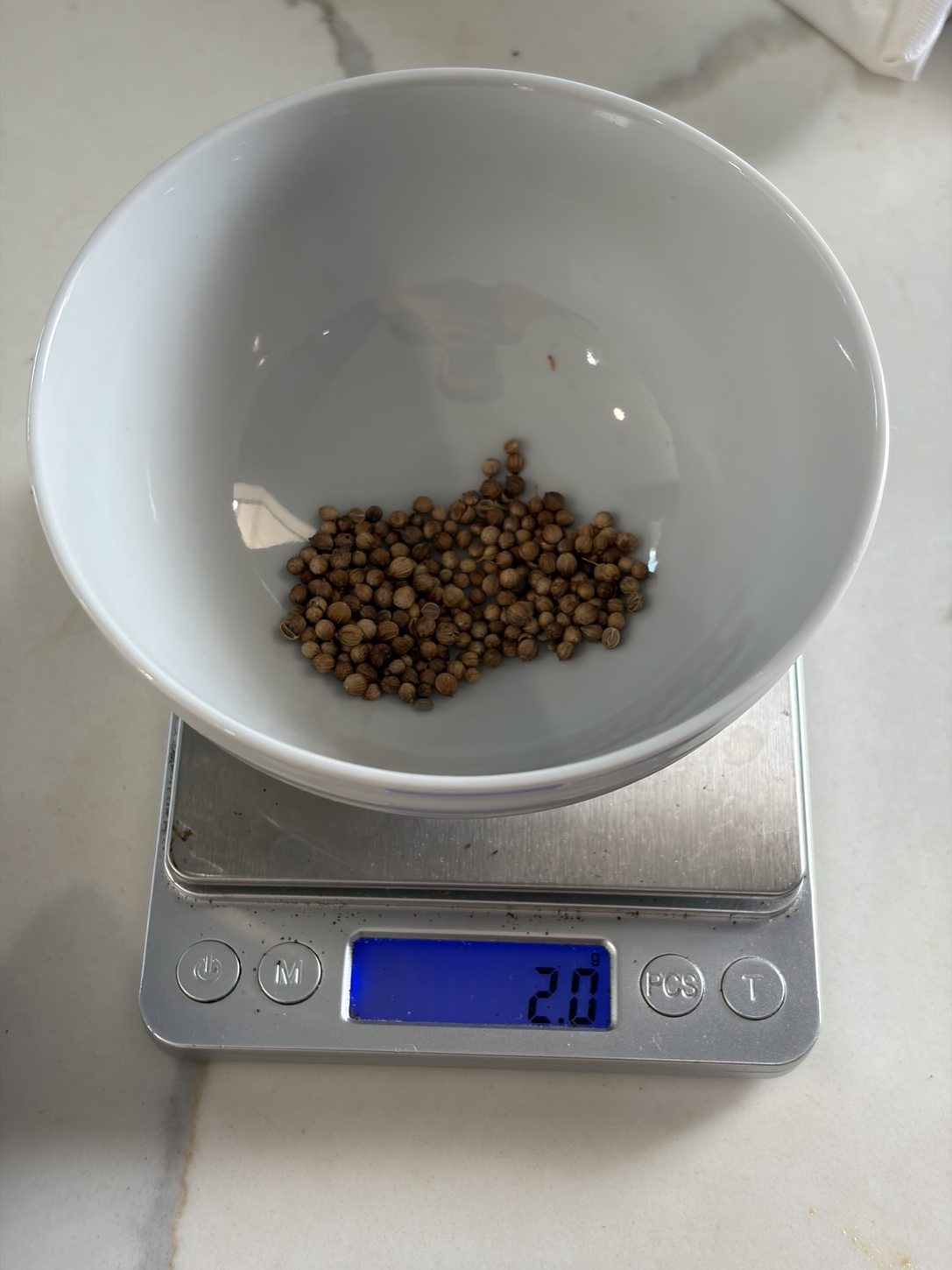
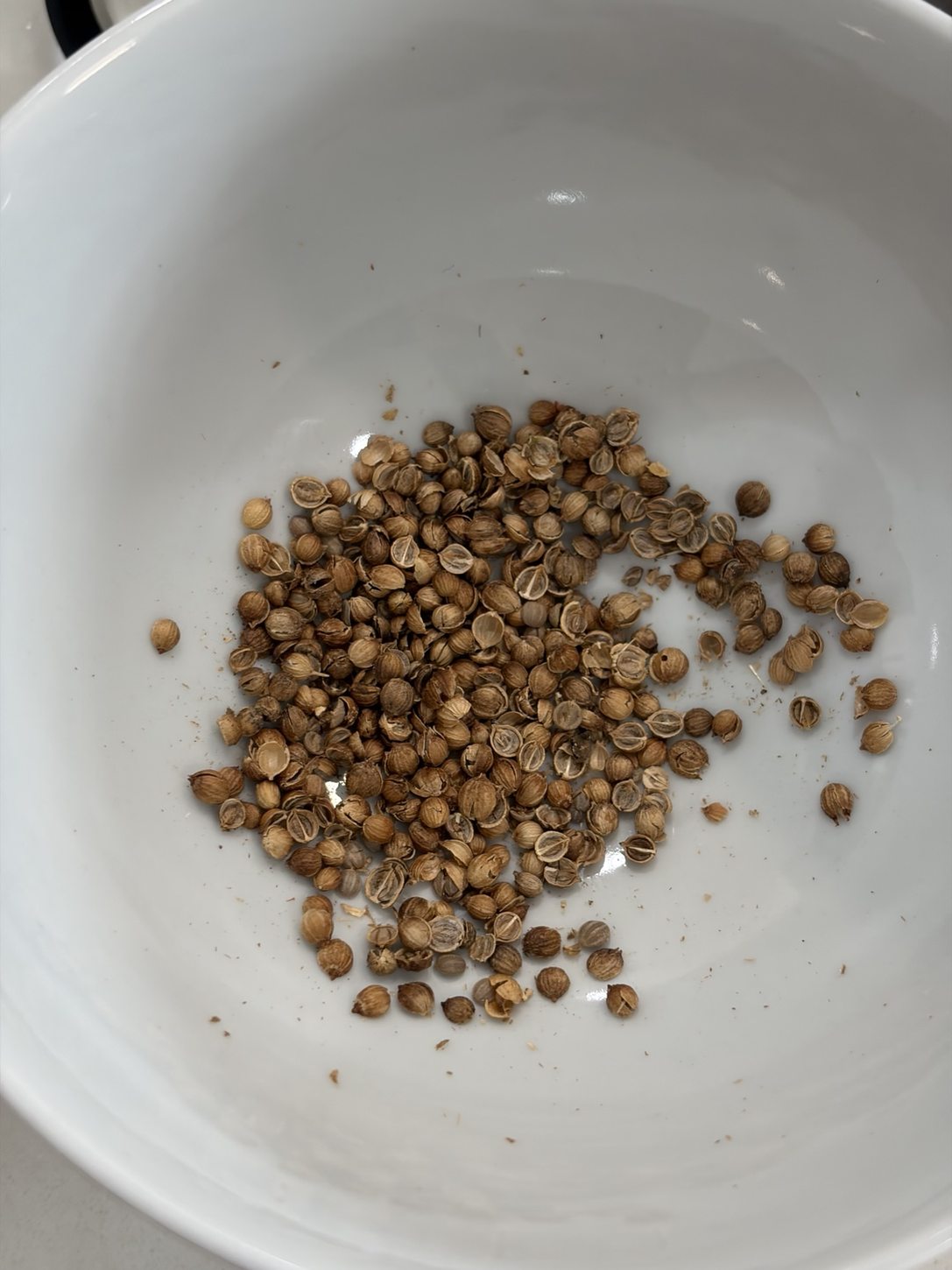
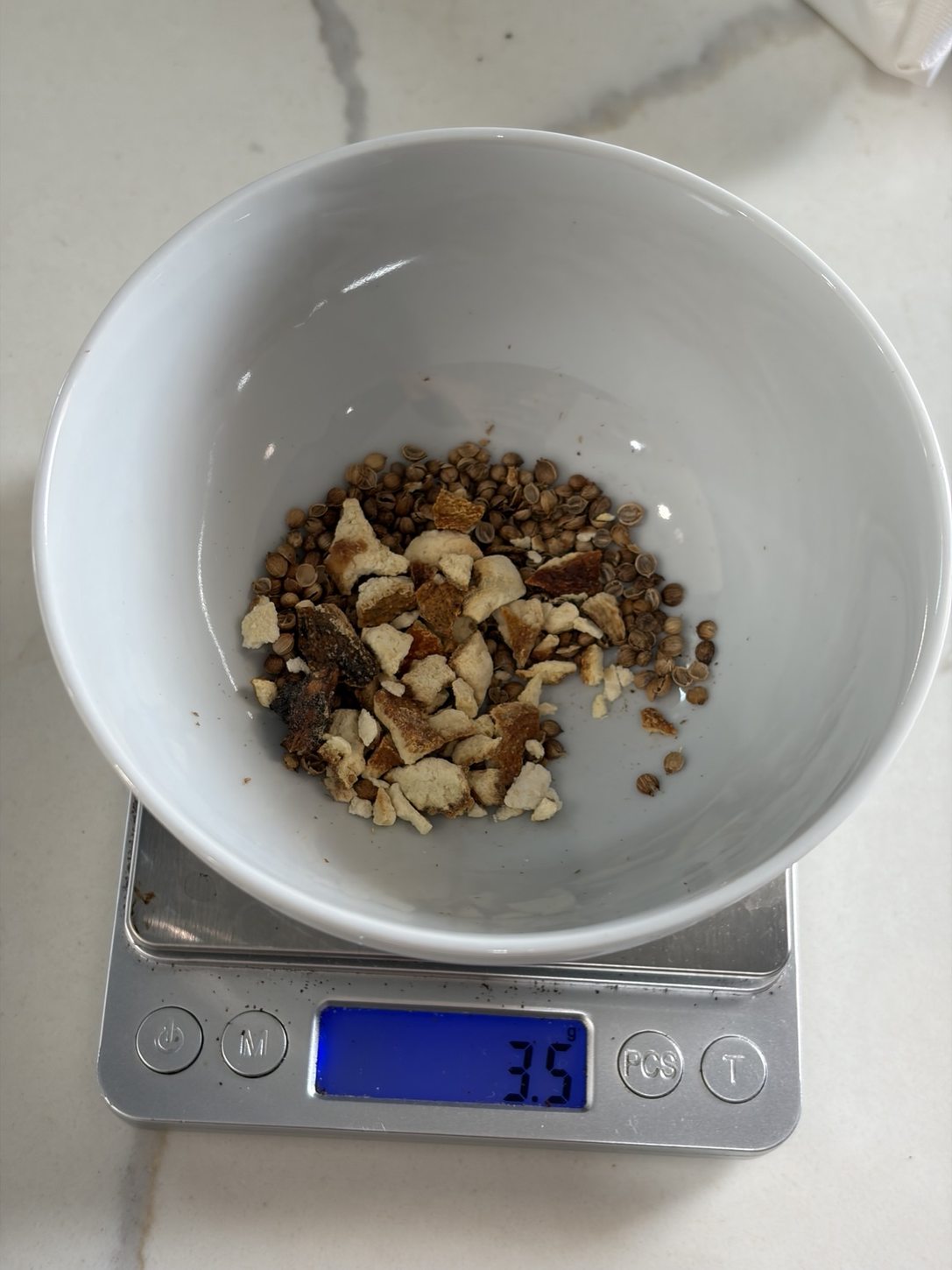
| Added spices | 2.0 g lightly crushed coriander and 3.5 g bitter orange peel. I reset the scale after weighing the coriander, then measured the orange peel separately. |
| BeerDroid targets | 21°C (70°F) propagation → 17°C (63°F) fermentation |
| RAPT Pill | Peak displayed SG 1.0456 on Day 2; approximately 1.016 from Day 5 onward. The peak is not a verified original gravity. |
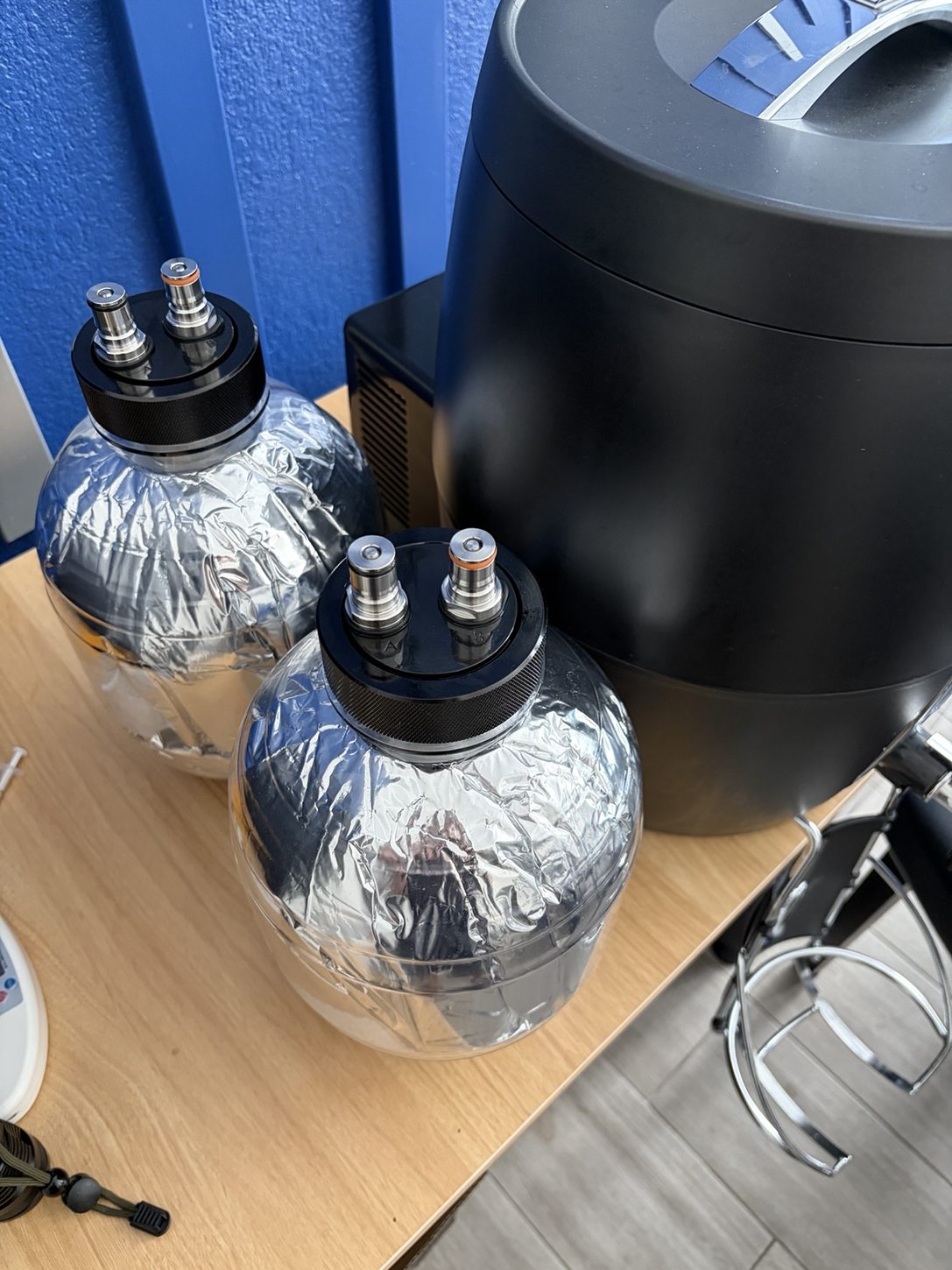
| EOF and transfer | BeerDroid reported EOF and Ready to Keg. Transferred into two BrewArt 5 L kegs and checked the filled amount by weight. |
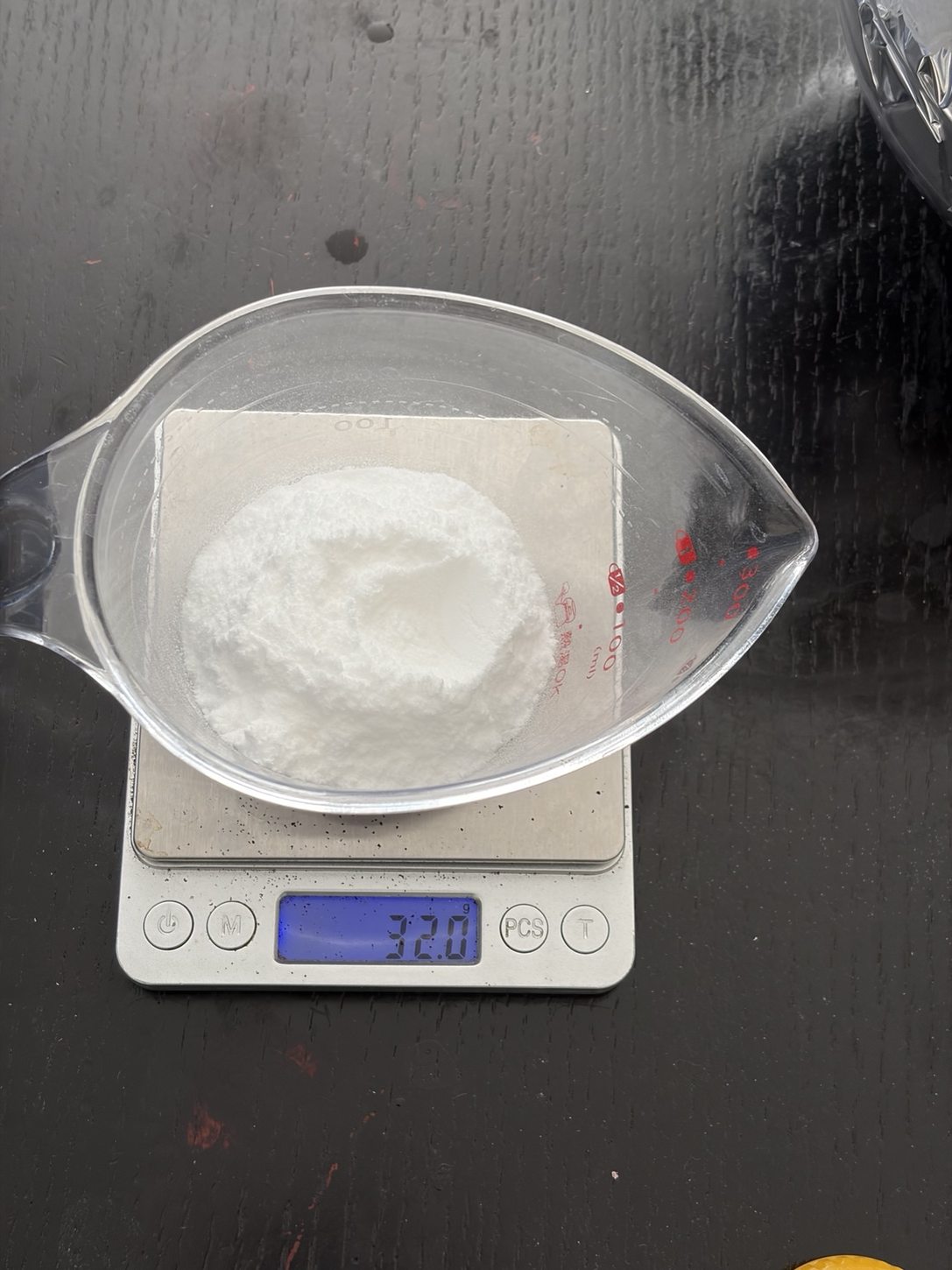
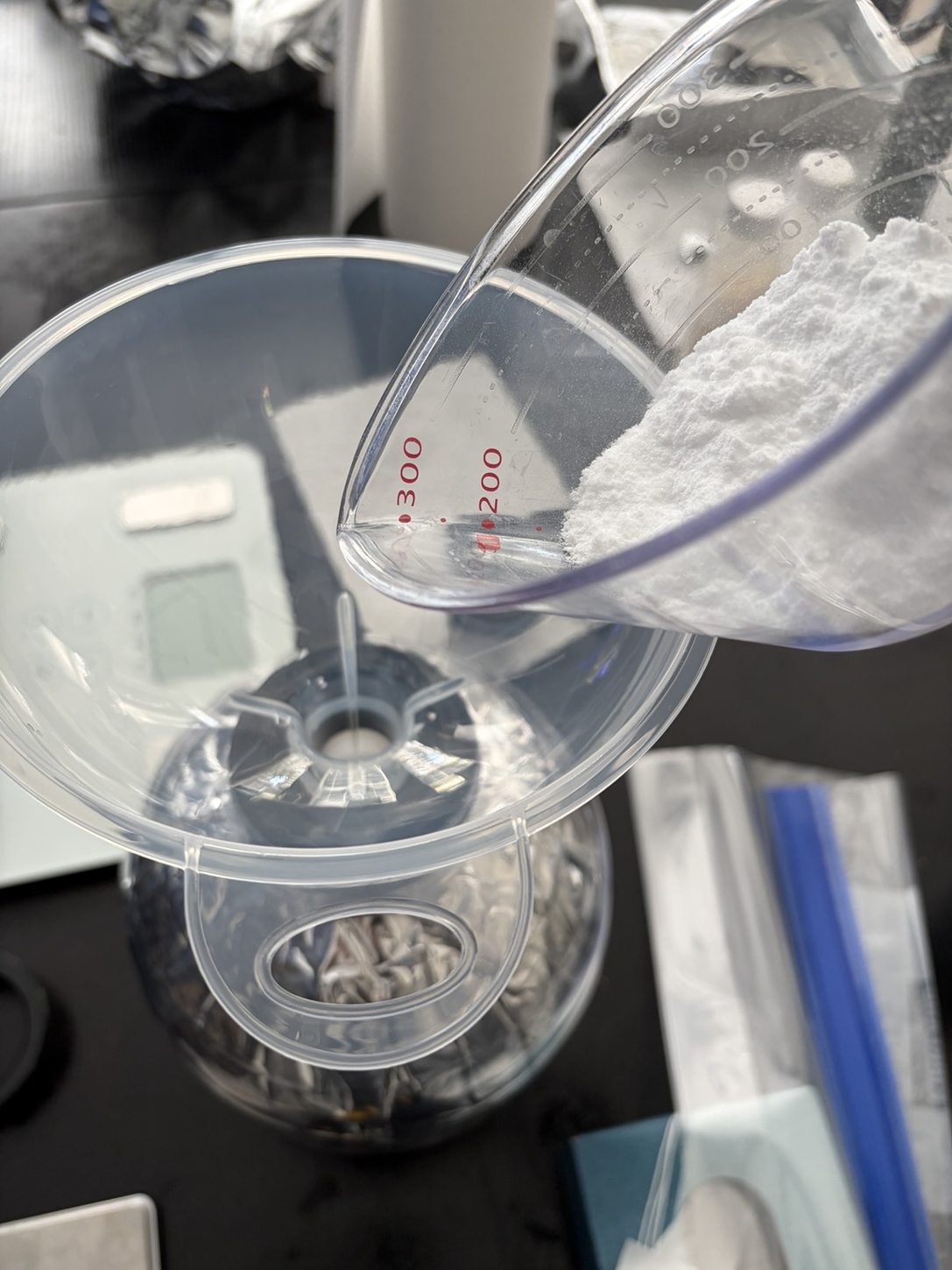
| Priming | Switched from carbonation drops to dextrose: 32 g per keg × 2 = 64 g total. |
| First taste | Refreshing sweetness and good flavor; relatively weak orange aroma and a lingering mild bitterness of uncertain origin. |
Day 1 starts with the first valid RAPT reading; it is not a calendar date. Final ABV and carbonation volumes were not measured.
The starting point: BrewArt Team's Hoegaarden Wheat Clone
The starting point was the Hoegaarden Wheat Clone published by BrewArt Team in the BrewArtist Community. Their 10 L recipe uses 1× E5 / 4× X2 / 1× Y5 / 2 g crushed coriander seed / 3.5 g dried Curaçao orange peel with the regular Ale program, and steeps the spices in 1 L of hot water for 30 minutes before adding the infusion to the BeerDroid.
I used 1× E5 / 4× X2 / 1× Y5 / 2.0 g coriander / 3.5 g bitter orange peel, matching the source recipe quantities. After weighing the coriander, I reset the scale and measured the orange peel separately at 3.5 g. I also added a RAPT Pill so I could compare the BeerDroid temperature history with an independent gravity trend.
Designing a BeerDroid Witbier recipe in Brewfather →
Comparing BrewArt-based and DIY ingredient costs →
Ingredients and equipment | Links
These are the ingredients and equipment used for this batch. BrewArt items link to BrewArt; spices, dextrose, the folding thermometer, and the nylon mesh bag to MoreBeer; and the RAPT Pill to KegLand.
- BrewArt Element 5 (E5) — 1 pack (250 g / 8.8 oz)
View at BrewArt → - BrewArt Enhancer 2 (X2) — 4 packs (250 g ×4)
View at BrewArt → - BrewArt Yeast 5 (Y5) — 1 pack (10 g / 0.35 oz)
View at BrewArt → - Coriander Seed (Whole) — 2.0 g (0.07 oz) used
View at MoreBeer → - Bitter Orange Peel — 3.5 g (0.12 oz) used
View at MoreBeer → - BrewArt BeerDroid — 10 L brewing and temperature control
View BeerDroid at BrewArt → - Folding Instant Read Digital Thermometer — purchased for spot temperature checks during brewing
View at MoreBeer → - Drawstring Mesh Bag - 9 in. × 12 in. — reusable nylon mesh bag used for the coriander and orange-peel infusion
View at MoreBeer → - RAPT Pill Hydrometer & Thermometer — continuous gravity and temperature logging
View at KegLand → - BrewArt Complete Kegging Pack — two 5 L PET kegs, caps, spears, filling tube, and related parts
View at BrewArt → - Five Star Star San — used to sanitize the BeerDroid and beer-contact kegging parts
Five Star Star San → - Dextrose / Corn Sugar — 32 g per nominal 5 L keg ×2
View at MoreBeer →
Recipe reference: BrewArt Team — Hoegaarden Wheat Clone →. This batch also used 2.0 g coriander and 3.5 g bitter orange peel, matching the source spice quantities.
Preparation: cleaning, sanitizing, and weighing the spices
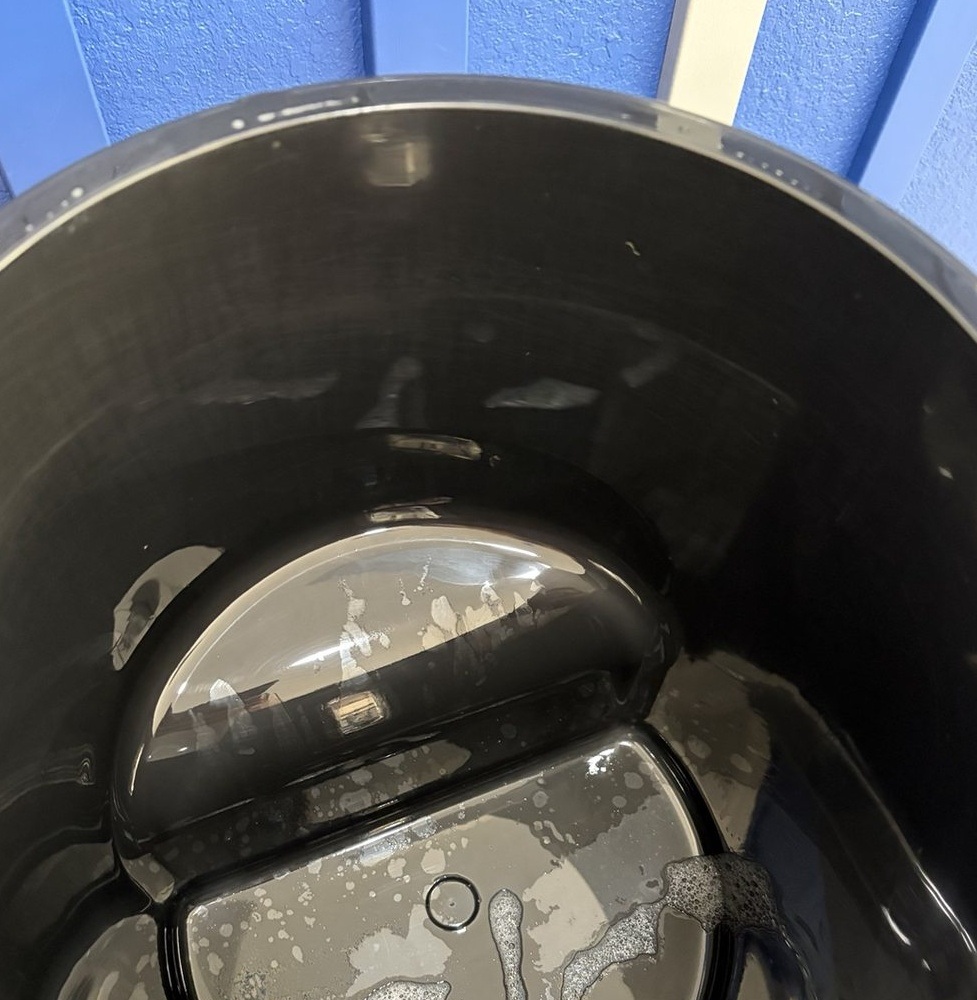
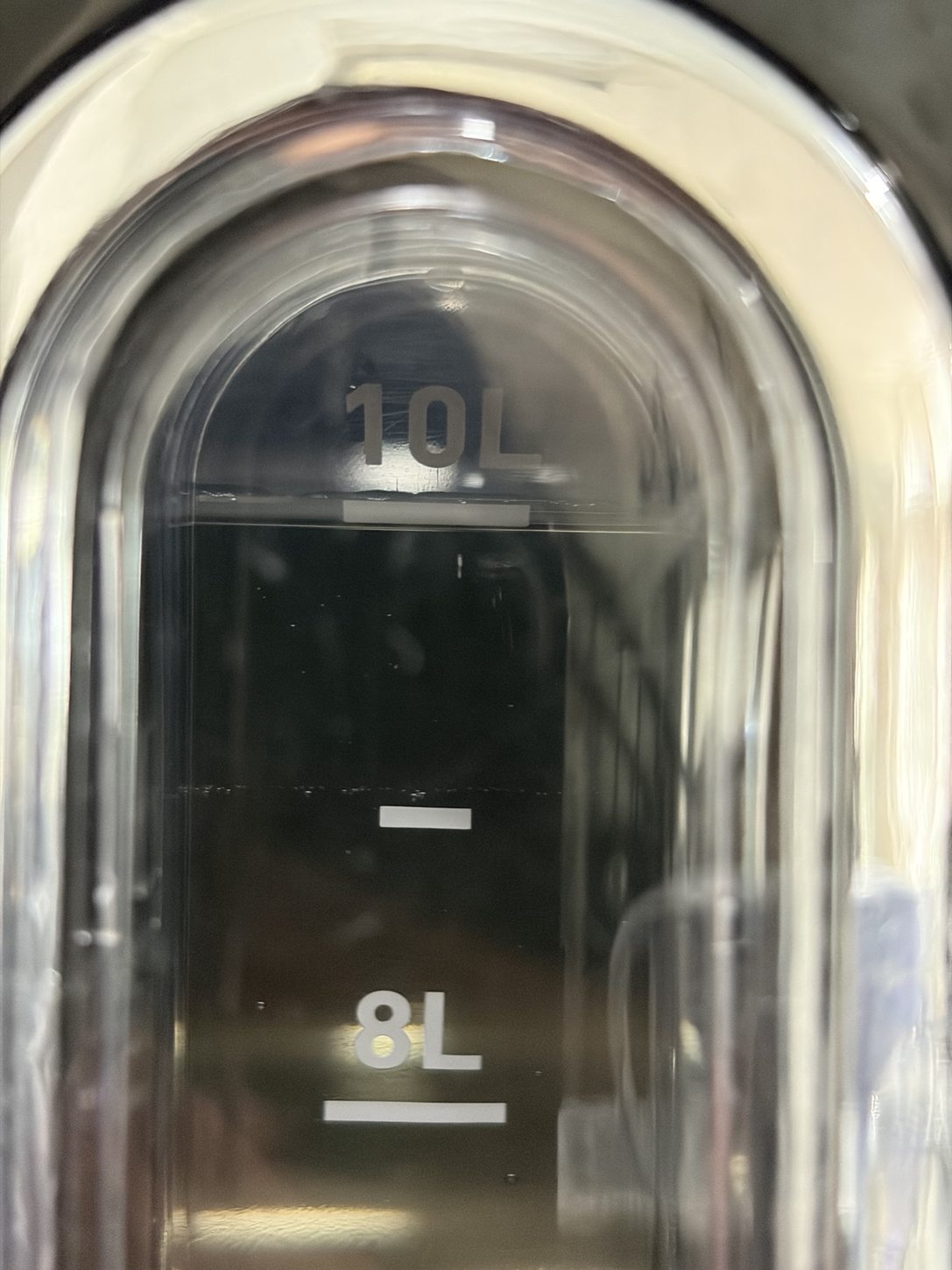
I cleaned and sanitized the BeerDroid interior and beer-contact components, checked the 10 L fill mark, and prepared the spices separately. Measuring small quantities made the additions repeatable.
Steeping the spices in 1 L of hot water for 30 minutes
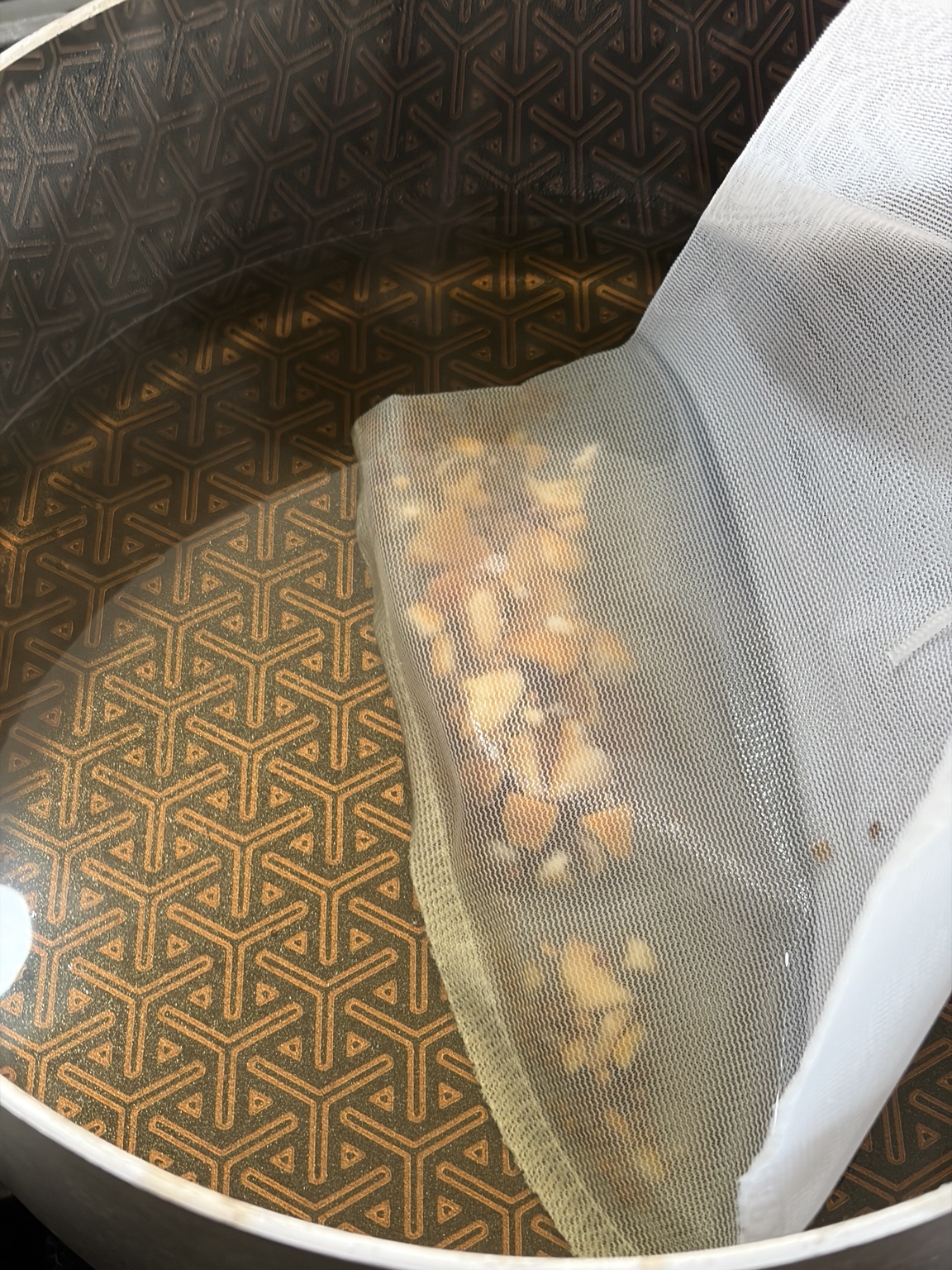
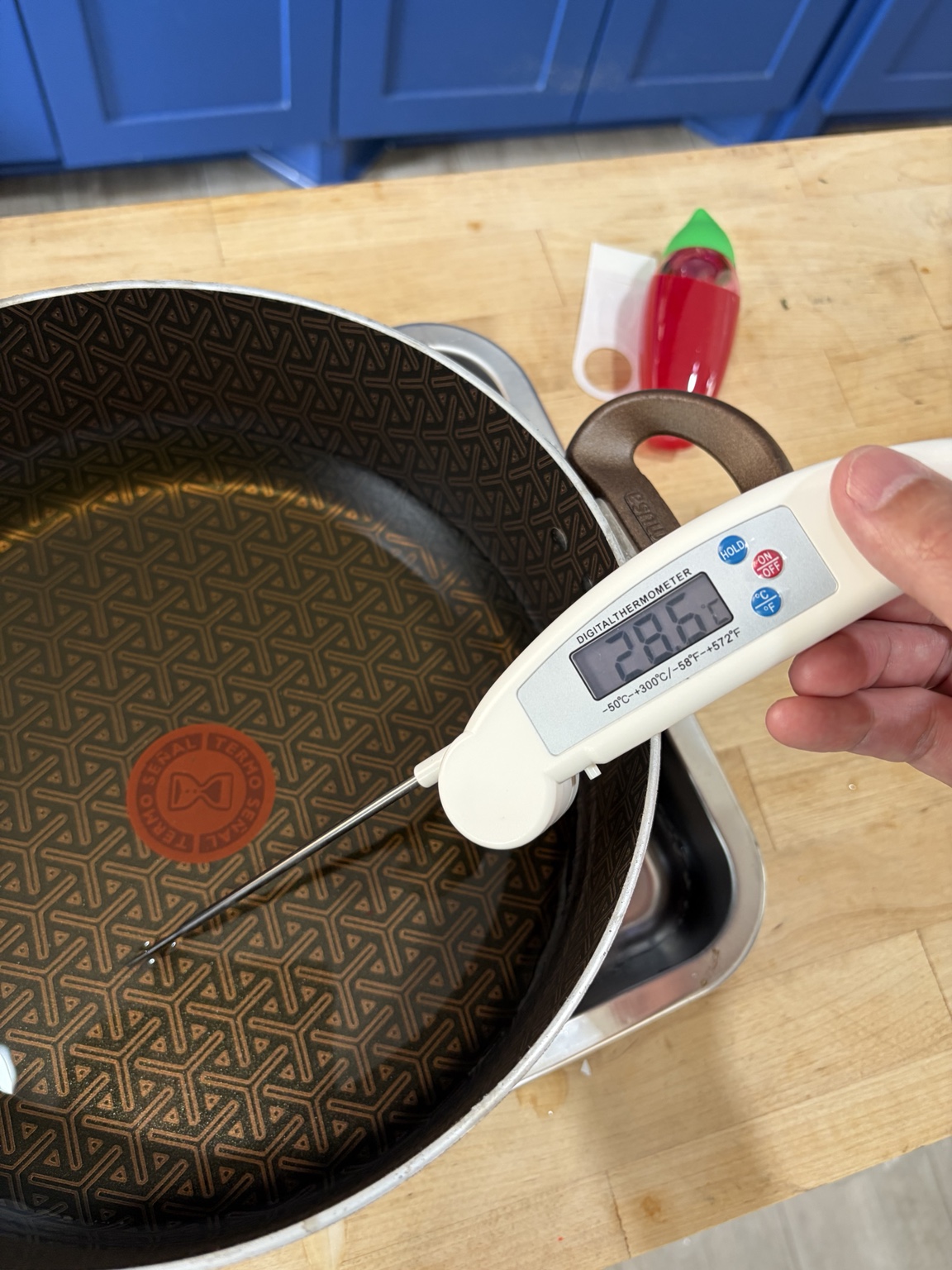
Following BrewArt Team's original method, I brought 1 L of water to a boil, turned off the heat, added 2.0 g coriander and 3.5 g bitter orange peel, covered the pot, and steeped them for 30 minutes. I placed the spices in the 9 × 12 in. nylon mesh bag so I could lift the solids out cleanly afterward. The source method then adds the spice infusion to 9 L of water in the BeerDroid and brings the liquid down to 22°C (72°F) before adding the yeast, Element, and Enhancers. [2]
Adding the BrewArt ingredients and the RAPT Pill
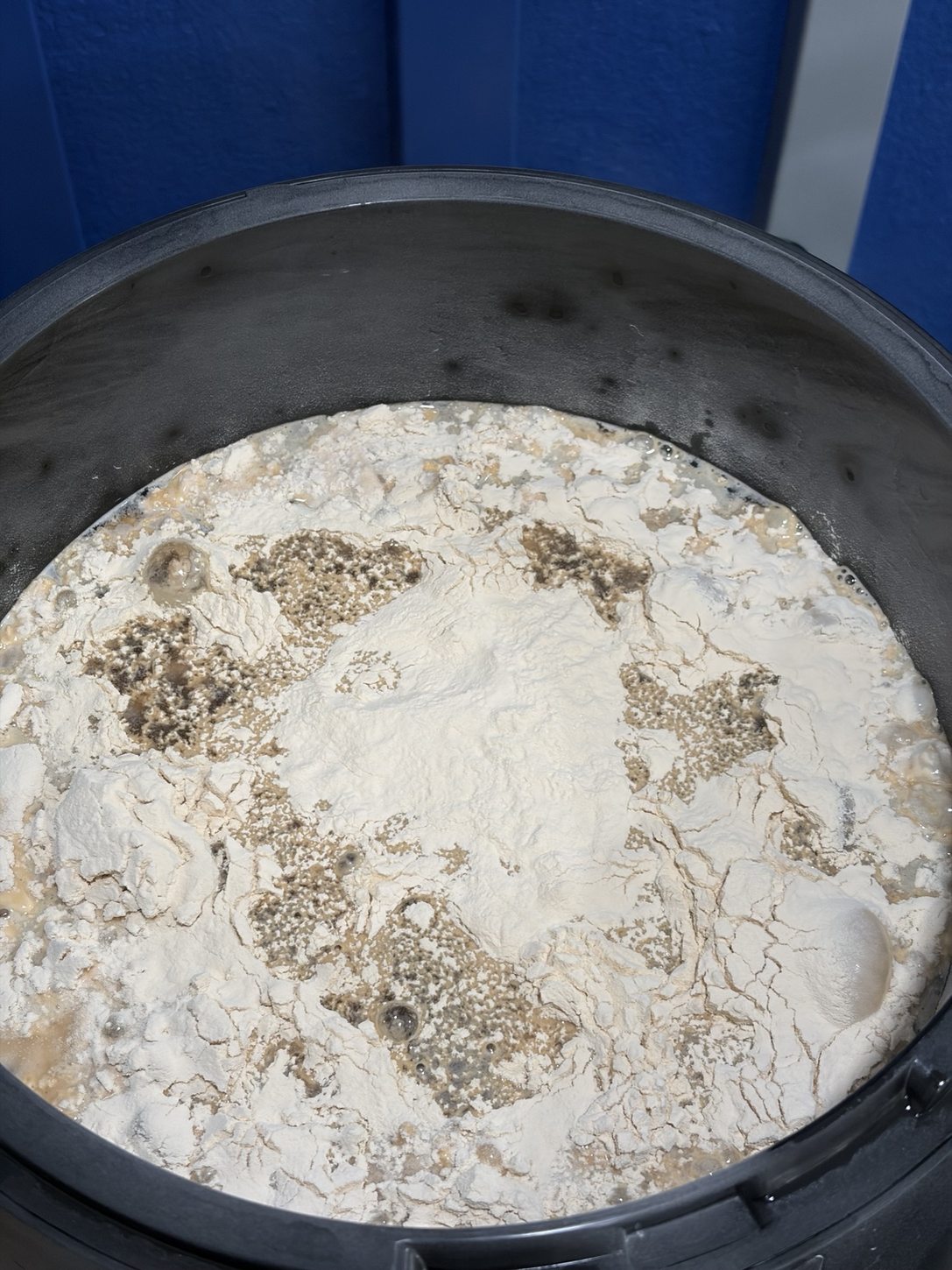
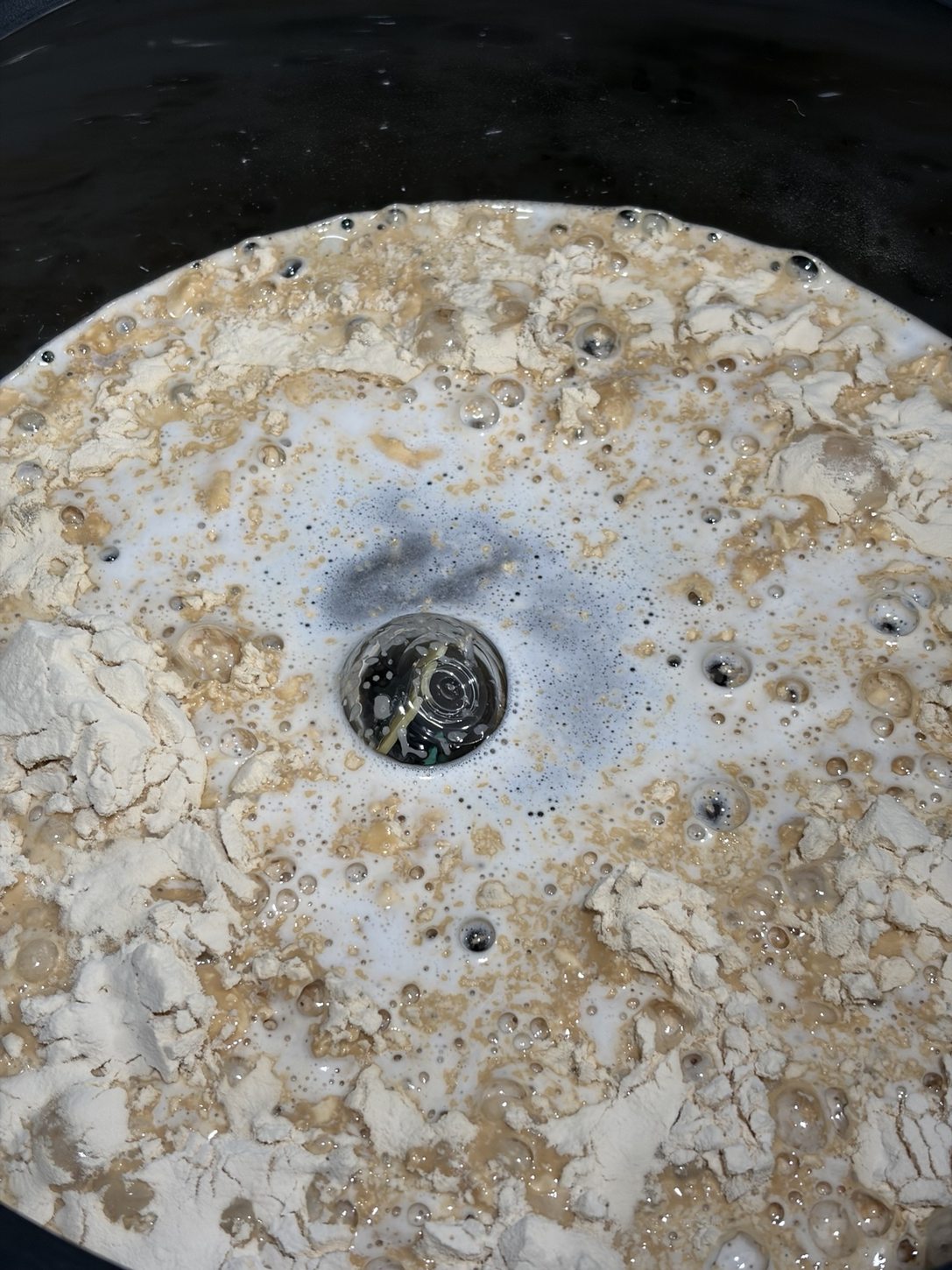
After adding the spice infusion and bringing the liquid down to 22°C (72°F), I added the BrewArt ingredients. The powder floated in clumps at first; this was the immediate post-addition appearance. I then placed the RAPT Pill in the BeerDroid to record gravity and temperature continuously.
BeerDroid programming: 21°C propagation → 17°C fermentation
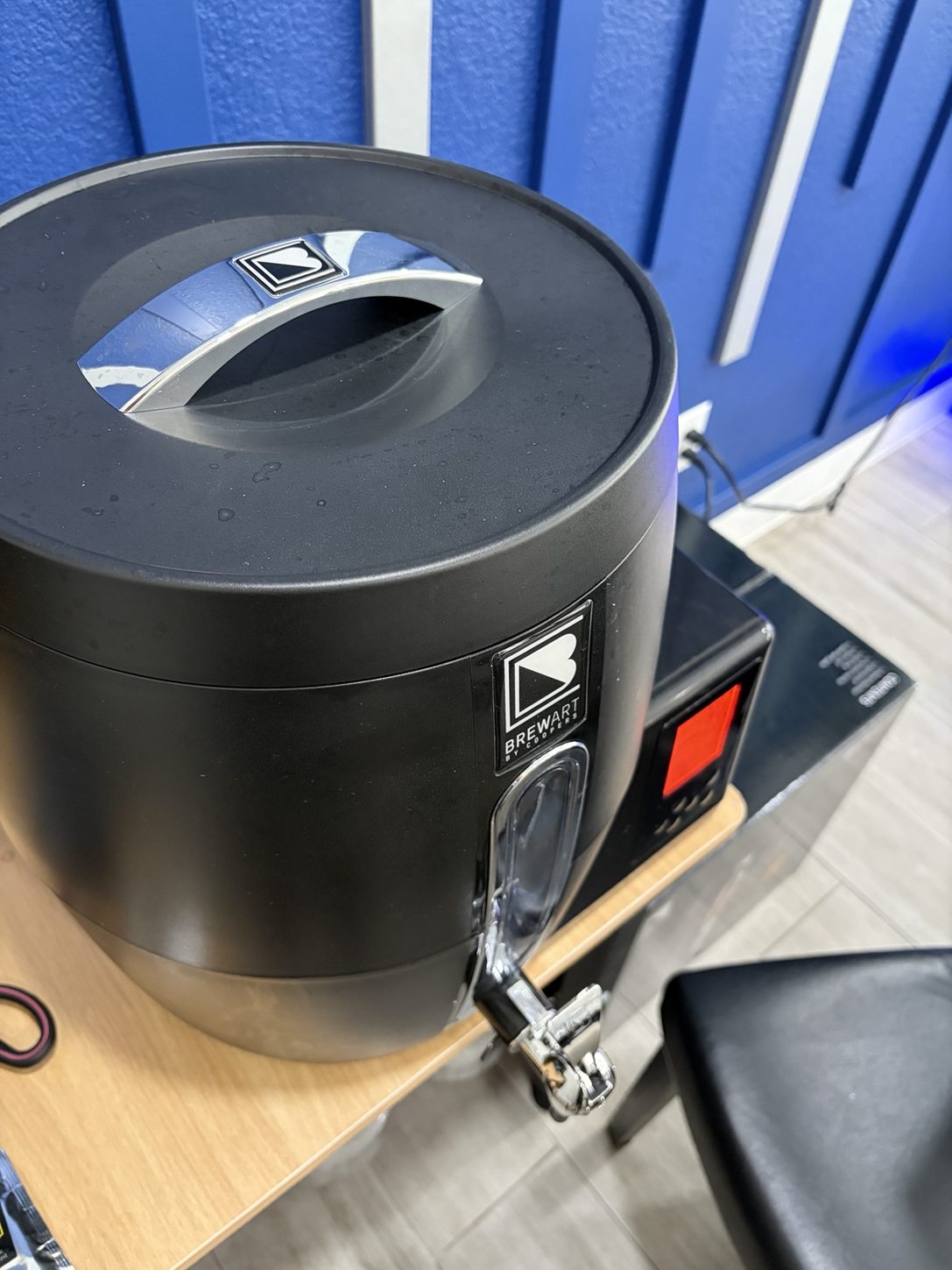
The programmed stages were 21°C (70°F) for Propagate and 17°C (63°F) for Ferment. The app's Now and Target figures are distinct: the measured temperature doesn't have to match the setpoint at every instant. I also tracked how visible bubbles and liquid movement changed over time, then compared those observations with the RAPT Pill SG trend.
Below, each stage pairs a BeerDroid app screenshot and a sight-window video from approximately the same elapsed brewing time.
Stage 1: From propagation to fermentation (8–18 hours)
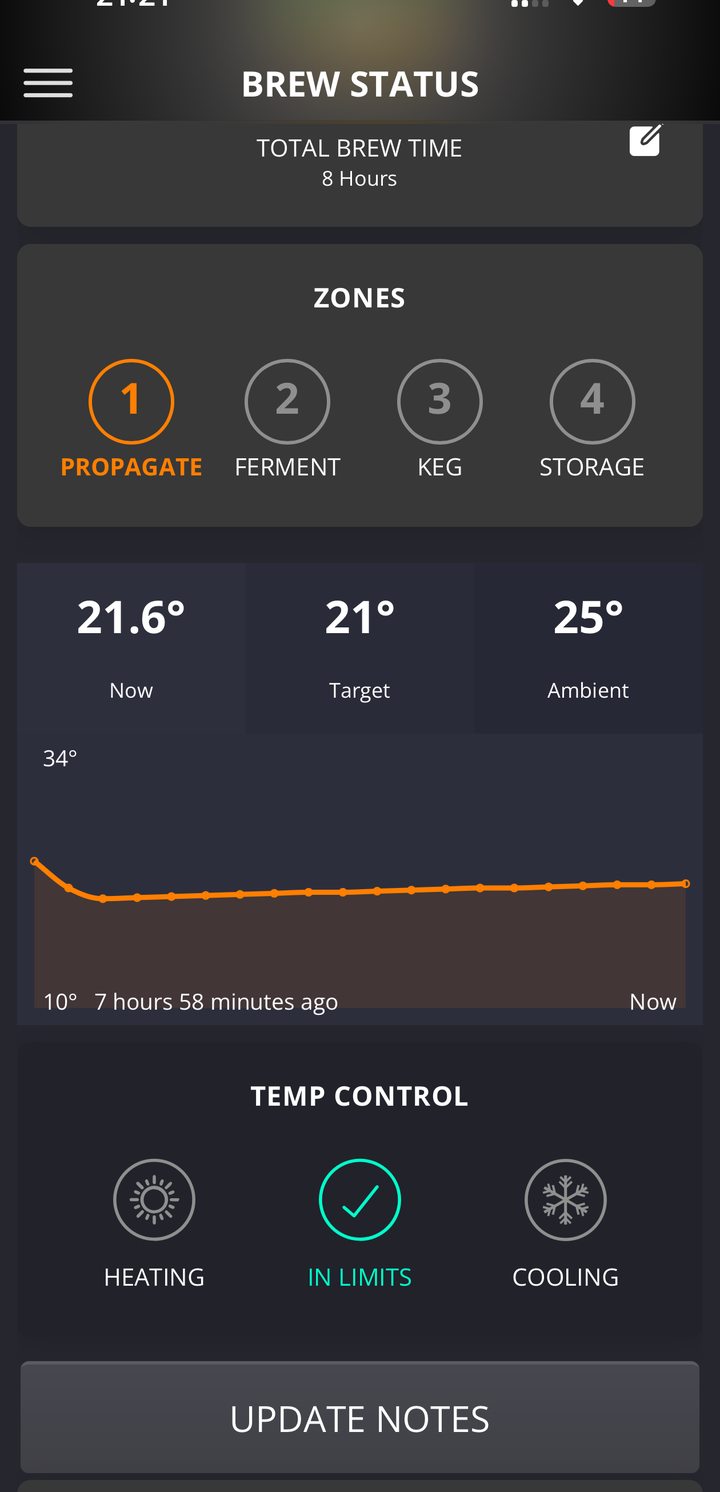
8 hours: Propagate at 21°C
App: Now 21.6°C (71°F), Target 21°C (70°F), Ambient 25°C (77°F). The vessel had settled near the propagation target.
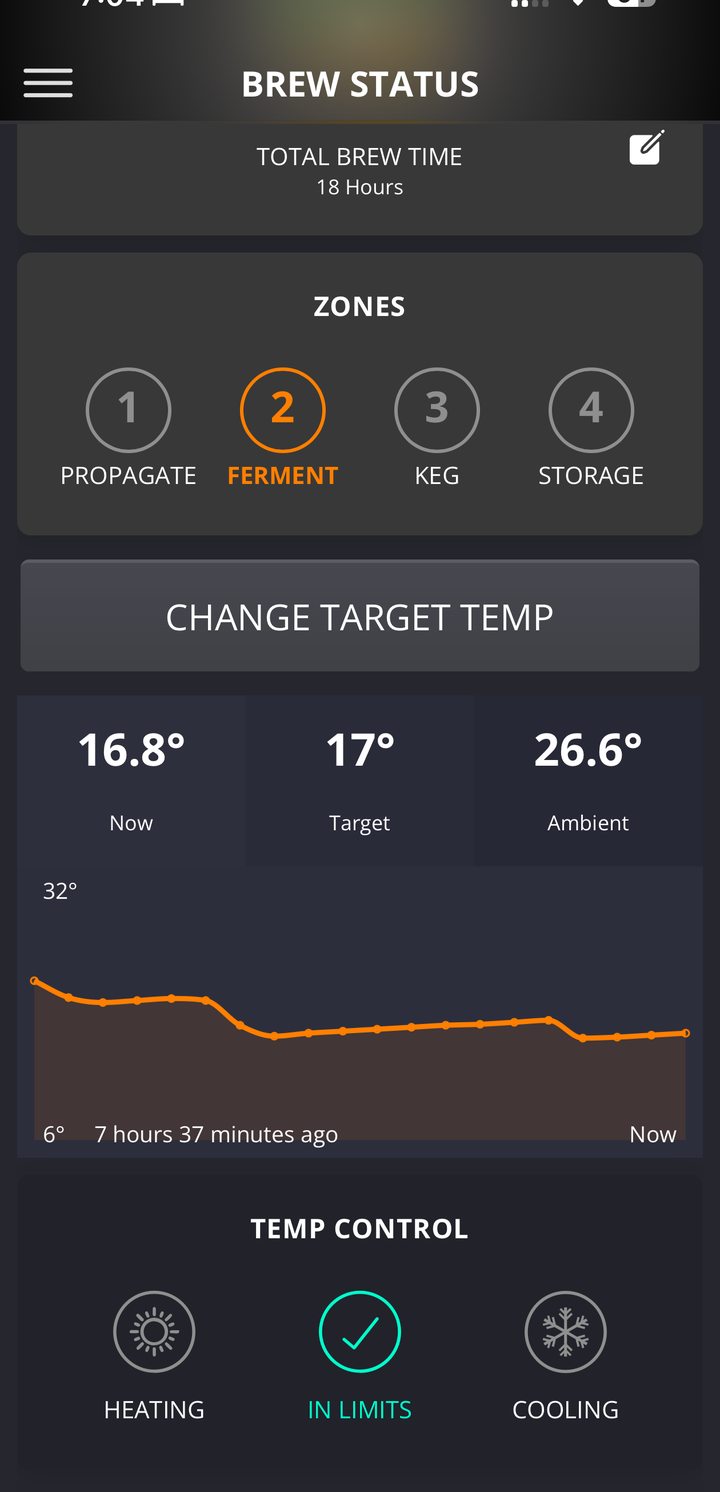
18 hours: Ferment stage at 17°C
The app had switched to Ferment. Now 16.8°C (62°F), Target 17°C (63°F), Ambient 26.6°C (80°F). This documents the shift to a lower target.
Stage 2: The biggest SG changes (days 1–3)
In the early period, the RAPT gravity display rose, then fell sharply. The post-addition photos still show undissolved powder at the surface, so one plausible explanation is that more of the remaining material dissolved and the wort became more uniform, pushing the displayed gravity upward before fermentation drove it down. Orientation, bubbles, or solids on a floating hydrometer can also influence early readings, so I did not treat the 1.0456 maximum as a verified OG.
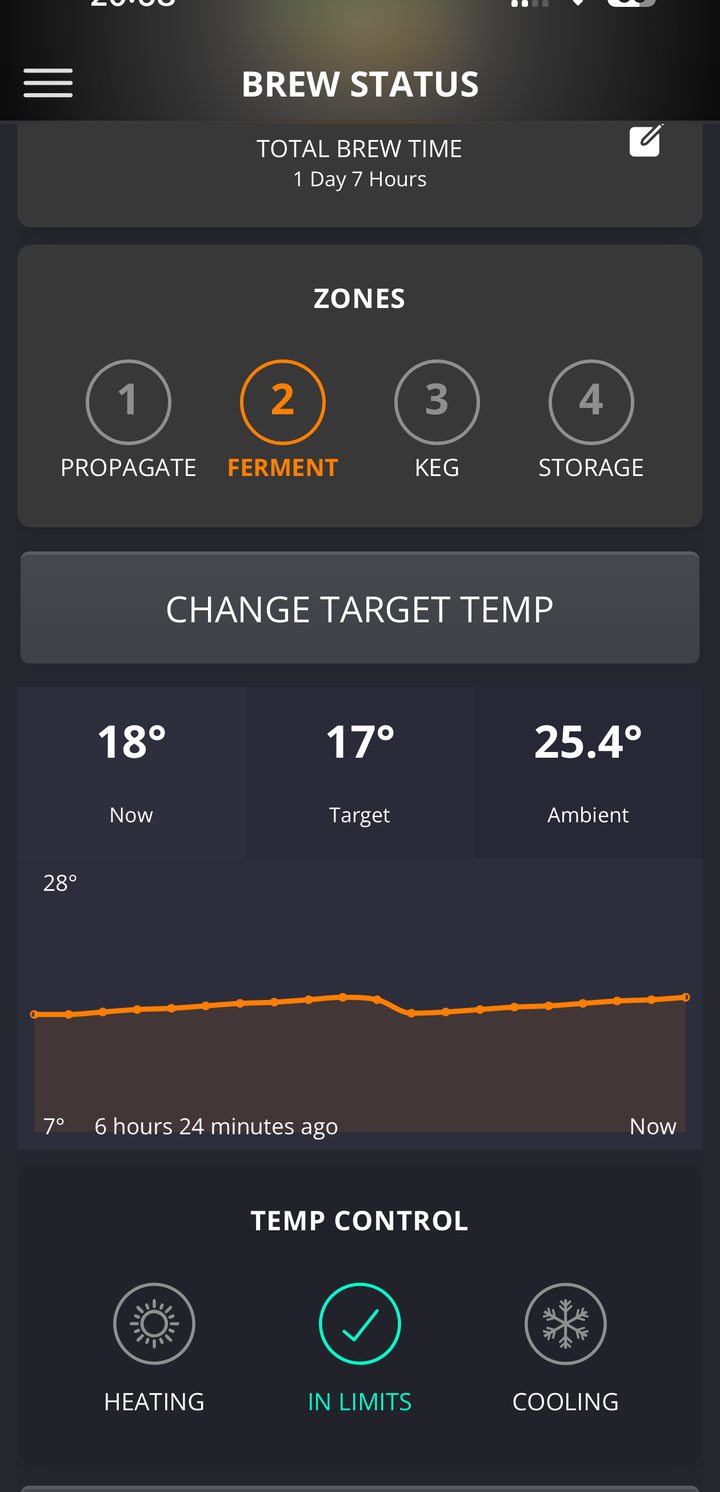
1 day 7 hours: maintaining the fermentation setpoint
Now 18.0°C (64°F), Target 17°C (63°F), Ambient 25.4°C (78°F). The Ferment program was continuing with modest temperature variation.
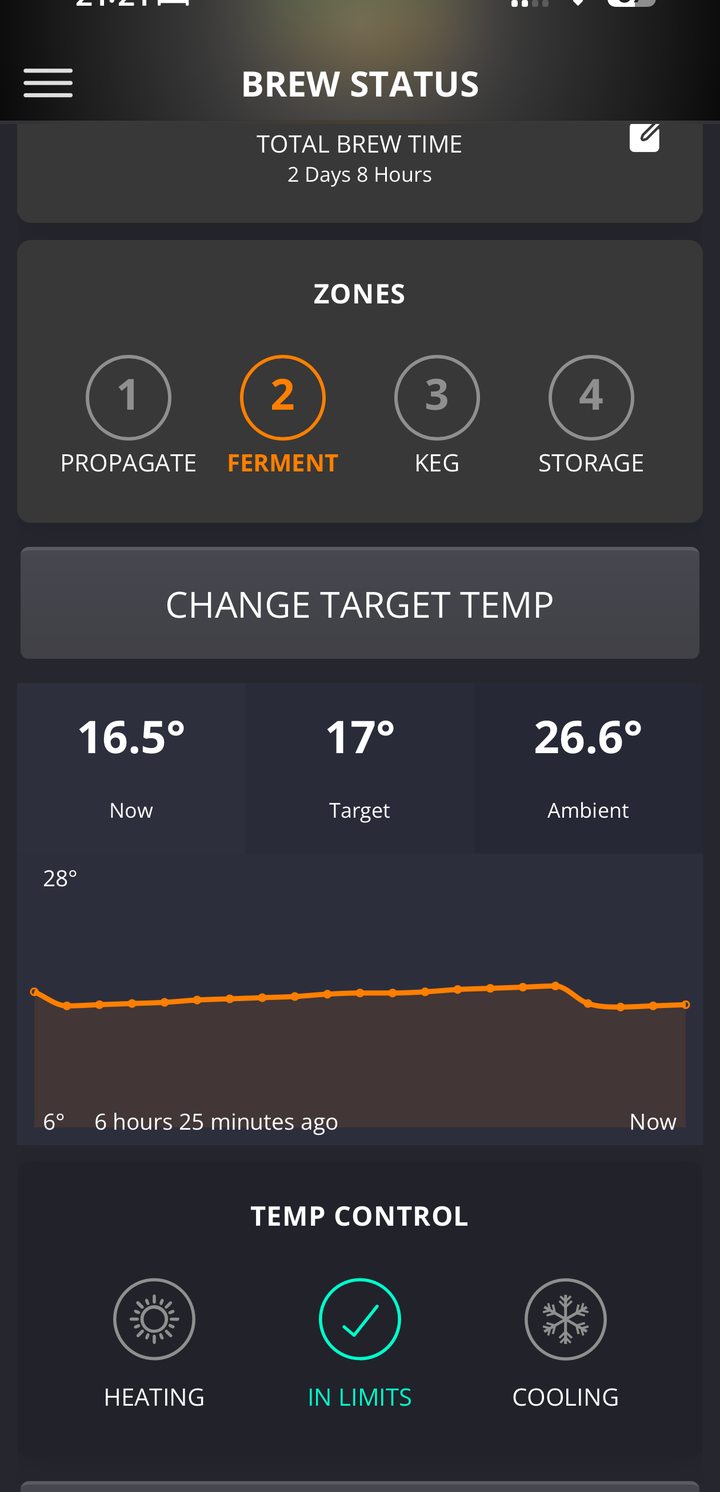
2 days 8 hours: the gravity-drop phase
Now 16.5°C (62°F), Target 17°C (63°F), Ambient 26.6°C (80°F). The RAPT trend showed its major decline around Days 3–4.
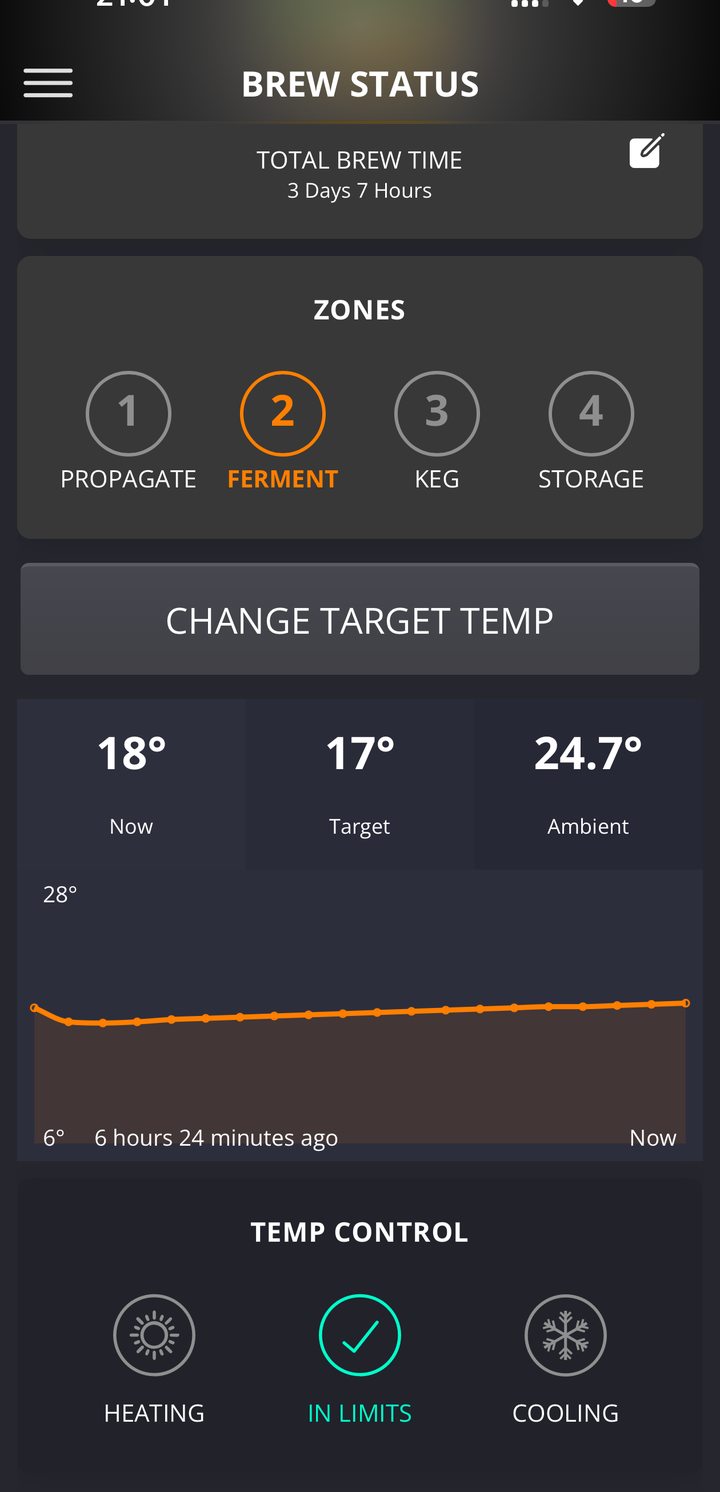
3 days 7 hours: still running at 17°C
Now 18.0°C (64°F), Target 17°C (63°F), Ambient 24.7°C (76°F). Gravity was still trending down, but the pace was easing.
Stage 3: Temperature regulation continues as SG levels off (days 4–6)
BeerDroid still displayed Ferment, while the RAPT SG hovered near 1.016 after about Day 5. The key distinction is that a stable target temperature does not imply sugars are being consumed at a constant rate. The proprietary EOF decision logic cannot be established from these screenshots alone.
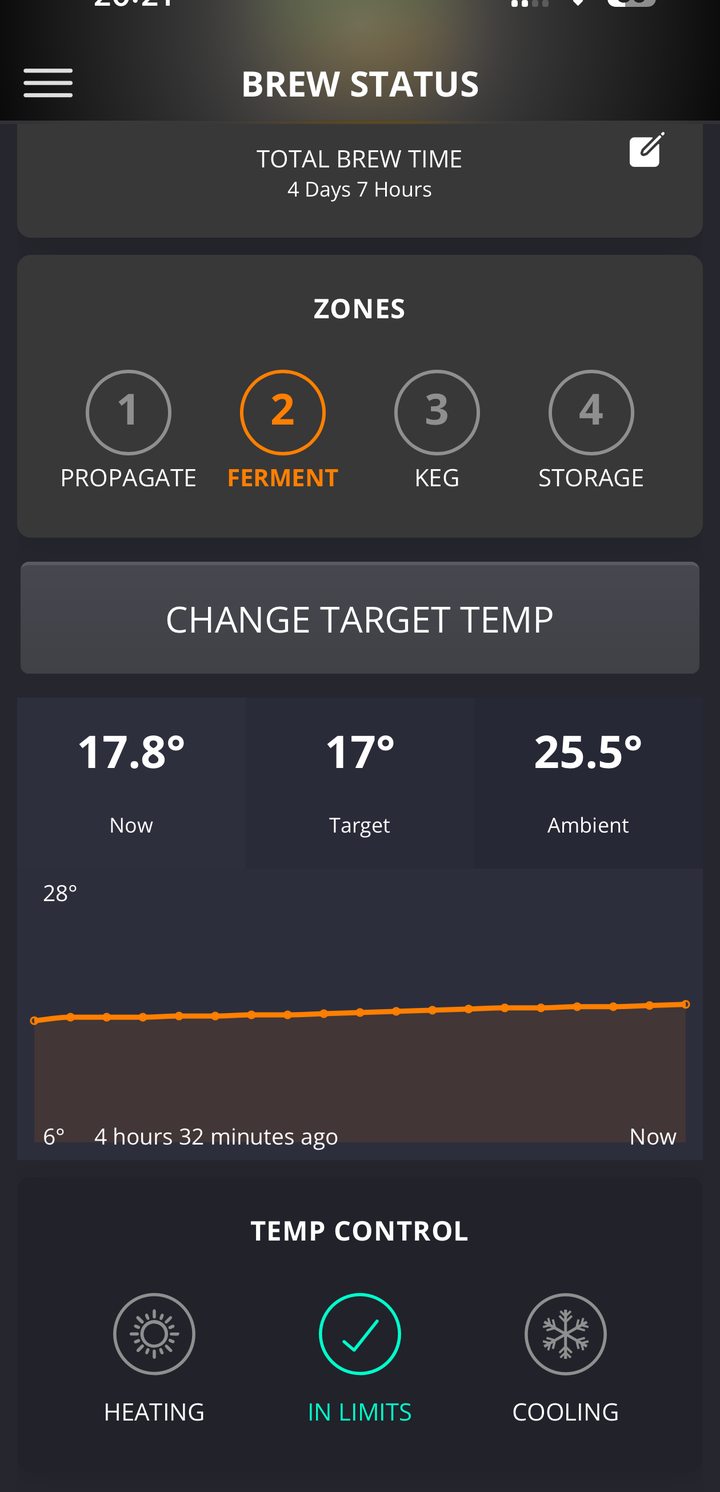
4 days 7 hours: continued 17°C control
Now 17.8°C (64°F), Target 17°C (63°F), Ambient 25.5°C (78°F). SG was moving toward its later plateau.
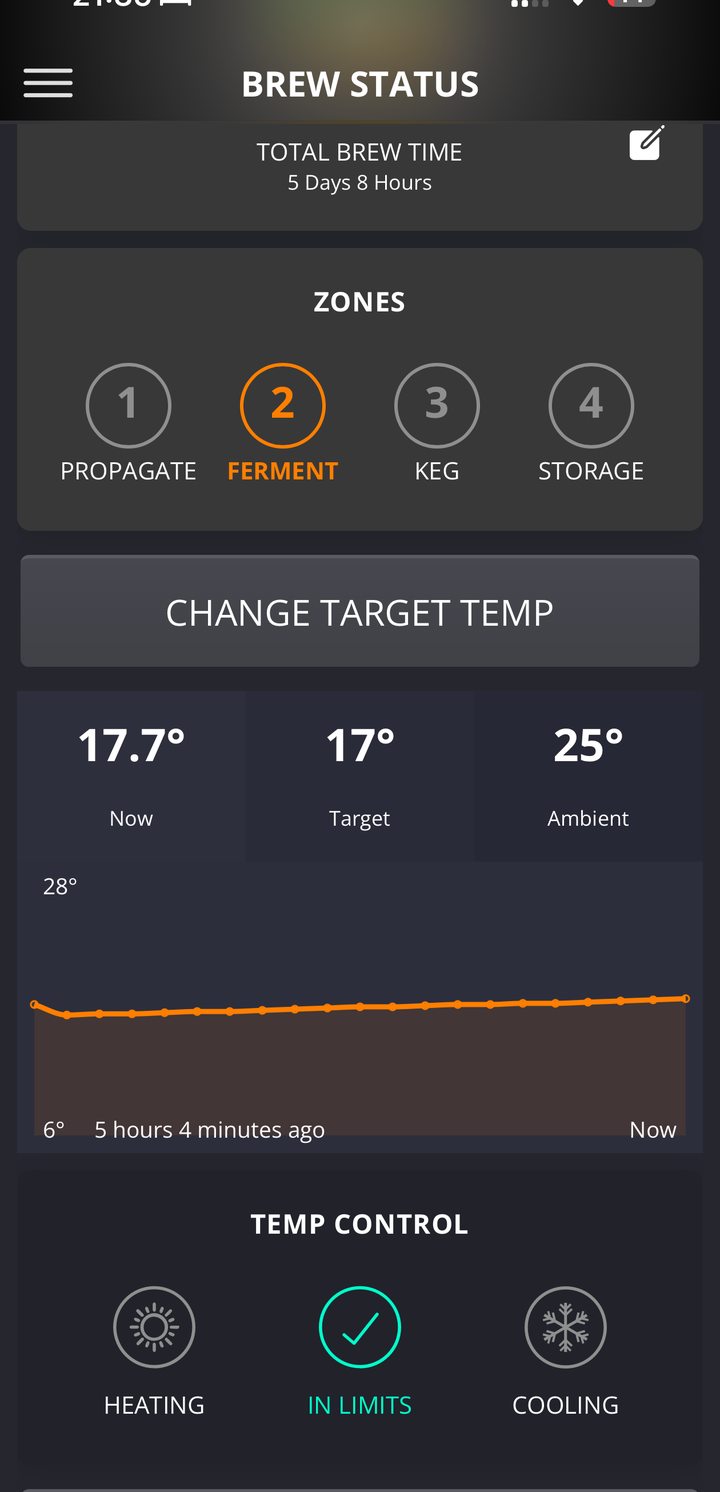
5 days 8 hours: SG almost flat
Now 17.7°C (64°F), Target 17°C (63°F), Ambient 25°C (77°F). Small sensor fluctuations remained, but the sustained SG decline had stopped.
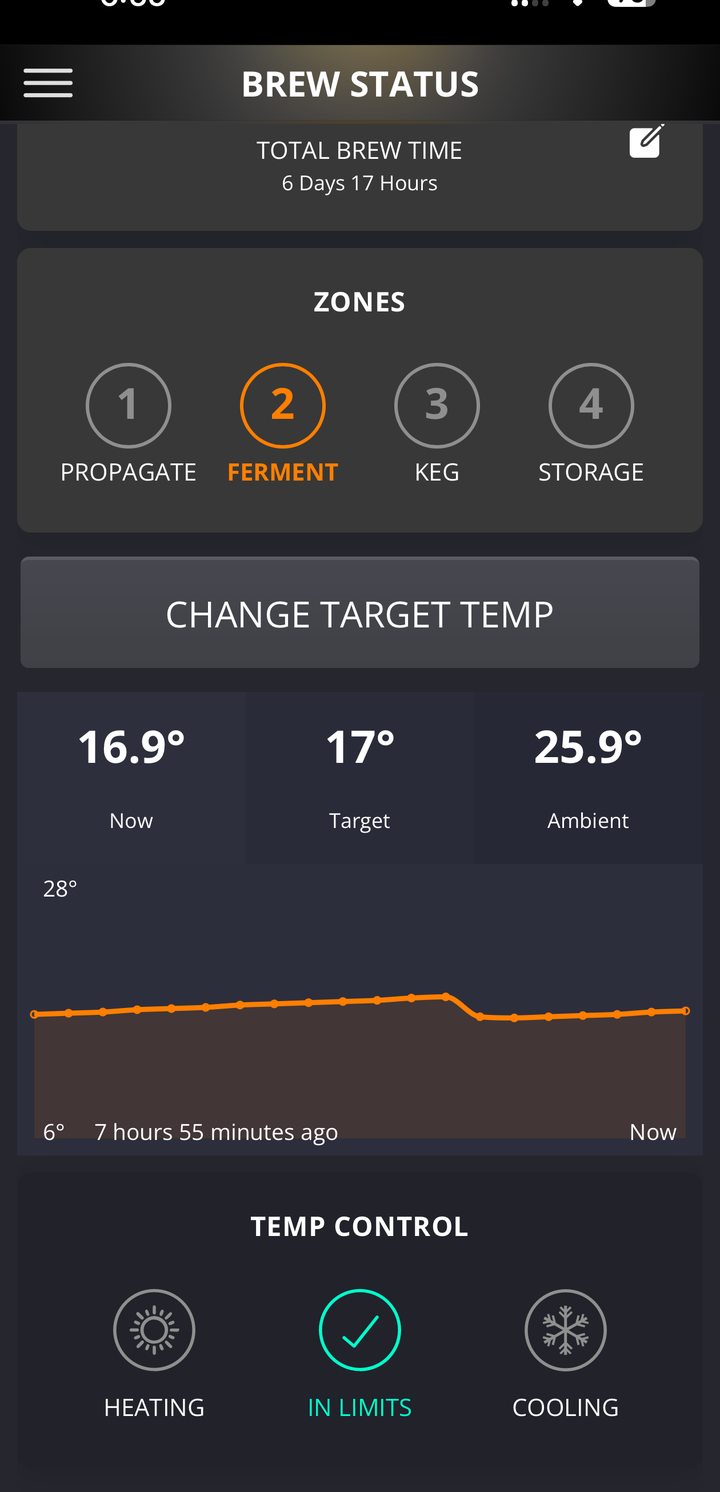
6 days 17 hours: still displayed as Ferment
Now 16.9°C (62°F), Target 17°C (63°F), Ambient 25.9°C (79°F). The app still showed Ferment here; EOF and Ready to Keg notifications followed later.
RAPT Pill: SG and temperature plotted by Day
The BeerDroid display showed thermal control; the independent RAPT data showed a different side of the process. The most useful contrast is the sharp fall in SG followed by a near-flat reading near the end.
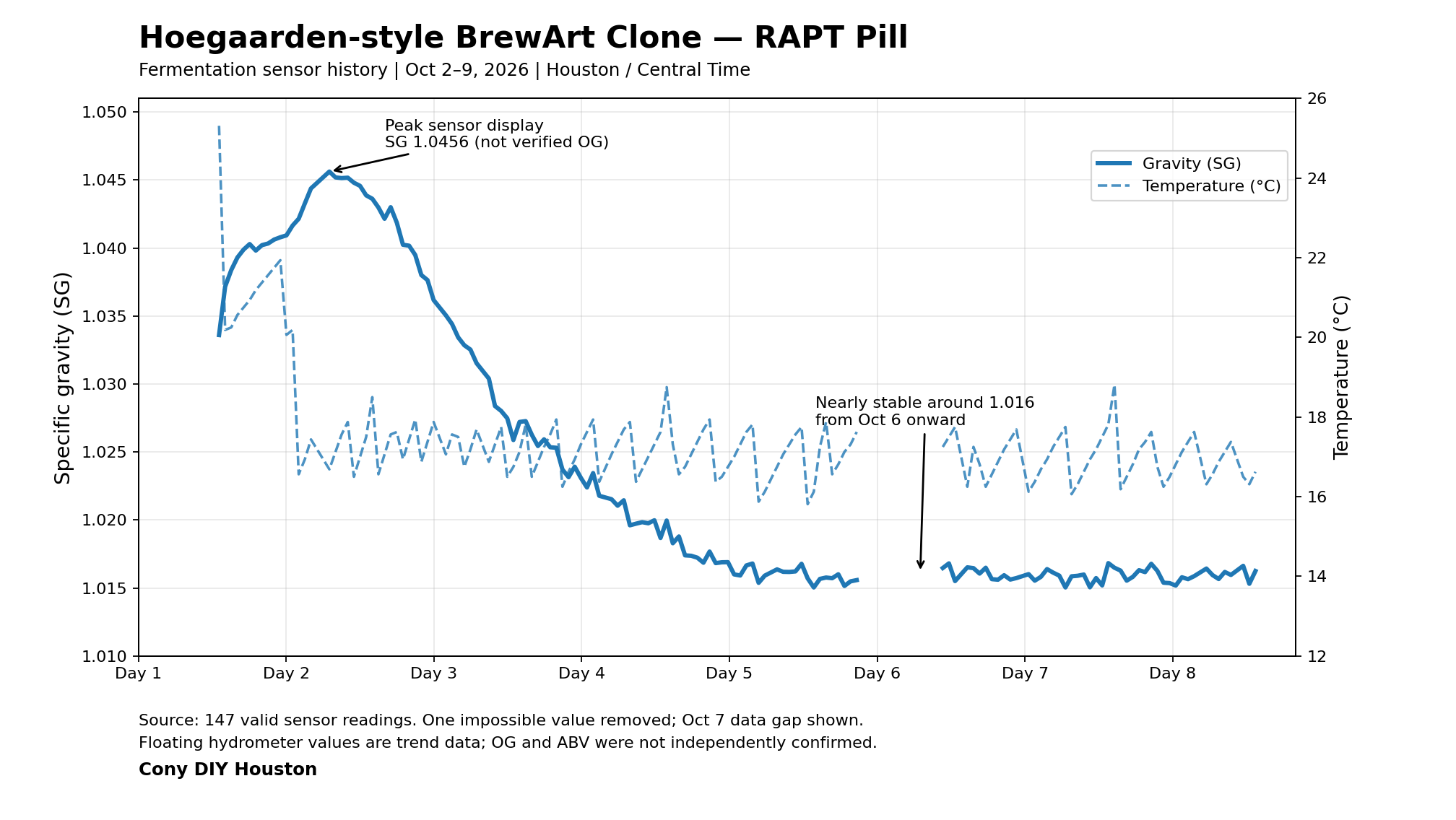
| Days 1–2 | Displayed gravity rises and peaks at 1.0456. Continued dissolution of powder still visible after mixing is one plausible contributor; this is not treated as verified OG. |
|---|---|
| Days 3–4 | Gravity falls steeply while visible bubbling is strong, consistent with the most active part of fermentation. |
| Days 5–8 | Gravity is broadly flat around 1.016 and visible bubbling is much calmer, consistent with late fermentation. |
The RAPT temperature is also influenced by BeerDroid control, so I would not label every rise as fermentation heat. Still, during the steep gravity-change period, the temperature appears to recover/rise more quickly after dips, while late in the batch the changes become gentler. Combined with the gravity decline and the visible transition from strong bubbling to a quieter beer, that pattern is consistent with fermentation moving from a more vigorous stage toward a calmer finish.
Limitations: Initial readings may be affected by the floating Pill's orientation, bubbles, or debris. One clearly invalid outlier was removed, and a roughly 14-hour data gap was left unconnected. I have not treated 1.0456 as verified original gravity, or 1.016 as a laboratory-confirmed final gravity; therefore I am not publishing a definitive ABV or attenuation figure. [1]
EOF and kegging: RAPT showed the finish about a day earlier
BeerDroid ultimately sent its EOF / Ready to Keg notifications. BeerDroid does not directly measure SG, so my working interpretation is that its EOF decision is based on information available to the system such as temperature behavior and elapsed time; the exact internal logic is not documented in the material I reviewed. In this batch, RAPT was already nearly flat around 1.016 by Day 5–6, and the BeerDroid EOF alert followed later. The two methods therefore told the same broad story, but the RAPT gravity trend could have flagged “essentially in the finishing stage” roughly a day earlier.
After cleaning and sanitizing the kegging parts, I transferred the batch into two BrewArt 5 L kegs and checked the filled amount by weight afterward. For priming, I replaced the carbonation drops I had used previously with weighed dextrose (corn sugar).
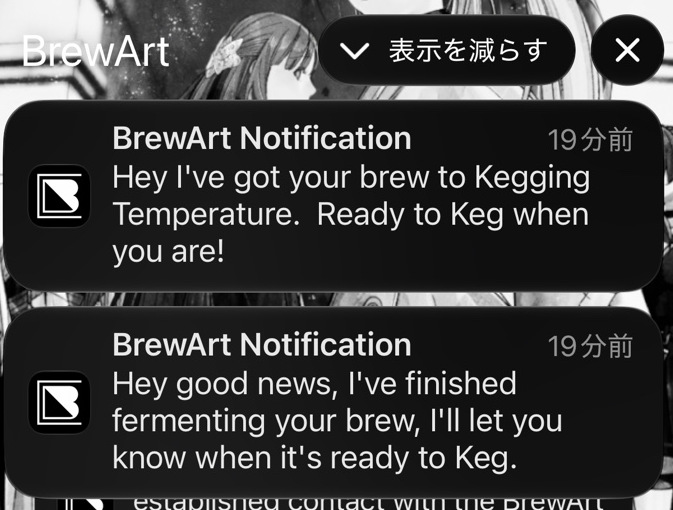
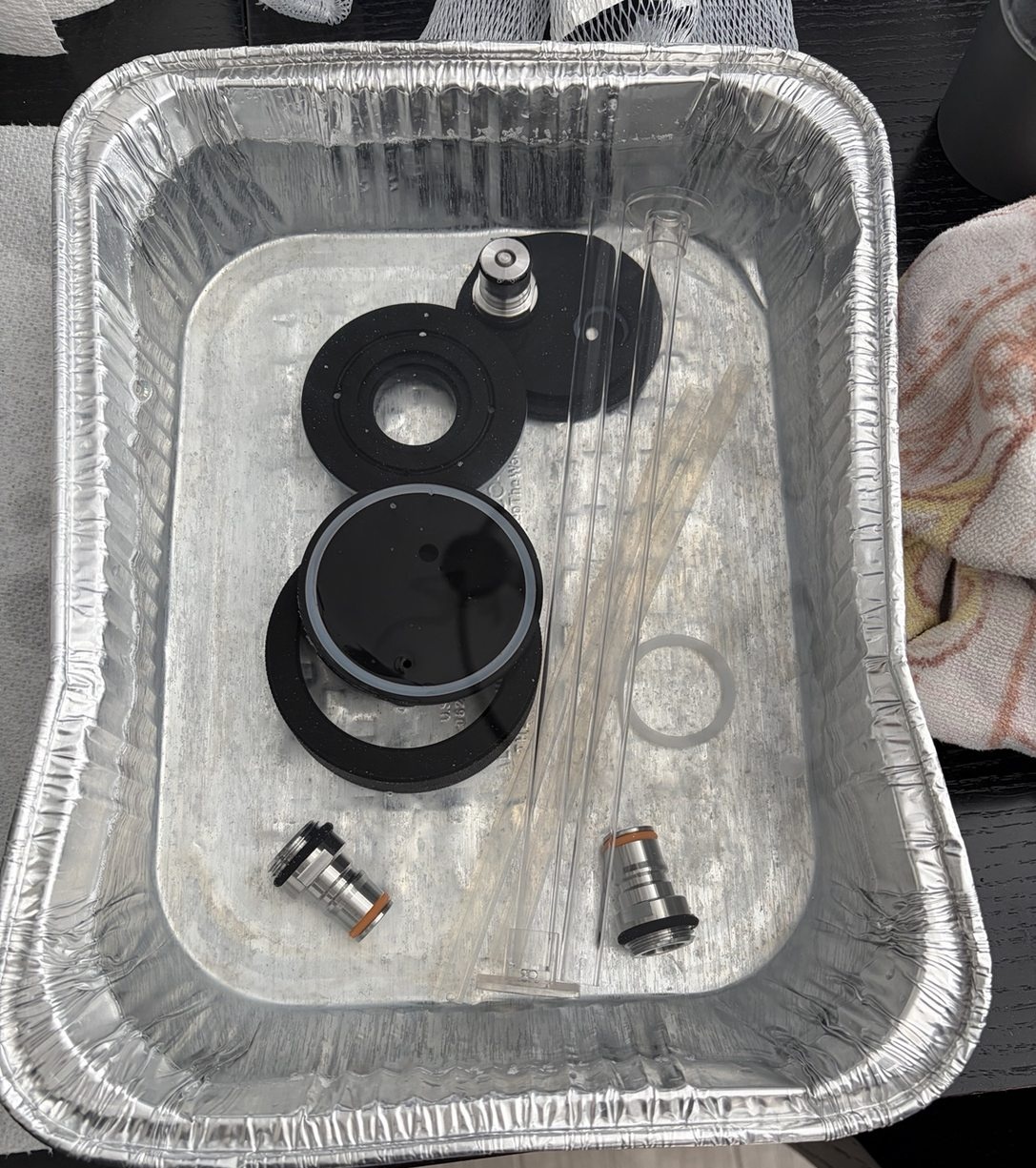
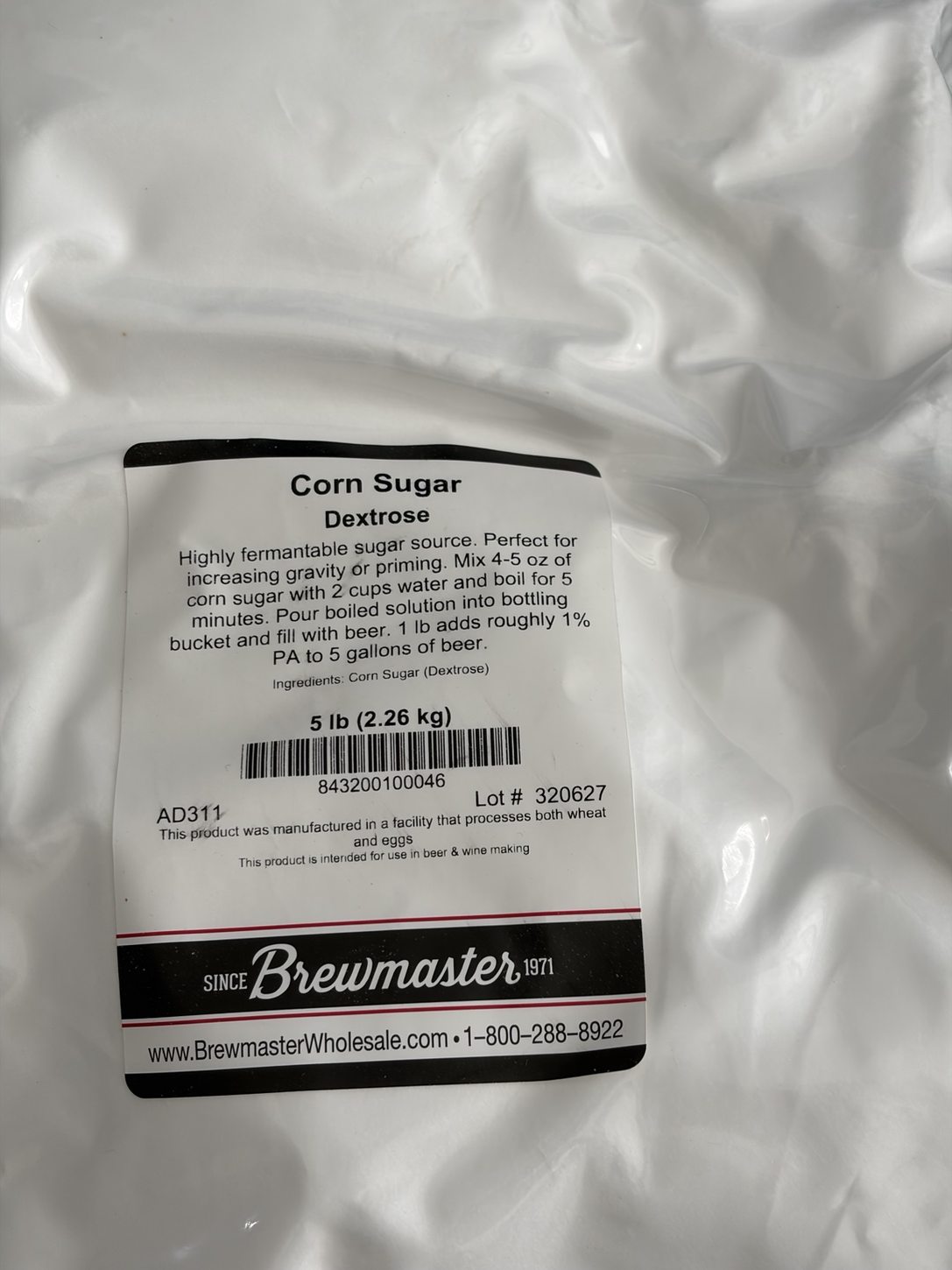
The kegging-day tasting: delicious, but I want more orange aroma
The sample had an orange tint. Even before carbonation and conditioning, I found it refreshingly sweet and delicious. The orange note was weaker than I had hoped, and a light bitterness lingered at the end.
Did that bitterness come from the bitter orange peel, the coriander, or something in the base ingredients? A single batch cannot isolate the cause. In the next self-designed Witbier v1, I will keep the same 2 g coriander / 3.5 g orange-peel amounts and first compare the broader recipe design. A spice-ratio experiment will come after that as a separate batch.
Carbonation and conditioning can change aroma release, perceived sweetness, bitterness, and mouthfeel. I will evaluate those once the beer has had time to carbonate.
What I learned — and the next self-designed Hoegaarden-style batch
The most interesting part was watching RAPT gravity fall sharply and then settle near 1.016 while BeerDroid continued to control temperature around 17°C. Once I put the steep gravity change, the RAPT temperature response, and the visible bubbling side by side, the transition from vigorous fermentation to the finishing stage became much easier to see.
My kegging-day flavor summary is still: refreshing sweetness was good, orange aroma could be stronger, and the source of the lingering bitterness is uncertain.
With the BrewArt Team Clone as a baseline, the next batch will be the Witbier v1 I designed in Brewfather →. For v1, the coriander and orange-peel amounts stay at 2 g / 3.5 g; the larger changes are the base ingredients, Saaz hopping, and yeast. Changing the spice balance will be a separate experiment after v1.
References
- KegLand, RAPT Pill Hydrometer & Thermometer — manufacturer information on gravity/temperature logging and measurement limitations.
- BrewArt Team, Hoegaarden Wheat Clone — 1× E5 / 4× X2 / 1× Y5, 2 g coriander, 3.5 g dried Curaçao orange peel, Ale program, and spice-infusion method.
- BrewArt, BeerDroid — manufacturer information on 10 L capacity, temperature control, brewing programs, and EOF notifications.
Batch quantities, SG trends, priming measurements, and tasting notes are based on measurements and observations from this batch; manufacturer specifications are identified separately.
Questions or comments about this article?
Questions about the BeerDroid temperature log, RAPT gravity readings, ingredients, or kegging? Leave a note here.
The website is where I organize the completed experiment log. I post day-by-day progress and quick observations on X at @ConyDIYHouston.