
Beyond BrewPrints: Designing a 10 L BeerDroid Witbier in Brewfather
I only had two BrewPrints left—Discovery Pale Ale and Traditional Irish Stout. Once those are gone, I wanted the BeerDroid to move beyond “open a kit and add it” brewing. A BrewArt Team Hoegaarden Wheat Clone gave me the bridge into individual ingredients, and that led to a bigger question: if I am already buying coriander and orange peel, why not design my own 10 L (2.6 gal) Witbier in Brewfather? This is the full recipe-development trail, including the numbers that looked wrong and what I changed.
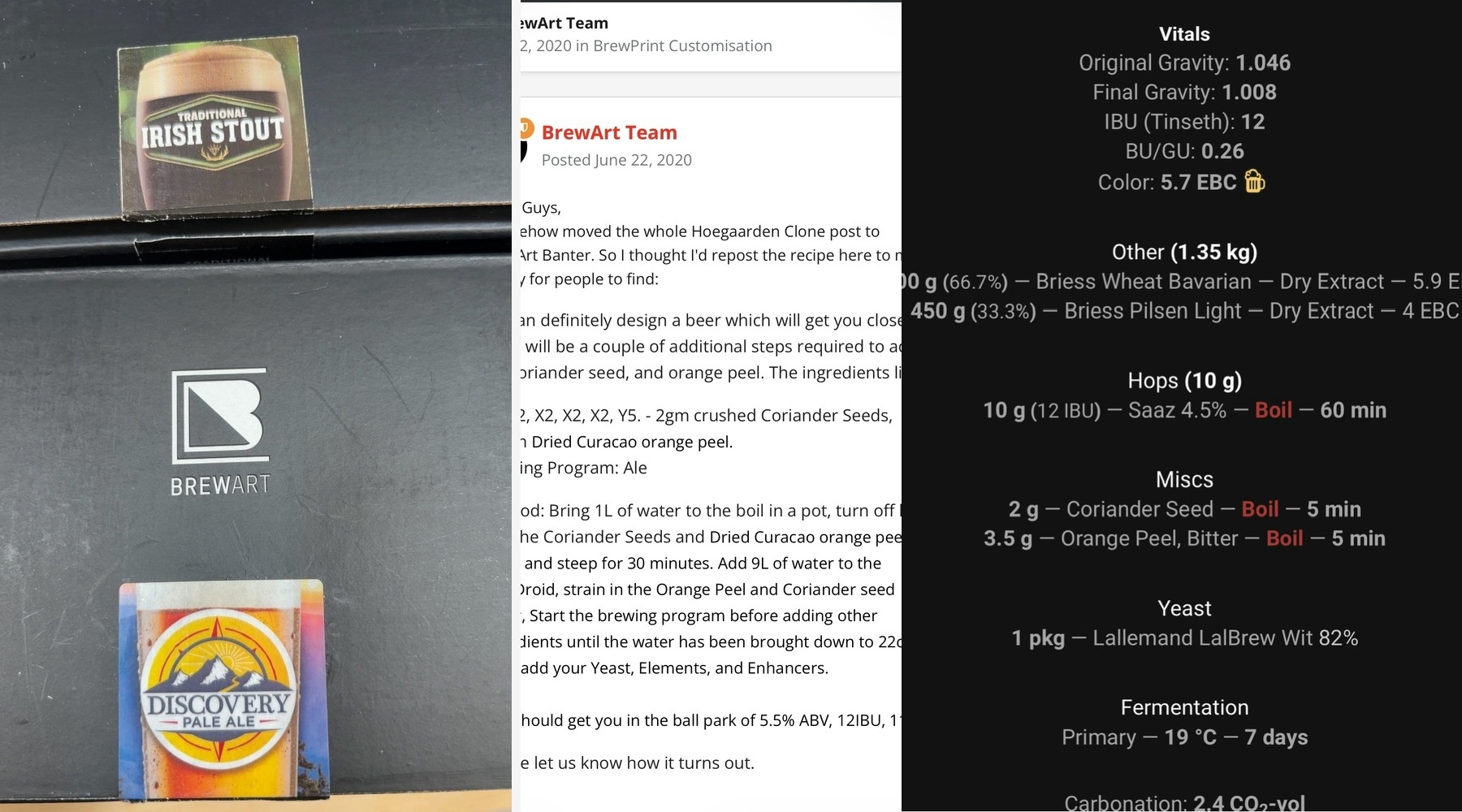
OG, FG, ABV, IBU, color, and fermentation settings are Brewfather design values at this point. Brew-day measurements, fermentation behavior, and tasting results will be documented separately.
The recipe I ended up with
| Batch size | 10 L (2.64 gal) |
|---|---|
| Recipe Type / Style | Extract / 24A Witbier [8] |
| Bavarian Wheat DME | 900 g (31.7 oz / 1.98 lb) |
| Pilsen Light DME | 450 g (15.9 oz / 0.99 lb) |
| Czech Saaz | 10 g (0.35 oz) / 60 min; 4.5% AA used as a design placeholder |
| Coriander Seed | 2 g (0.07 oz) / 5 min |
| Bitter Orange Peel | 3.5 g (0.12 oz) / 5 min |
| Yeast | 1 package Lallemand LalBrew Wit |
| Primary | 19°C (66°F) / 7 days — design setting |
| Calculated values | OG 1.046 / FG 1.008 / ABV 5.0% / IBU 12 / Color 5.7 EBC (~2.9 SRM) / BU:GU 0.26 / Carbonation 2.4 vol |
1. The starting point: BrewArt Team's “Hoegaarden Wheat Clone”
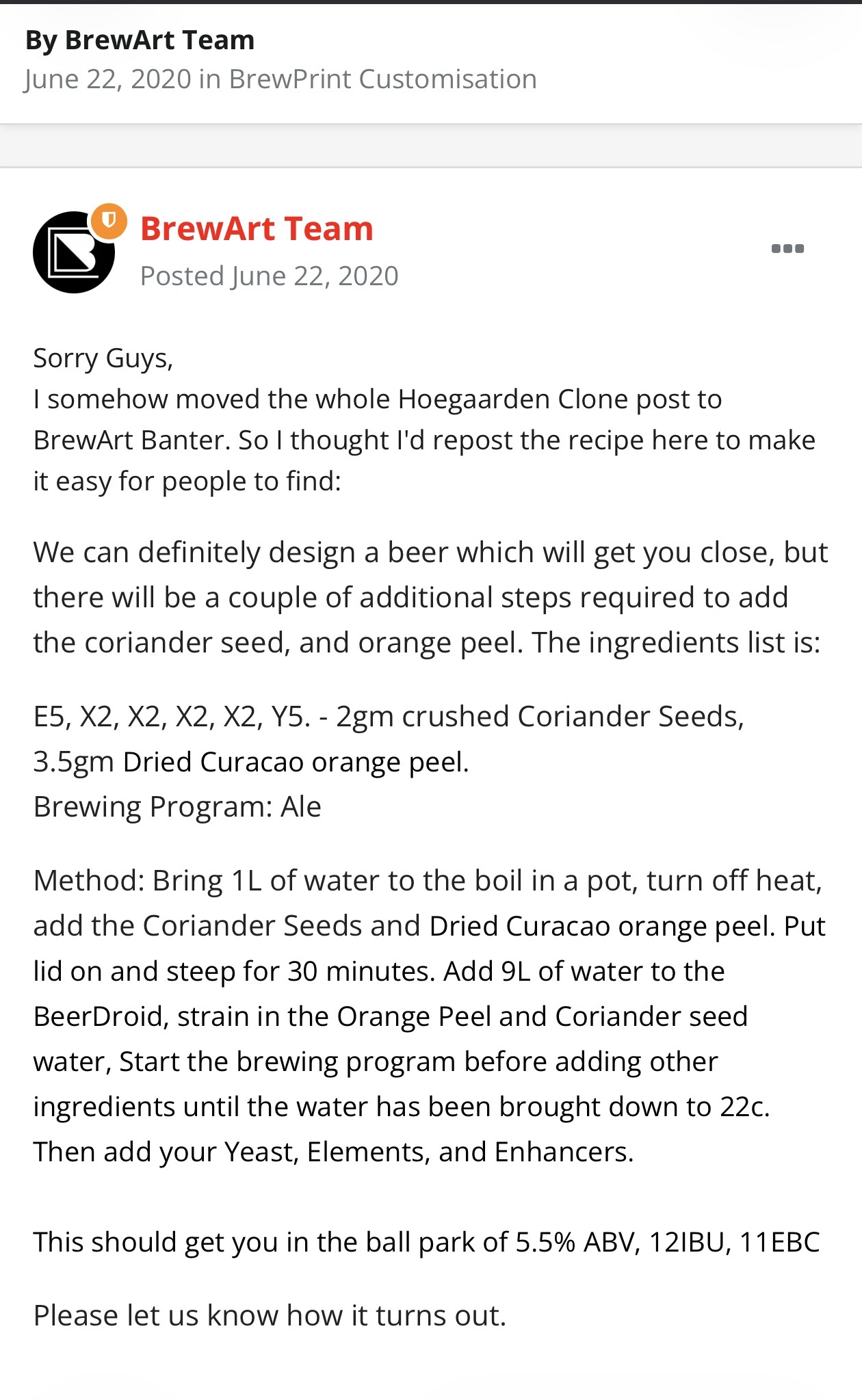
While deciding what to brew after my BrewPrint stash runs out, I found a Hoegaarden Wheat Clone posted by BrewArt Team in the BrewArtist Community. The 10 L ingredient list is 1× E5 / 4× X2 / 1× Y5 / 2 g crushed coriander seed / 3.5 g dried Curaçao orange peel, using the regular Ale program. BrewArt Team's method steeps the spices in 1 L of hot water for 30 minutes, combines that infusion with 9 L of water in the BeerDroid, cools to 22°C (72°F), then adds the yeast, Elements, and Enhancers. Their ballpark target is about 5.5% ABV, 12 IBU, and 11 EBC (~5.6 SRM). [1]
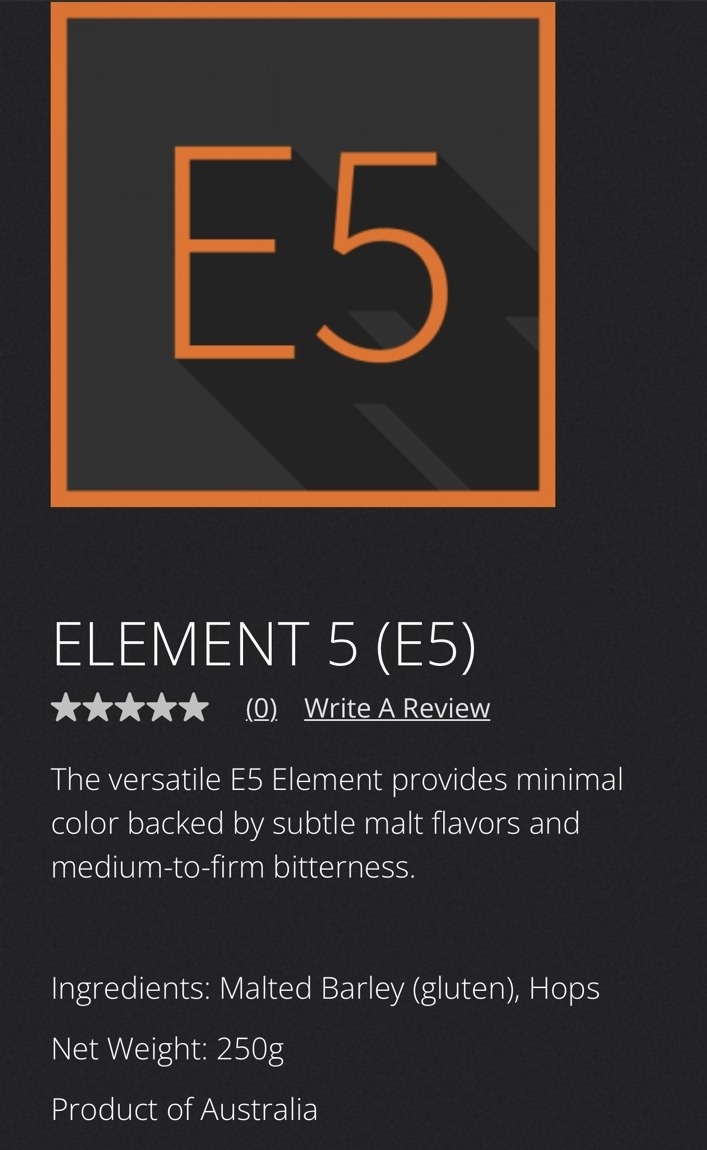
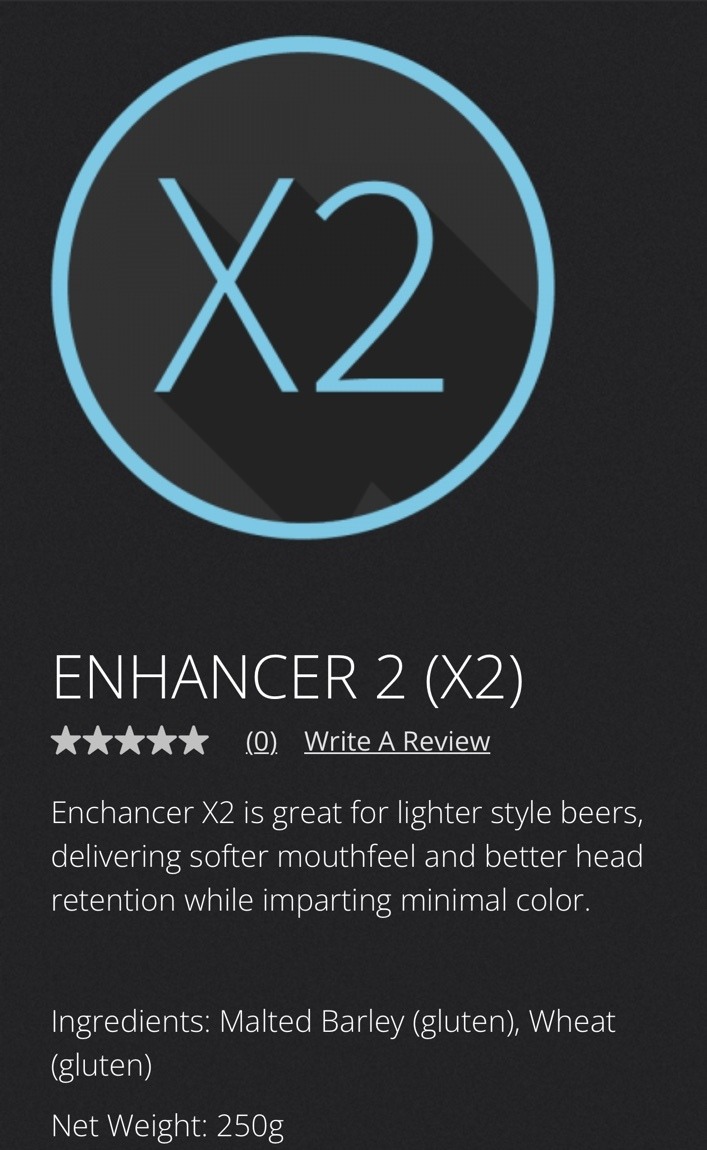
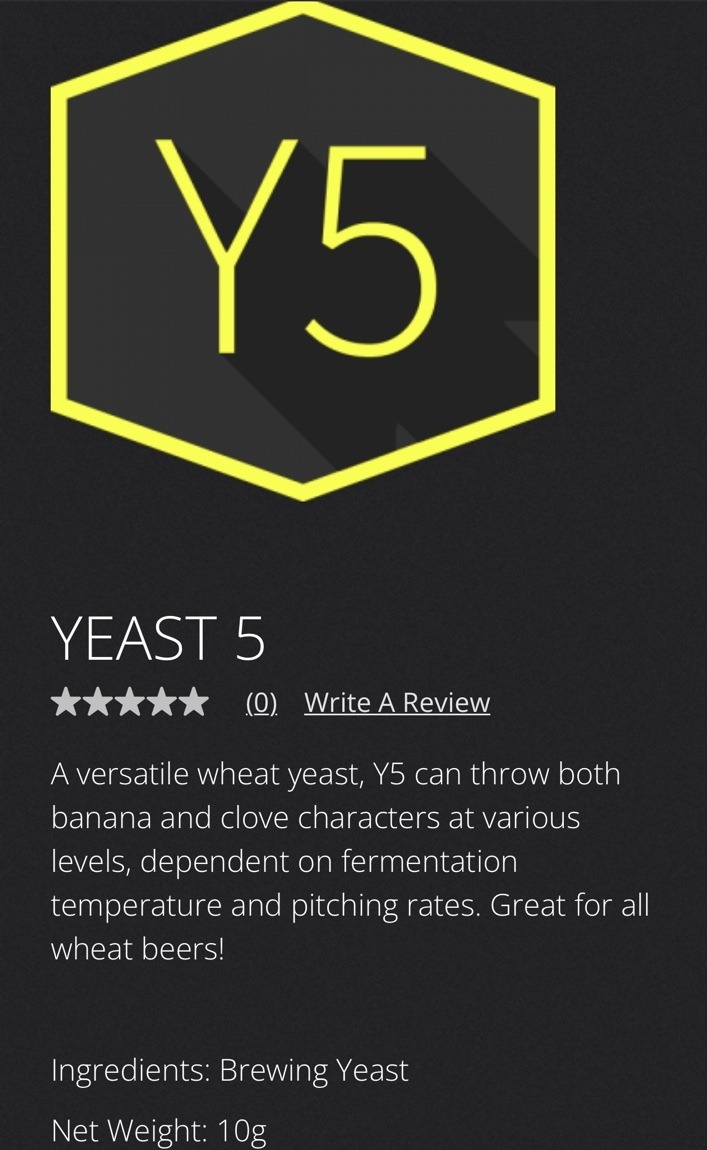
That was the bridge I was looking for: still brewing in the BeerDroid, but moving from one complete BrewPrint to choosing and combining ingredients myself.
2. If I am buying spices anyway, why not design my own recipe?
I still want to brew the BrewArt clone. But it already requires coriander and orange peel in addition to the E/X/Y ingredients. Once I am buying ingredients outside a complete kit, stopping at the clone felt like a missed opportunity.
So I set a new goal: design a 10 L (2.64 gal) Witbier for the BeerDroid and watch the numbers myself. I used Brewfather, whose Recipe Designer recalculates predicted OG, FG, ABV, IBU, color, and related recipe values as ingredients and settings change. [5]
3. Starting with a 10 L extract recipe
I set the recipe to Extract, 10 L (2.64 gal), and style 24A Witbier. The BJCP 2021 Beer Style Guidelines likewise classify Witbier as 24A. [8] The first fermentable bill was 900 g (1.98 lb) Bavarian Wheat DME plus 450 g (0.99 lb) Pilsen Light DME.
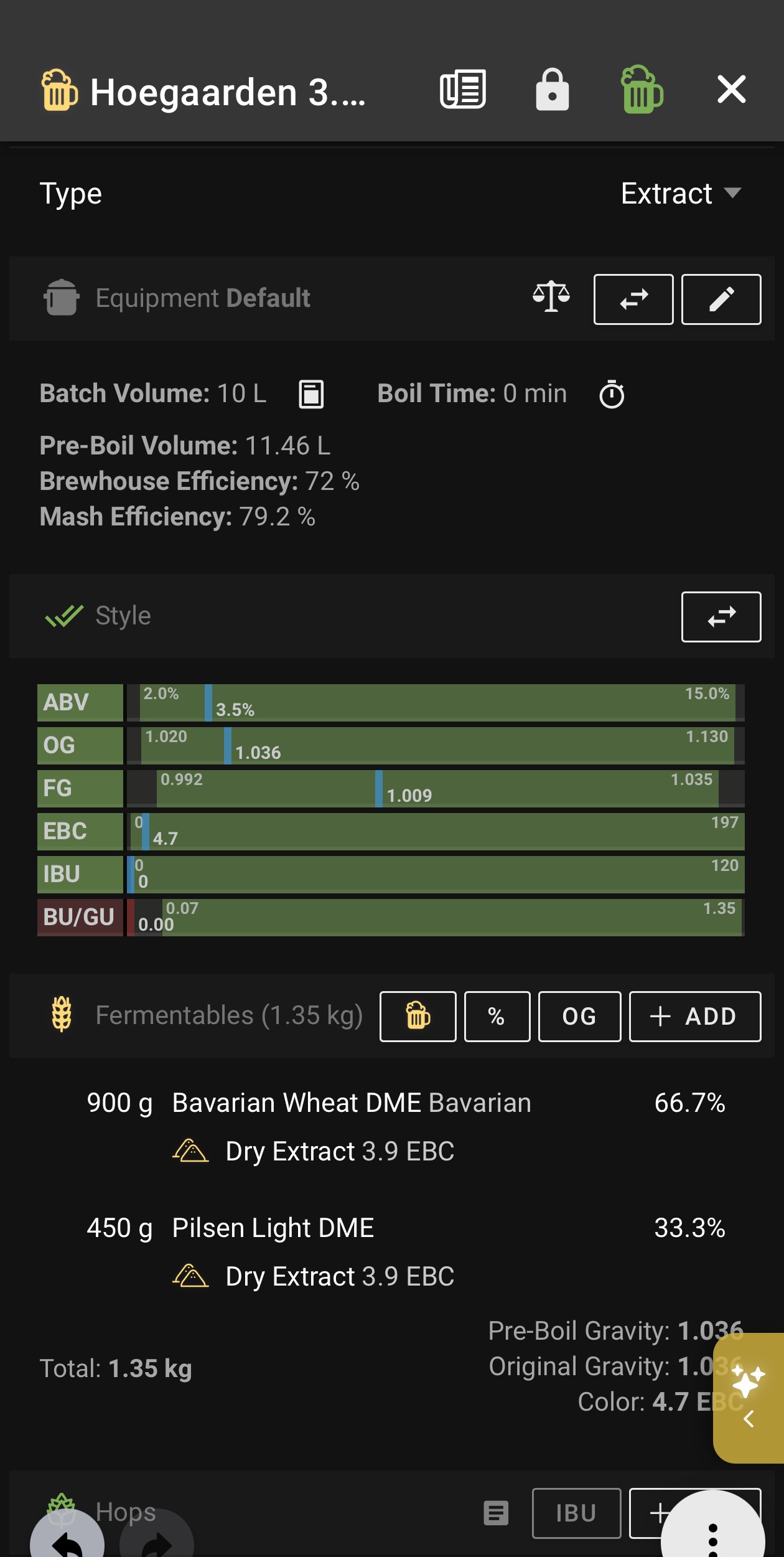
The first result was only OG 1.036 and 3.5% ABV—obviously lower than I was aiming for. Before adding more extract, I checked why the calculation was low.
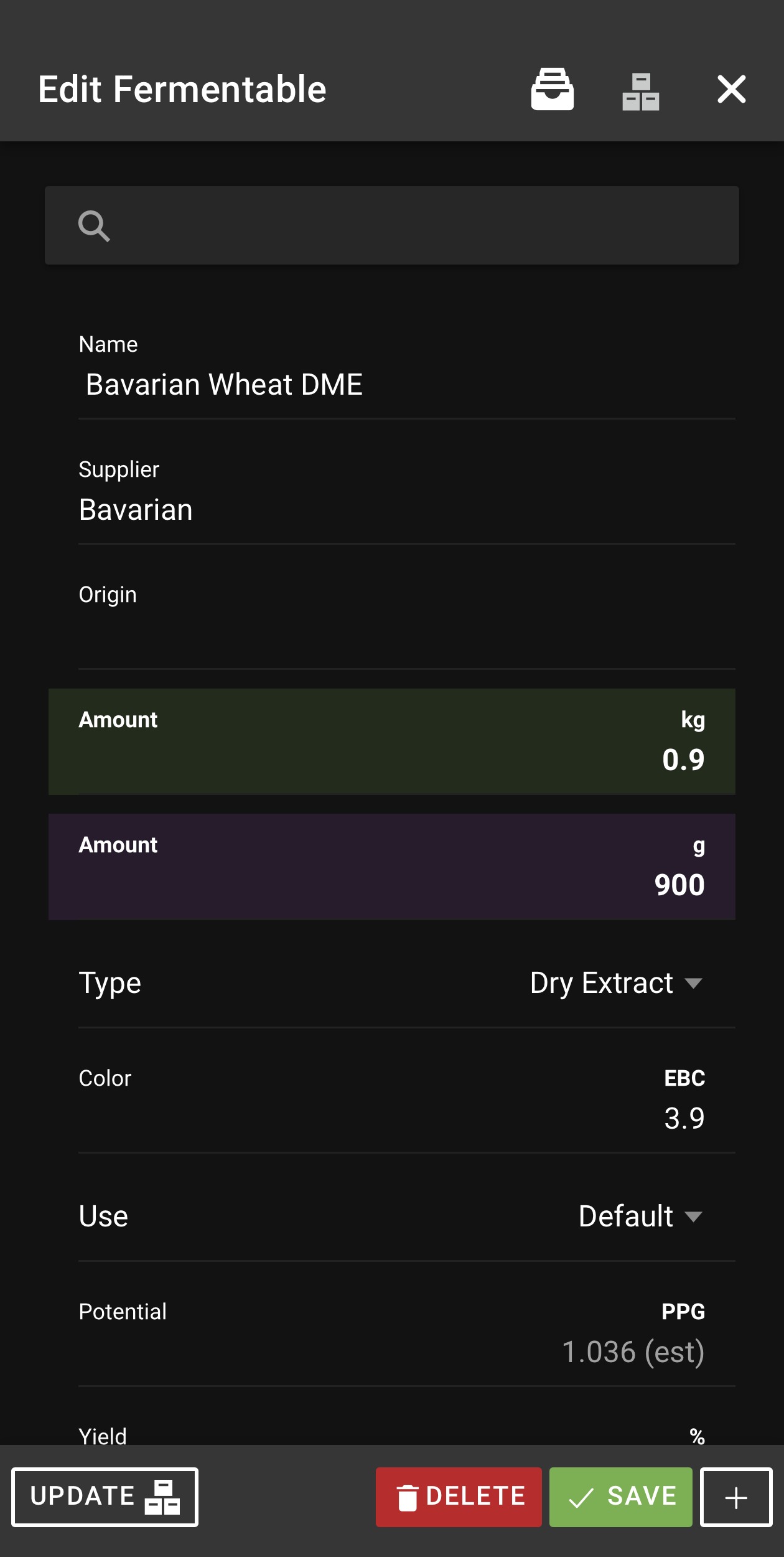
4. First red flag: the Wheat DME record showed 1.036 potential
The Bavarian Wheat DME entry I had been using showed a 1.036 potential.
I searched Brewfather's built-in ingredients again and checked the Briess Bavarian Wheat and Pilsen Light records. For this model, I aligned both to the Brewfather Briess entries showing 1.045 potential / 97% yield. Briess's current product information lists Bavarian Wheat DME at 3 SRM and Pilsen Light DME at 2 SRM. [6]
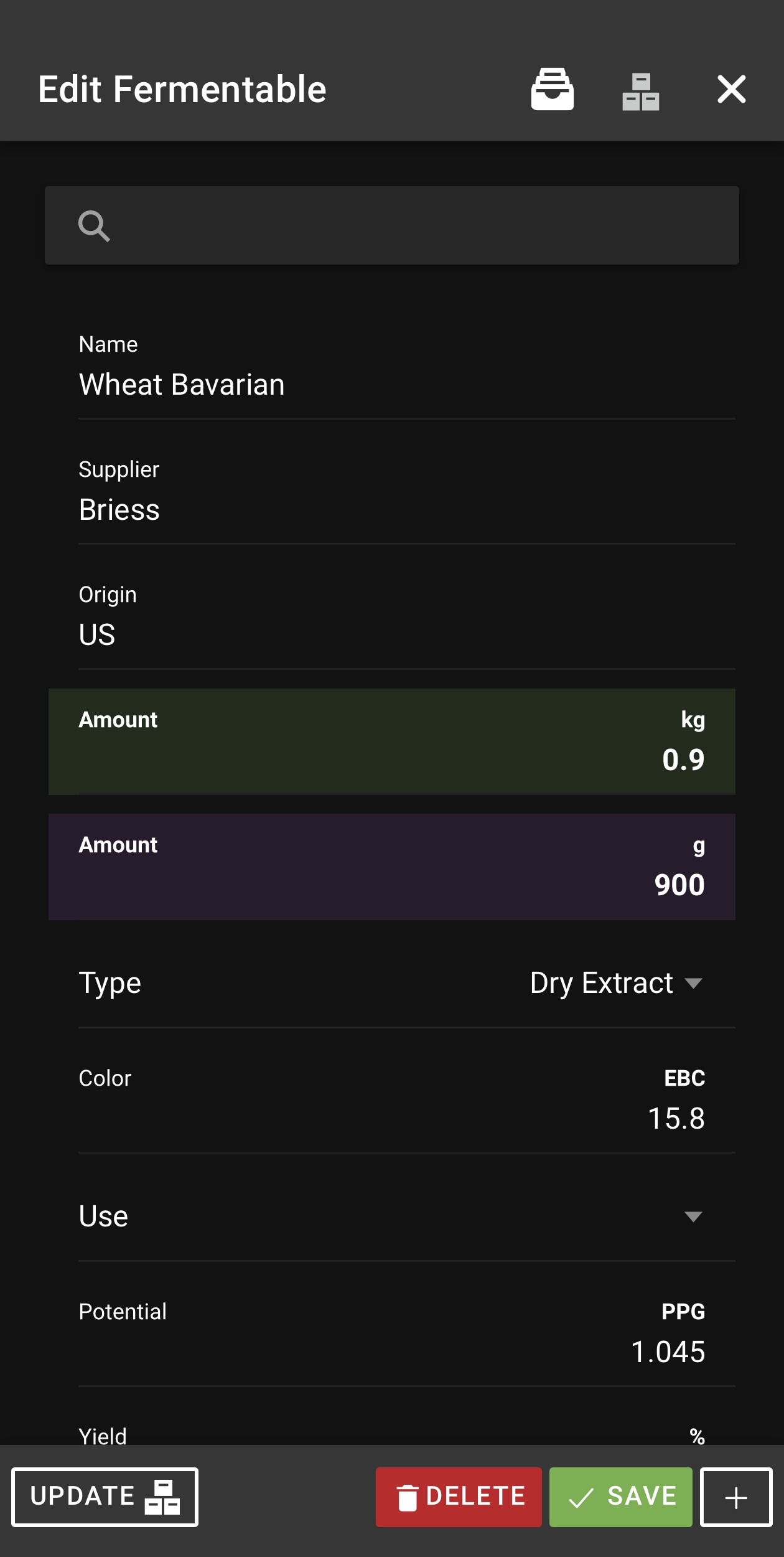
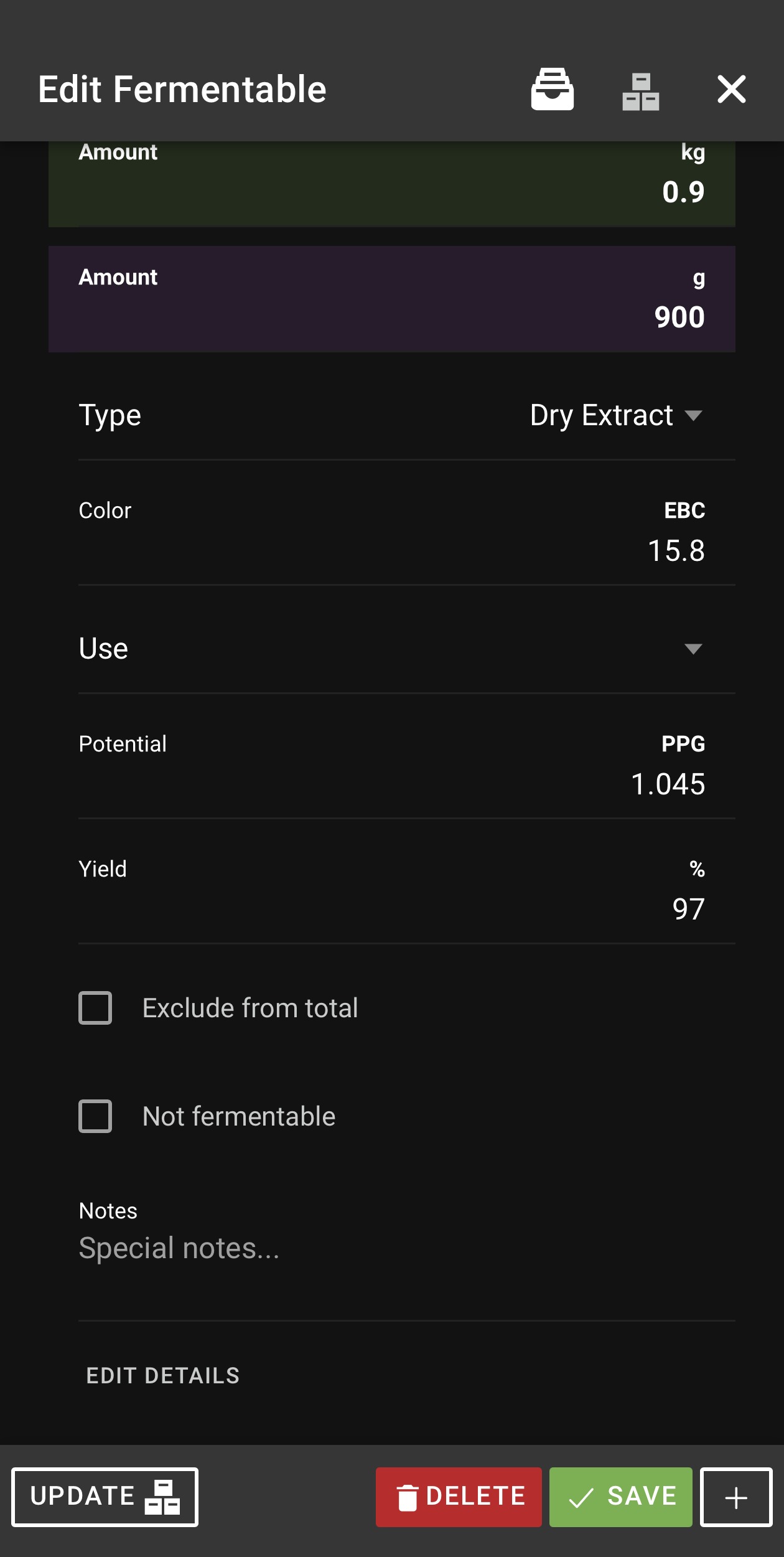
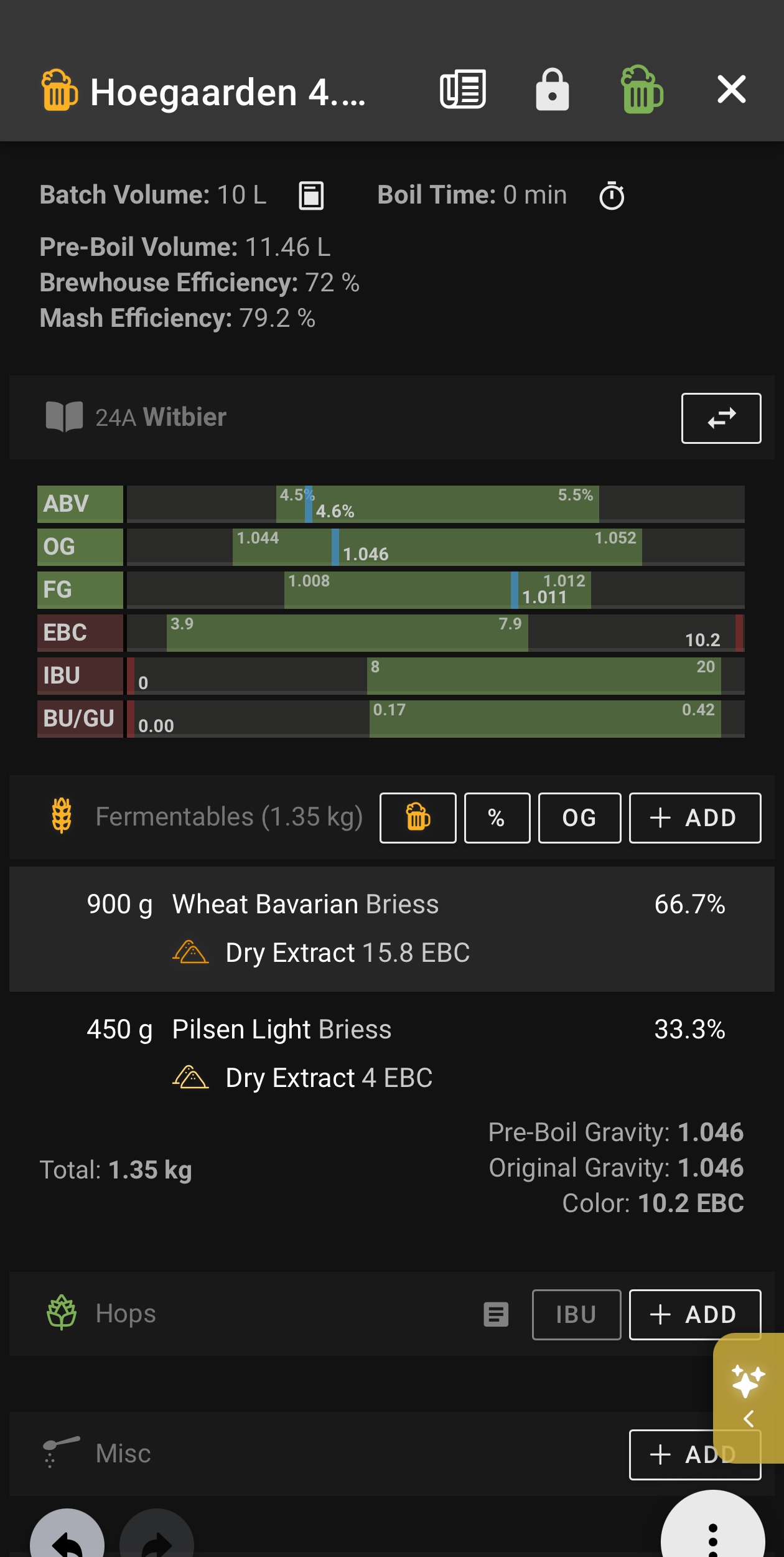
Without changing the ingredient weights, the estimated OG moved from 1.036 to 1.046. The lesson here is not “Brewfather was wrong.” It is that the ingredient record feeding the calculation matters, and I needed to verify the values in the record I had selected.
5. Gravity fixed—then the color jumped to 10.2 EBC
After fixing the potential, OG was where I wanted it, but the recipe color was 10.2 EBC (~5.2 SRM). The Wheat DME color entry was 15.8 EBC, so I checked the product data again.
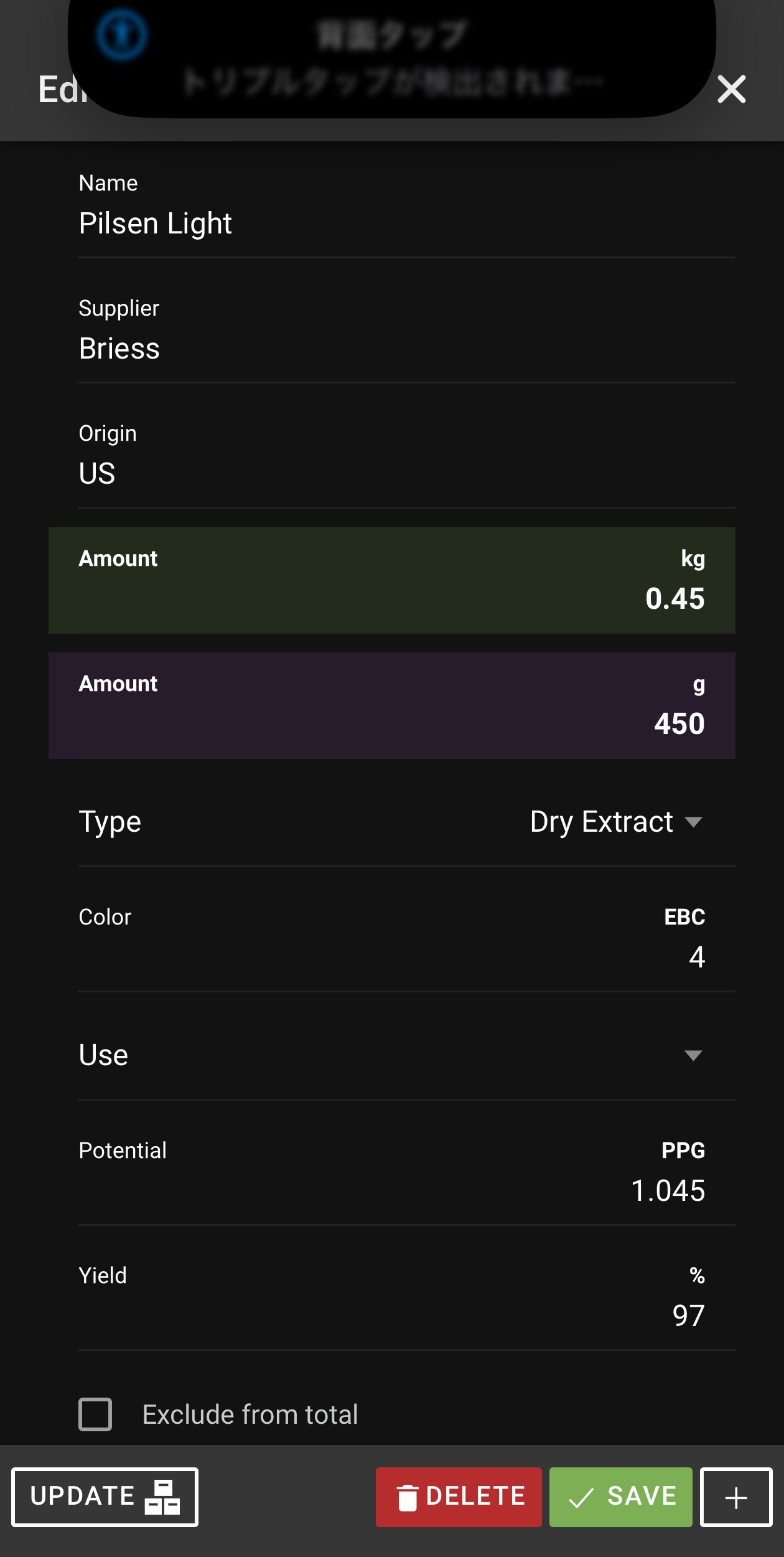
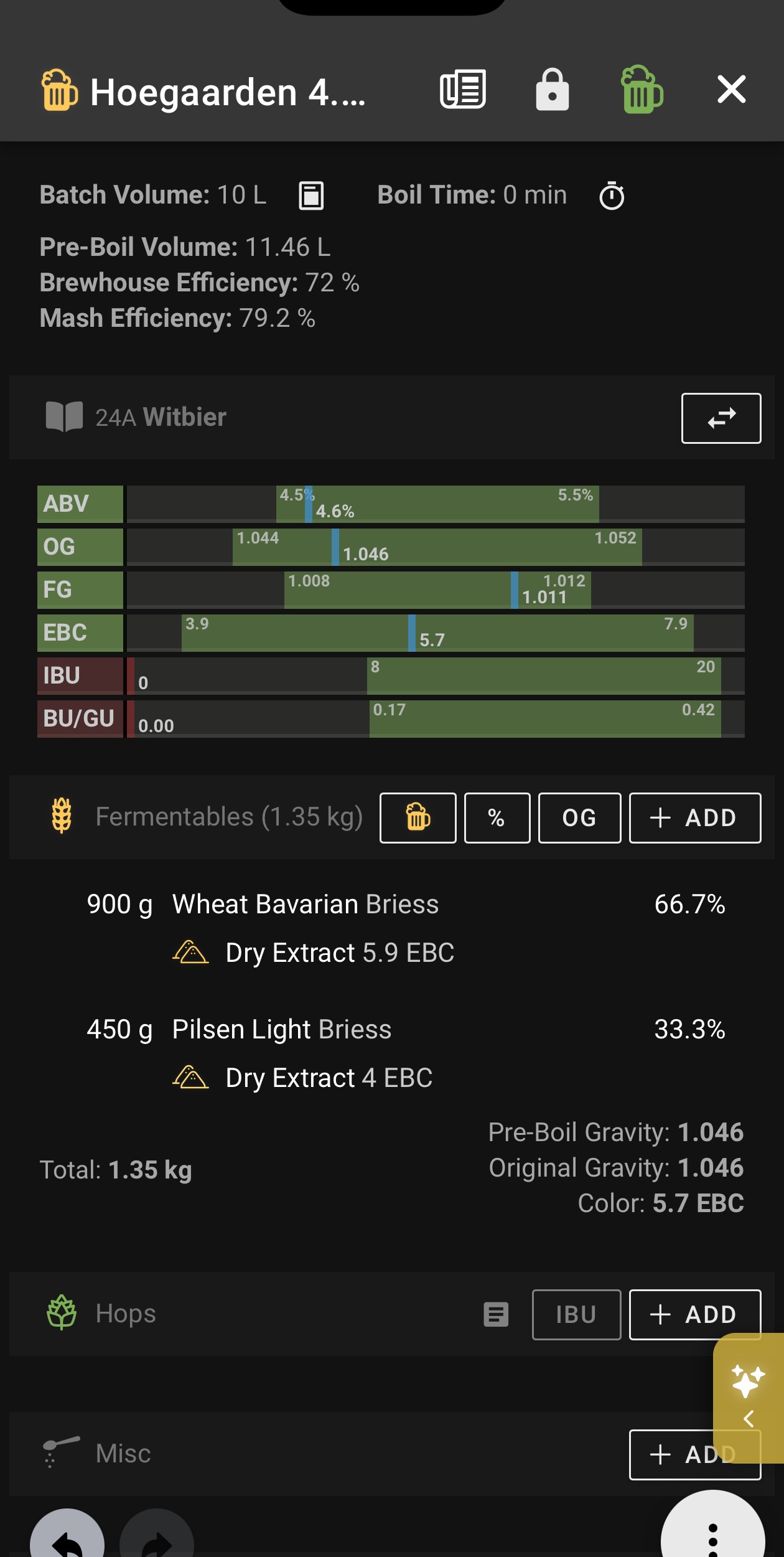
Briess currently lists Bavarian Wheat DME at 3 SRM (~5.9 EBC) and Pilsen Light DME at 2 SRM (~3.9 EBC). [6] Using those color values brought the overall recipe estimate to 5.7 EBC (~2.9 SRM).
6. Saaz: 10 g for 60 minutes to target 12 IBU
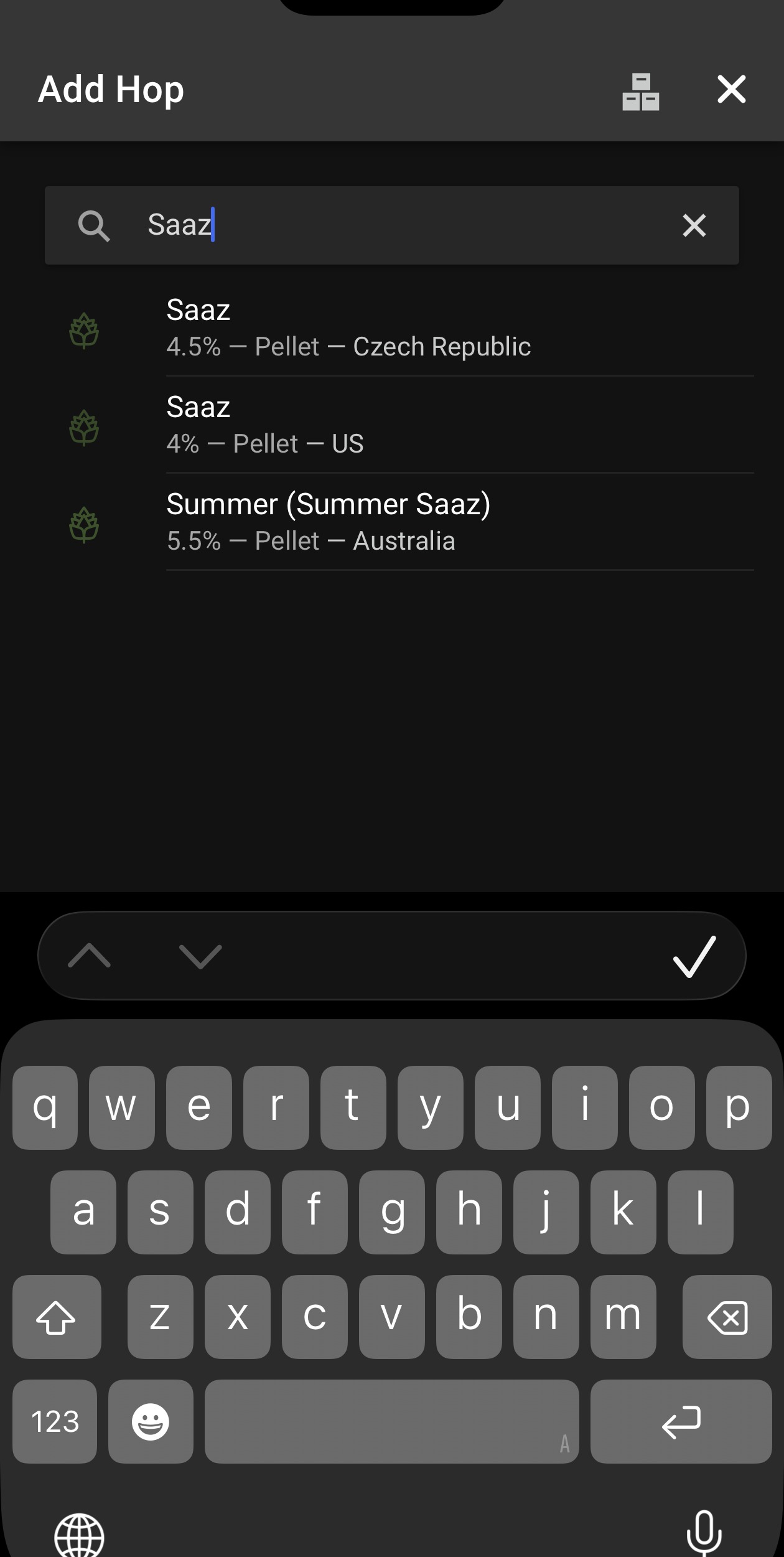
Next came hops. Brewfather returned several Saaz entries, so I used Czech Saaz at 4.5% alpha acid as a design placeholder.
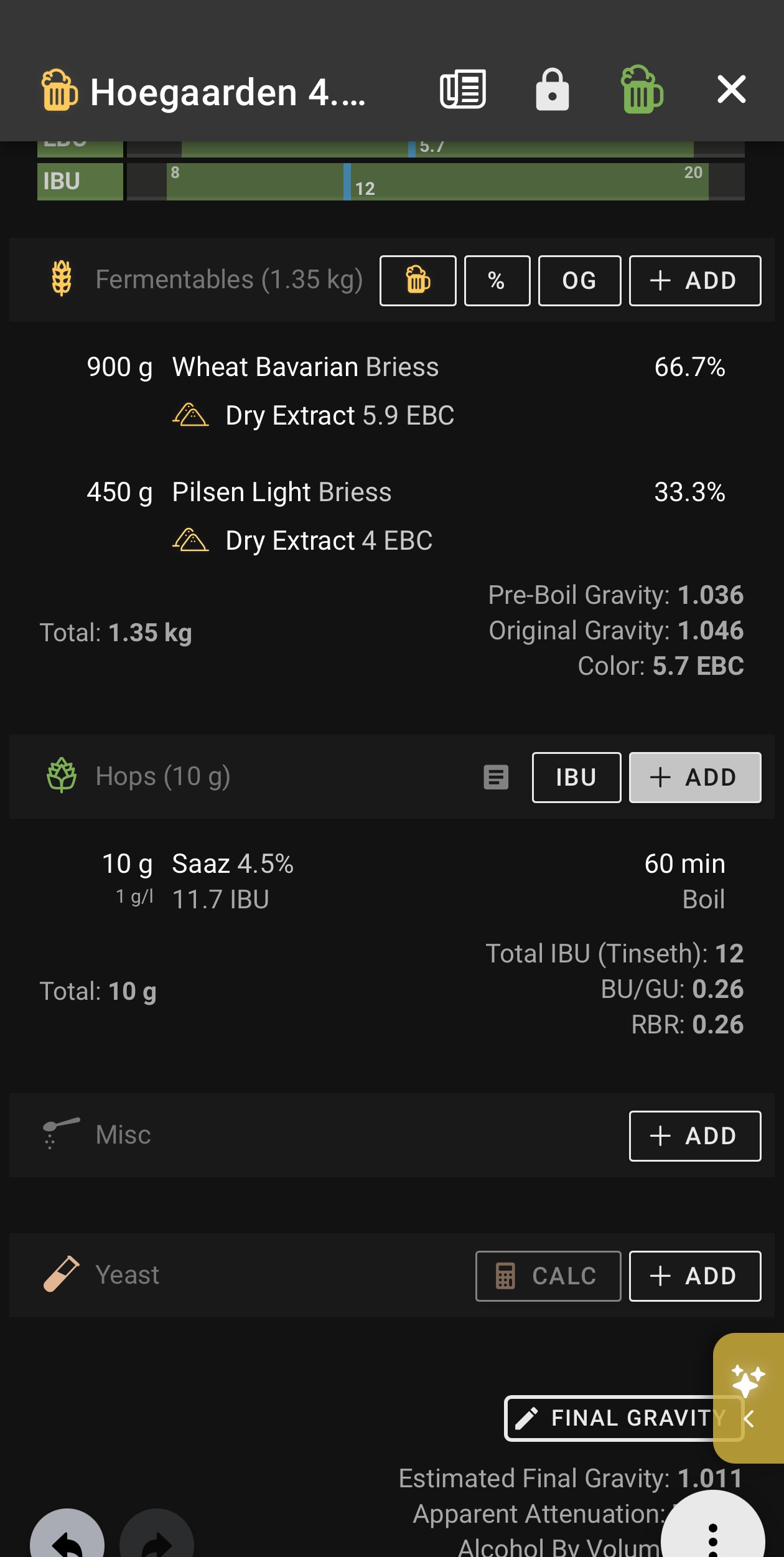
That matches the 12 IBU ballpark of the BrewArt Team clone. [1] The actual alpha acid percentage will depend on the bag I buy, so I will replace the placeholder with the lot-specific AA% before brew day and recalculate.
7. Fixing the spice amounts and choosing the yeast
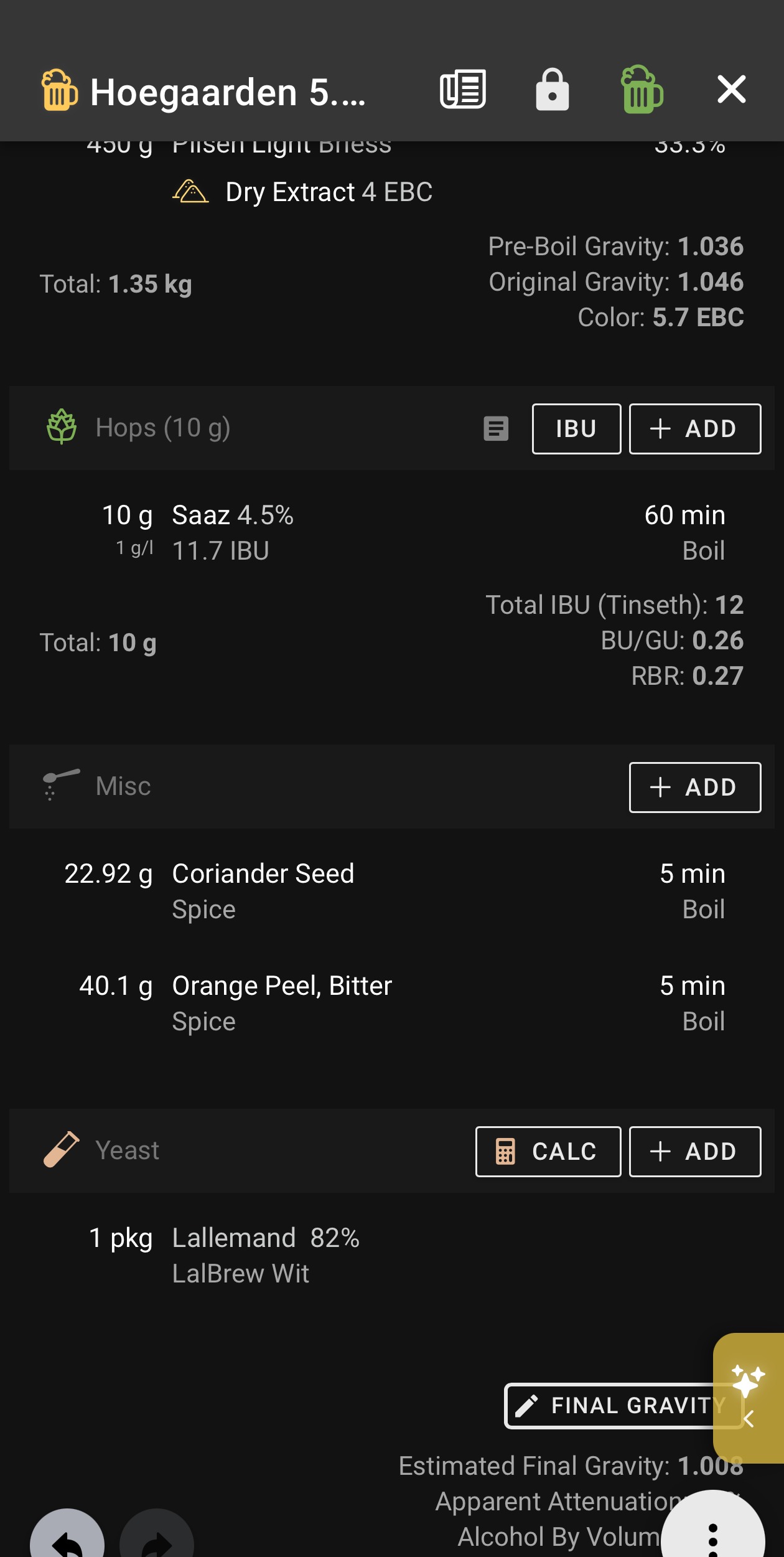
When I first added coriander and bitter orange peel under Misc, the in-progress entries were 22.92 g and 40.1 g—far beyond what I intended. Those were not Brewfather recommendations; they were simply intermediate input values that still needed to be edited.
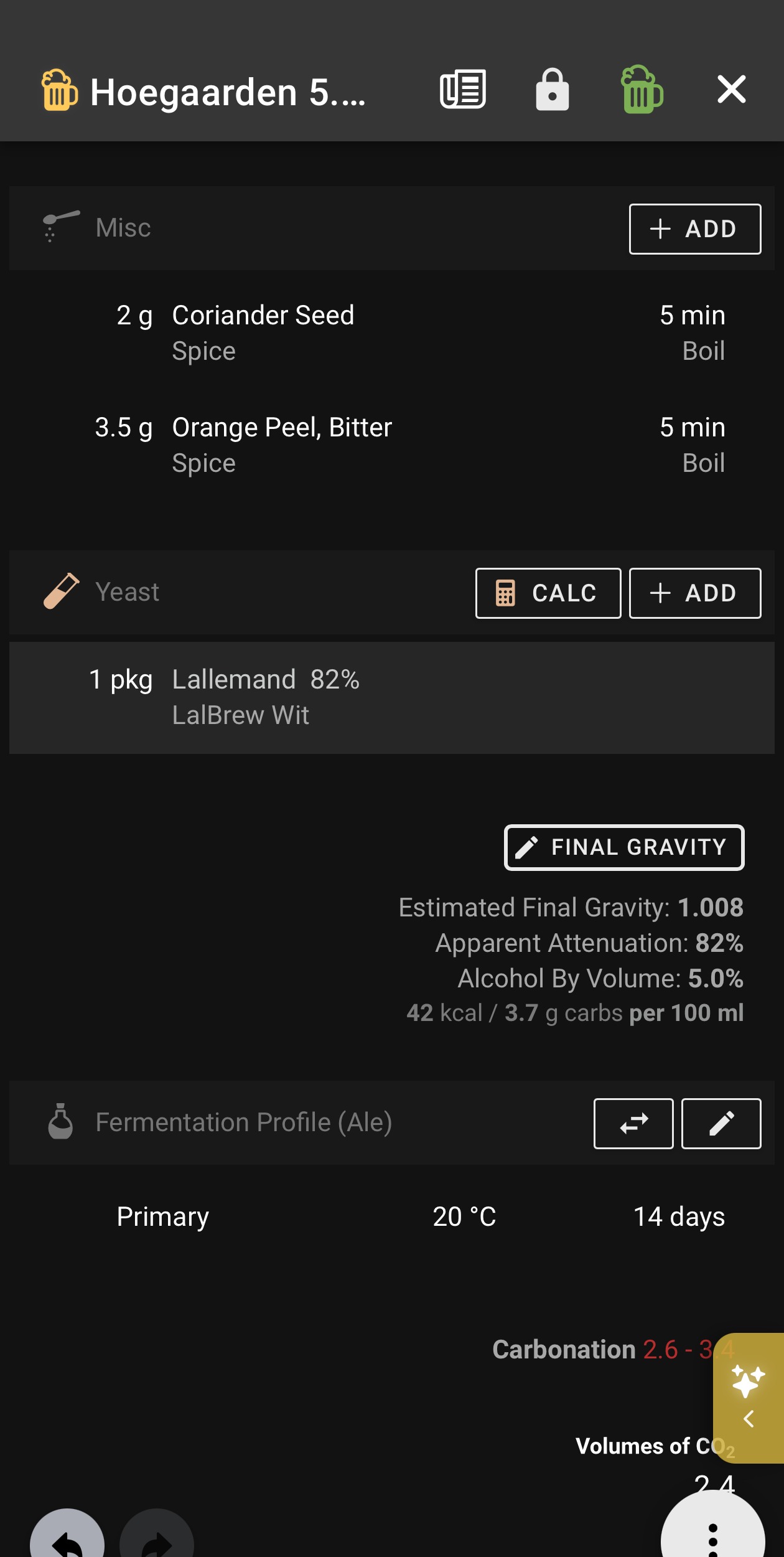
I reset the spices to match the BrewArt starting point—2 g coriander and 3.5 g bitter orange peel—then chose Lallemand LalBrew Wit. Lallemand lists LalBrew Wit's fermentation range at 17–25°C (63–77°F) with 75–82% attenuation. [7] My current design setting is 19°C (66°F) for 7 days.
8. Final design: BeerDroid 10 L Witbier v1
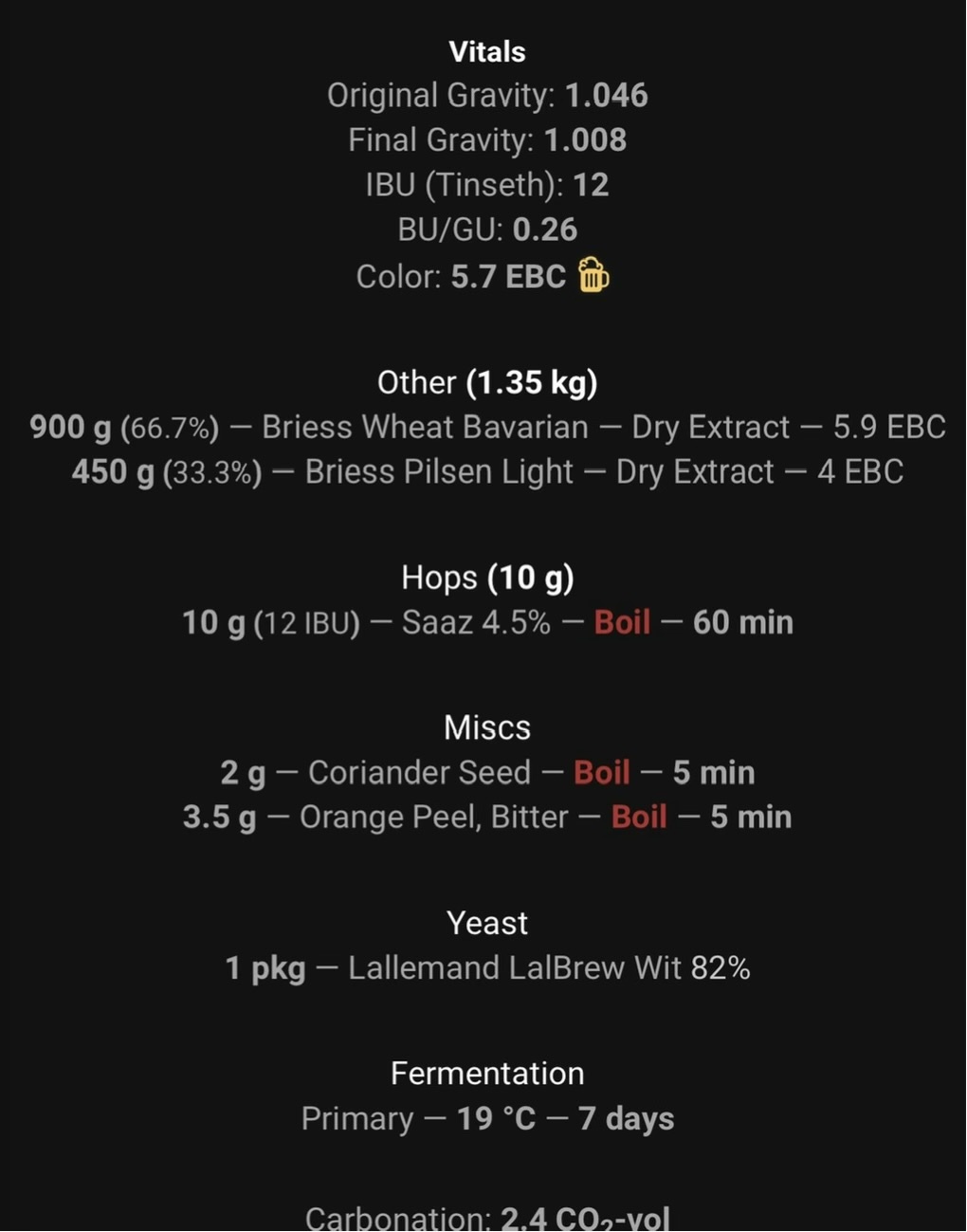
The BrewArt Team Hoegaarden clone started the project, but this is not a direct replacement of BrewArt ingredients with generic equivalents. I rebuilt it around DME, Saaz, and LalBrew Wit while watching Brewfather's predicted gravity, attenuation, bitterness, color, and fermentation settings. It is now my BeerDroid 10 L Witbier v1.
9. The most interesting part was questioning the numbers
What I liked most about this process was not the automatic calculation itself. It was the loop:
- Add an ingredient.
- Look at the result.
- Notice that something seems off.
- Check the ingredient record or assumption.
- Correct it.
- Recalculate.
If I had reacted to OG 1.036 by simply adding more DME, I might have built an unnecessarily strong wort. Checking the ingredient record moved the estimate to 1.046. Then 10.2 EBC forced another check of the color values. Saaz required an explicit AA assumption, and the spice entries had to be corrected before they meant anything.
A recipe calculator is incredibly useful, but it calculates from the inputs you give it. If the ingredient record or assumption is wrong, the math can be perfectly consistent and still describe the wrong recipe. Spotting the weird number and checking the input is part of recipe development.
10. Next: what does this recipe actually cost to brew?
The recipe design is finished. The next question is how to buy the ingredients efficiently. A BrewArt-ingredient version and an individually sourced DME/hops/yeast/spice version have very different economics once I include multi-batch quantities, leftovers, shipping, primer, keg liners, and sanitizer.
I followed that recipe-design article with a full cost comparison that adds measured electricity, consumables, and equipment amortization.
Read the BeerDroid cost comparison →
Conclusion
Running low on BrewPrints pushed me toward the BrewArt Team Hoegaarden Wheat Clone, and buying the clone's extra spices pushed me one step further into designing my own recipe. Brewfather let me see each change immediately—but the useful part was checking the assumptions behind those numbers.
The current v1 design is OG 1.046 / FG 1.008 / 5.0% ABV / 12 IBU / 5.7 EBC (~2.9 SRM). It is still a calculated recipe, not a proven beer. The next real test is brewing it in the BeerDroid, watching fermentation, and tasting the finished result.
Here are the ingredients for the BrewArt Team clone that started this comparison. E5 / X2 / Y5 link to BrewArt's official store, while the additional spices link to MoreBeer.
- BrewArt Element 5 (E5) — 1 pack (250 g / 8.8 oz)
View at BrewArt → - BrewArt Enhancer 2 (X2) — 4 packs (250 g × 4 / 8.8 oz × 4)
View at BrewArt → - BrewArt Yeast 5 (Y5) — 1 pack (10 g / 0.35 oz)
View at BrewArt → - Coriander Seed (Whole) — 2 g (0.07 oz)
View at MoreBeer → - Bitter Orange Peel — 3.5 g (0.12 oz)
View at MoreBeer →
Original BrewArt Team recipe: Hoegaarden Wheat Clone →. Prices, availability, and product specifications may change.
These are the ingredients selected for my Brewfather-designed Witbier v1, listed with the amounts used in the recipe. The links below are currently standard product links.
- Briess Bavarian Wheat DME — 900 g (1.98 lb)
View at MoreBeer → - Briess Pilsen Light DME — 450 g (0.99 lb)
View at MoreBeer → - Czech Saaz Pellet Hops — 10 g (0.35 oz) / 60 min
View at MoreBeer → - Coriander Seed (Whole) — 2 g (0.07 oz) / 5 min
View at MoreBeer → - Bitter Orange Peel — 3.5 g (0.12 oz) / 5 min
View at MoreBeer → - Lallemand LalBrew Wit — 1 pack
View at MoreBeer →
Note: Saaz alpha acid varies by lot. Before brewing, I will replace the 4.5% design assumption with the value printed on the hops I actually buy and recalculate IBU. Prices, availability, and product specifications may change.
References
- BrewArt Team, Hoegaarden Wheat Clone (E5 / X2 / Y5, coriander, orange peel, Ale program, ~5.5% ABV / 12 IBU / 11 EBC, and the 2024 estimate of roughly 5–7 days fermentation)
- BrewArt, Element 5 (E5) (250 g and product description)
- BrewArt, Enhancer 2 (X2) (250 g and product description)
- BrewArt, Yeast 5 (Y5) (wheat yeast, banana/clove character, and 18–22°C recommended ferment range)
- Brewfather, Recipe Designer documentation (recipe design and live recalculation of predicted values)
- Briess, Brewer's Grade Malt Extracts (Bavarian Wheat DME at 3 SRM and Pilsen Light DME at 2 SRM, plus product details)
- Lallemand Brewing, LalBrew Wit™ (17–25°C / 63–77°F temperature range and 75–82% attenuation)
- Beer Judge Certification Program (BJCP), 2021 Beer Style Guidelines — 24A. Witbier (Witbier style classification)
Questions or comments about this article?
If you tried something similar, noticed something different, or have a question about the recipe design, feel free to send it. Add your email if you would like a reply.
The website is where I organize each experiment after it reaches a useful checkpoint. For real-time recipe tweaks and brew-day updates, I also post at @ConyDIYHouston.