
3 Weeks of Bento Lunches
14 Days, 13 Main Menus, and a Practical Side-Dish Rotation
Trying to make every single part of a lunch different each day gets exhausting. I lined up about three weeks of our homemade bentos—14 days total—and found 13 different main-menu patterns. The only repeat was chicken meatballs, because my daughter says she would happily eat them every day. The sides tell a very different story: cherry tomatoes appeared on 12 of 14 days, corn on 10, and spinach on 9. The system works because I change the main dish, keep reliable colorful sides, and keep using Costco-sized groceries until they are actually gone.
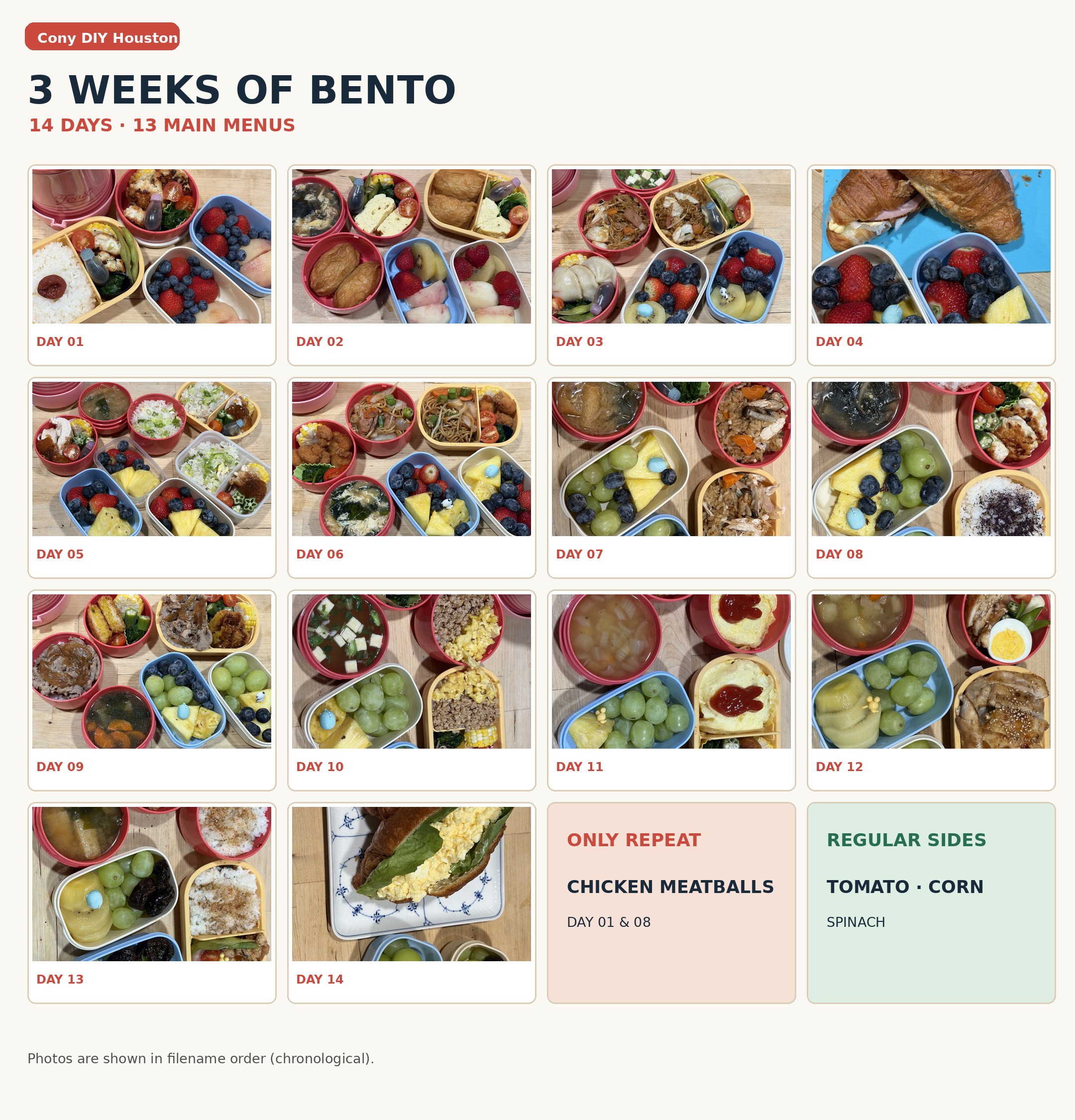
The short version
| Different every day? | Not completely, but close: 13 main-menu patterns across 14 days. |
|---|---|
| The only repeat | Chicken meatballs. They are my daughter's favorite—she says she would eat them every day—so I see no reason to force variety there. |
| What about the sides? | Very repetitive on purpose: cherry tomatoes on 12 days, corn on 10, spinach on 9. Red, yellow and green are easy to add and keep the box visually balanced. |
| The Costco factor | Large packages take time to finish, so the same vegetables and fruit keep returning until we use them up. |
| Soup | For the person using the red insulated lunch container, soup comes along every day except sandwich days. The container itself makes that routine easy. |
1. Fourteen days gave us 13 main-menu patterns
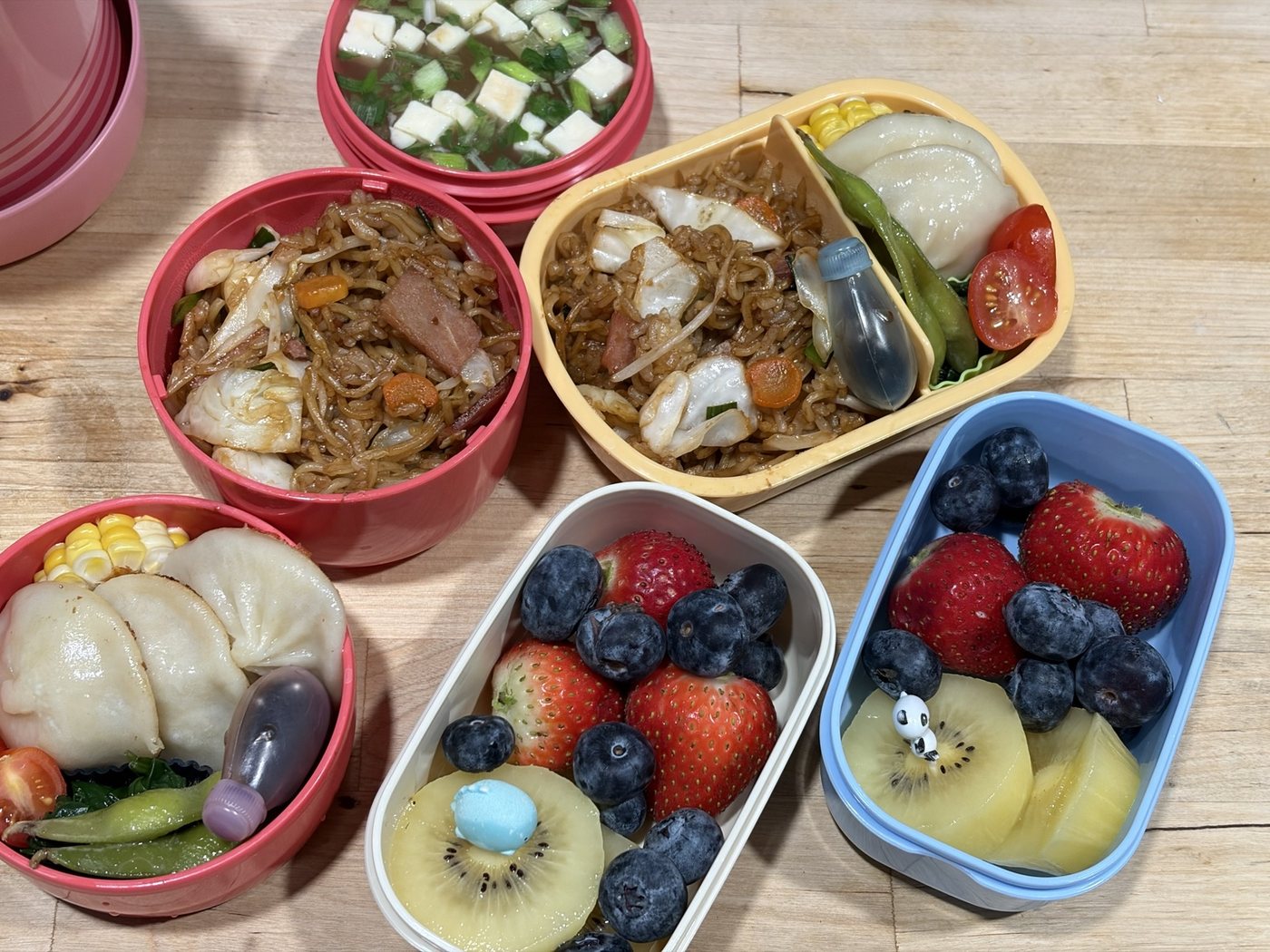
I count sobameshi on Day 3 and yakisoba on Day 6 as different dishes. Day 4's croissant sandwiches and Day 14's egg croissant sandwiches also count separately because the fillings are different.
| Day | Main menu |
|---|---|
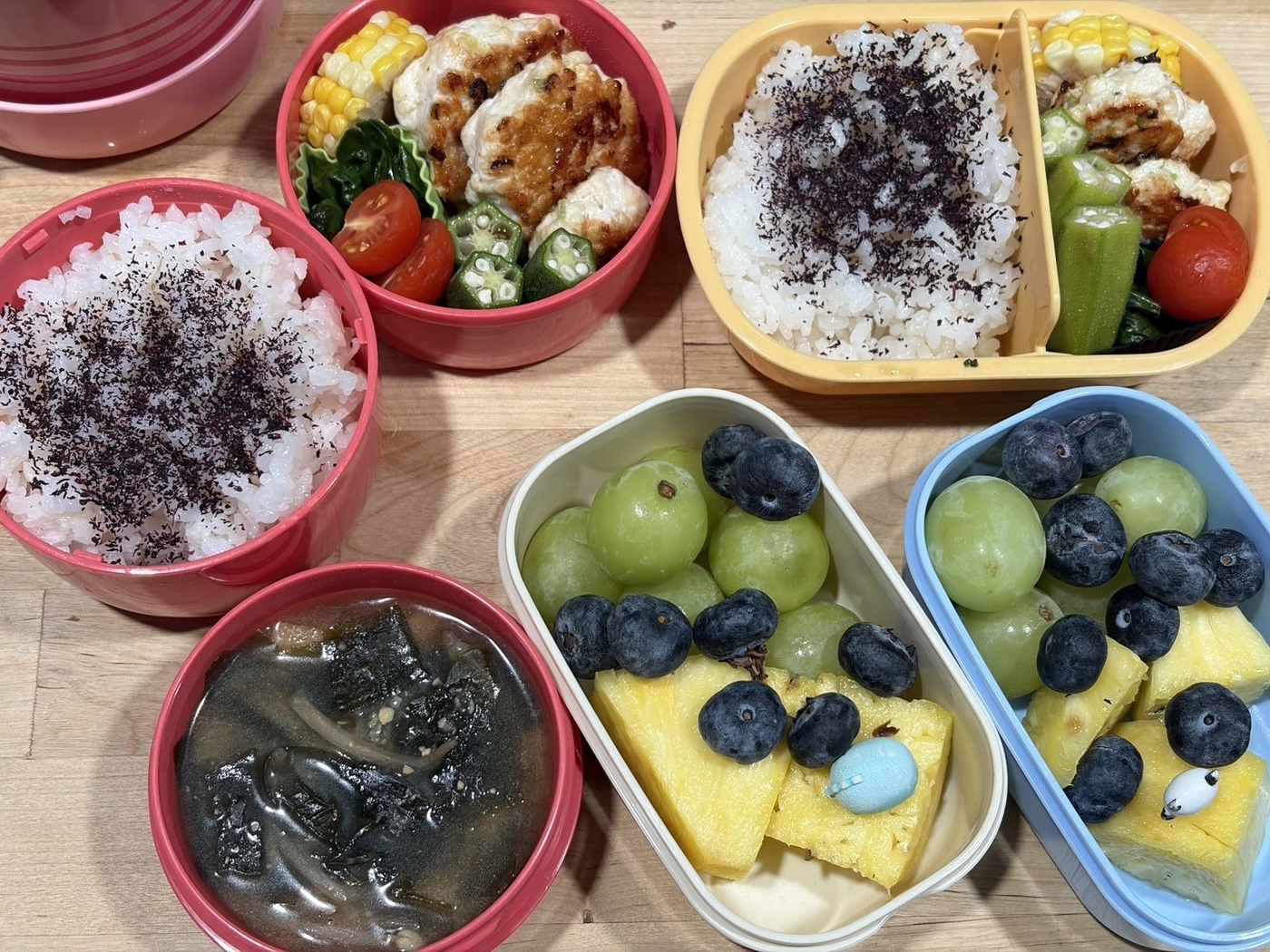
| DAY 01 | Chicken meatballs (tsukune) |
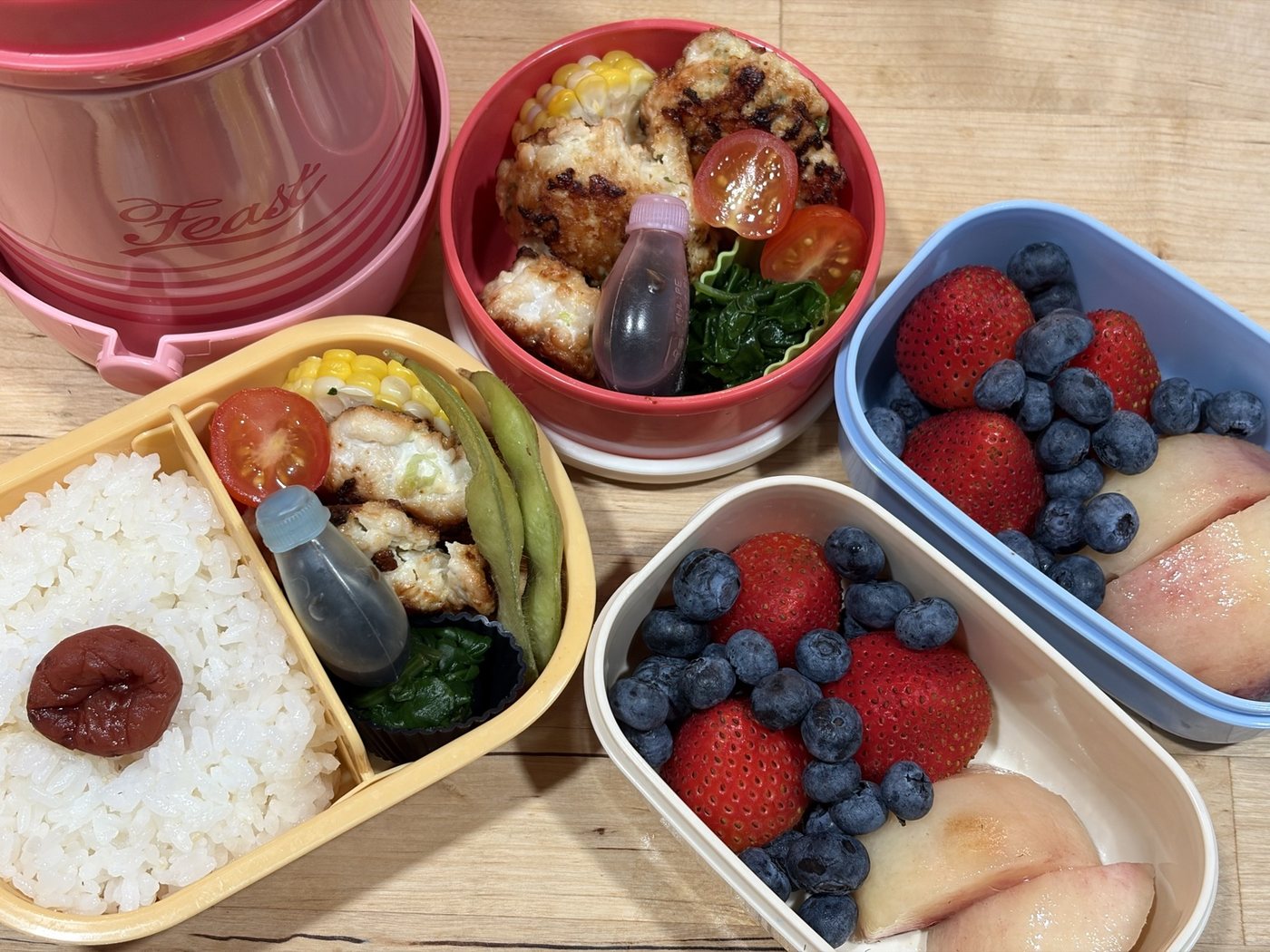
| DAY 02 | Inari sushi + tamagoyaki |
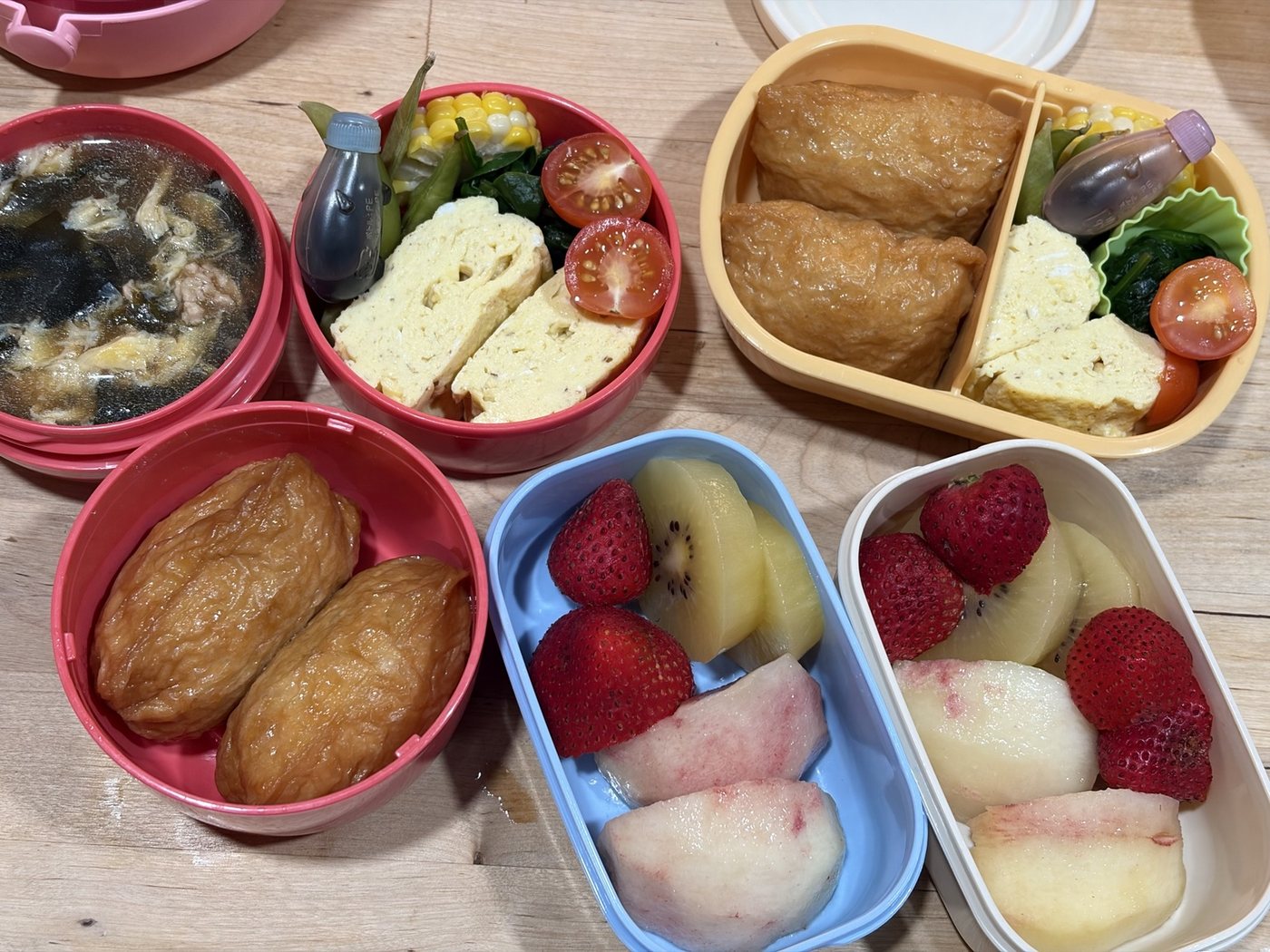
| DAY 03 | Sobameshi + pork xiaolongbao |
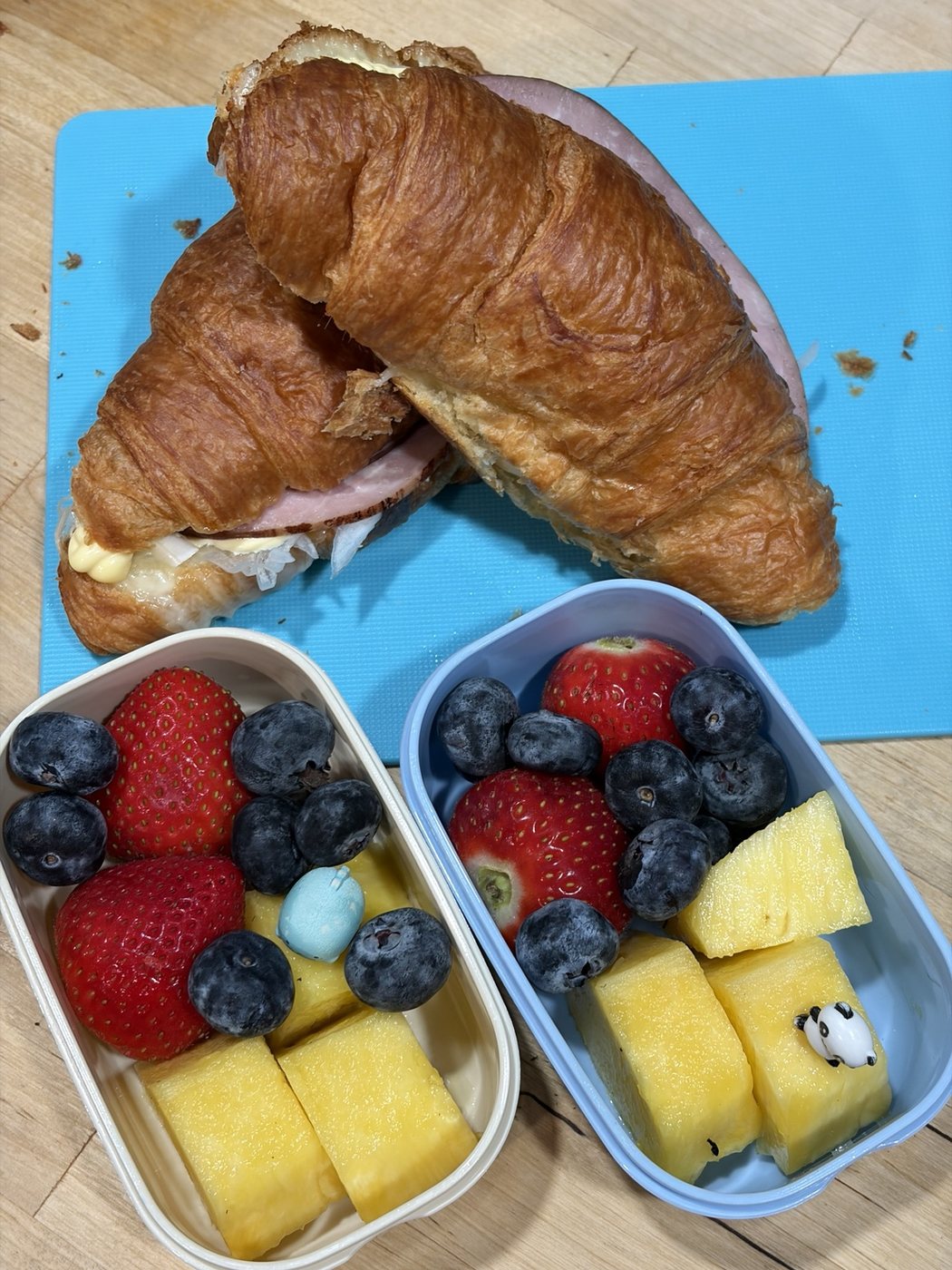
| DAY 04 | Croissant sandwiches |
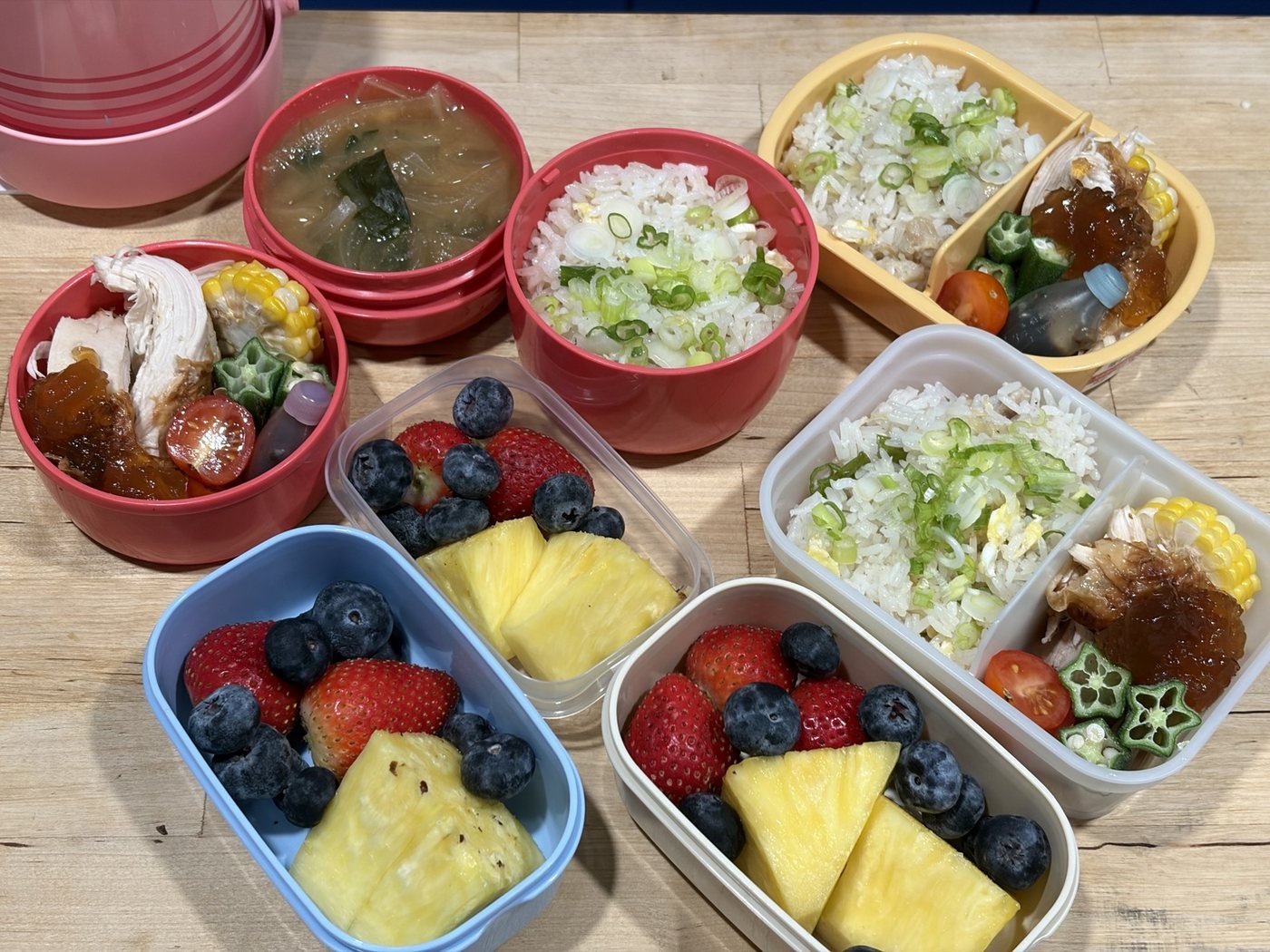
| DAY 05 | Fried rice + chicken |
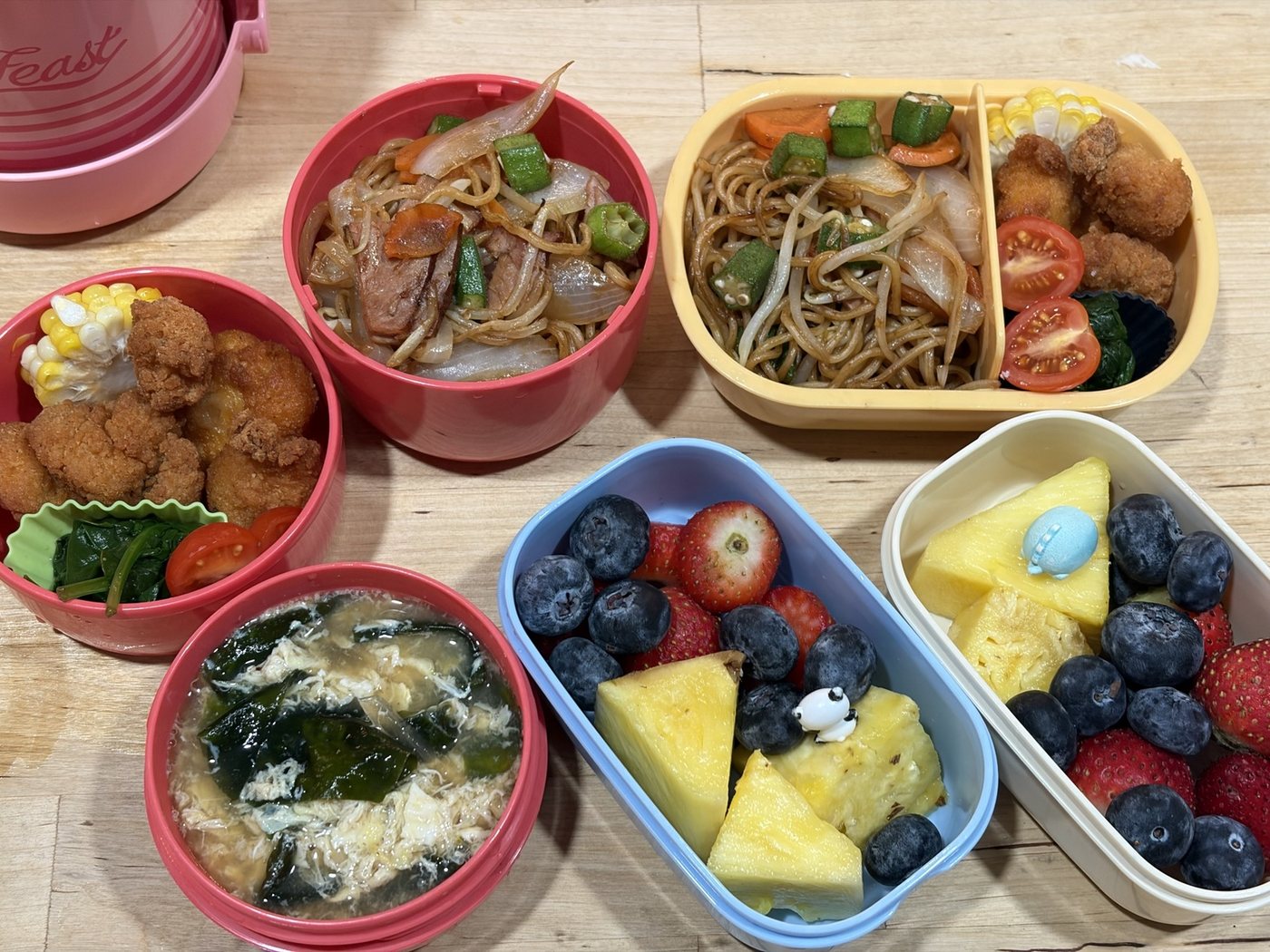
| DAY 06 | Yakisoba + chicken nuggets |
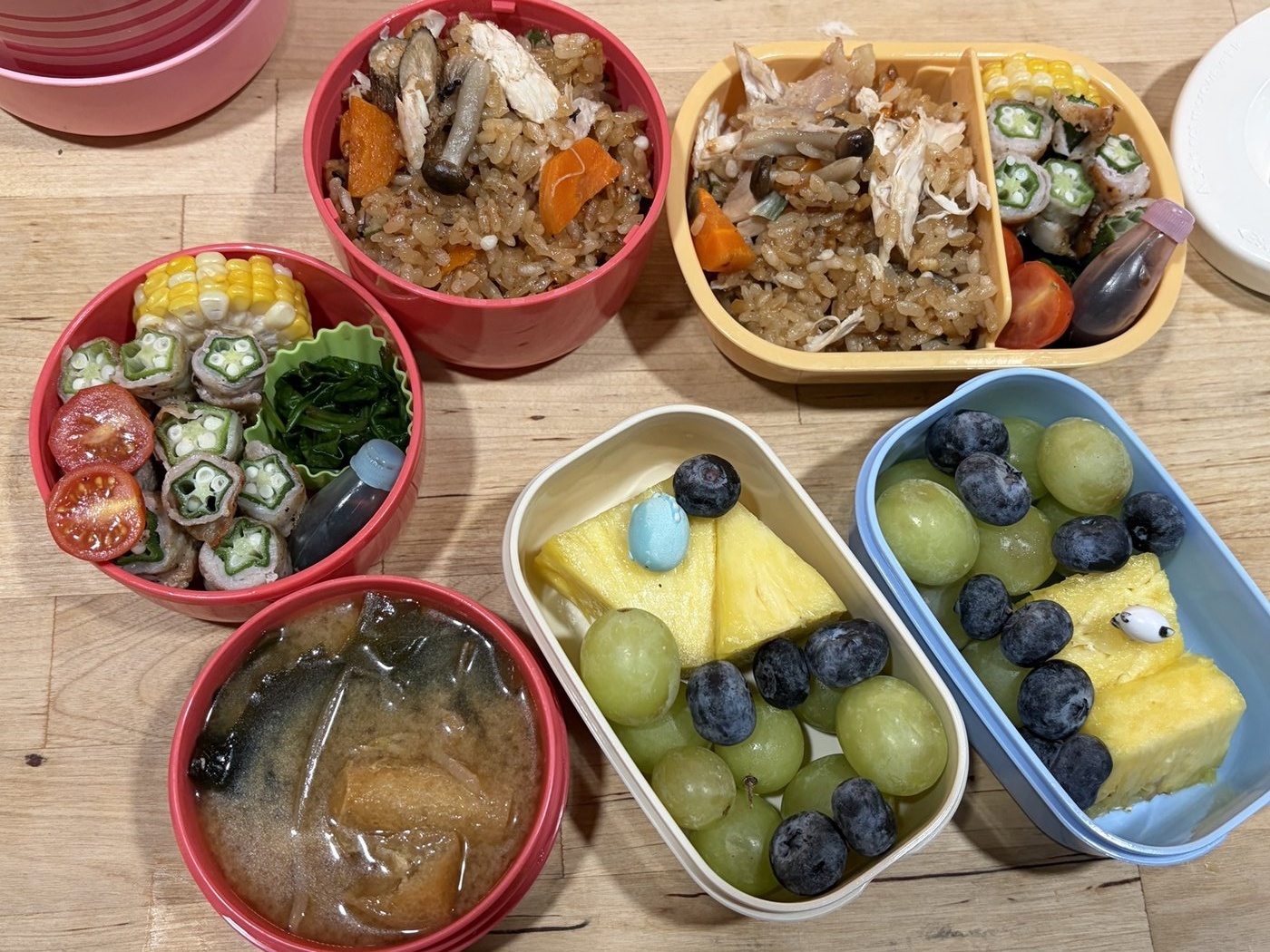
| DAY 07 | Chicken takikomi rice + pork-wrapped okra |
| DAY 08 | Chicken meatballs (tsukune) |
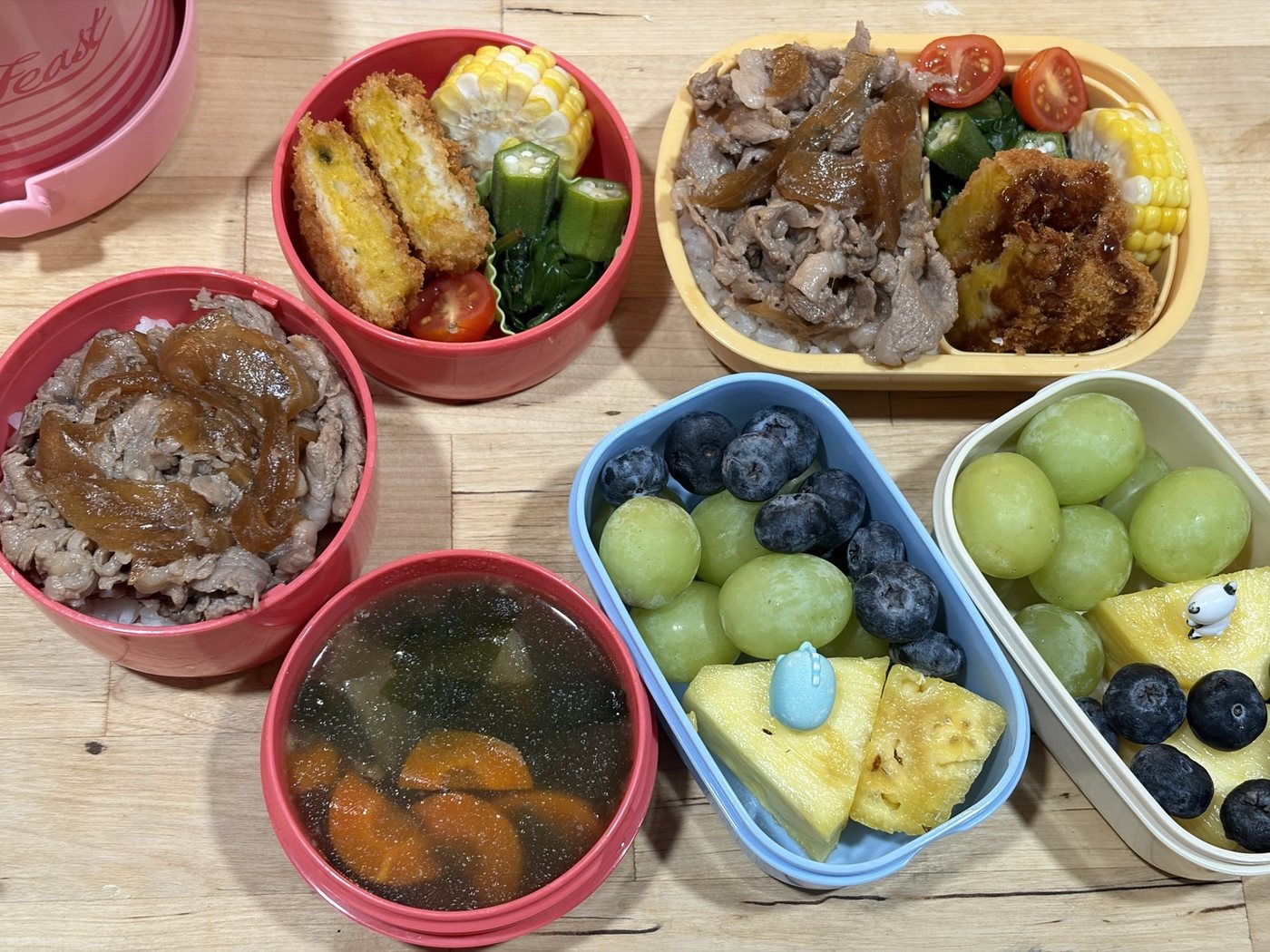
| DAY 09 | Gyudon + croquettes |
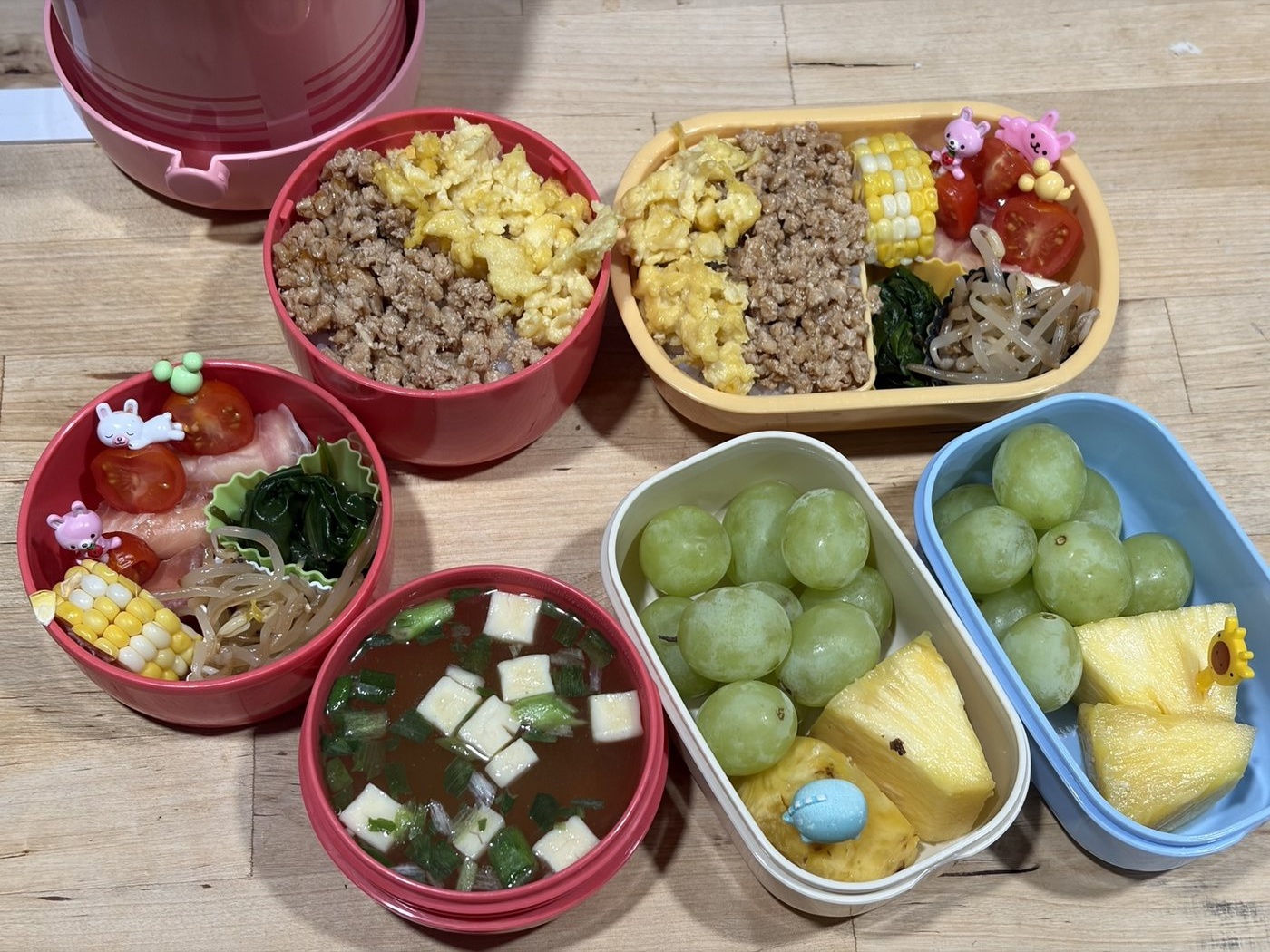
| DAY 10 | Chicken soboro + egg |
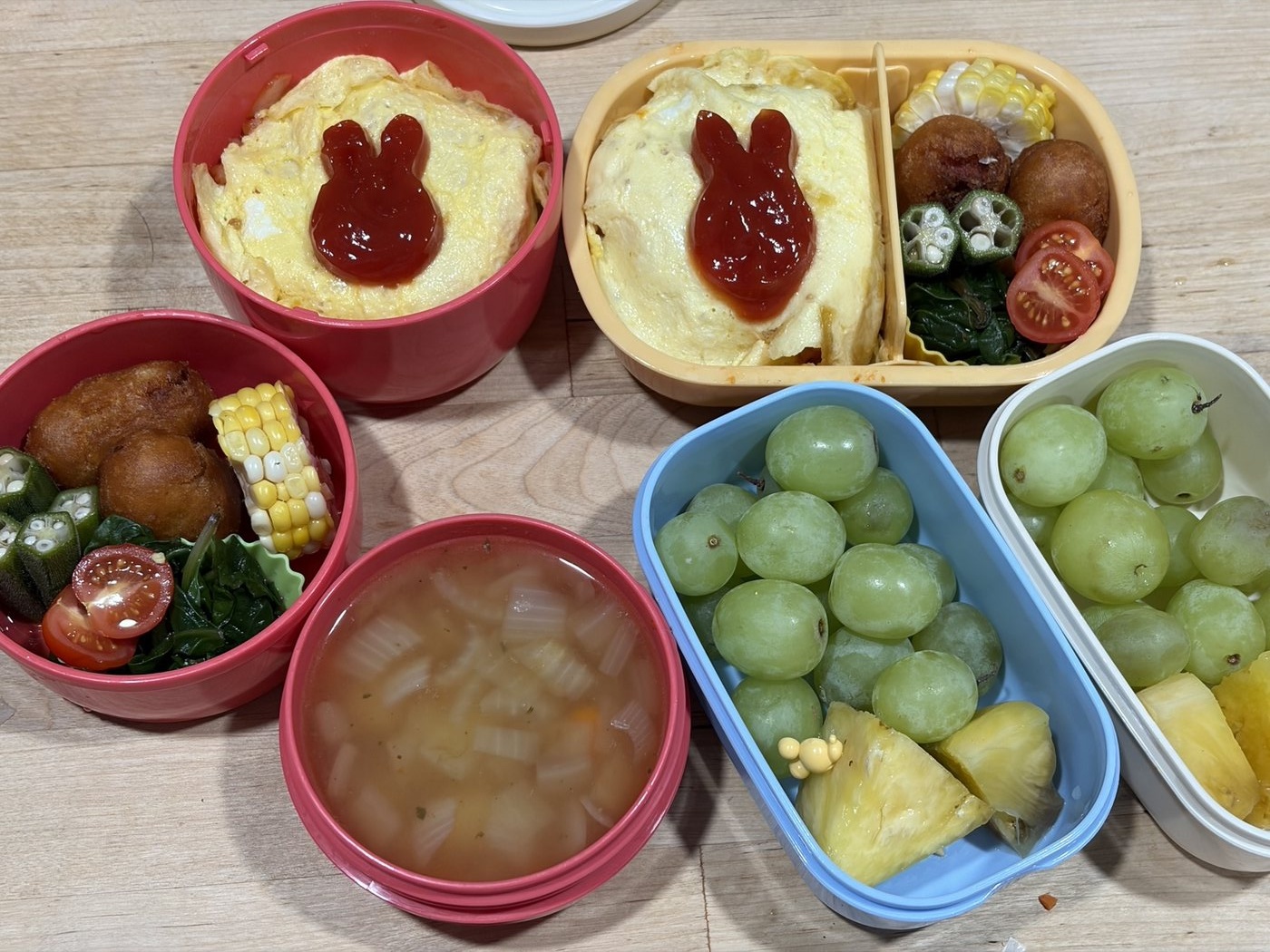
| DAY 11 | Omurice + corn dogs |
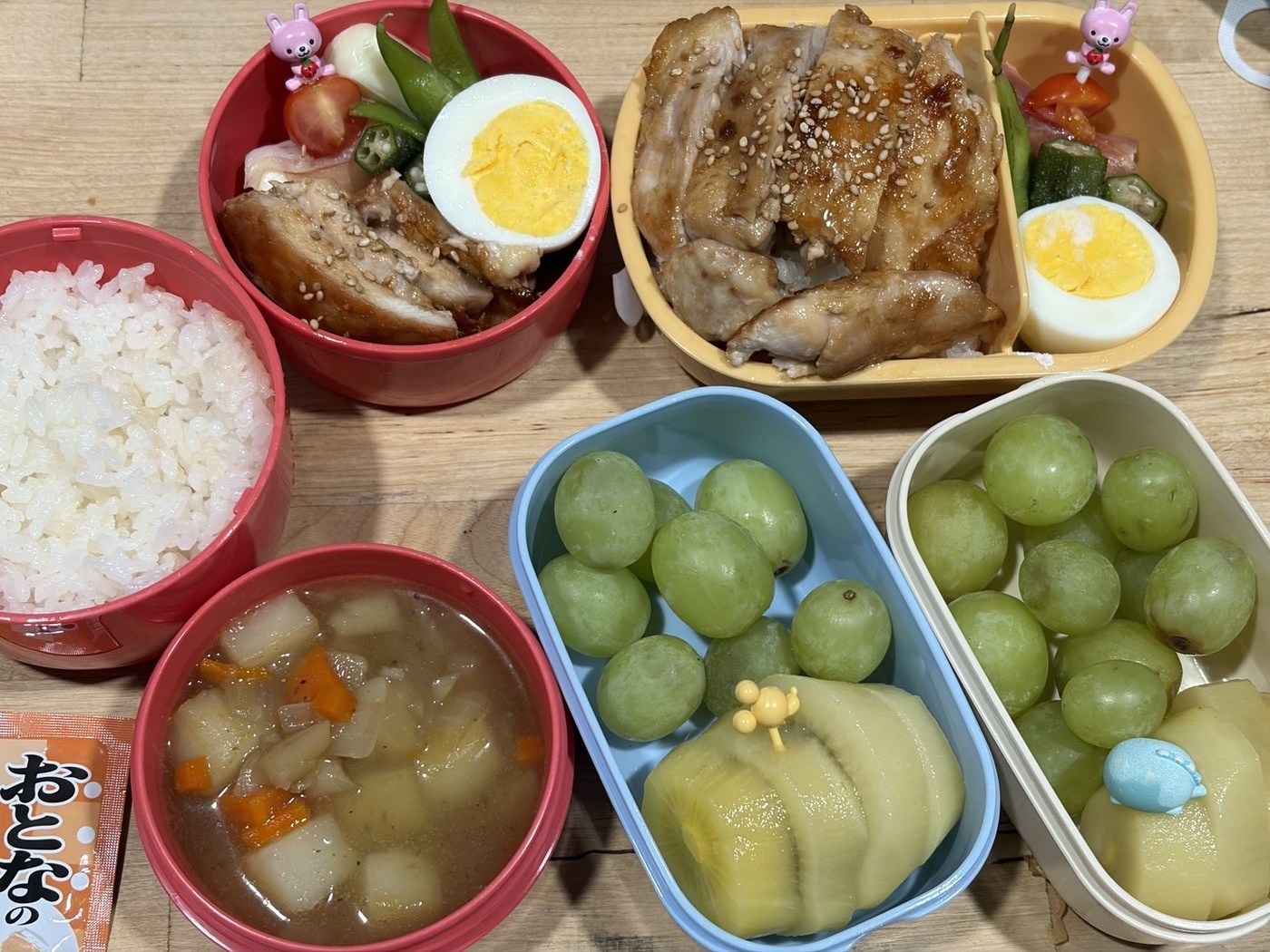
| DAY 12 | Chicken teriyaki |
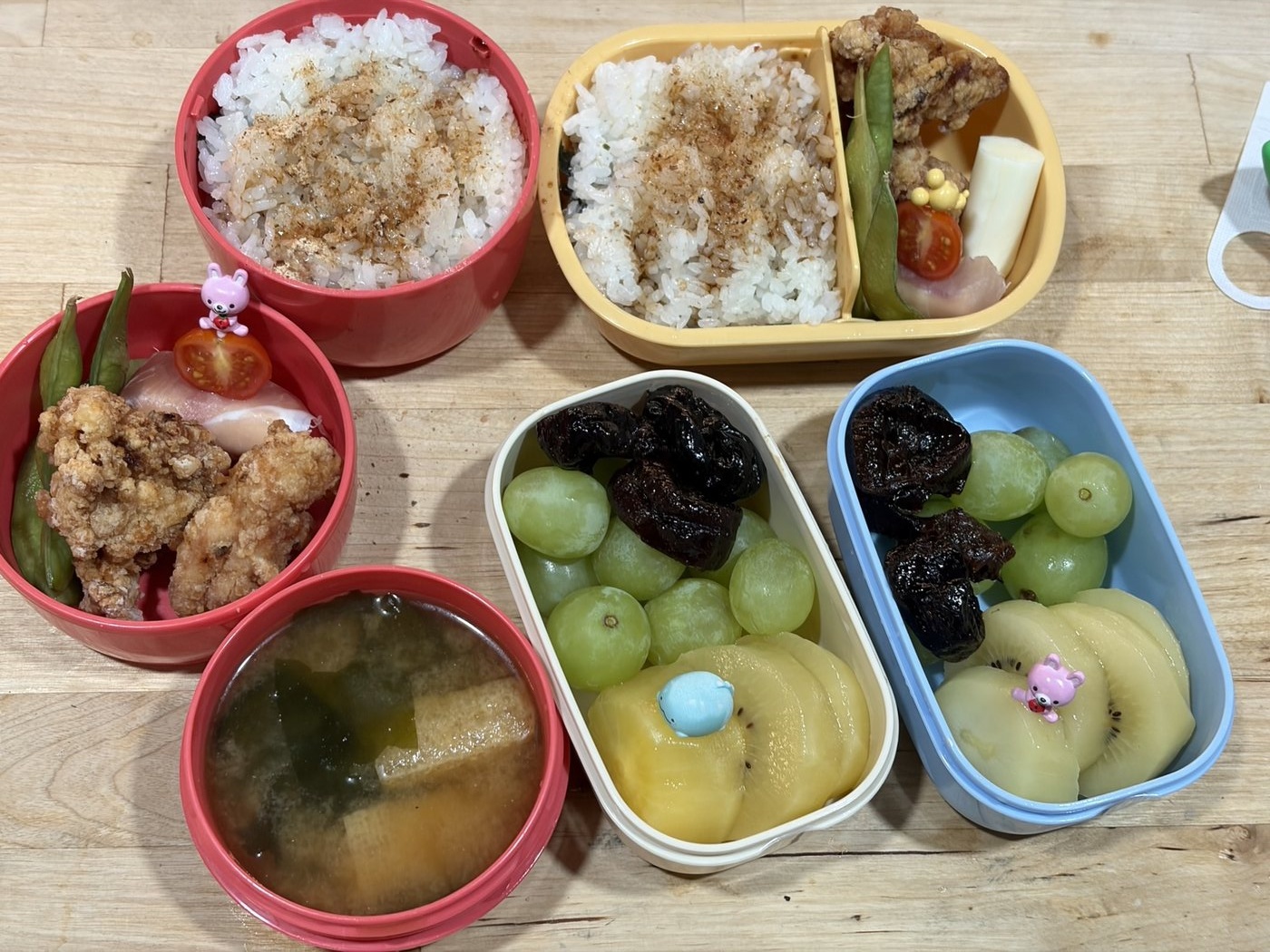
| DAY 13 | Karaage |
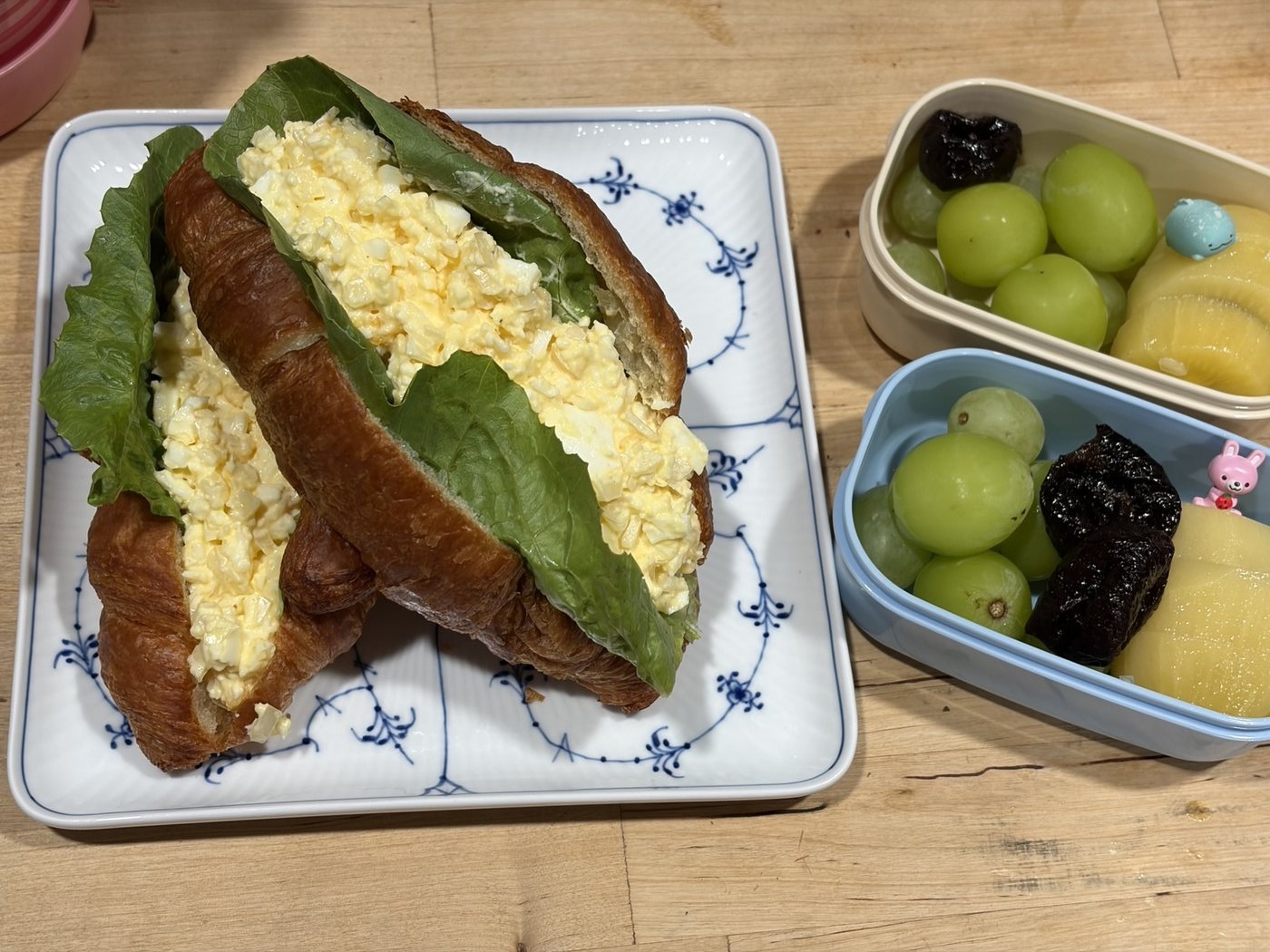
| DAY 14 | Egg croissant sandwiches |
2. The one repeat is my daughter's favorite
As the person making the lunches, I tend to think, “I should make something different from yesterday.” But the only repeated main menu—chicken meatballs on Days 1 and 8—is my daughter's favorite. Her verdict is simple: “I could eat these every day.”
That was a useful reminder that zero repetition is not actually the goal. If the family genuinely loves something, repeating it is a feature, not a failure. It is easier to keep going when I separate the parts that need variety from the parts that do not.
My daughter likes chicken, and we sometimes turn leftover Costco rotisserie chicken into other meals instead of treating it as a one-night dinner. As I remember it, we were also out of fresh beef and pork for part of the first half of this stretch, so chicken and eggs did a lot of the work.
I also wrote about taking apart a Costco rotisserie chicken in my yagen-cartilage article.
3. Thirteen main patterns—but the sides repeat constantly
For the side-dish count, an ingredient counts once if it appeared that day, even when it was packed into both lunches. The result is wonderfully repetitive.
Cherry tomatoes, corn and spinach are our reliable trio. The reason is simple: they make it easy to add red, yellow and green to a small lunch box, while also making it easy to include vegetables without reinventing the side dishes every morning.
4. The biggest reason the sides repeat: Costco portions take forever to finish
The other reason is very American-life specific: Costco portions are big.
Cherry tomatoes, spinach and fruit do not disappear after one or two lunches. If I avoided an ingredient just because I used it yesterday, we would have a harder time finishing what we bought. So our rule is simple: keep using it until it is gone.
That is less about cutting corners and more about reducing waste. The main dish creates variety; the sides help us finish the groceries. That division of labor is a big reason the routine stays manageable.
5. The fruit changes when the shopping cycle changes
The photos also show clear fruit “eras.” Early on there are strawberries, blueberries and peaches. Then pineapple and grapes take over, followed by kiwi and, later, prunes.
That is not because I am deliberately designing a different fruit combination every day. We simply finish one large package and move to the next. Lining up the pictures makes our grocery cycle visible right inside the lunch boxes.
6. Soup is mostly a function of the lunch container
For the person who uses the red insulated lunch container, soup comes along every day except the sandwich days. Some days it is miso soup; other days it is an egg or vegetable soup.
This is not really a case of adding an extra morning task on purpose. The container is built to carry rice, a main/side compartment, and soup separately, so the hardware itself created the habit. A well-matched container can quietly shape the routine.
7. The full 14-day photo log
Here are all fourteen lunches in order. The mains change a lot, while the recurring tomatoes, corn, spinach, and the same fruit from a given grocery run are easy to spot.
8. What I learned: changing everything is not what creates variety
- Across about three weeks and 14 lunches, there were 13 main-menu patterns.
- The one repeat was the meal my daughter would happily eat every day: chicken meatballs.
- The sides were intentionally repetitive: cherry tomatoes on 12 days, corn on 10, spinach on 9, and edamame on 5.
- Costco-sized groceries stay in rotation until we finish them.
- Fruit changes with the shopping cycle, not with a daily “must be different” rule.
- The red insulated lunch container naturally keeps soup in the routine on non-sandwich days.
The biggest takeaway is that a lunch can look different every day without changing every component every day. The main dish carries most of the variation. Reliable sides handle color and grocery use-up. And if the family loves a dish, repeating it is perfectly fine.
For us, thinking about how to keep the system sustainable matters more than trying to make every box unique from scratch.
Questions or comments?
If you have questions about bento planning, rotating side dishes, or using up Costco-sized groceries, send them here.
These fourteen lunches originally appeared as day-to-day posts. I also share the experiments, fixes, and everyday DIY details behind life in the U.S.