
When Does Homemade Kimchi Taste Best?
Day 1, 3, 7 and 14 Refrigerator Taste Test
Kimchi keeps changing after it is made. Sourness rises, heat rounds out, and the cabbage softens. I kept one batch in the regular refrigerator compartment and tasted it on Day 1, 3, 7 and 14. My conclusion: Day 7 had the best overall balance.
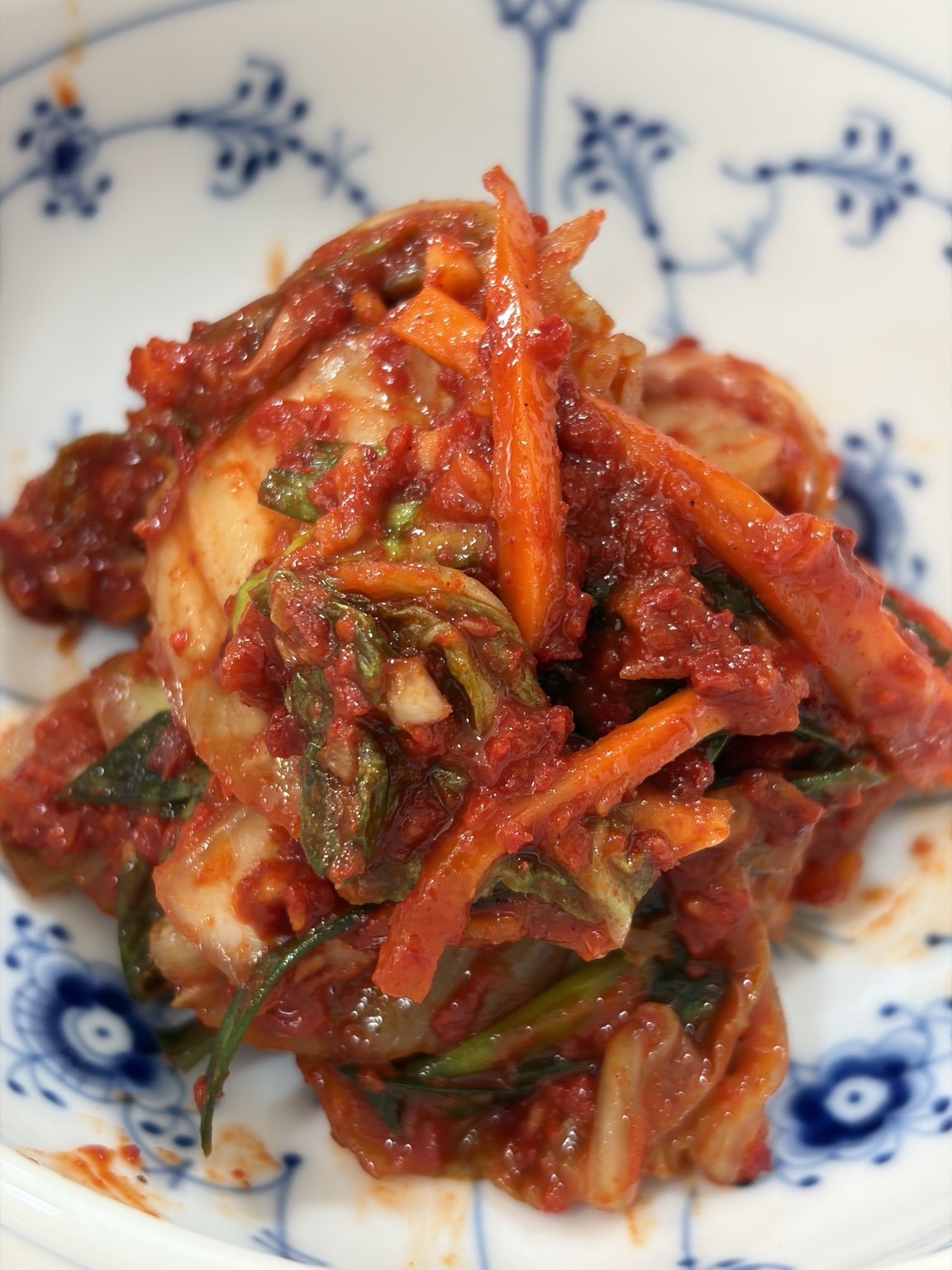
Short answer: Day 7 was the balance point
| Stage | Sourness | Heat | Texture | My take |
|---|---|---|---|---|
| Day 1 | Almost none | Sharp | Very crisp | Fresh and one of my favorites |
| Day 3 | Light | Slightly rounder | Still crisp | Great middle ground |
| Day 7 | Clearly kimchi-like | Mellow, then a kick | Nicely tender | Best overall balance |
| Day 14 | Stronger than Day 7 | More mellow | Soft but not mushy | Still very enjoyable |
Day 7 is not a universal scientific rule. Fermentation speed changes dramatically with temperature, salt, ingredients and storage. But for this refrigerator-only batch, one week was the clearest balance point. Sourness, sweetness, heat and texture all came together at the same time.
My personal taste still leaned younger: I loved the crisp, fresh Day 1–3 stage.
The batch: based on a recipe, then adjusted to my taste
I used a Mesitsu / Hot Pepper Gourmet homemade kimchi article as the starting reference, then changed the vegetable mix and seasoning amounts for my own batch.[1]
Vegetables
- 1 whole napa cabbage
- 1 onion
- 1/3 carrot
- 3/4 bunch garlic chives
- 2 bunches green onion
Brine and drain
- 1.6 L water
- 200 g coarse salt
- Brined for 30 minutes
- Then drained overnight under weight
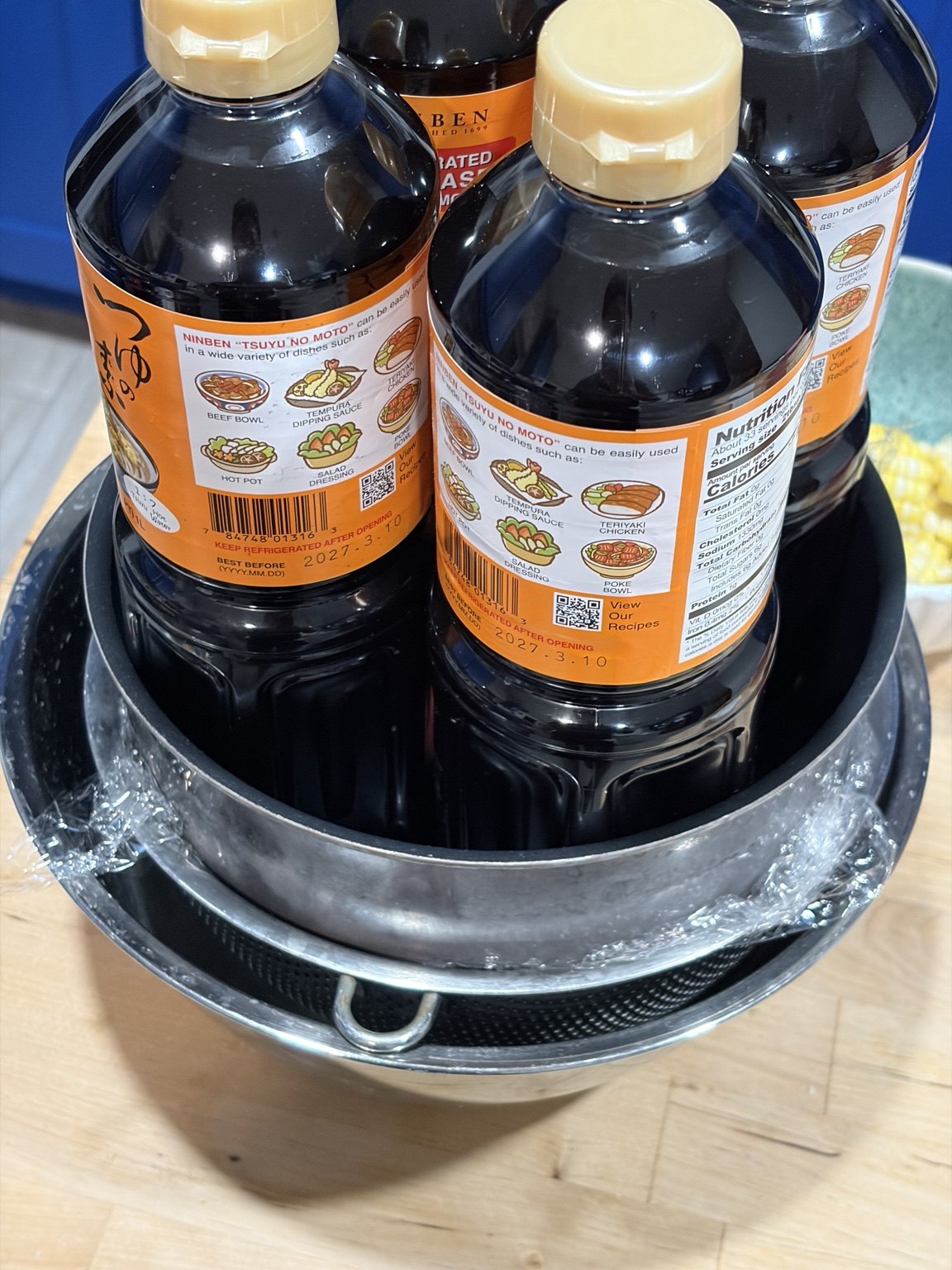
My seasoning mix
I used roughly 2.5 times my usual personal seasoning batch, so these are approximate amounts.
- Red pepper powder: about 250 g
- Anchovy-based seasoning: about 200 g
- Tuna-based seasoning: about 100 g
- Sugar: about 125 g
- Honey: about 75 g
- Garlic: about 225 g
- Kimchi paste: about 200 g water + 3.75 tbsp flour
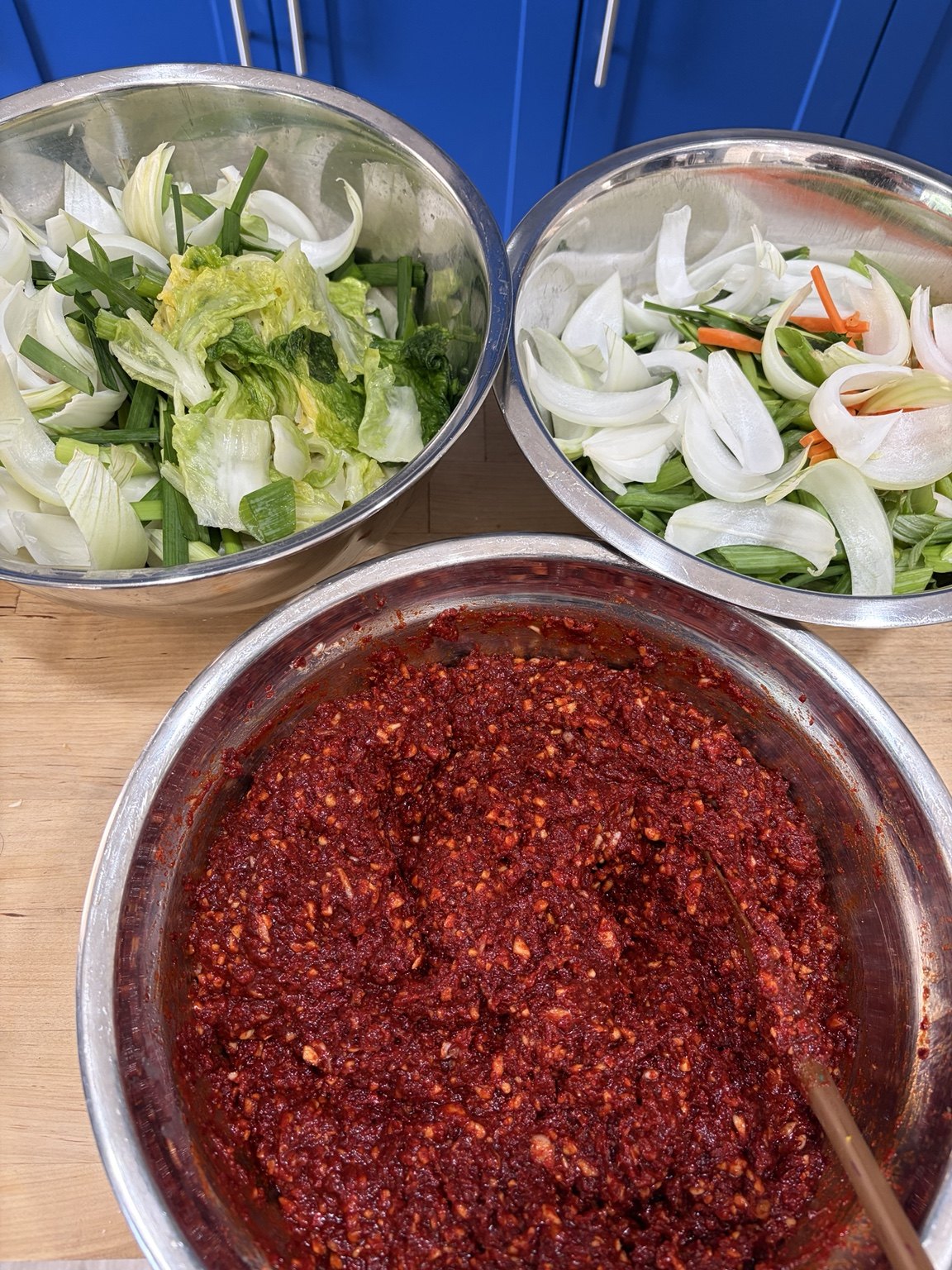
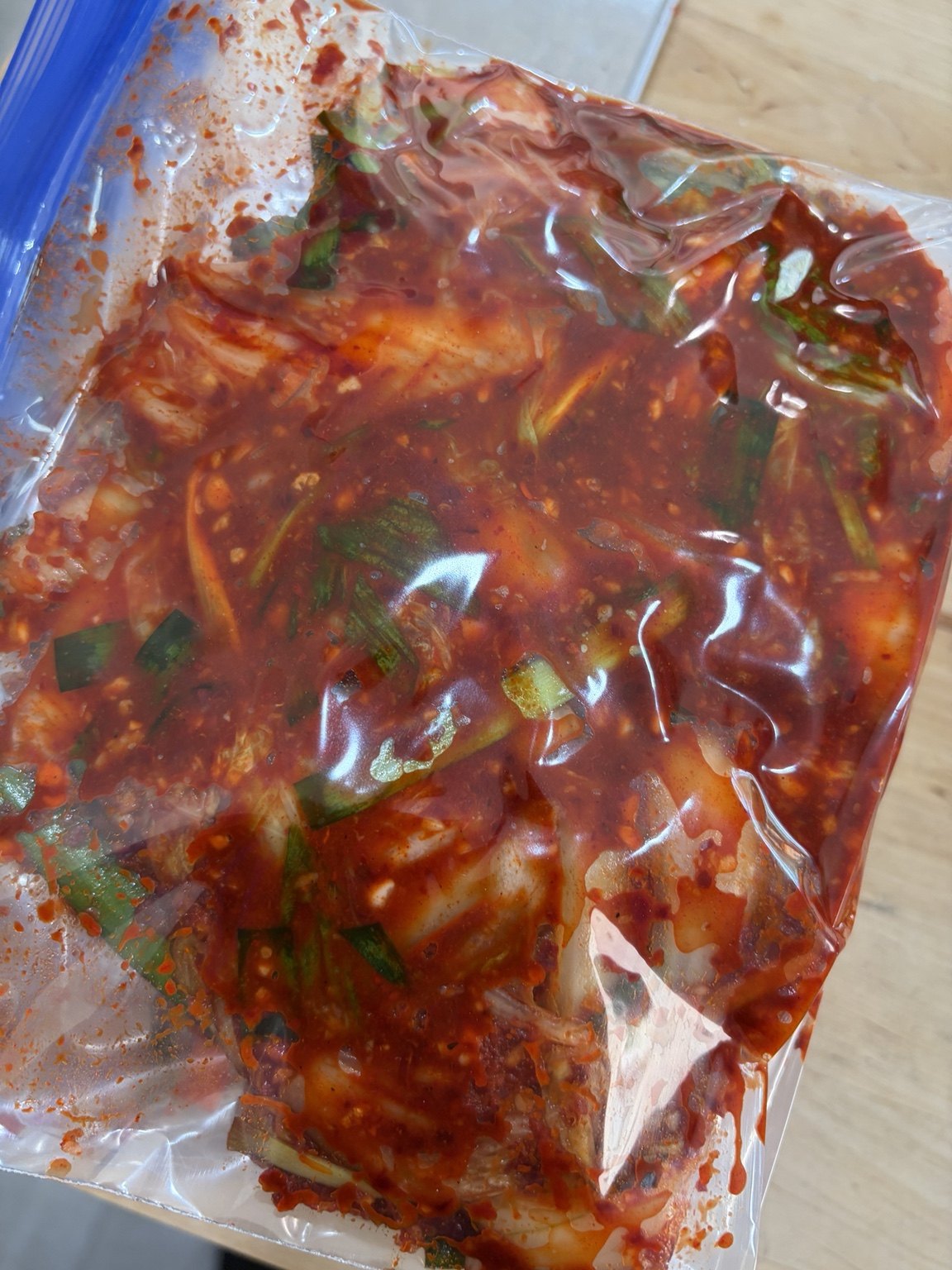
Day 1: almost no sourness, very crisp
Day 1 had almost no sourness. It was sweet, the heat was still sharp, and the cabbage had a strong crunch. The seasoning had already soaked in more than immediately after mixing, and I really liked this stage.
The reference recipe describes freshly made kimchi as geotjeori-like fresh kimchi.[1] I did not make a separate geotjeori recipe here, so I think of this simply as a very fresh, young stage.
Day 3: a little tang, still plenty of crunch
By Day 3 I could detect a little sourness. The heat had rounded off slightly, but the cabbage was still pleasantly crisp. If you like younger kimchi, this stage is excellent: fresh character plus the first clear signs of fermentation.
Day 7: the most complete kimchi balance
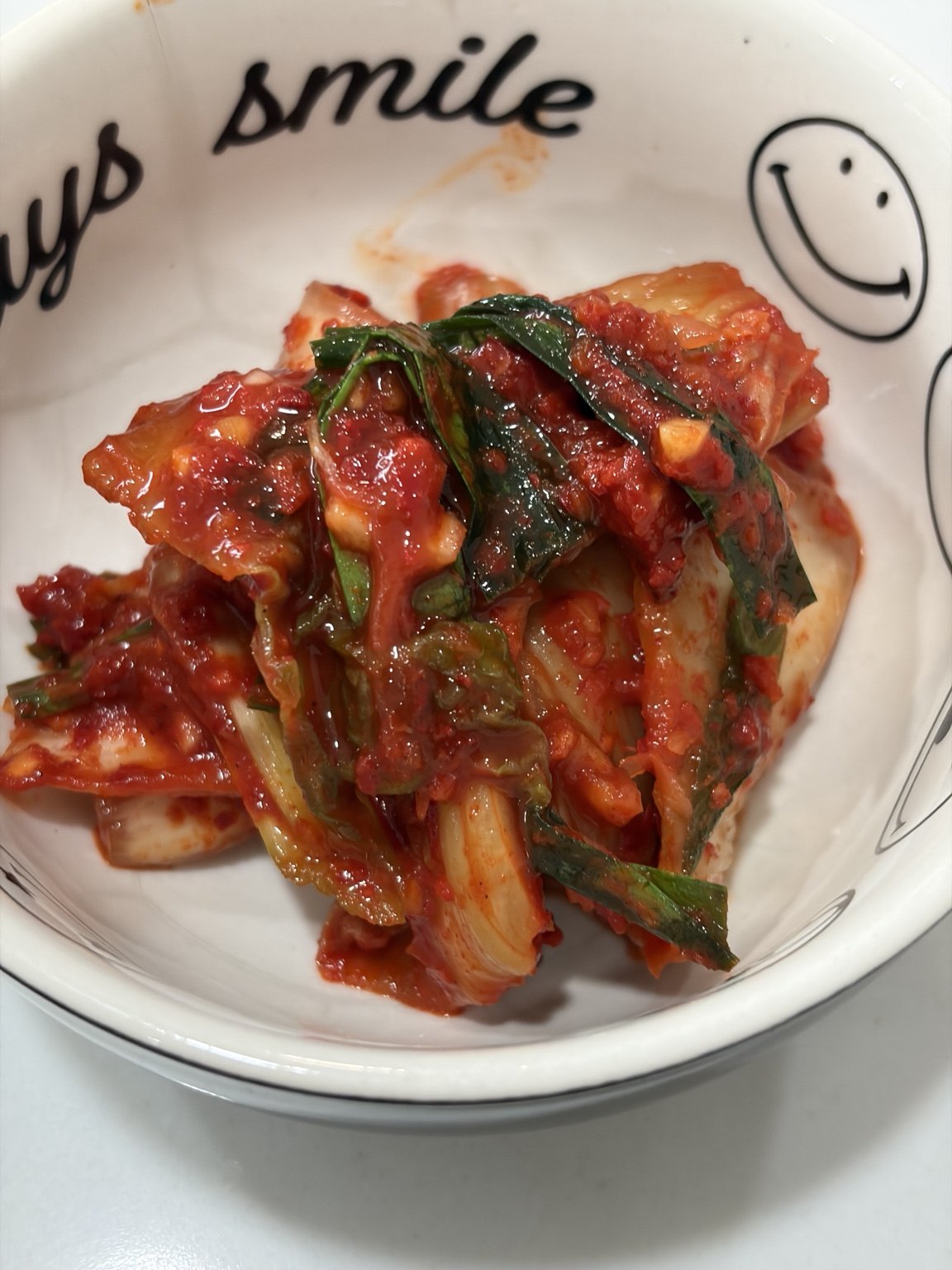
Day 7 was where the flavor felt fully "kimchi-like." The sourness was obvious but still balanced by sweetness. The cabbage had softened just enough, and the heat was much rounder while still finishing with a pleasant kick.
Across all four tastings, this was the clear best overall balance. Even though my personal preference leaned toward the younger Day 1–3 stage, Day 7 won when I judged sourness, sweetness, heat and texture together.
Day 14: tangier, but still very good
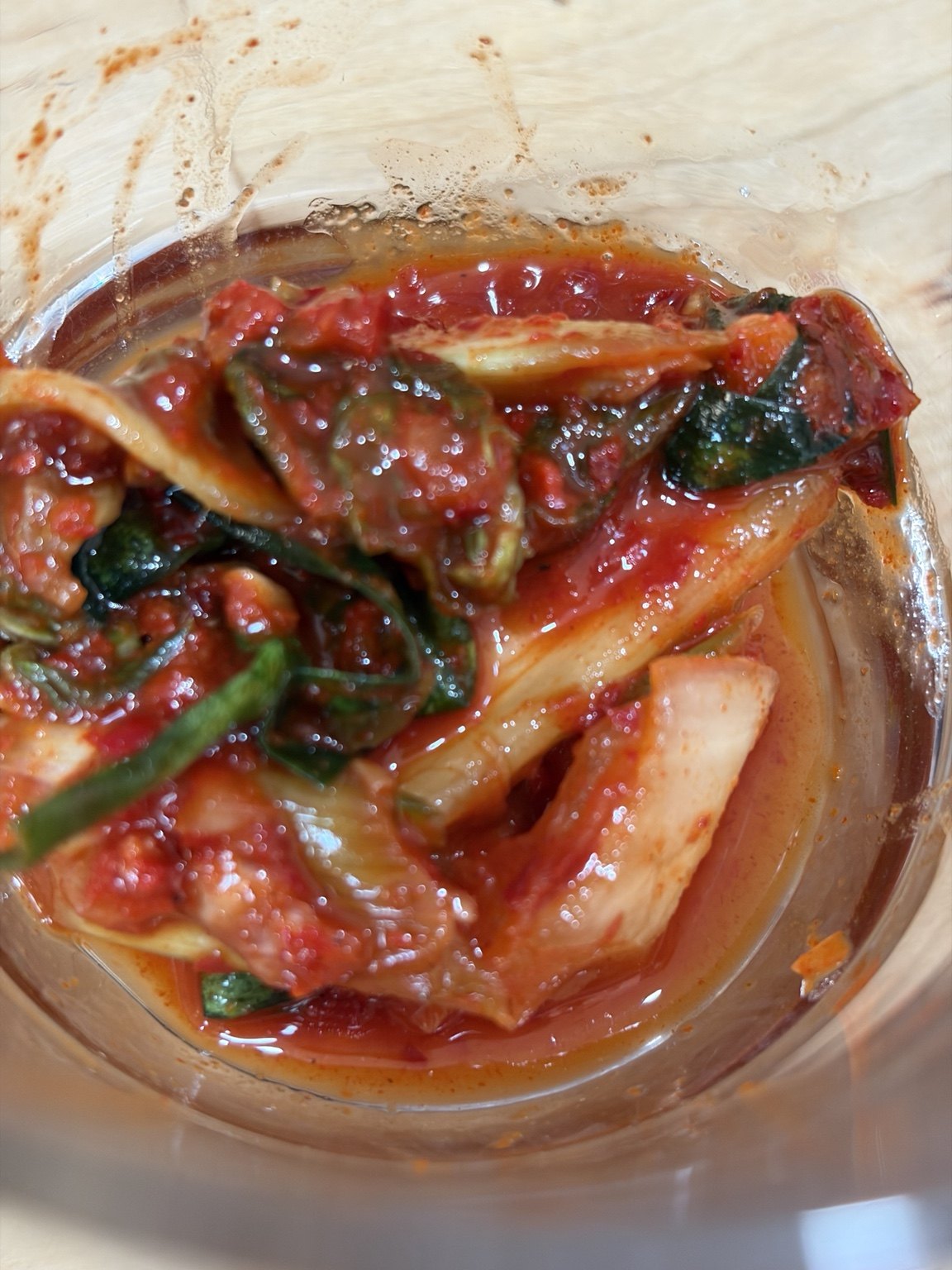
At two weeks, the sourness had increased again compared with Day 7. It was not unpleasantly sour, though. Some sweetness remained, the cabbage was pleasantly soft, and the heat had become quite mellow with a small kick at the end.
After documenting the whole series, I somehow missed the last picture. I am leaving that mistake in the log rather than pretending another day's photo is Day 14.
Why “best” is really a fermentation state, not a fixed day
Research generally defines optimally ripened kimchi by its condition—often around a pH range near 4.0–4.5—rather than by a universal day count. The time needed to reach that stage changes substantially with storage temperature. A study comparing 4°C and 15°C storage showed a major difference in the time required to reach the optimal fermentation range.[2]
That is why I would not claim that every kimchi is scientifically “best on Day 7.” As fermentation progresses, acidity tends to rise, and over-ripening can bring stronger sourness and softer texture.[3]
In this refrigerator-only batch, Day 1 was fresh, Day 3 was the transition, and Day 14 was noticeably more acidic. Day 7 sat right in the middle, with all four sensory pieces—sourness, sweetness, heat and texture—working together.
Final result: Day 7 overall, Day 1–3 for my personal taste
Same recipe, completely different personality just from time. Making kimchi was fun, but tasting it repeatedly and finding my own preferred stage was the better experiment.
Research. Try. Taste. Compare. Learn.
References
- Mesitsu / Hot Pepper Gourmet, Homemade kimchi recipe taught by a Korean cooking professional (Japanese). Starting reference for this batch. Article
- Effect of Fermentation Conditions on Functional Quality of Napa Cabbage Kimchi. Compares fermentation progress at 4°C and 15°C and defines an optimal stage by pH. PMC
- A mathematical model to predict ripening degree of kimchi, a Korean fermented vegetable for meeting consumer preference and controlling shelf life on real time basis. Discusses optimal ripening around pH 4.2 and 0.6–0.8% total acidity. ScienceDirect
This Day 1/3/7/14 timeline is an observation from this specific recipe and refrigerator. Fermentation speed and preferred ripeness change with temperature, salt, ingredients and storage conditions.
Questions or comments about this article?
If you want to compare kimchi recipes, refrigerator aging, or the flavor changes across the two weeks, feel free to send a note.
The website keeps the recipe and conclusion organized; X has the tasting notes as they happened from Day 1 through Day 14.