
Drip Irrigation Test: Five Plant Types, One Zone, and a No-Flow Dripper
Five kinds of potted plants, but only one automatic irrigation zone. I tuned the flow from each dripper instead of giving every plant the same volume. The system seemed to work—until the Houston summer revealed one particularly important failure: the timer was running, but one dripper wasn’t delivering any water.
The results up front
- Spring: 2 minutes per run, every 3 days. Summer: 4 minutes per run, every 3 days. I adjusted each dripper to deliver a different amount during the same runtime.
- Rosemary developed brown tips and some yellowing. After increasing the watering time, I started seeing healthy-looking green new growth. That suggests improvement; it doesn't prove a single cause.
- A foxtail fern with brown shoots in the middle turned out to have a dripper that wasn't emitting water. After adjustment, I measured approximately 180–200 mL/min.
- Timer running ≠ water delivered. Check actual output at the dripper, not just the clock.
Five kinds of plants, but just one watering zone
My Houston front yard has potted camellias, Bridal Spinel (the name in my own plant records), roses, rosemary, and foxtail ferns. Some kinds have more than one pot. They share one automatic irrigation zone, so every pot gets the same programmed runtime.
Different plants and container sizes don't need the same volume. My workaround was to keep the timer common but adjust each dripper's flow. I aimed for a measured amount of water per watering cycle instead of treating “two minutes” as a universal answer.
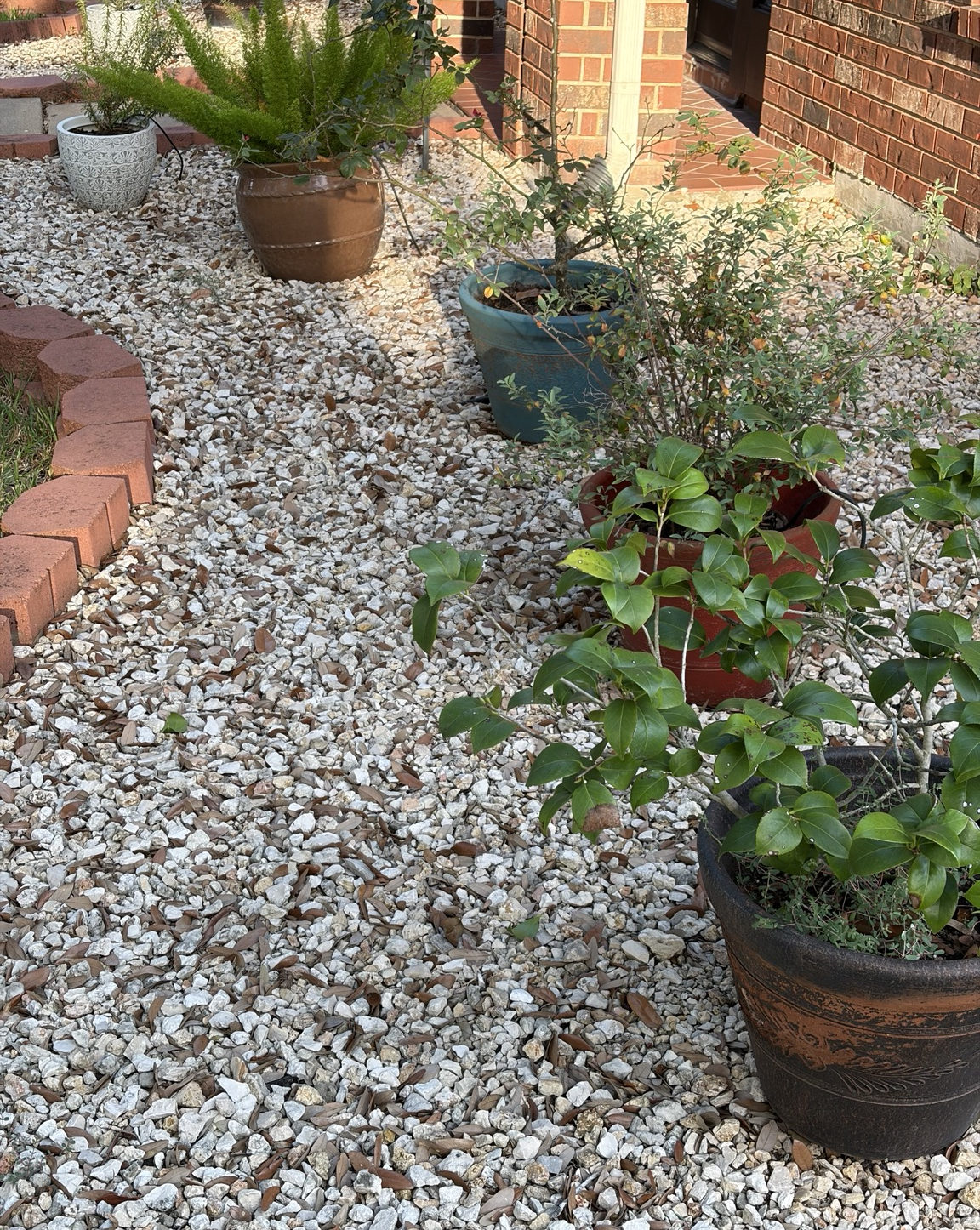
The spring baseline: 2 minutes every 3 days
I measured the drippers and set a target amount per pot per cycle. With different emitter settings, a shared two-minute runtime could deliver different volumes.
| Plant | Spring target / cycle | Initial summer target (2×) |
|---|---|---|
| Camellia | 500–700 mL | 1,000–1,400 mL |
| Bridal Spinel* | 400–600 mL | 800–1,200 mL |
| Rose (each pot) | 400–500 mL | 800–1,000 mL |
| Rosemary (each pot) | 150–250 mL | 300–500 mL |
| Foxtail fern (each pot) | 250–350 mL | 500–700 mL |
These are my starting targets, not universal watering recommendations. The summer numbers simply double the spring targets; they are calculated assumptions, not measured delivered volumes. Both schedules used a 3-day interval. *“Bridal Spinel” is retained from my original plant notes; it is not a verified botanical identification. For scale, 400 mL is about 13.5 US fl oz.
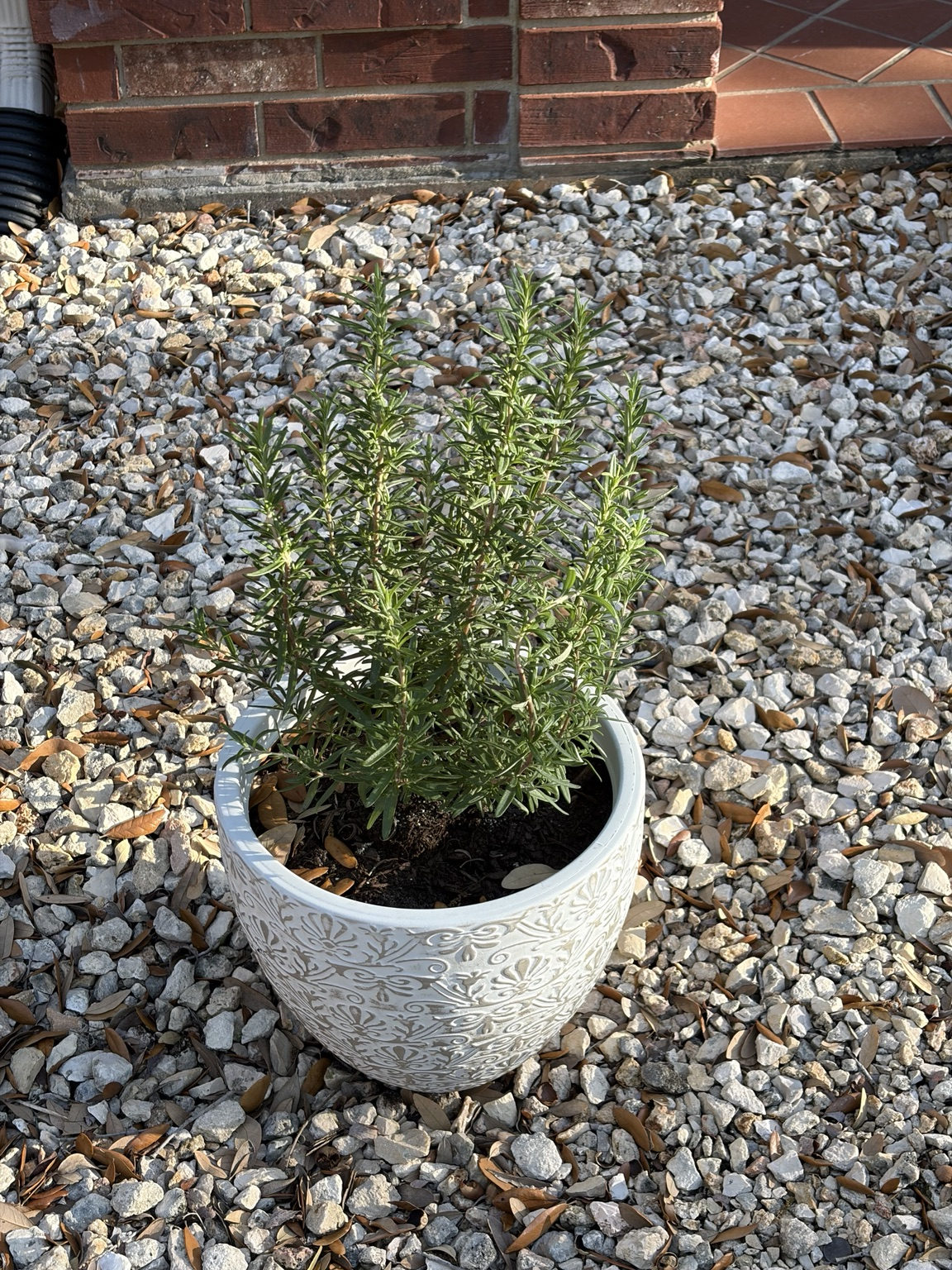
Houston summer: the rosemary started showing stress
The spring setup worked for a while. In early August 2026, though, my rosemary developed brown leaf tips and some yellowing. The pot also felt unexpectedly light even the day after the irrigation cycle.
Leaf discoloration can have several causes. Still, the combination of hot weather and a light pot made me suspect the existing volume might be insufficient. Without changing the dripper setup, I increased runtime from 2 to 4 minutes while keeping the 3-day interval.
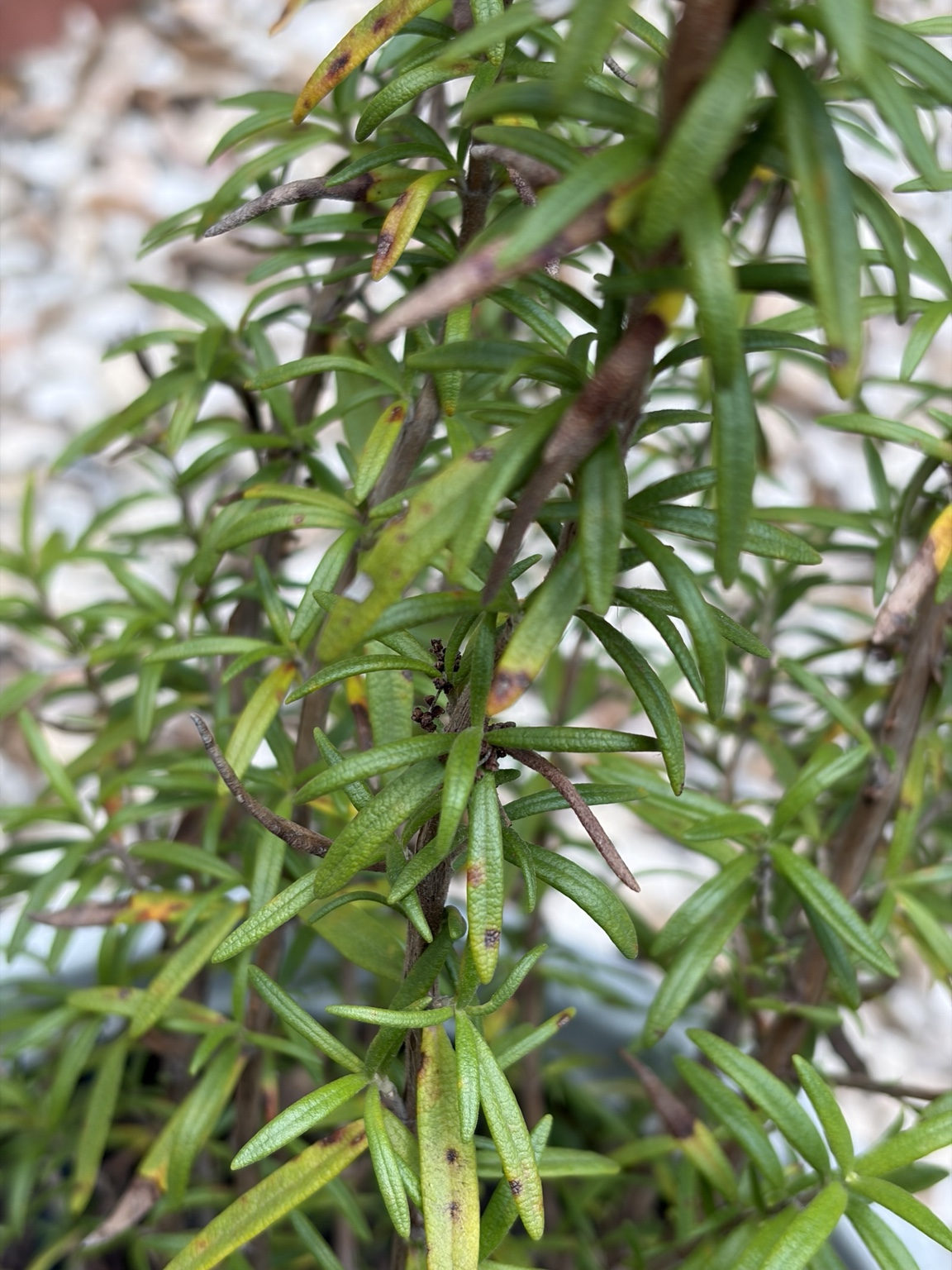
At a constant flow rate, doubling the runtime should approximately double output per cycle. But a timer running for four minutes does not prove the emitter actually delivered water.
Then one foxtail fern looked distinctly wrong
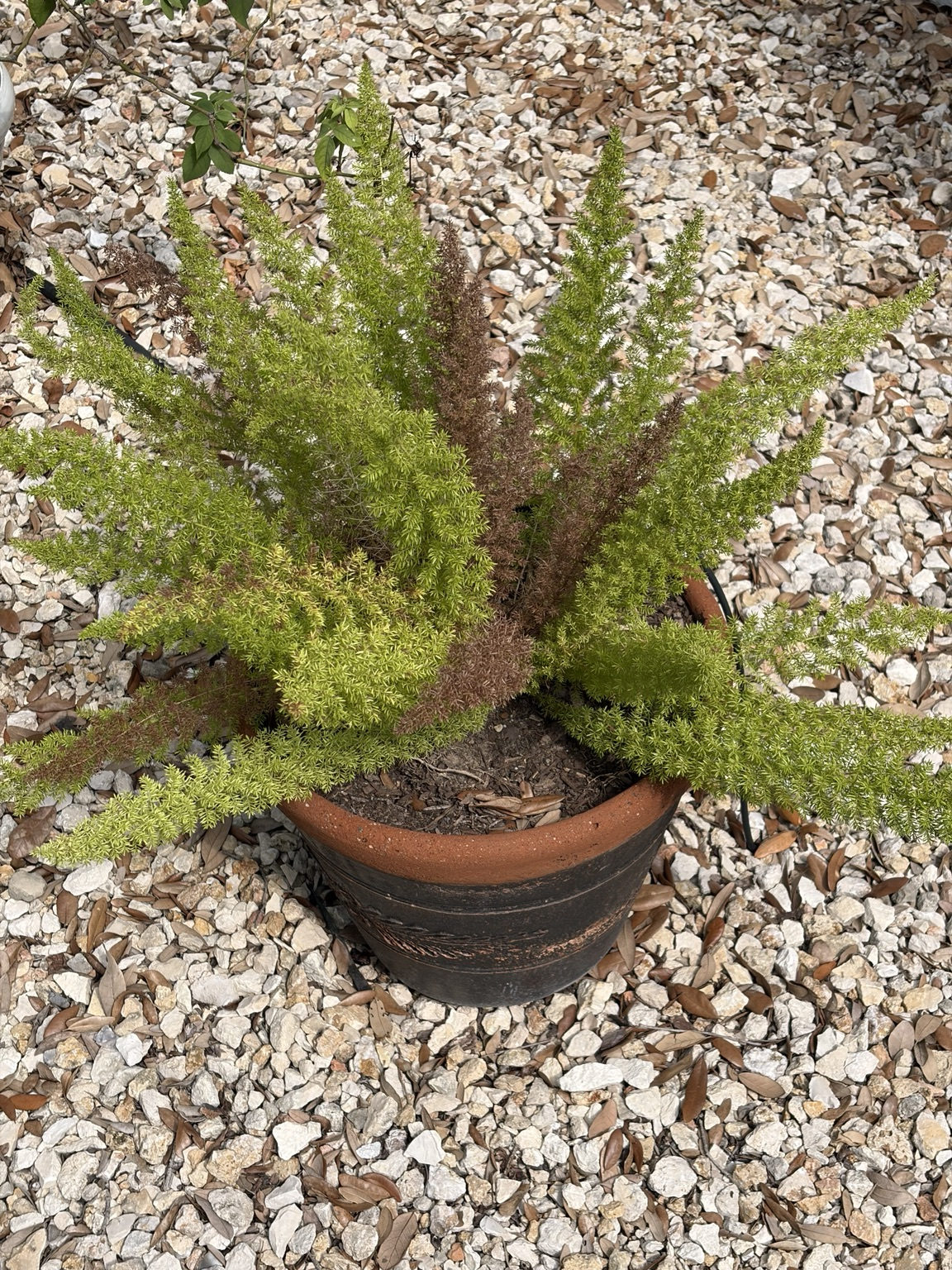
One foxtail fern showed a different pattern: multiple shoots near the center had turned brown, while the outer shoots were still green. I initially wondered whether those were aging shoots or whether the pot had uneven moisture.
Even with the longer runtime, the plant's appearance was concerning. So I checked the basic question first: was the dripper actually emitting water?
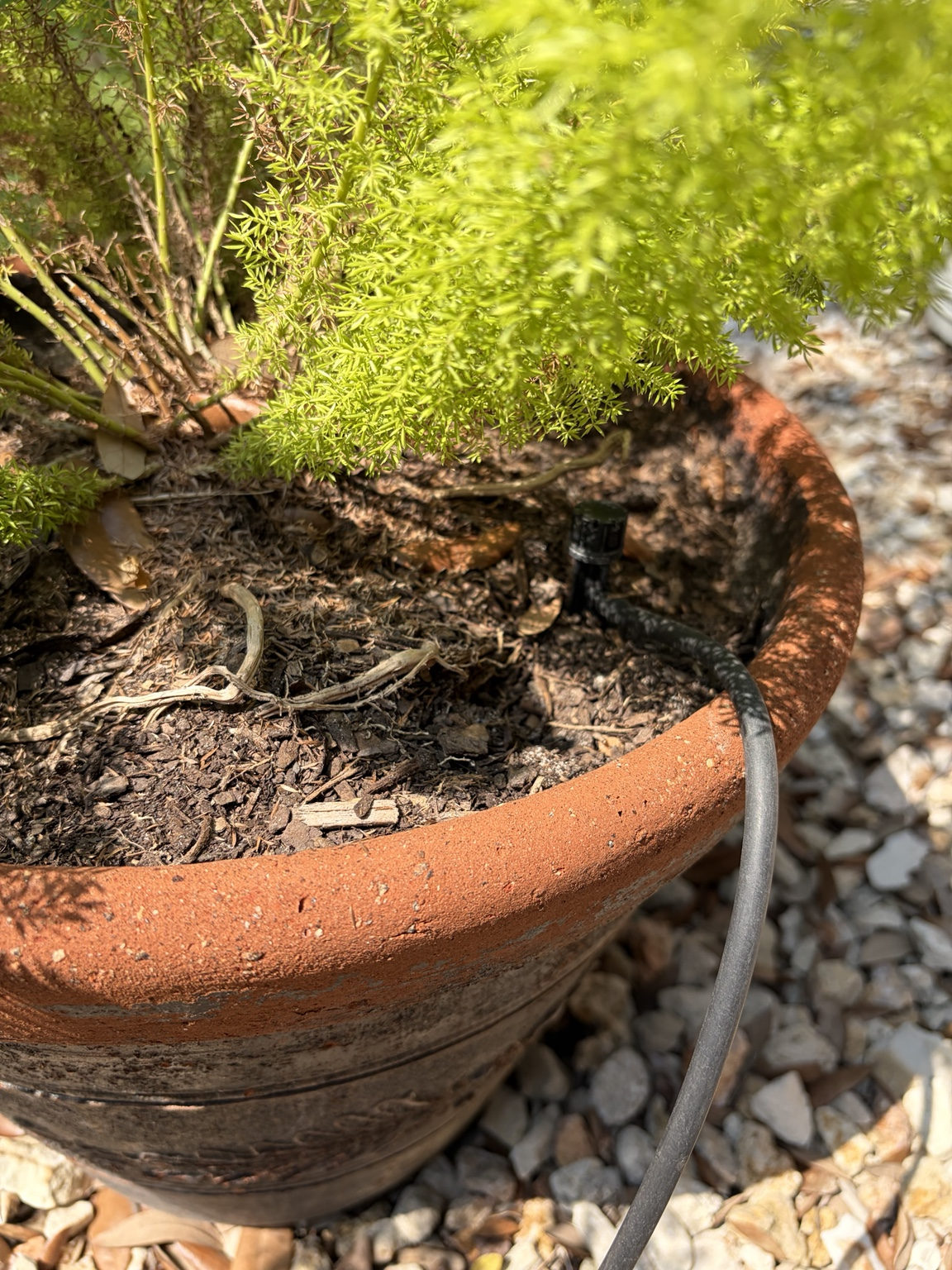
The one-minute test: no flow at the problem dripper
On August 27, 2026, I placed the drippers in a measuring cup and collected their output for one minute. At the problem foxtail pot, the emitter was not putting out water.
The automatic timer and the irrigation zone were operating, yet the plant's emitter was not delivering water. I cannot tell whether the exact cause was a clog, an adjustment problem, or another temporary fault. I adjusted it, verified that it would flow again, and repeated the measurement.
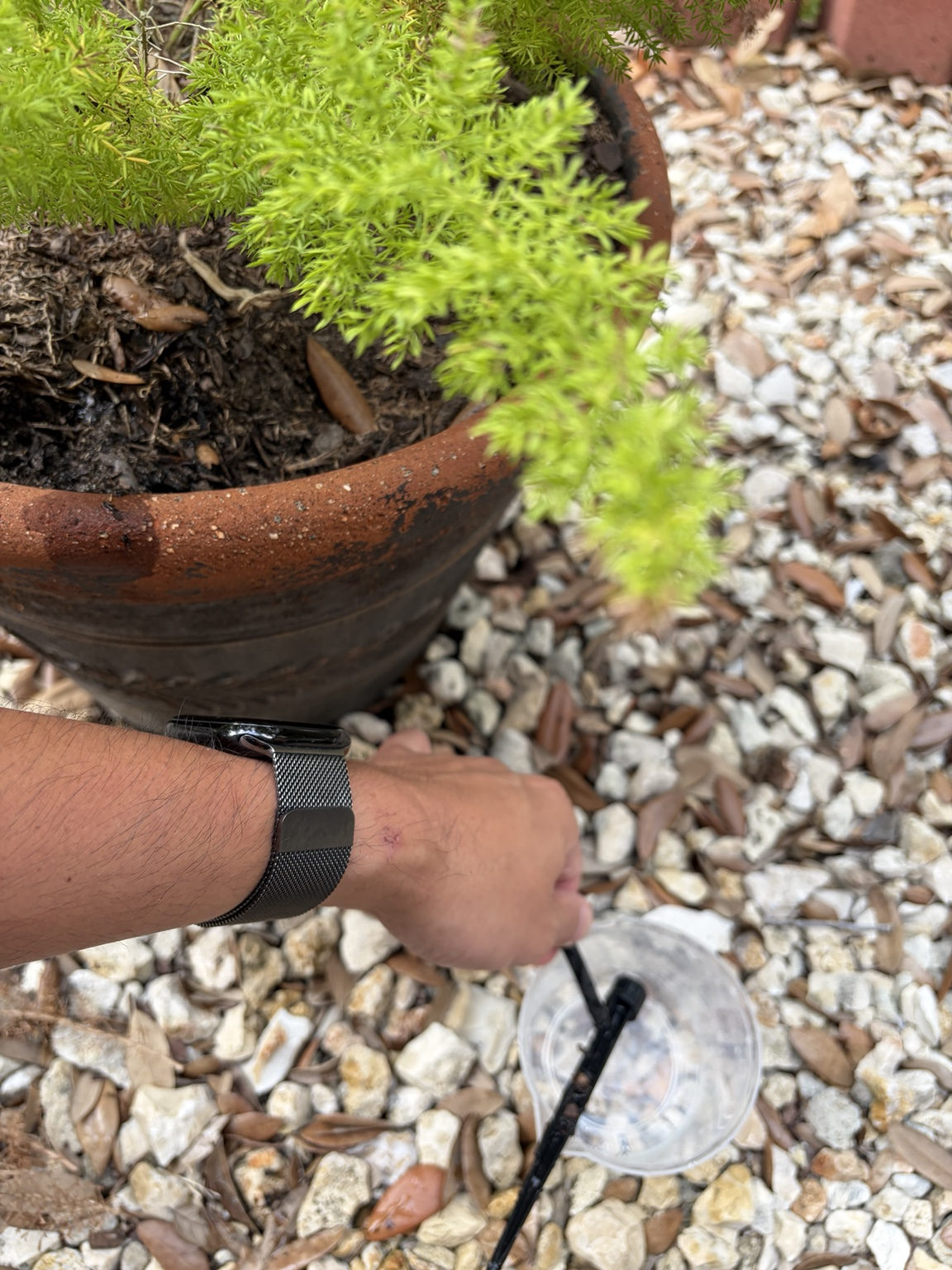
| Plant / condition | Measured flow | Calculated for 4 min |
|---|---|---|
| Rosemary | ≈100 mL/min ≈3.4 US fl oz/min | ≈400 mL ≈13.5 US fl oz |
| Foxtail fern, after adjustment | ≈180–200 mL/min ≈6.1–6.8 US fl oz/min | ≈720–800 mL ≈24.3–27.1 US fl oz |
The formula is flow (mL/min) × runtime (minutes) = output per cycle (mL). Rosemary landed within my preliminary summer target of 300–500 mL. The foxtail's restored output was slightly above my initial 500–700 mL target. Since I'd just fixed its zero-flow problem, I chose to watch the plant before adjusting the volume again.
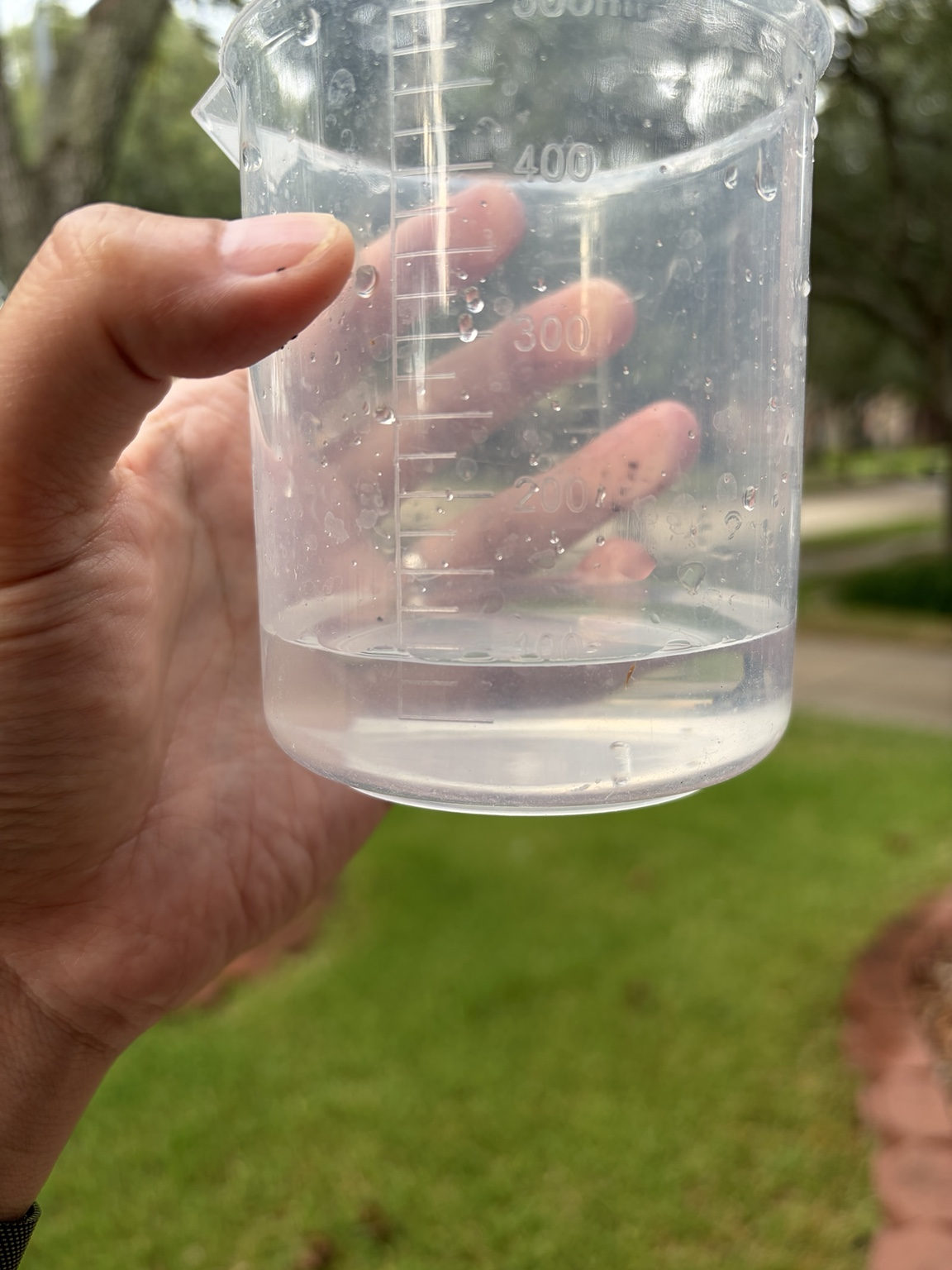
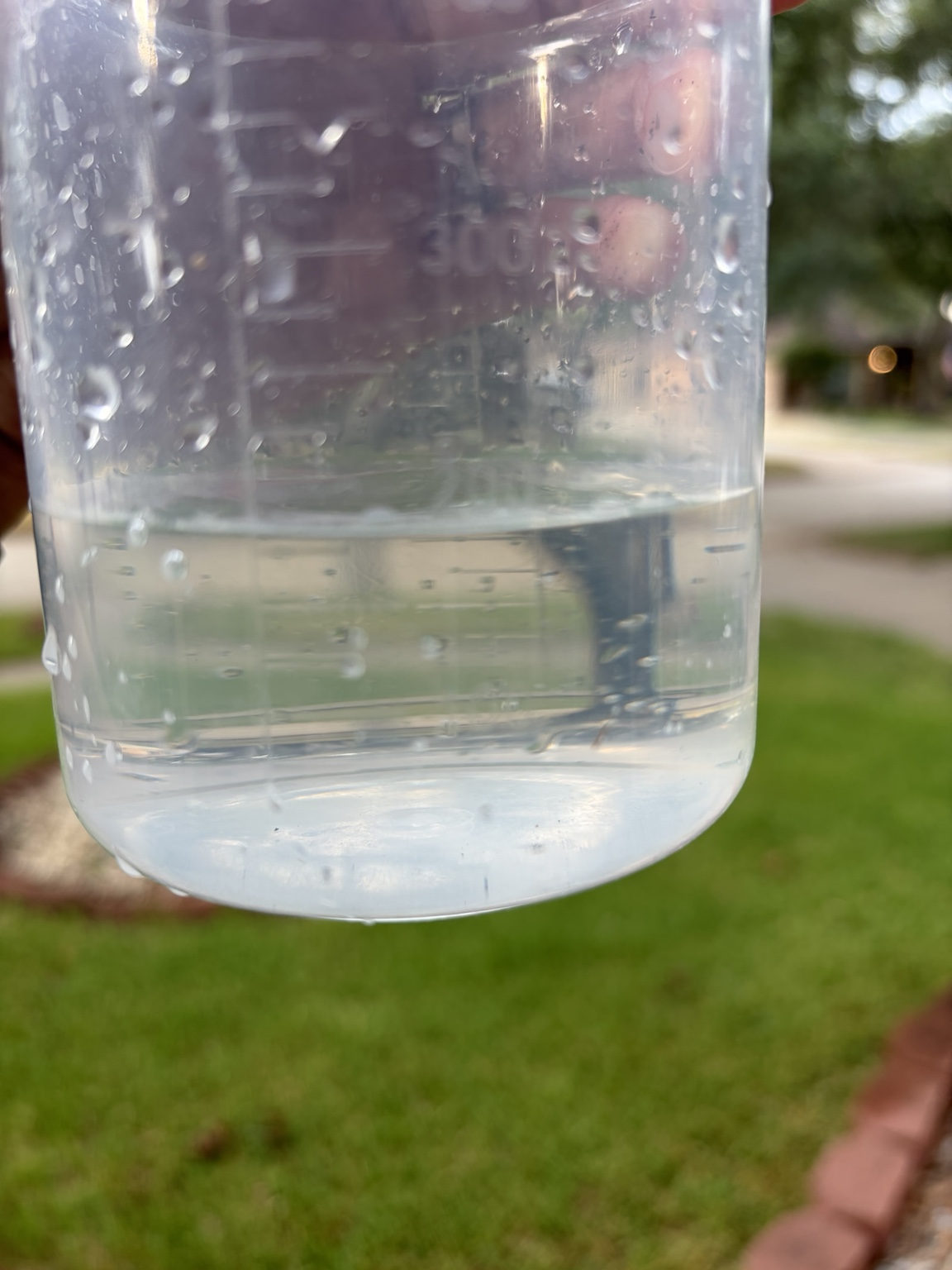
Important distinction: this is water exiting the emitter, not a measurement of what spread evenly through the pot or what the roots absorbed. Soil moisture, distribution around the root ball, and drainage still matter.
What happened next: rosemary growth and a foxtail under observation
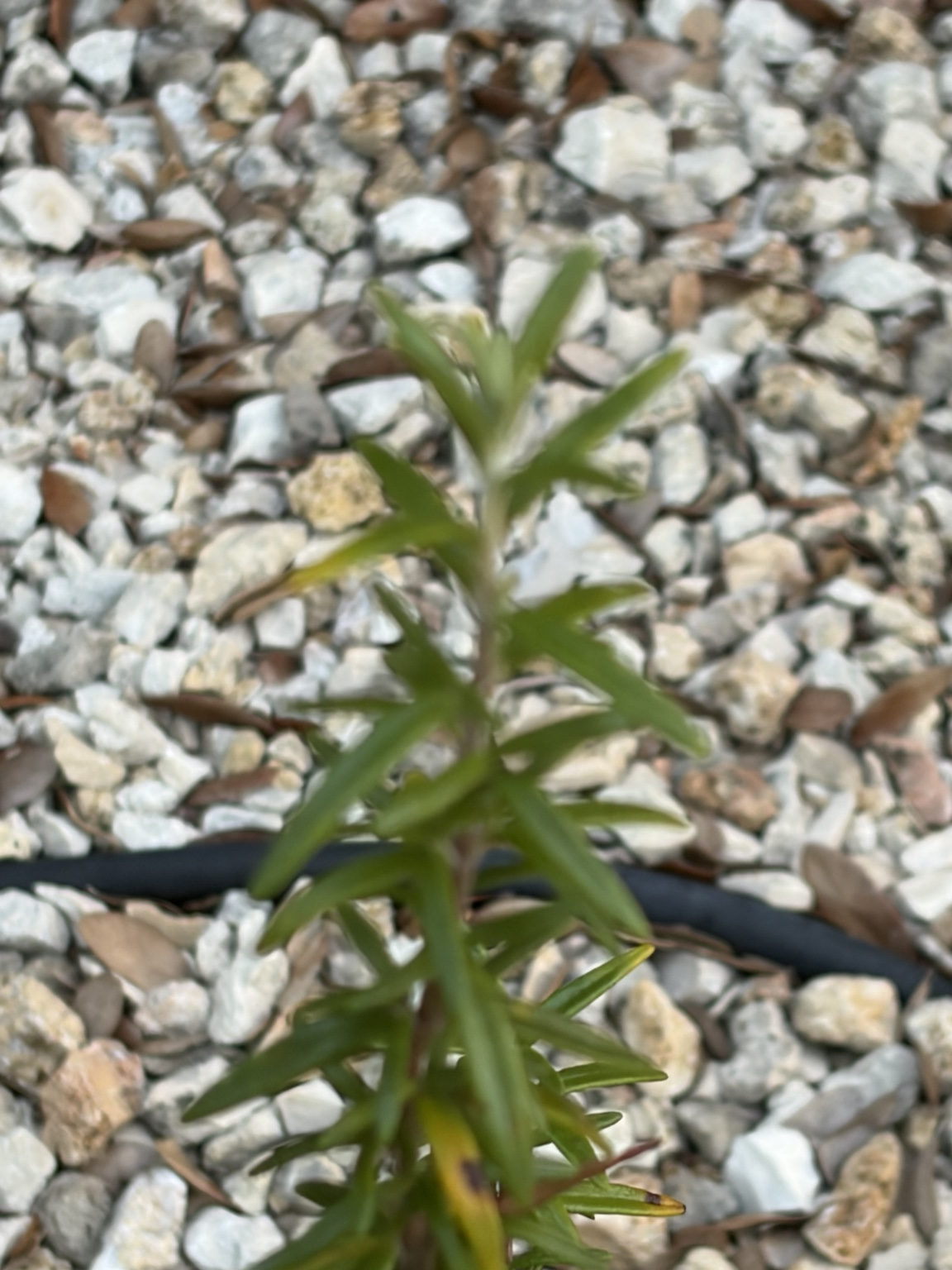
After I increased the runtime, clean green shoots started appearing on the rosemary. The older brown foliage did not turn green again, but the new growth looked encouraging. Inadequate water may have been part of the problem; I can't establish that as the sole cause from this observation.
For the foxtail, I had only just restored the flow. Restoring water output and confirming the plant has recovered are not the same thing, so its condition remains under observation.
What I want to check next
- Re-measure each dripper: collect water for one minute and confirm the actual flow.
- Compare east and west exposure: I may try roughly 25% more output for the pots receiving stronger afternoon sun. This is an untested idea, not a change already made.
- Check the whole root ball: if needed, slowly water the entire pot by hand, then inspect whether the dripper had been wetting only a small area.
- Follow the plants: new growth, yellowing, dieback, pot weight, and the need to adjust both volume and frequency.
General container-watering advice also emphasizes that temperature and pot size change water needs, and that soggy soil is a problem too[1]. Extension guidance for agricultural drip systems recommends checking emitter discharge and periodically collecting output for a timed measurement[2]. The every-three-days schedule here describes my experiment; it is not a blanket recommendation for every Houston container plant.
Conclusion: automation still needs an actual measurement
One zone was enough for me to run five kinds of plants by giving each a different dripper setting. I increased runtime from two to four minutes in summer, noticed encouraging rosemary growth, and discovered a foxtail dripper that had stopped flowing altogether.
A running timer is not proof that a pot is getting watered. I now want to keep checking emitter output, soil moisture across the pot, and the plant's response—not just the minutes programmed on the controller. That is the lesson this experiment gave me.
For these pots, I measured dripper output in mL/min. For the lawn, I also measured actual sprinkler output instead of relying on programmed run time alone.
How long should sprinklers run to deliver one inch of water? →
References
- University of Minnesota Extension, Fertilizing and watering container plants (container moisture, heat, and avoiding waterlogged roots).
- University of Georgia Cooperative Extension, Drip Irrigation in Pecans (periodic emitter checks and timed output collection; the original publication concerns orchards).
Questions or comments about this article?
Feel free to ask about the one-zone setup, the watering volumes, or the dripper flow tests.
The dry rosemary, foxtail dieback, and measuring-cup checks were also shared as photo updates.