
Brewing Discovery Pale Ale in a BeerDroid
My fourth BeerDroid style was BrewArt Discovery Pale Ale. This batch reached EOF / Ready to Keg in 7 days 1 hour. Before H2, the young beer showed an apple-like aroma with a slightly floral edge to the bitterness. I then split H2 ×2 between two 5 L kegs and conditioned the beer for about 17 days before tasting again. The conditioned beer shifted toward subtle citrus to green-apple-like aroma, firmer bitterness, and a clean, refreshing finish. This update adds that final tasting and a pressure-cooked kakuni pairing.
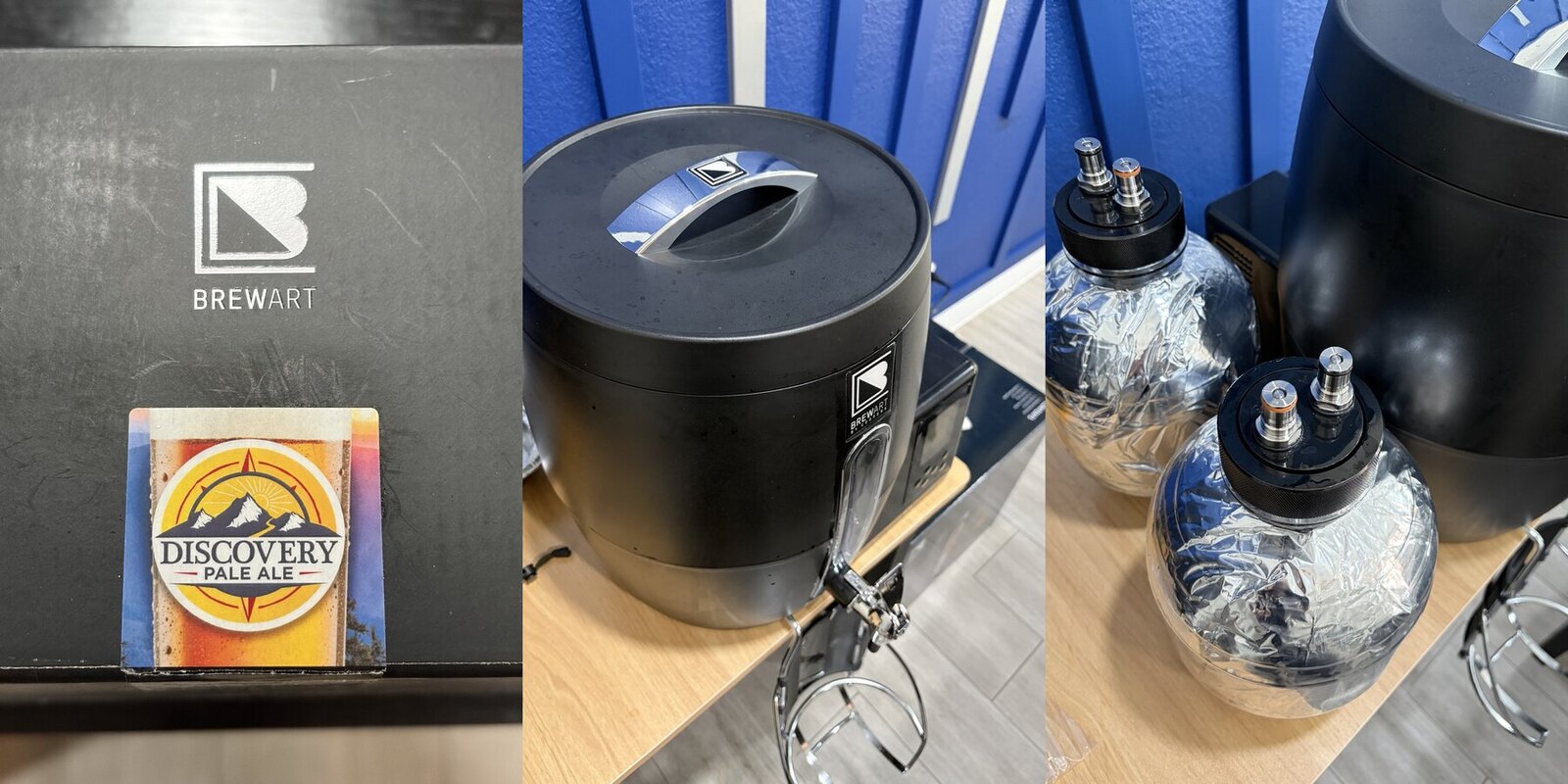
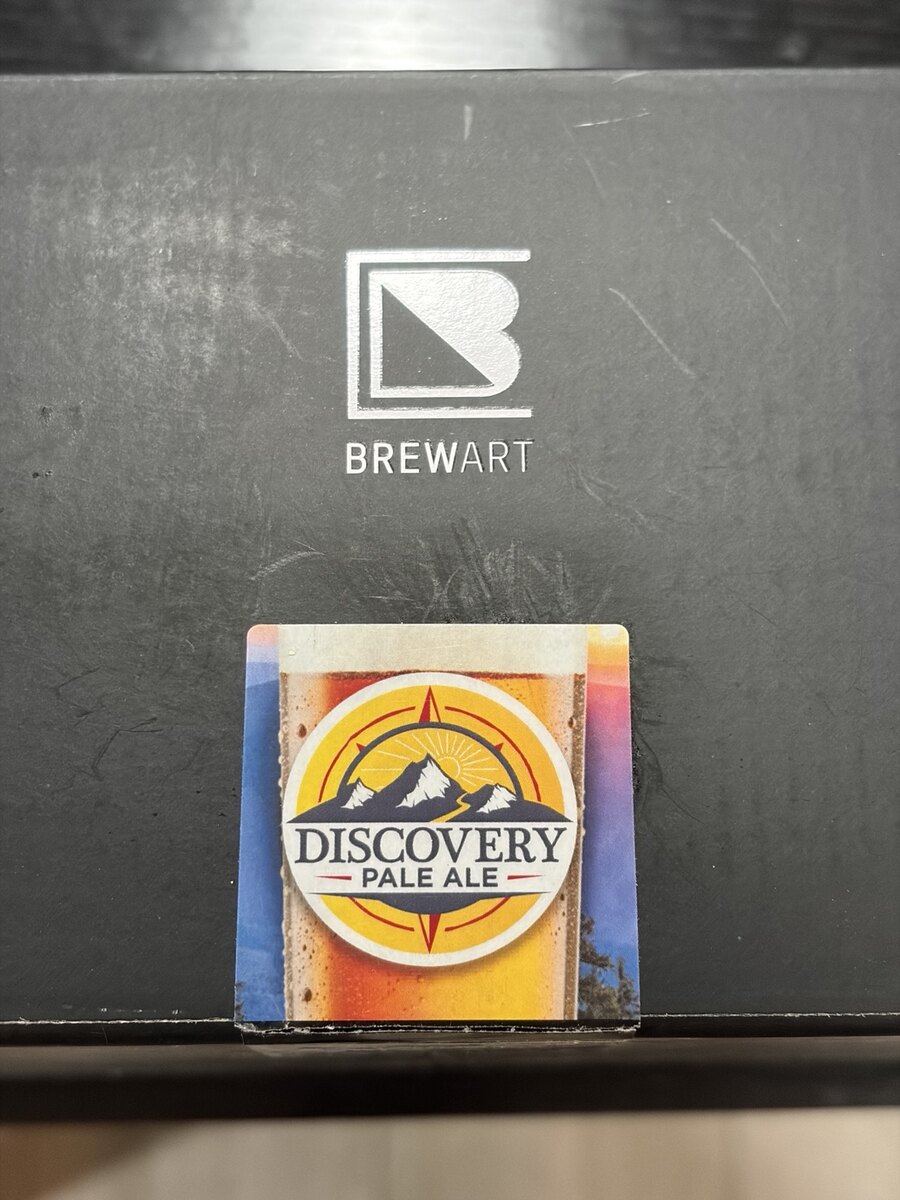
Batch at a glance
| Batch | BrewArt Discovery Pale Ale |
|---|---|
| Brewer | BrewArt BeerDroid |
| Batch size | 10 L (2.6 gal) |
| BrewArt spec | 5.5% ABV / Colour 16 / Bitterness 33 / Ale program / approx. 7–10 days; minimum 14 days secondary fermentation after kegging[1] |
| Standard ale program | Propagate 21°C (70°F) → Ferment 17°C (63°F) → Keg 18°C (64°F) → Store 4°C (39°F)[4] |
| Actual EOF | 7 days 1 hour to “BREWING COMPLETE / READY TO KEG” |
| Pre-H2 sample | Apple-like aroma + a slightly floral edge to the bitterness. This was an early sample before H2 and conditioning. |
| Kegging | Two H2 packs split between two 5 L kegs, then filled from the BeerDroid. |
| Conditioned tasting | About 17 days after kegging: subtle citrus to green-apple-like aroma, firm bitterness, and a clean, refreshing finish that was easy to drink. |
The target profile: pine, citrus, toffee, crisp bitterness
BrewArt describes Discovery Pale Ale as a hop-driven American Pale Ale at 5.5% ABV, Colour 16, and Bitterness 33, with an approximate brew time of 7–10 days. The finished profile is described around pine and citrus aroma, upfront citrus, hints of toffee, and crisp bitterness.[1]
Rather than waiting only for the finished beer, I took a checkpoint at EOF before H2, then repeated the same tasting after keg conditioning. BrewArt's BeerDroid manual also recommends drawing no more than about 100 mL (3.4 oz) before kegging to smell and taste the brew for quality.[4]
Gear, ingredients, and supplies used
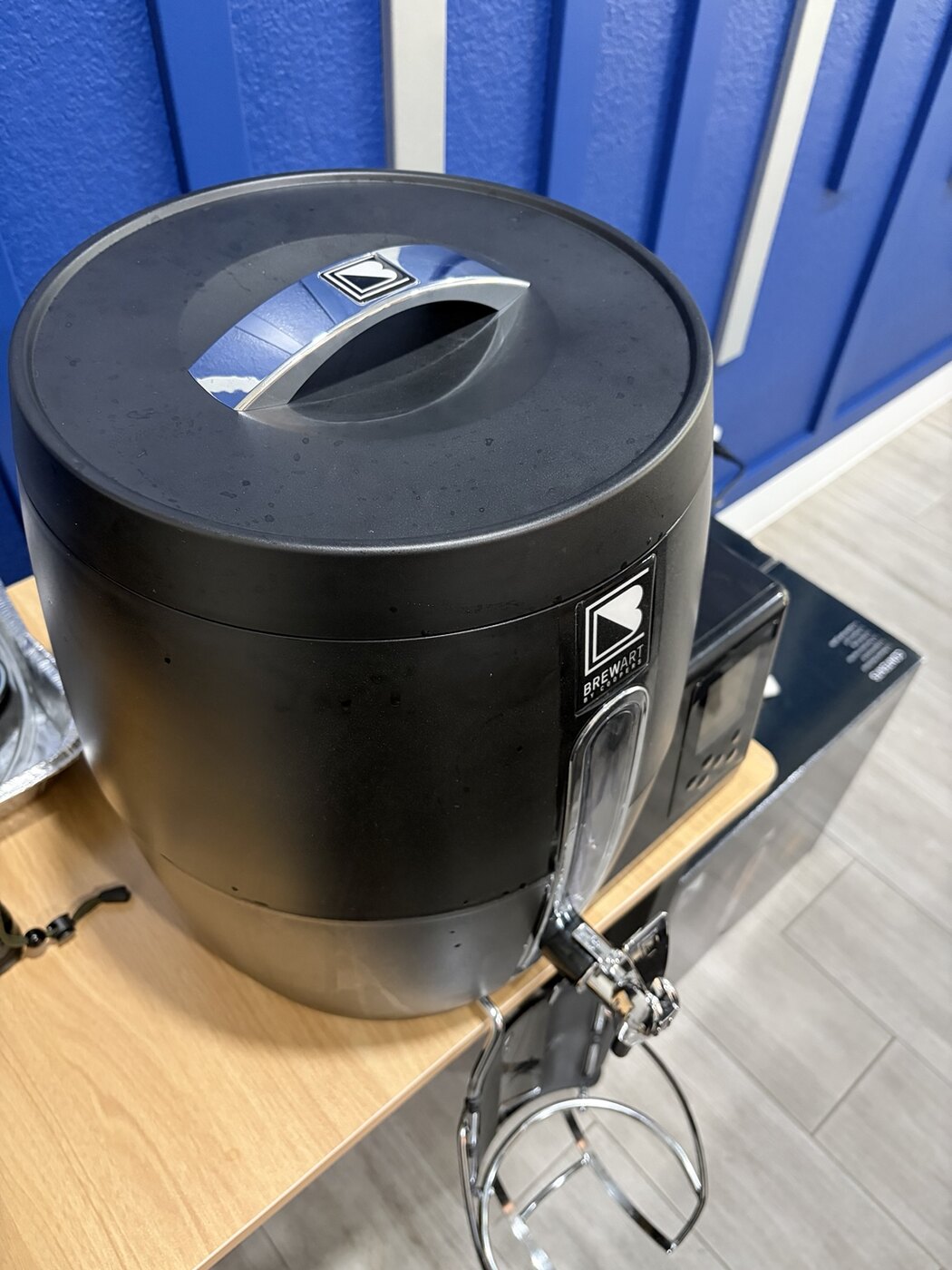
BrewArt BeerDroid
The 10 L (2.6 gal) automated brewer used for EOF detection, temperature control, and app monitoring in this batch.[5]
Discovery Pale Ale BrewPrint
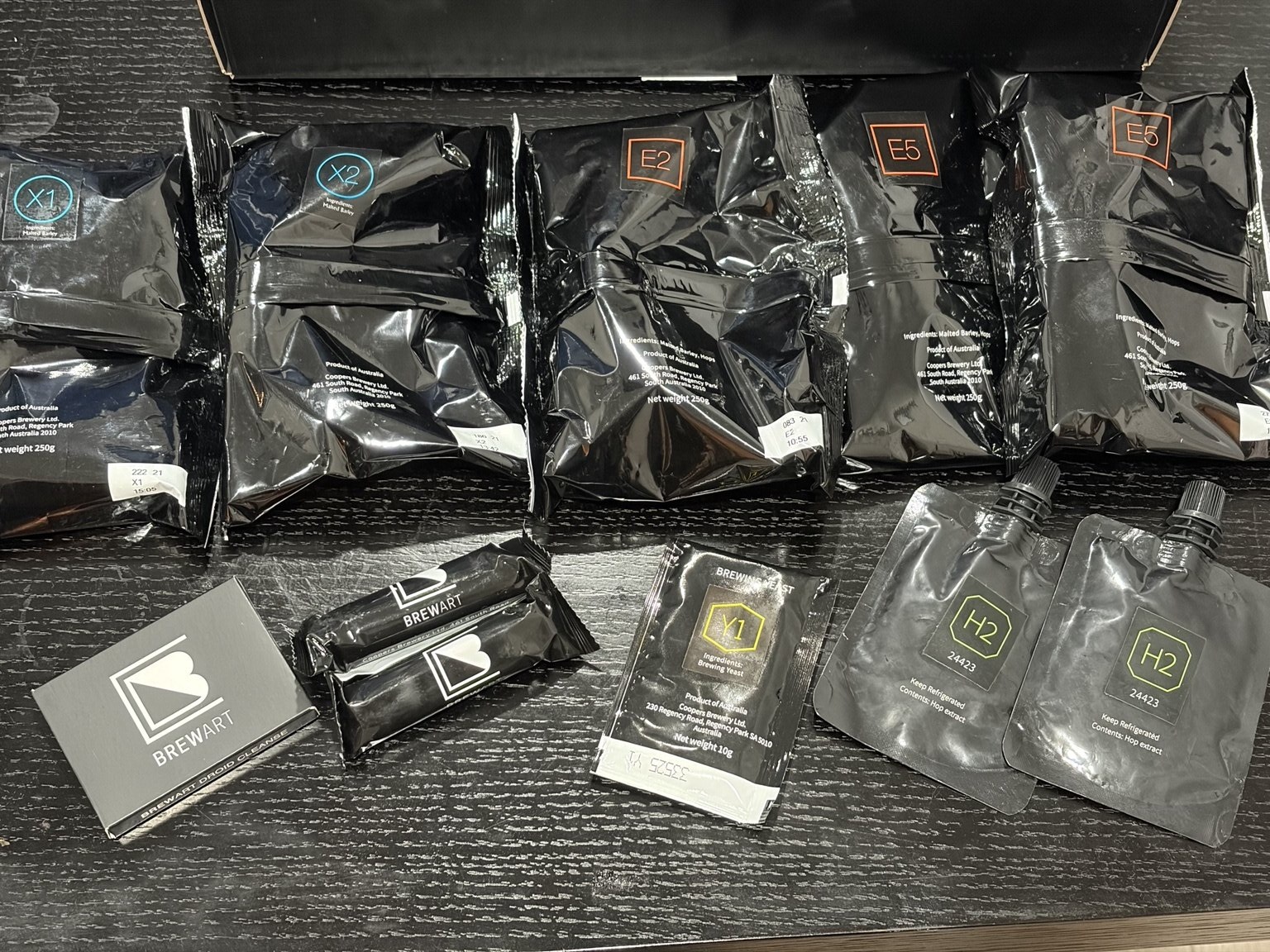
My box contained E2 ×1, E5 ×2, X1 ×1, X2 ×1, Y1 ×1, H2 ×2, Primer ×2, and Droid Cleanse ×1.
View Discovery Pale Ale on BrewArt US →
Hops 2 (H2) / Yeast 1 (Y1)
BrewArt describes H2 as resinous with bold citrus/floral notes and an assertive bitter finish. Y1 is an American Ale yeast that can throw subtle esters while highlighting hop character.[2][3]
Five Star Star San Sanitizer
Used to sanitize the 5 L kegs, caps, spears, transfer-side hardware, and other beer-contact parts at kegging.
Checking the BrewPrint and starting the batch
Laid out on the table, the BrewPrint contained E2 ×1, E5 ×2, X1 ×1, X2 ×1, Y1 ×1, H2 ×2, Primer ×2, and Droid Cleanse ×1. The H2 and primer are kept for the kegging stage rather than the start of primary fermentation.
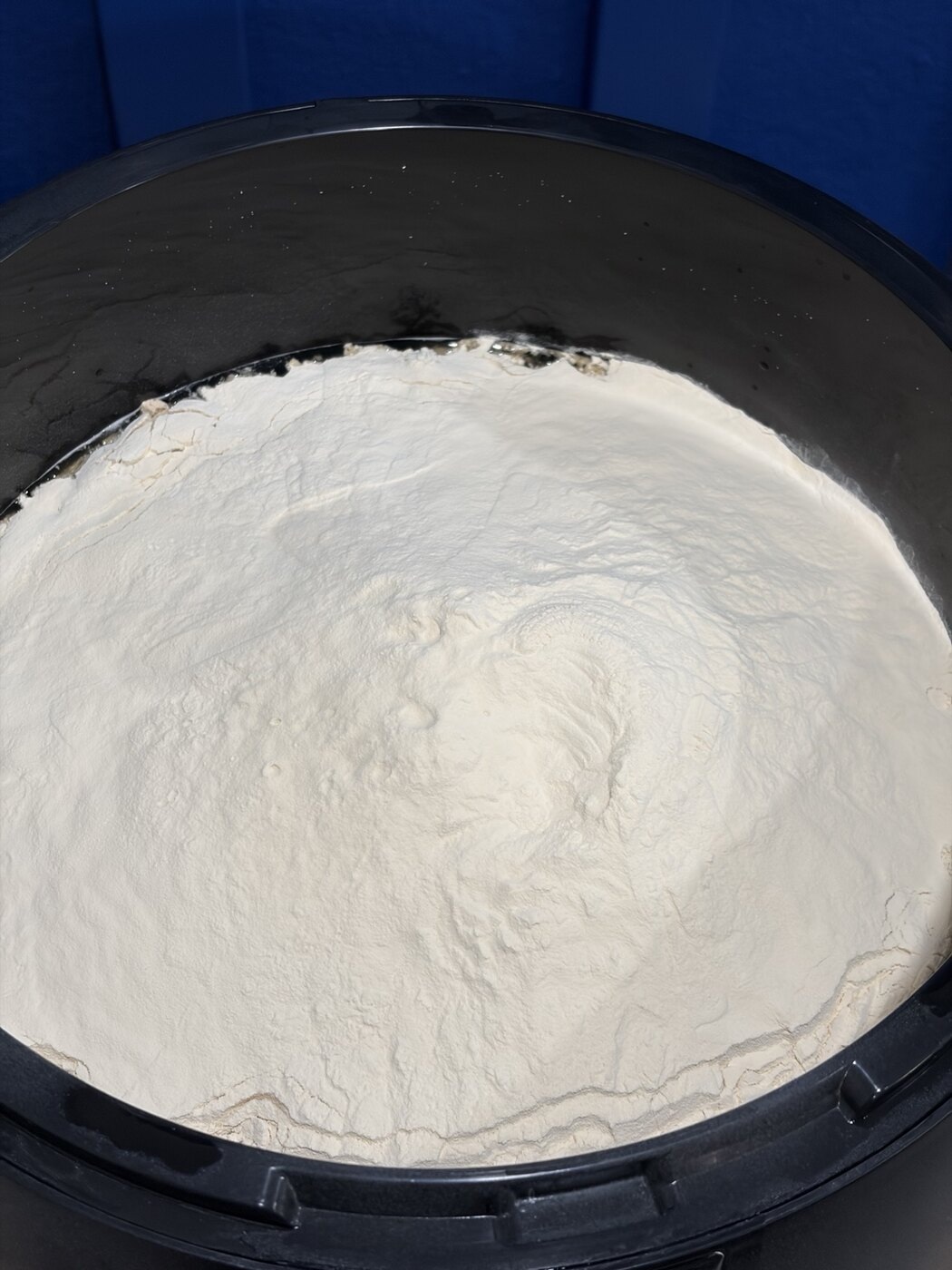
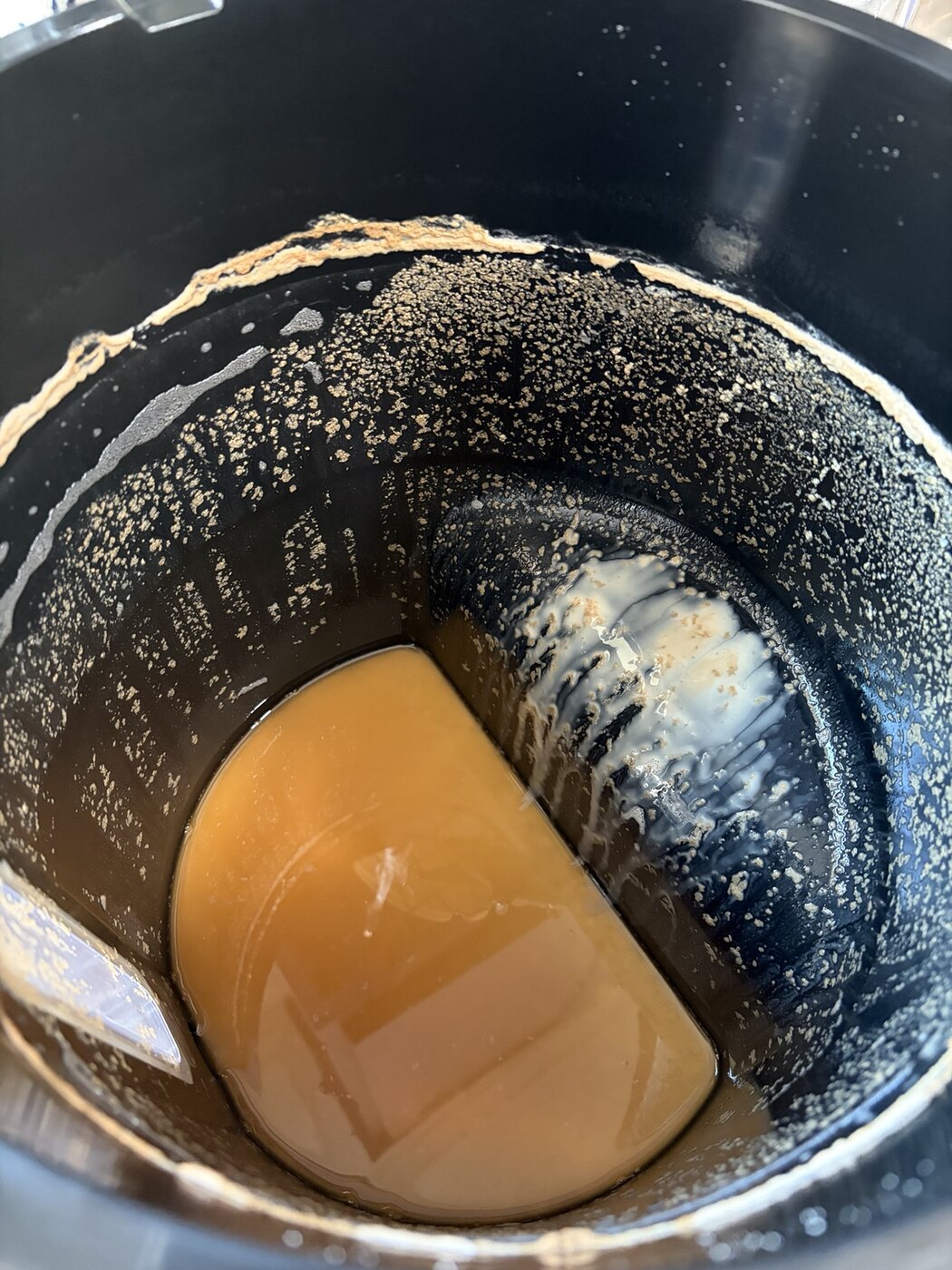
Immediately after adding the dry ingredients, the surface was covered with a pale layer of powder. From there, the BeerDroid handled the standard ale program automatically.
Temperature log: Ferment after 12 hours, then centered around 17°C
The standard BeerDroid ale program runs a 12-hour Propagate zone targeting 21°C (70°F), then changes to a 17°C (63°F) Ferment target.[4] At the 12-hour screenshot, the app already showed Ferment, with the beer at 21.1°C (70.0°F) and the target at 17°C. By about 21 hours it had dropped to 18.1°C (64.6°F).
These are representative “Now” snapshots from the app, not a continuous average of every temperature reading.
| Elapsed | Now | Target | Ambient |
|---|---|---|---|
| 12 h | 21.1°C / 70.0°F | 17°C / 63°F | 25.1°C / 77.2°F |
| 21 h | 18.1°C / 64.6°F | 17°C / 63°F | 25.4°C / 77.7°F |
| Day 1 | 16.9°C / 62.4°F | 17°C / 63°F | 26.7°C / 80.1°F |
| Day 2 | 17.4–17.5°C / 63.3–63.5°F | 17°C / 63°F | 24.9–25.0°C / 76.8–77.0°F |
| Day 3 | 15.8–15.9°C / 60.4–60.6°F | 17°C / 63°F | about 27°C / 80.6°F |
| Day 4 | 16.2–16.3°C / 61.2–61.3°F | 17°C / 63°F | 25.2–26.6°C / 77.4–79.9°F |
| Day 5 | 16.7°C / 62.1°F | 17°C / 63°F | 24.9–26.3°C / 76.8–79.3°F |
| Day 6 | 16.2–16.7°C / 61.2–62.1°F | 17°C / 63°F | 26.1–26.5°C / 79.0–79.7°F |
| Day 7 / Keg | 17.4°C / 63.3°F | 18°C / 64°F | 24.8°C / 76.6°F |
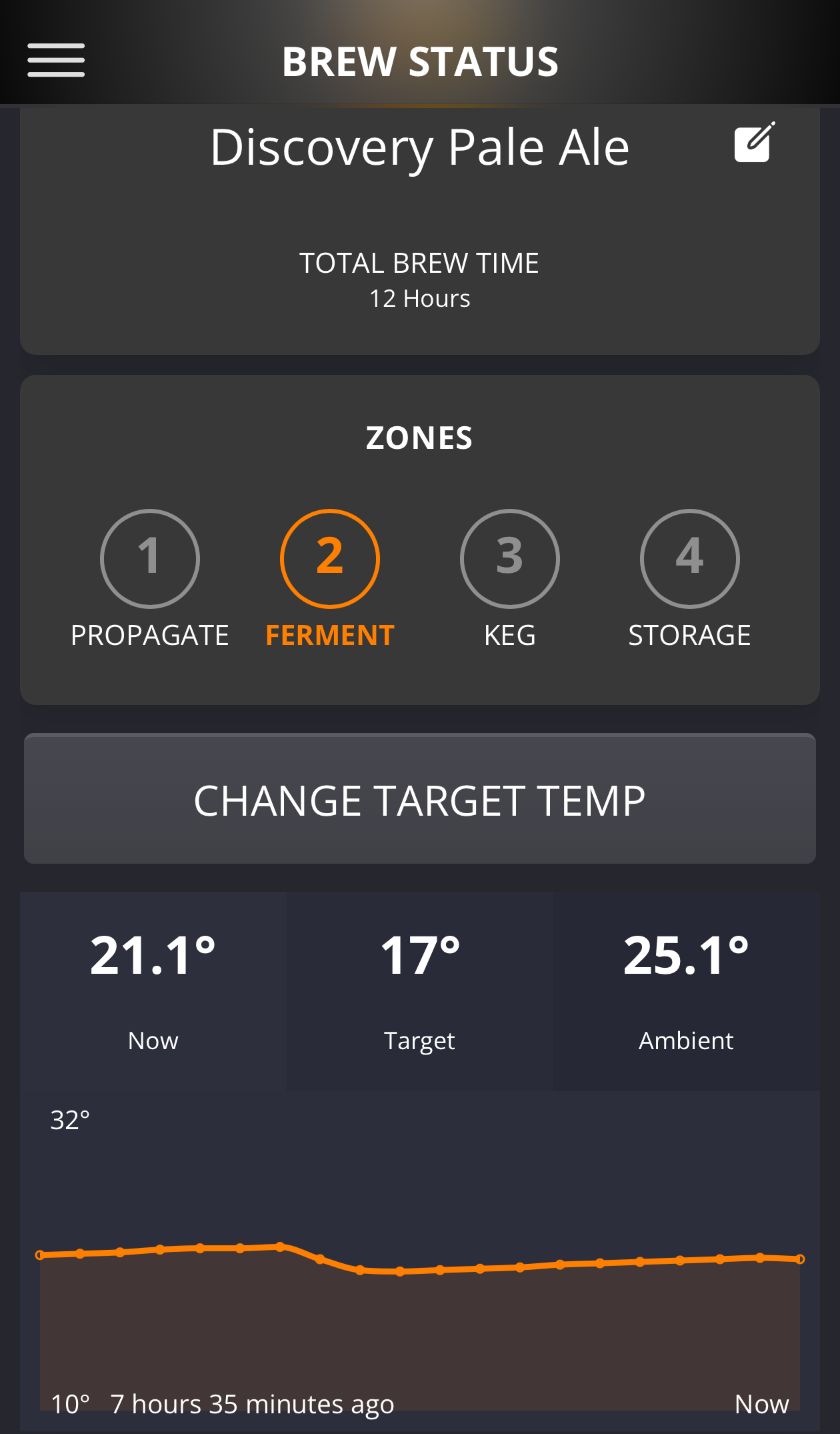
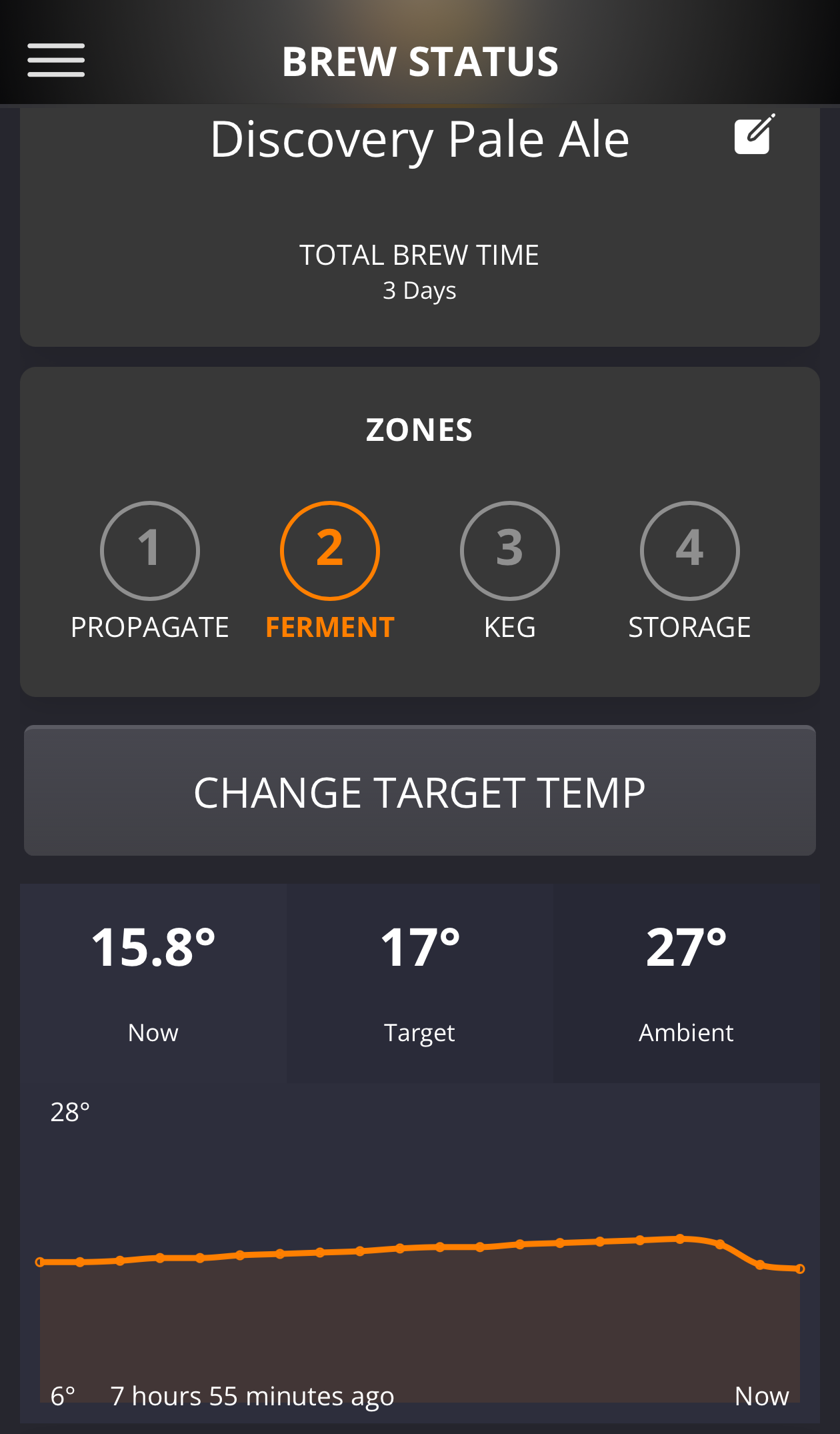
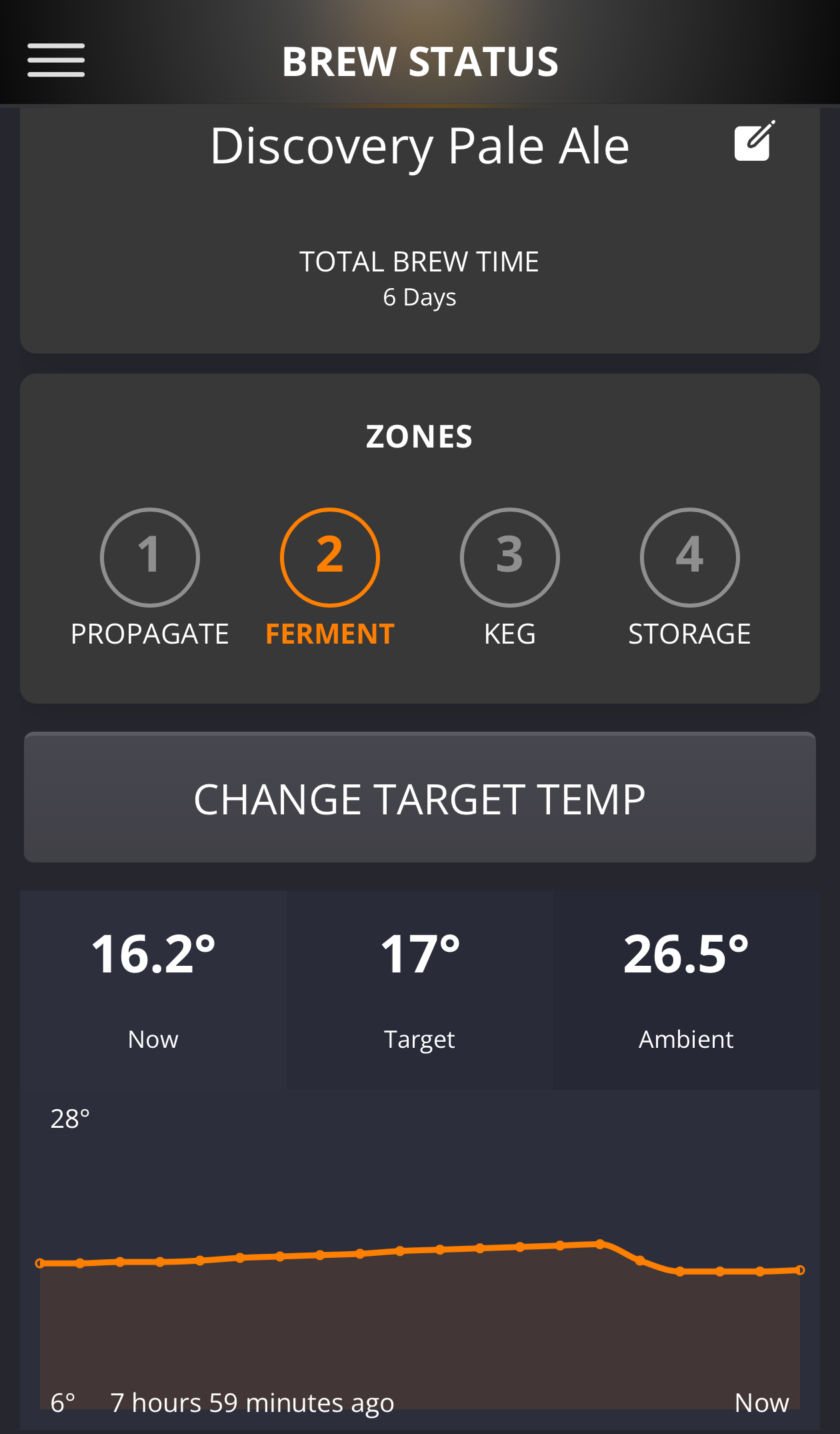
Even with the app reporting ambient temperatures around 25–27°C (77–81°F), the beer spent most of the post-cooldown snapshots in the 16–17°C range. One day-3 snapshot dipped into the high 15s; I am recording it as part of the control cycle rather than treating a single reading as evidence of a fermentation change.
EOF at 7 days 1 hour—right at the low end of the 7–10 day estimate
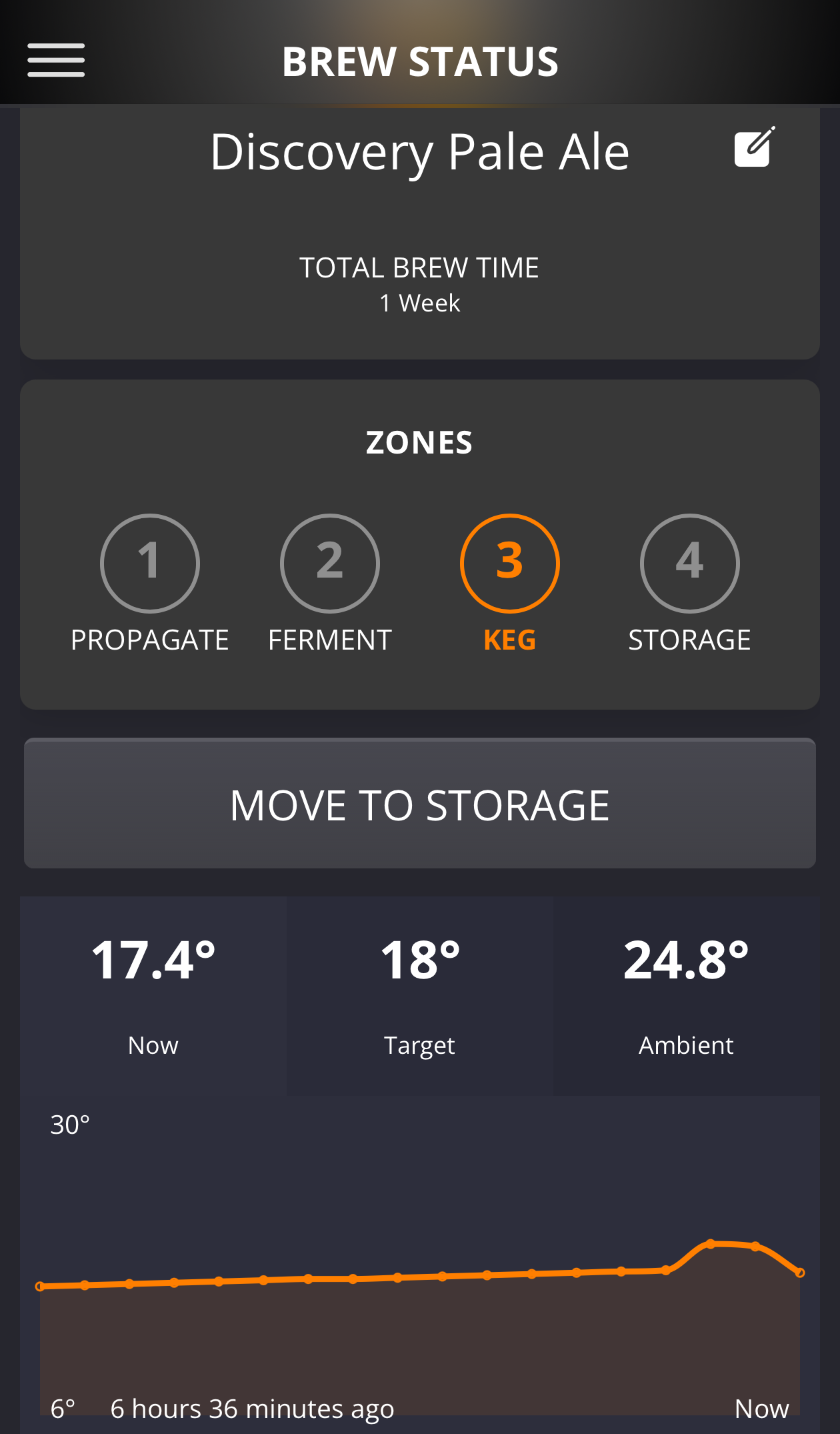
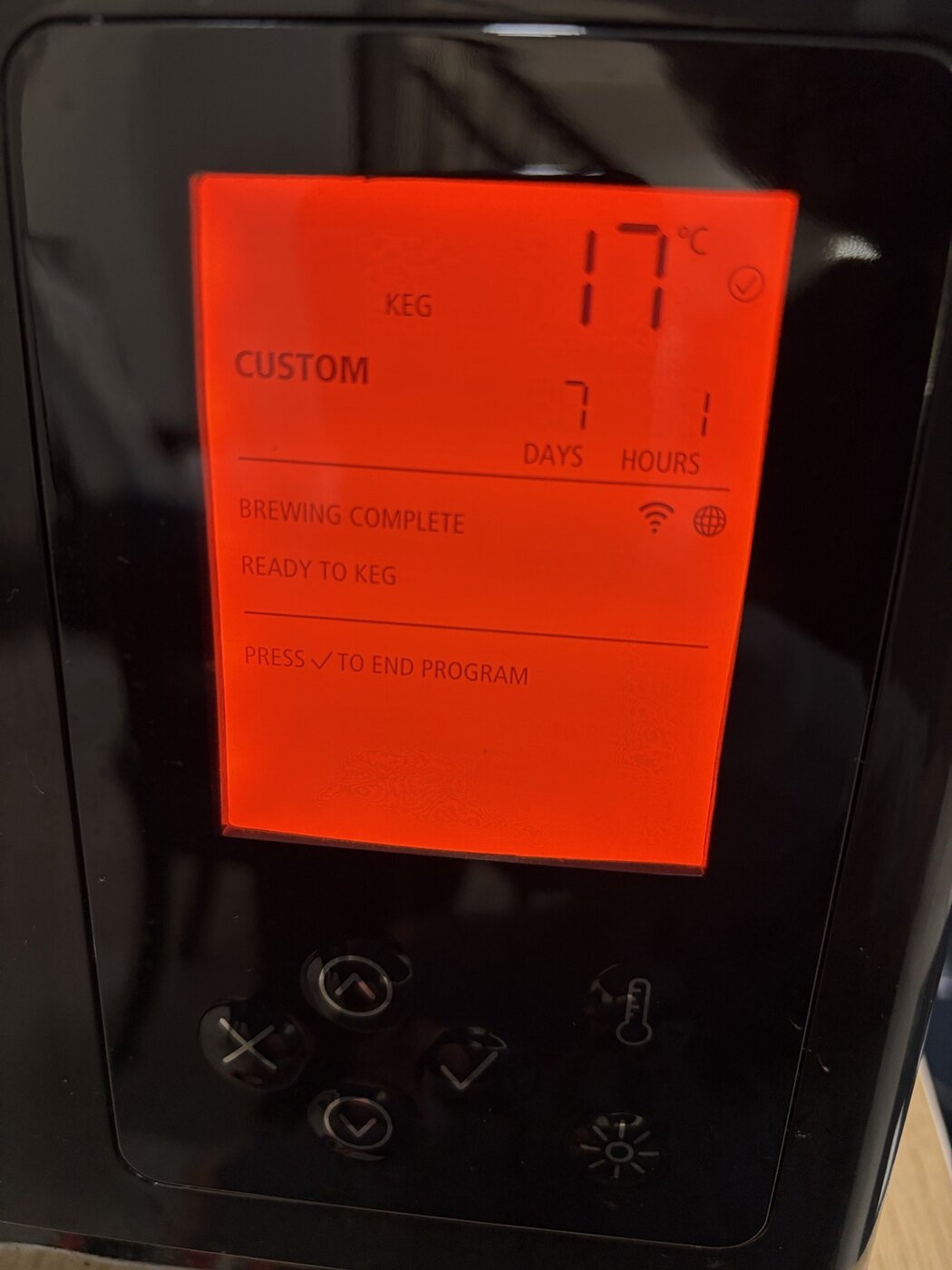
On day 7 the BeerDroid moved from Ferment to Keg. The front display showed 7 days 1 hour together with “BREWING COMPLETE / READY TO KEG,” while the app showed “1 Week” and Zone 3 Keg. That puts this batch essentially at the low end of BrewArt's published 7–10 day window.[1]
Pre-H2 tasting: apple-like aroma and a slightly floral edge to the bitterness
Apple-like aroma, plus a slightly floral impression in the bitterness. This was before H2 and before conditioning.
This was the most interesting checkpoint. BrewArt's finished description points to pine and citrus, toffee, and crisp bitterness.[1] At EOF before H2, however, the first thing I noticed was an apple-like aroma.
That is not a reason to call the batch “off” yet. BrewArt describes H2 as resinous, bold citrus/floral, with an assertive bitter finish, and this BrewPrint contains two H2 packs.[2] In other words, some of the citrus/floral hop expression is added at the next stage rather than being fully present in the pre-H2 sample.
Y1 is also described by BrewArt as an American Ale yeast that can throw subtle esters.[3] Fermentation-derived ester character is one possible contributor to a fruity impression, but one small EOF sample is not enough to attribute the apple note specifically to Y1. I am keeping it as an observation to compare after conditioning.
H2 into two kegs, then conditioning
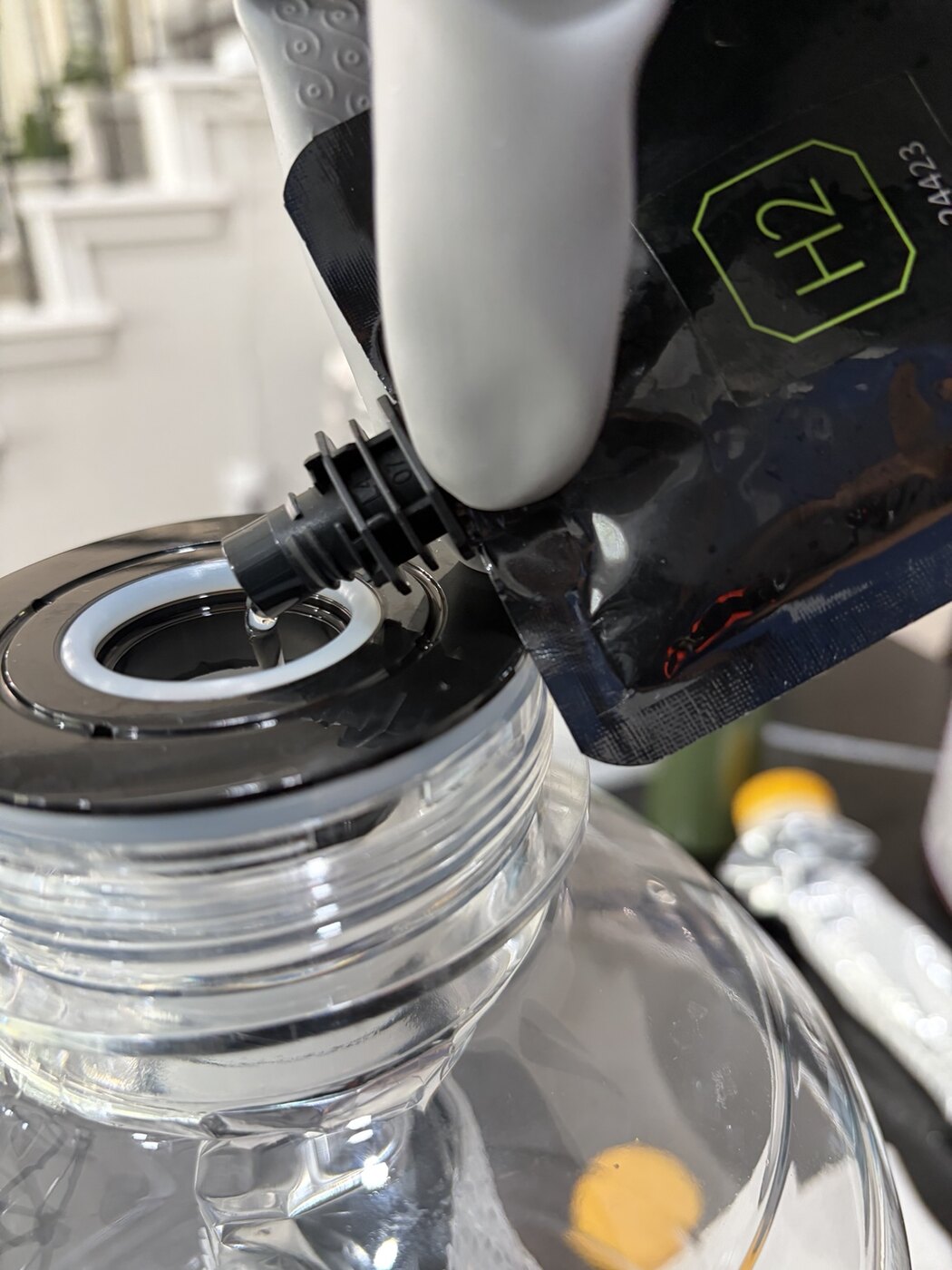
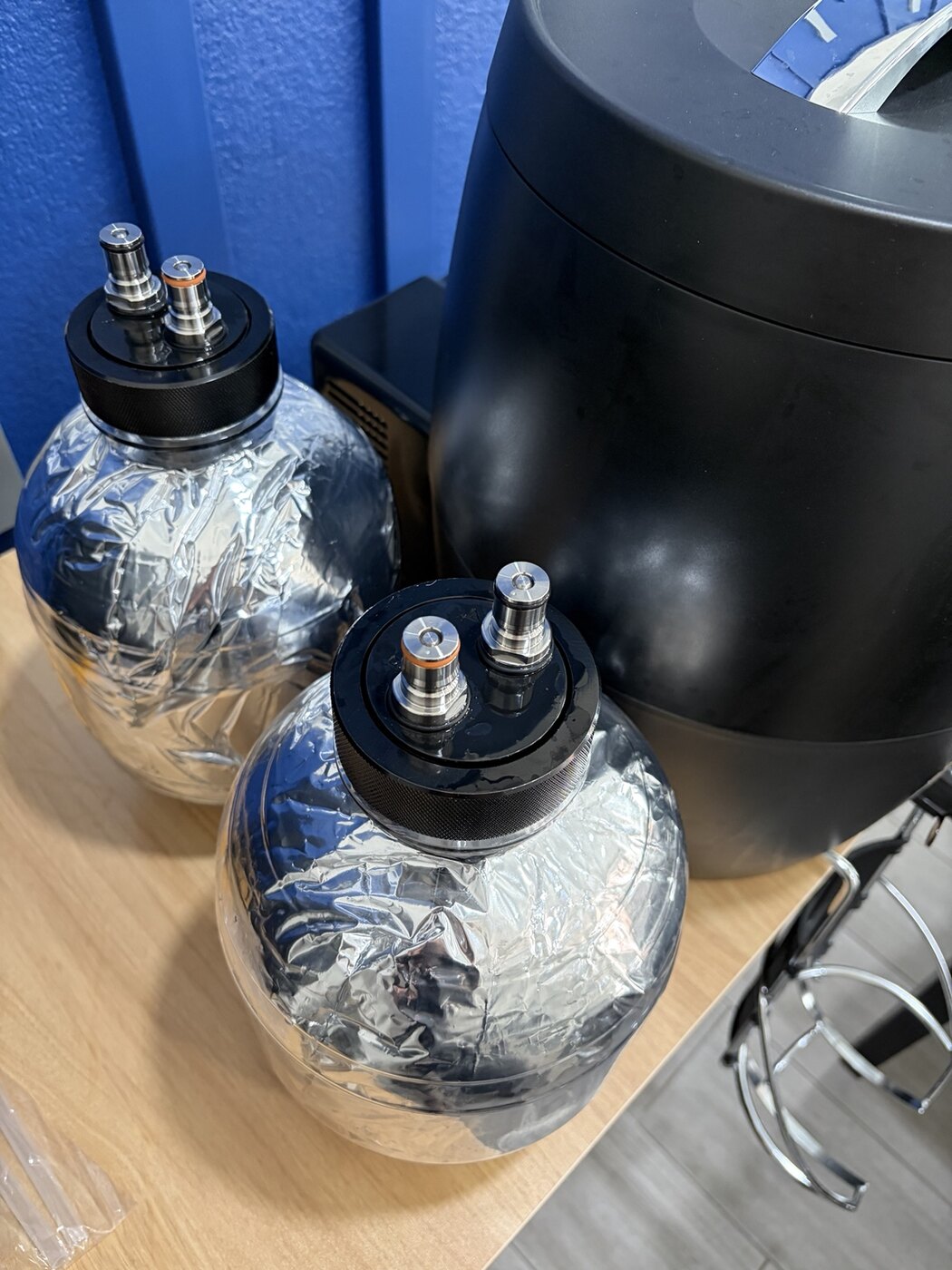
After EOF, I sanitized the kegs and beer-contact parts with Star San, split the two H2 packs between the two 5 L kegs, and transferred the beer out of the BeerDroid. BrewArt's manual has primer/hops added at kegging and calls for at least 14 days of secondary fermentation/conditioning at 18–25°C (65–77°F).[4]
After about 17 days of conditioning: citrus, green apple, firmer bitterness
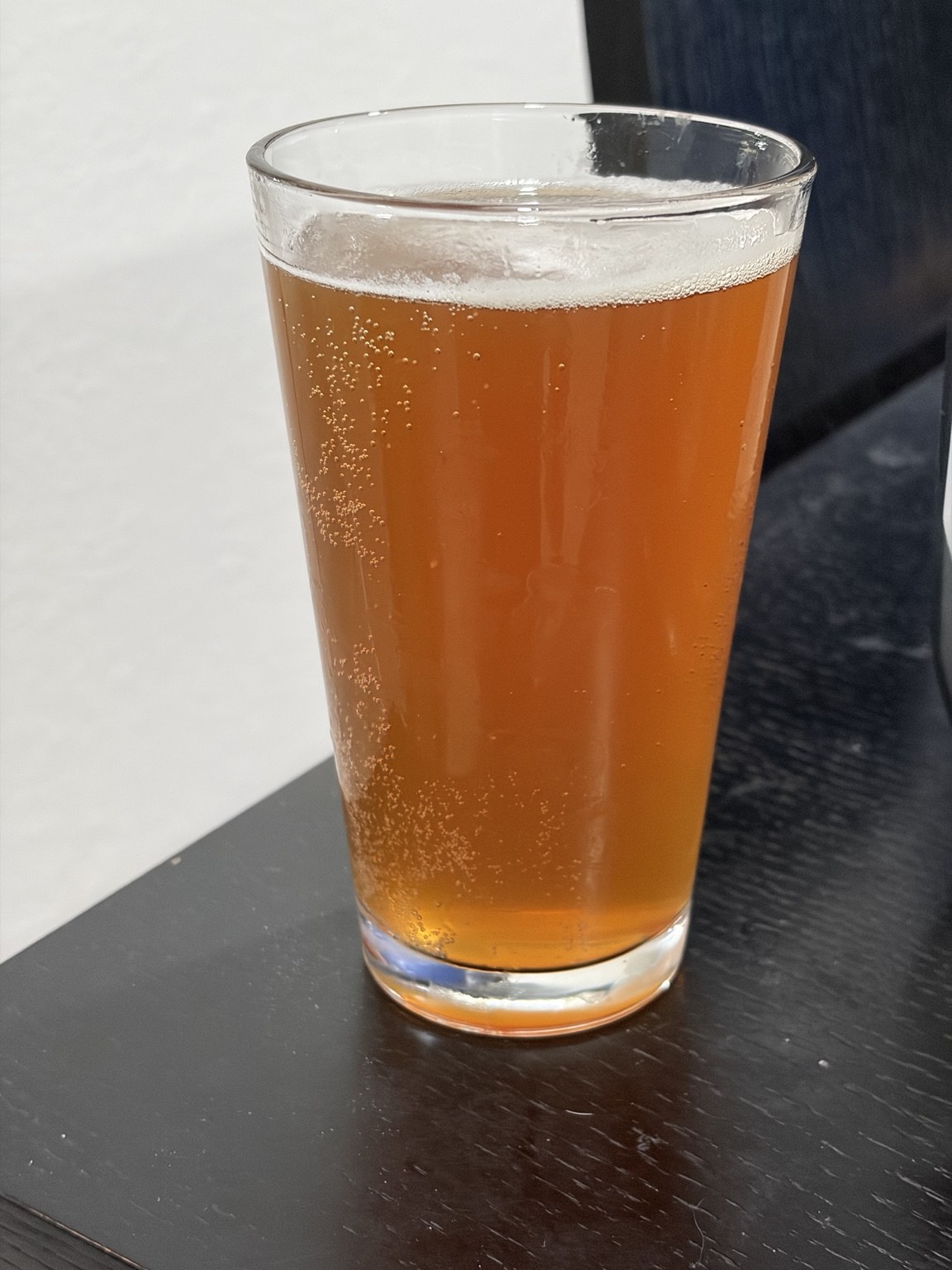
About 17 days after kegging, I retasted the beer after H2 and secondary fermentation/conditioning. The aroma had shifted toward subtle citrus to green-apple-like notes. The bitterness was clearly firmer than in the pre-H2 sample, but the finish stayed clean and refreshing. It had enough bitterness to stay interesting without feeling heavy—the kind of pale ale that was very easy to keep drinking.
Before conditioning → after conditioning → BrewArt target
| Stage | Aroma | Bitterness / finish |
|---|---|---|
| EOF / before H2 | Apple-like | Slightly floral edge |
| After ~17 days conditioning | Subtle citrus to green apple | Firm bitterness, clean finish |
| BrewArt description | Pine & citrus | Toffee notes, crisp bitterness[1] |
How it compared with BrewArt's finished profile
Compared with BrewArt's pine/citrus target, the conditioned beer did move more clearly in a citrus direction, while I still perceived a green-apple-like note. The bitterness was more pronounced than before H2 and felt closer to the crisp-bitter target. I did not clearly pick out pine or toffee in this tasting. These are personal sensory notes rather than instrument-based measurements. Here, “green apple” is simply a sensory descriptor; it is not a diagnosis of a specific off-flavor or compound.
Pairing: pressure-cooked Japanese kakuni
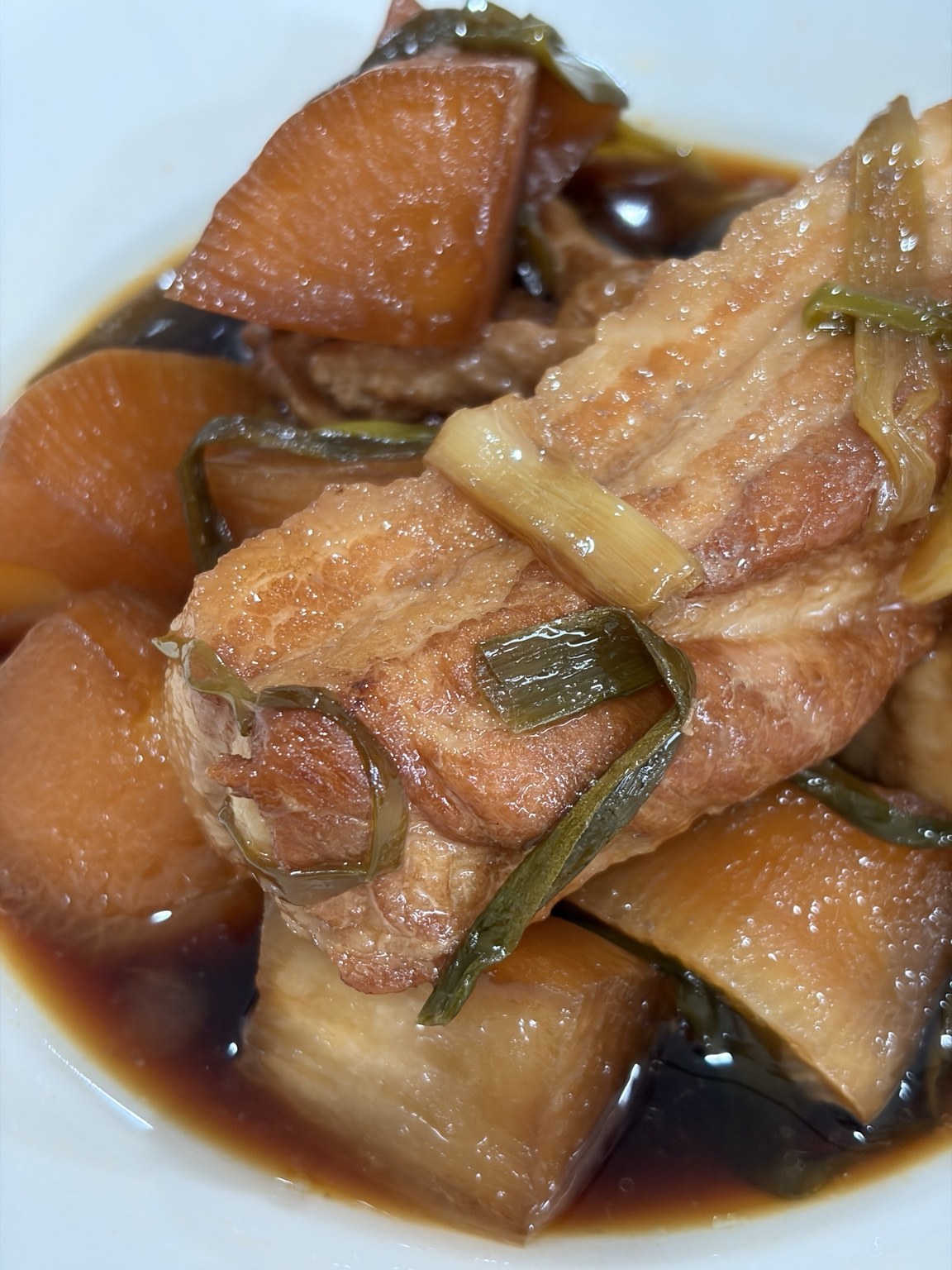
I paired the pale ale with pressure-cooked Japanese pork belly kakuni. The pork was fall-apart tender, and the daikon had soaked up the sweet-savory braising liquid. After the rich kakuni, the pale ale's firm bitterness and clean, refreshing finish reset the palate and made it easy to go back for another bite—and another sip.
What this batch showed
- Discovery Pale Ale reached EOF / Ready to Keg in 7 days 1 hour, right at the low end of the published 7–10 day range.
- The standard ale program uses a 12-hour, 21°C Propagate stage followed by a 17°C Ferment target; at 12 hours this batch was still cooling from 21.1°C toward 17°C.
- After the initial cooldown, the representative snapshots were mostly in the 16–17°C range even with ambient readings around 25–27°C.
- The pre-H2 EOF sample gave me an apple-like aroma and a slightly floral edge to the bitterness.
- After about 17 days of conditioning, the beer shifted to subtle citrus/green-apple-like aroma, firmer bitterness, and a clean, refreshing finish.
- The citrus side moved closer to BrewArt's target profile; pine and toffee were not obvious to me in this tasting.
Conclusion
My fourth BeerDroid style reached EOF in 7 days 1 hour, essentially at the low end of BrewArt's 7–10 day estimate. The 17°C ale fermentation stayed largely in the mid-16s to low-17s after the initial cooldown, even with room-temperature readings above 25°C.
The flavor development was just as useful to track. Before H2, the young beer read as apple-like. After H2 and about 17 days of keg conditioning, it had shifted toward subtle citrus to green apple, firmer bitterness, and a clean, refreshing finish. That brought the beer closer to BrewArt's citrus/crisp-bitter direction, while the green-apple-like character was still part of my own tasting impression. With rich food such as kakuni, the clean finish worked especially well. My final take: an easy-drinking pale ale with enough bitterness to stay interesting.
References
- BrewArt, Discovery Pale Ale (finished flavor description, 5.5% ABV, Colour 16, Bitterness 33, Ale program, 7–10 day estimate, minimum 14-day secondary fermentation).
- BrewArt, Hops (Hops 2: resinous, bold citrus/floral, assertive bitter finish).
- BrewArt, Yeast 1 (Y1 American Ale yeast and subtle ester description).
- BrewArt, BeerDroid Instruction Manual (Ale Propagate/Ferment/Keg/Store temperatures, EOF behavior, pre-keg sampling, kegging, and minimum 14-day conditioning).
- BrewArt, BrewArt US (10 L BeerDroid, EOF technology, app monitoring, and temperature control).
Questions or comments about this article?
If you have tried the same thing or noticed something different, feel free to send a message. Add your email address only if you would like a reply.
The website is where I organize the finished experiment log. I post the day-by-day process, surprises, and quick observations on X at @ConyDIYHouston.