
Wet or Oil a Wooden Cutting Board? Testing Mineral Oil on a Tramontina Board
I grew up with the idea that a wooden cutting board should be wetted before use. But when I checked the care guidance for this Tramontina board, the emphasis was different: hand wash, dry thoroughly, and condition it with food-safe mineral oil. So I coated the entire board and checked it again the next morning.
Bottom line first
Why I was confused: Japanese wood boards are often wetted first
Japan's Ministry of Agriculture, Forestry and Fisheries has a care page for a domestic hinoki cutting board that says to wet the board before use, wash it promptly afterward, stand it up in a well-ventilated place, and dry it out of direct sun. [1]
The important detail is that this guidance is presented for a Japanese hinoki board. It should not automatically be treated as the universal care method for every wooden cutting board.
Tramontina's guidance: hand wash, dry, and use mineral oil
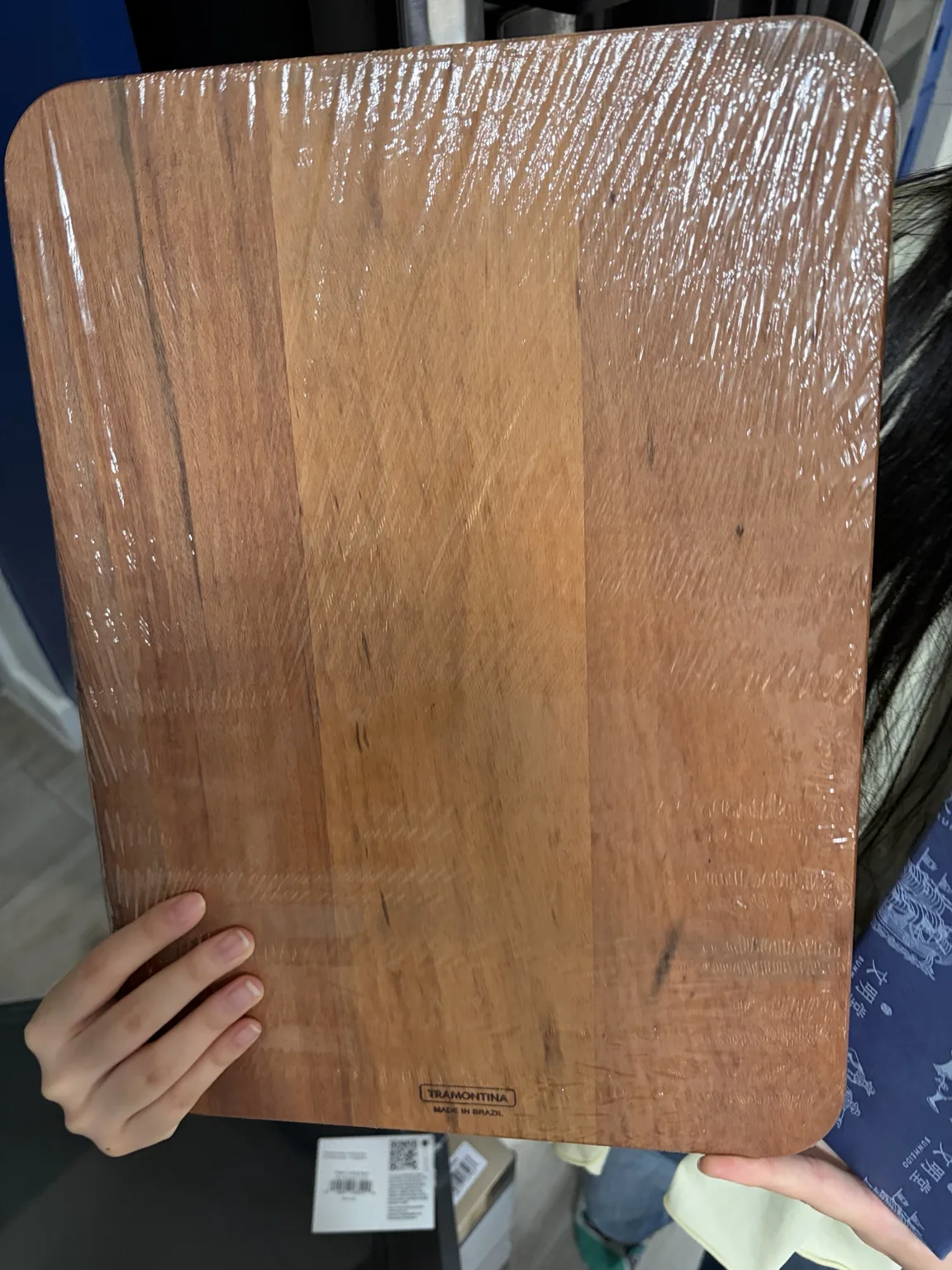
Tramontina USA tells users to hand wash with warm soapy water and dry the board upright so air reaches both sides. It also says not to soak a wood board or put it in the dishwasher, and recommends rubbing in food-safe mineral oil every few weeks to keep the wood conditioned and water-resistant. [2]
The current Tramontina guidance focuses on limiting prolonged water exposure, drying well, and conditioning with oil. It does not present pre-wetting before every use as a required step, so I followed the manufacturer's care approach for this board.
I coated the entire board with food-grade mineral oil
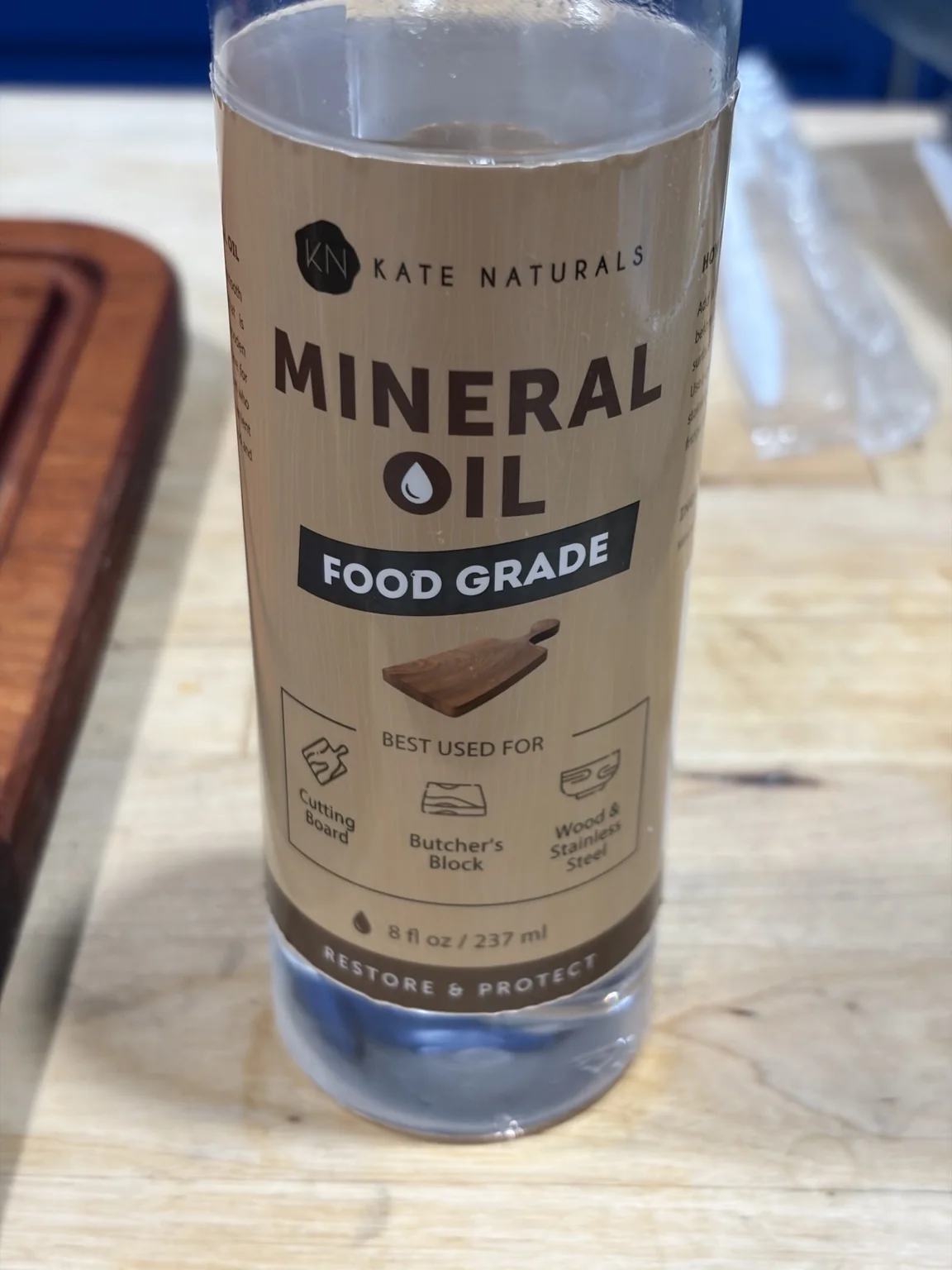
I used Kate Naturals Food Grade Mineral Oil. The bottle itself is labeled for cutting boards and butcher blocks. I did not measure the exact volume, so I am not going to invent an “X mL” dose; I simply used enough to leave the whole surface evenly damp-looking.
- Wash the board once and let it dry completely.
I started with a dry board rather than trapping surface water under the oil. - Oil the top, bottom, edges, corners, and juice groove.
For the first treatment I coated the entire board rather than only the cutting face. - Stop when the surface looks evenly conditioned.
There is no need to leave pools of oil. I did not measure the volume, so the photos are the best record of how much I used. - Leave it overnight.
My plan was to wipe off any obvious excess the next morning. In this case, the wet-looking shine had already settled down substantially.
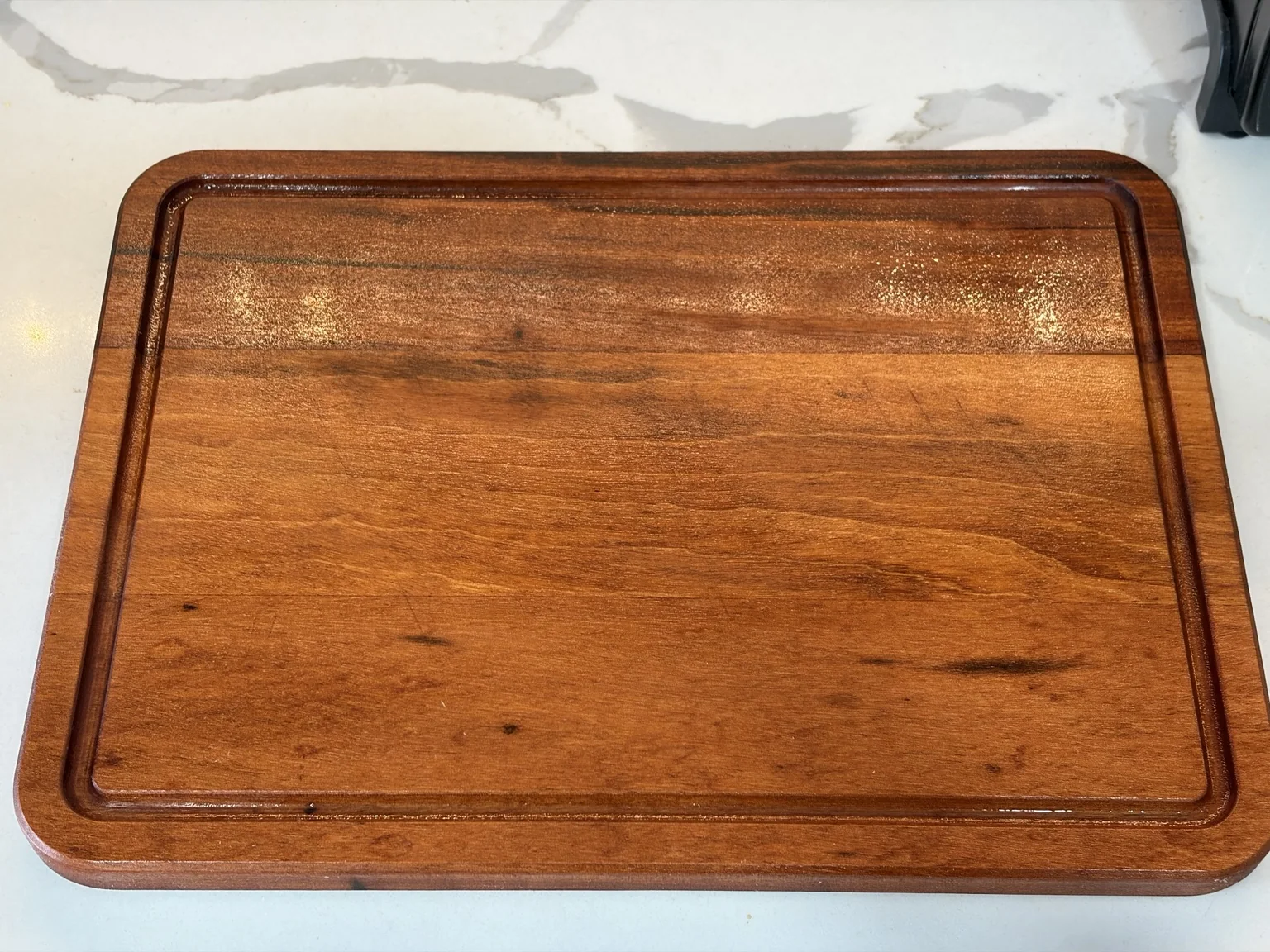
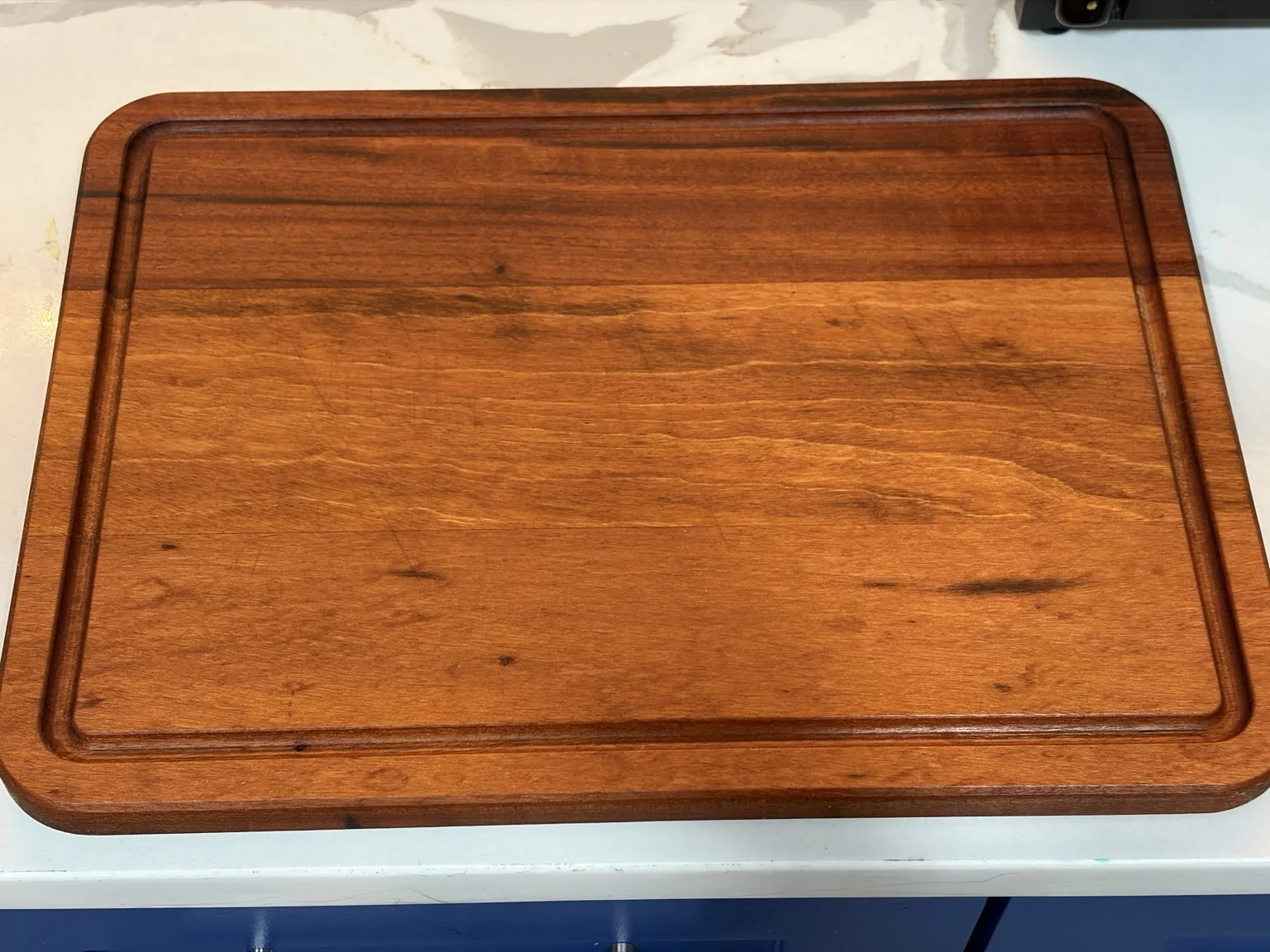
Right after oiling, the grain looked deeper and the surface was very shiny. By the next morning the shine had settled substantially, and it no longer felt noticeably sticky. The two photos at the top show that change side by side.
This was not a controlled color measurement. The lighting and camera position were not identical, so I treat these photos as a practical before/after record of surface appearance, not a quantified color comparison.
How I plan to wash it
For this Tramontina board, my normal routine will be warm water + dish soap by hand, remove surface water promptly, then dry upright. Tramontina specifically warns against soaking and dishwasher use because prolonged heat and moisture can contribute to warping and cracking. [2]
For food-safety basics, the FDA says cutting boards and utensils should be washed with hot, soapy water after preparing each food item, especially before moving on to another food. [3]
A wooden board obviously gets wet during washing. The distinction is between normal hand washing and prolonged exposure such as soaking it in a sink or running it through a dishwasher when the manufacturer says not to.
How often should it be re-oiled?
Tramontina USA says every few weeks as a general maintenance interval. [2] Actual timing will depend on use and how dry the board looks and feels, so I plan to watch the surface rather than oil it after every wash.
The mineral oil I used
Takeaway: “wood” does not mean one universal care method
MAFF's hinoki example uses pre-wetting. Tramontina's current guidance emphasizes hand washing, upright drying, and regular food-safe mineral oil. The right routine depends on the board you actually own.
After one overnight oil treatment, this board had lost most of the wet-looking shine and did not feel noticeably sticky. From here I will use it normally, hand wash it, dry it upright, and re-oil it when the wood starts to look dry.
References
- Ministry of Agriculture, Forestry and Fisheries of Japan, Wooden cutting-board care guidance (Japanese; pre-wetting, washing and drying guidance for a domestic hinoki cutting board; accessed Nov. 7, 2026).
- Tramontina USA, Cutting Boards & Teak Serving Boards — Your Cutting Board Questions Answered (hand washing, upright drying, no soaking/dishwasher, regular food-safe mineral oil; accessed Nov. 7, 2026).
- U.S. Food & Drug Administration, Safe Food Handling (washing cutting boards and utensils with hot, soapy water after each food item; accessed Nov. 7, 2026).
From the Tramontina sale find to the overnight oil treatment, the day-to-day questions and quick results usually appear on X before they are organized here.
Questions or comments?
If you have a question about washing, oil amount, drying, or wooden cutting-board care, send it here.