
Does “1:2 in 25–30 Seconds” Make Better Espresso?
From a Choked Shot to 14.5g → 30.6g
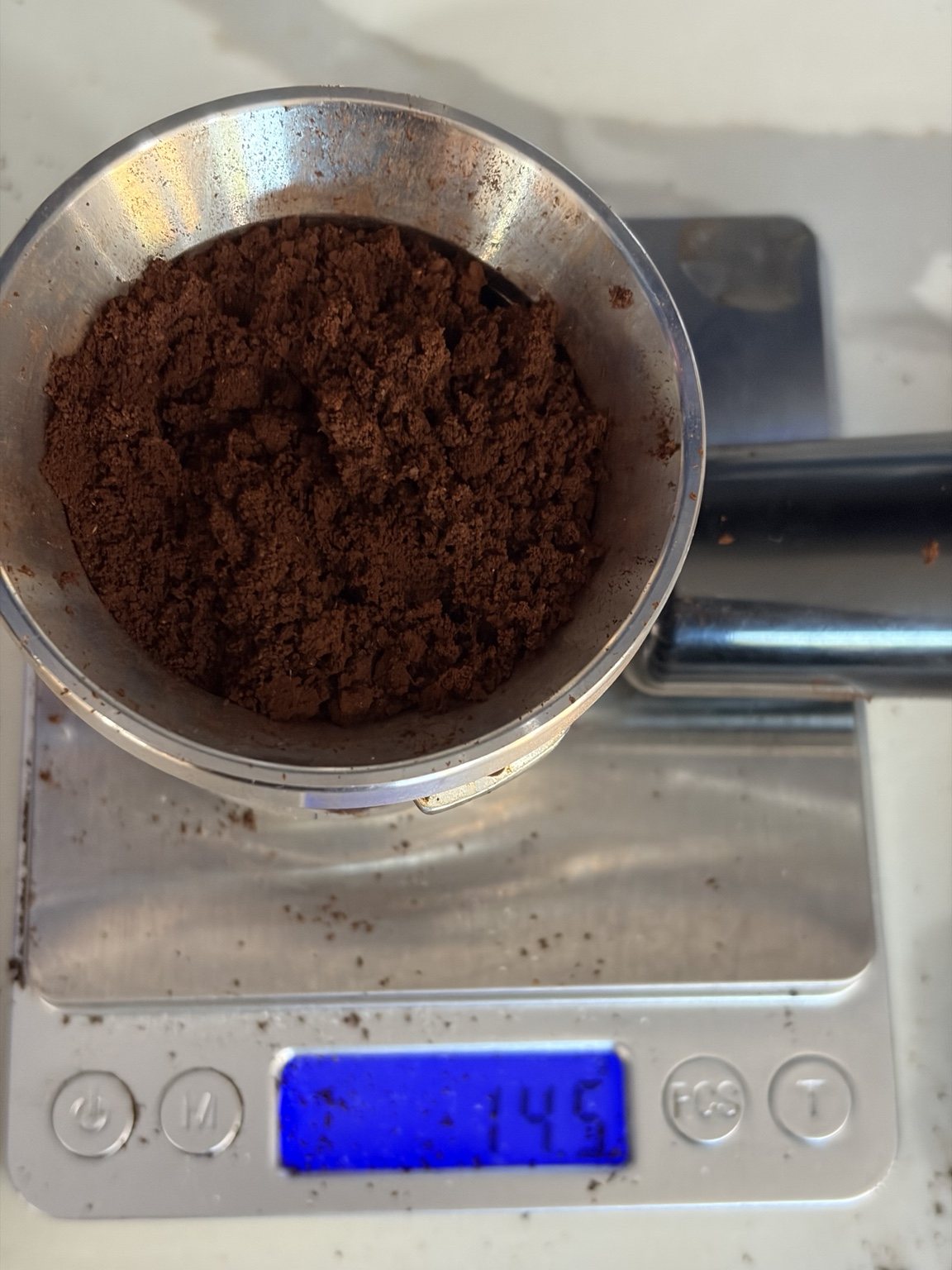
A common espresso starting point is roughly 1:2 coffee-to-beverage by weight in about 25–30 seconds. I wanted to see what that target actually looked and tasted like on my home setup: a fixed-program espresso machine, a blade grinder, and Costco's Kirkland Signature Colombian Supremo. I started with a fast 14.5g → 57.0g shot, over-corrected until only 11.3g came out, failed to rescue the over-fine grounds by cutting the dose to 13g, then restarted by weighing 14.5g of beans for each shot. The final result was 30.6g out — about 1:2.1 — in roughly 30 seconds.
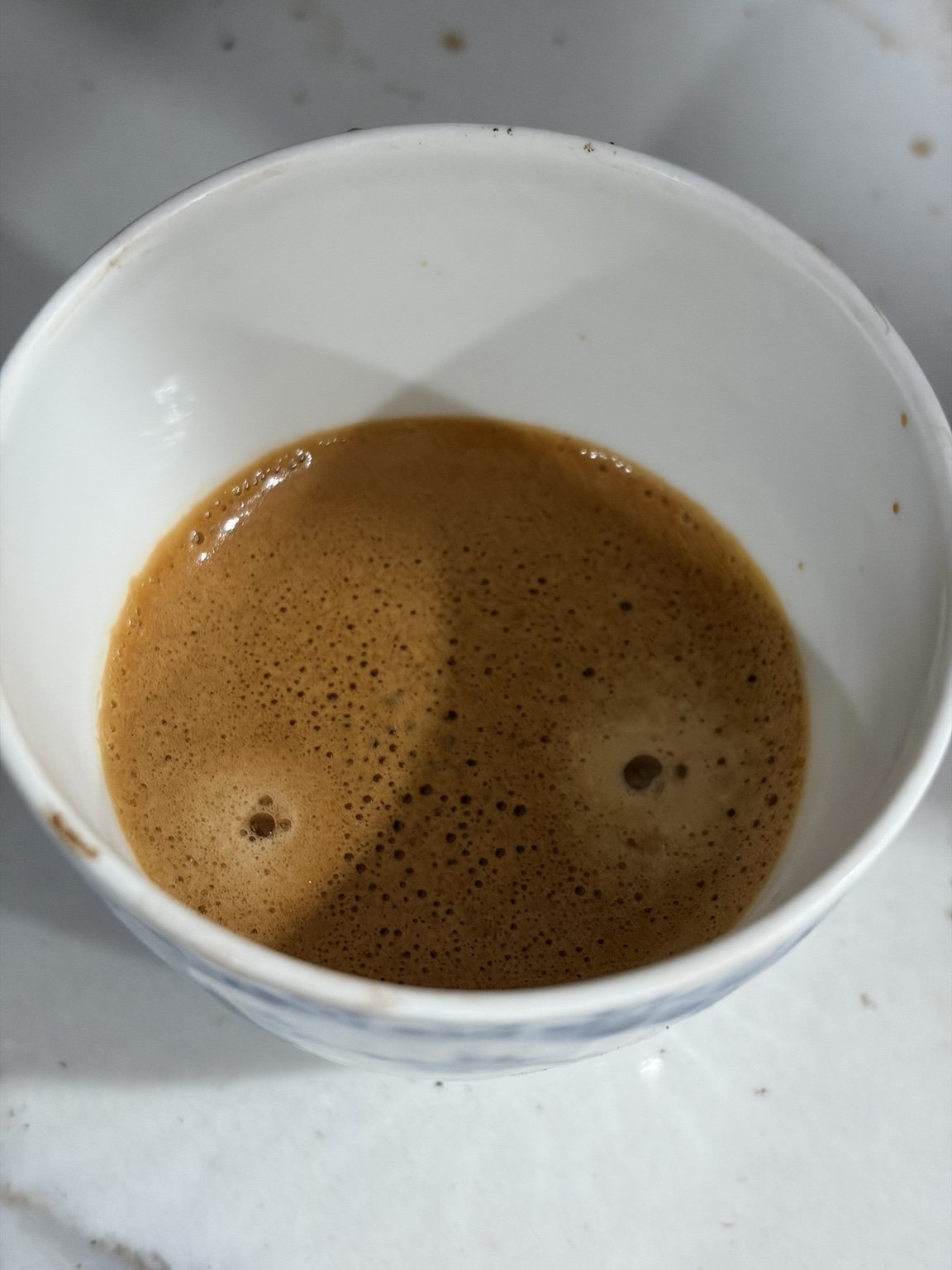
Quick answer
| Final baseline | 14.5g in → 30.6g out = about 1:2.1, with the machine's fixed program taking about 30 seconds on video. |
|---|---|
| Taste | A little acidity remained; bitterness was normal, sweetness was mild, crema was good, and the beverage volume felt right. |
| Most useful failure | An over-fine batch gave only 11.3g from a 14.5g dose. Cutting dose to 14.0g and then 13.0g still did not restore useful flow. |
| Grind-time search | With fresh 14.5g single doses: 12 s → 52.9g and 14 s → 42.7g. Four 15-second trials ranged from 20.3g to 39.8g (three were 30.6–39.8g); the final 30.6g shot came closest to the target. |
| Bottom line | 1:2 was not a magic answer; it was a very useful coordinate for finding a taste I liked. |
1. Where does the “1:2, 25–30 seconds” idea come from?
The Specialty Coffee Association's report on the 2017 Barista Guild of America survey found an average brew ratio of 1:2 and an average yield of 36.5g. Many respondents reported average doses of 18–20g, while 51% reported their average extraction time was 25–30 seconds. These figures describe common practice among survey respondents at the time, not a universal rule. [1]
La Marzocco likewise uses a medium-roast example of 1:2 in roughly 25–35 seconds as a home dial-in starting point. It also notes that smaller ratios tend to feel thicker and more viscous, while larger ratios stretch the shot and make it lighter. [2]
With a 14.5g dose, a 1:2 recipe means 29.0g out. I used that as the numeric target, then judged the result by taste.
My “about 30 seconds” is measured from button press to the end of the shot in the video. That includes this machine's startup / wetting period, so it is not necessarily identical to the timing convention used on every espresso machine.
2. Setup: Costco beans, a fixed-program machine, and a blade grinder
The coffee was Kirkland Signature Colombian Supremo Whole Bean Coffee from Costco. Costco currently lists it as Whole Bean / Medium Roast / 3 lb (about 1.36 kg). [3]
- Baseline dose: 14.5g
- Espresso machine: fixed extraction program; no direct flow profiling
- Grinder: blade grinder; I changed grind duration rather than a numbered grind-size setting
- Puck prep: break up clumps → level / tamp → thin puck screen
- Measurement: 0.1g scale for both dose and beverage yield
Equipment and tools used in this test
- CASABREWS 3700 Essential Espresso Machine — The home espresso machine used for every shot in this test. View on Amazon →
- SHARDOR Electric Super Silent Blade Coffee Grinder — The blade grinder used for the 30-, 12-, 14-, and 15-second grind-duration tests. View on Amazon →
- Reoszeank 51mm Espresso Accessories Kit — A 51mm kit with WDT, distributor, dosing funnel, and related puck-prep tools used to manage the grounds before tamping. View on Amazon →
- Apexstone 51mm Spring-Loaded Calibrated Tamper — The 51mm spring-loaded tamper used for puck preparation. View on Amazon →
- MHW-3BOMBER 51mm Puck Screen — The thin 0.8mm puck screen placed on top of the tamped coffee bed. View on Amazon →
- Fuzion Digital Gram Scale — The digital scale used to check dose and beverage yield. View on Amazon →
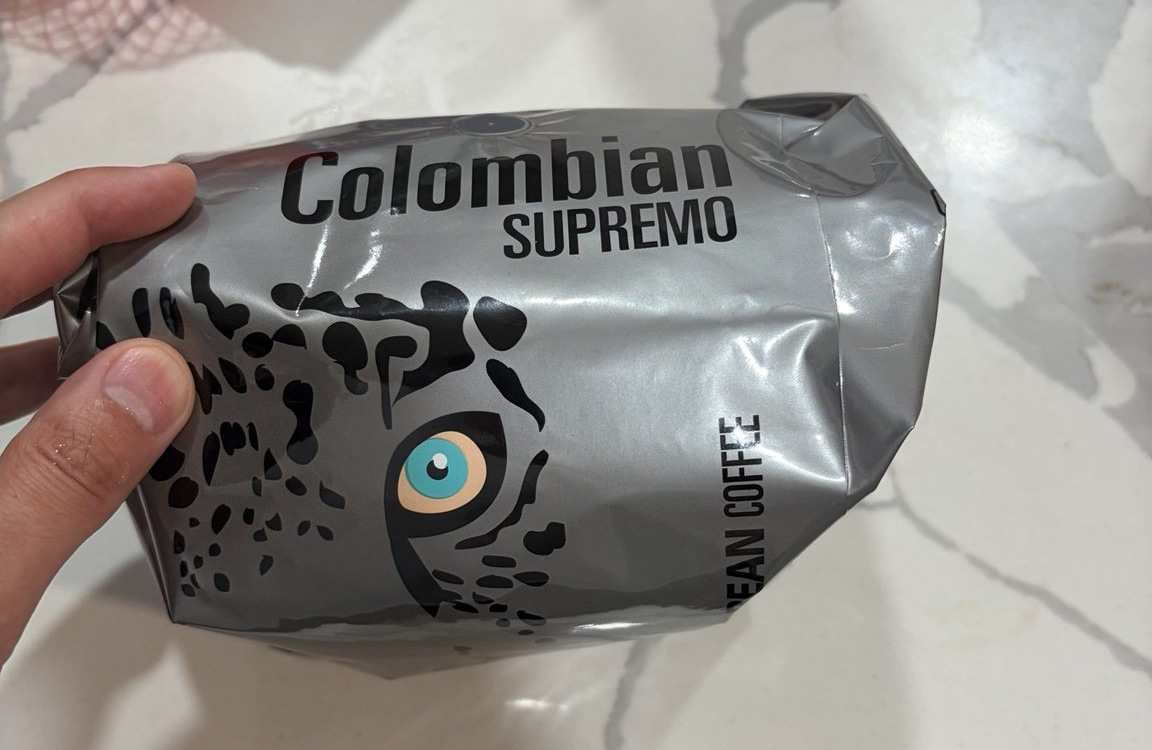
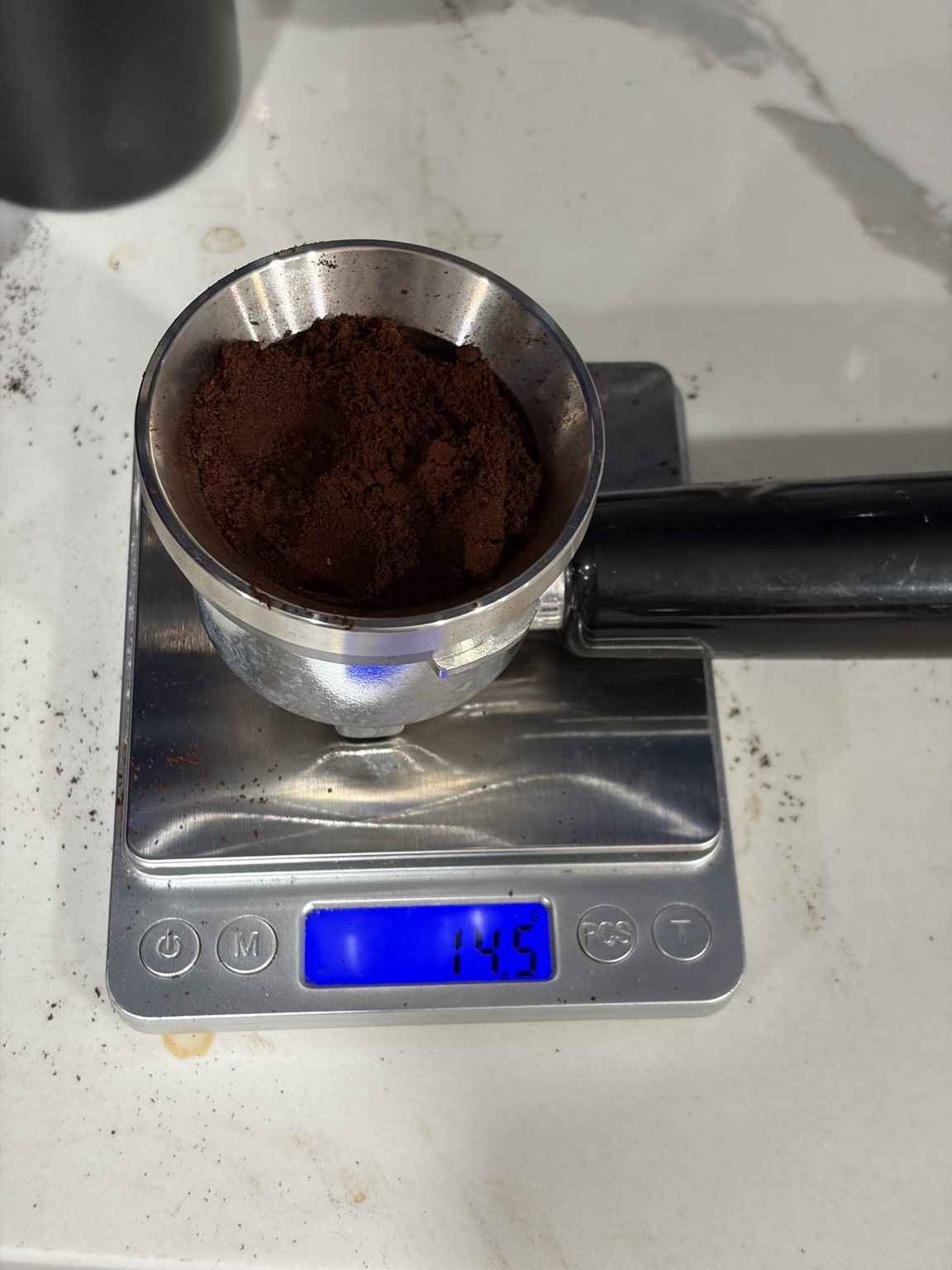
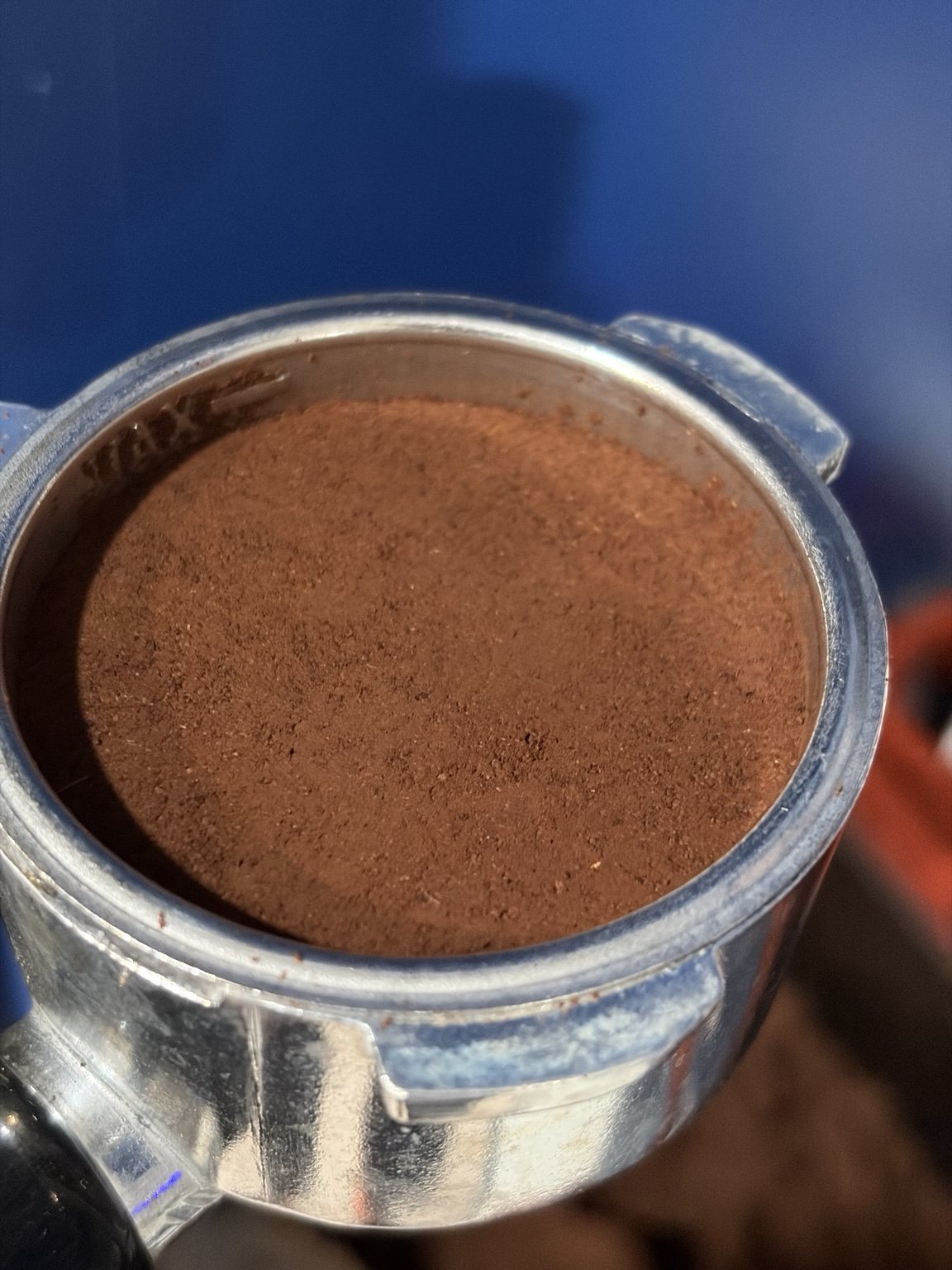
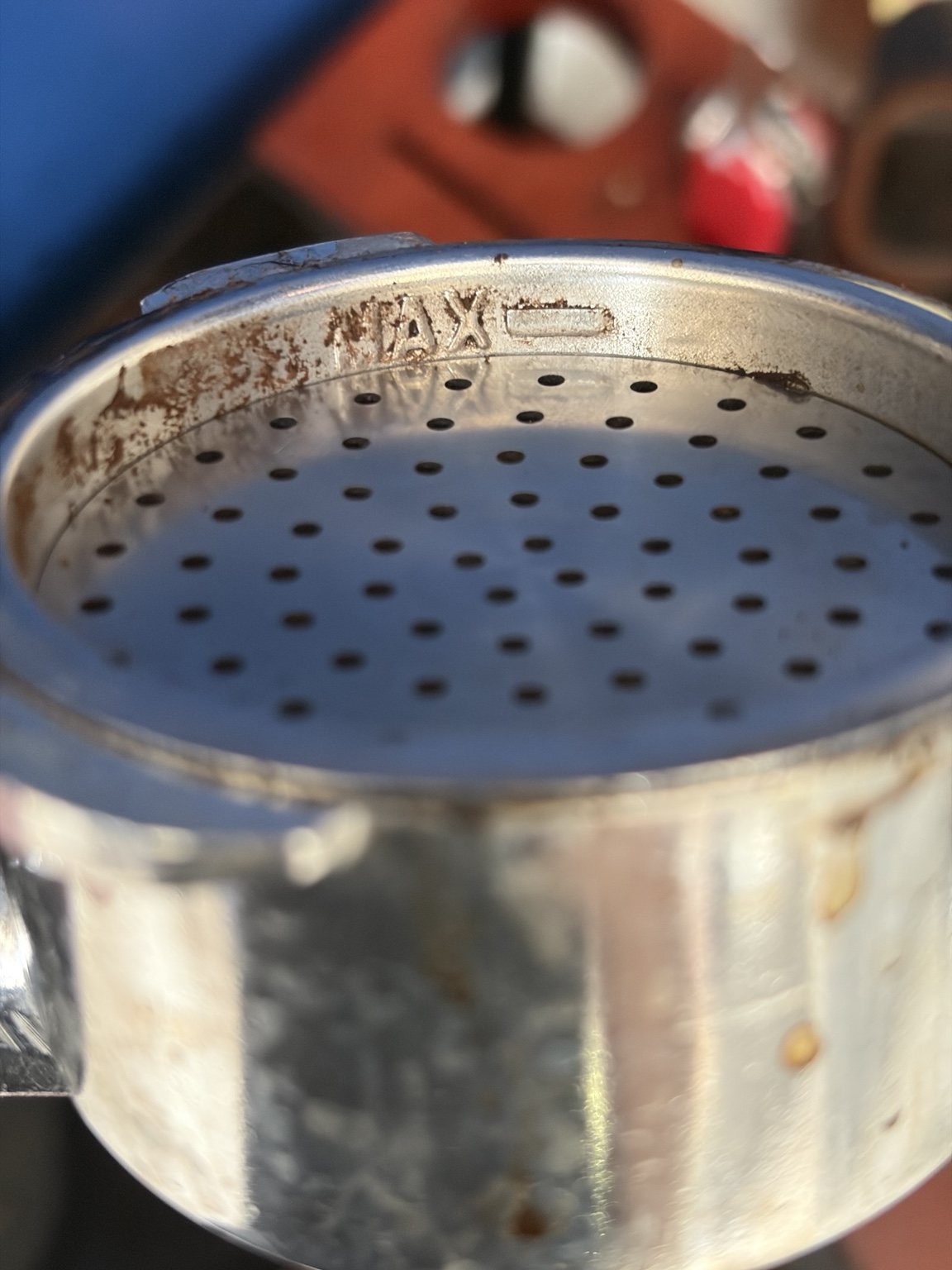
A blade grinder chops beans rather than controlling particle size between burrs. Breville notes that blade grinders tend to create a less-uniform mix of fine and larger particles, which can make extraction less consistent. [4] Here, grind duration is simply the control variable available on this grinder.
3. First extreme: 14.5g → 57.0g
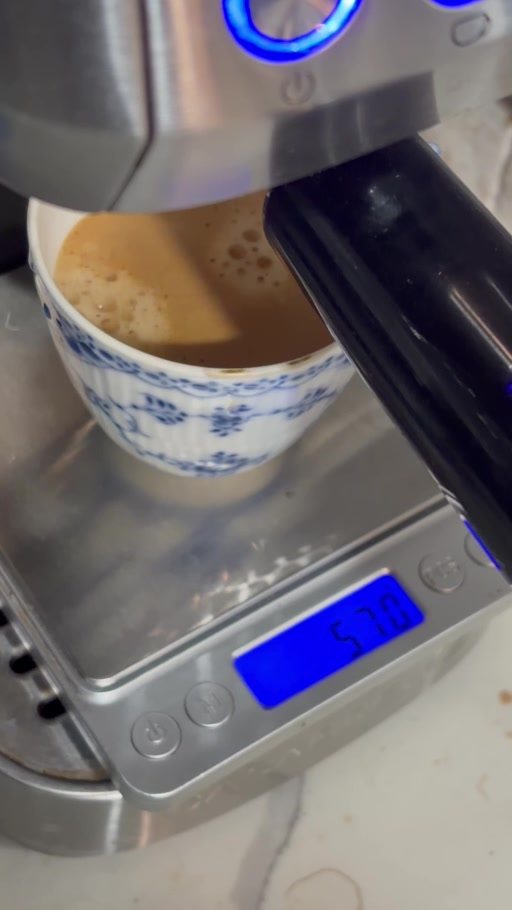
The first 14.5g shot ended at 57.0g in the video — about a 1:3.93 ratio. That was almost double the 29g target, so the obvious next move was to grind finer and add resistance.
4. I over-corrected: 14.5g → 11.3g
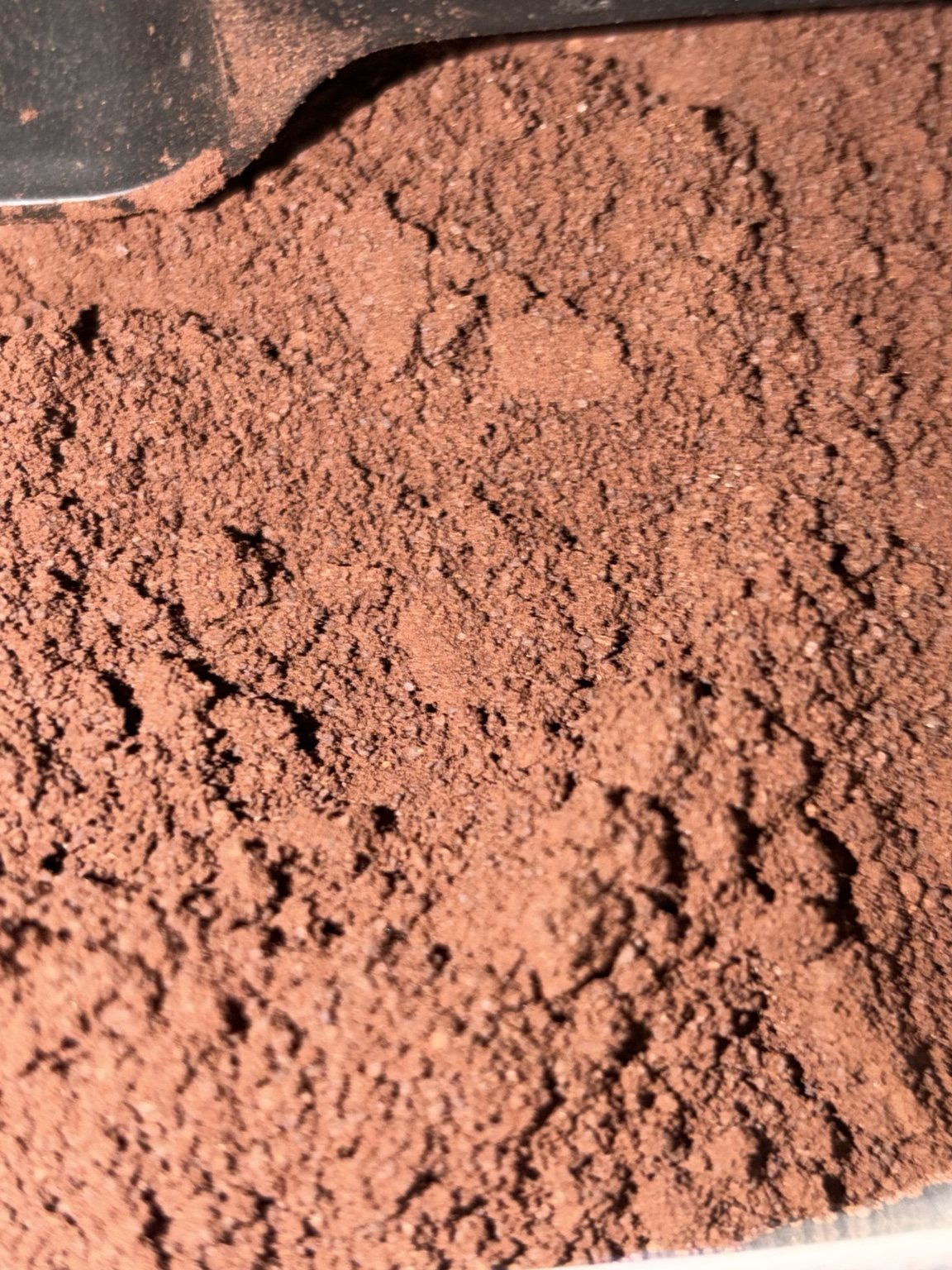
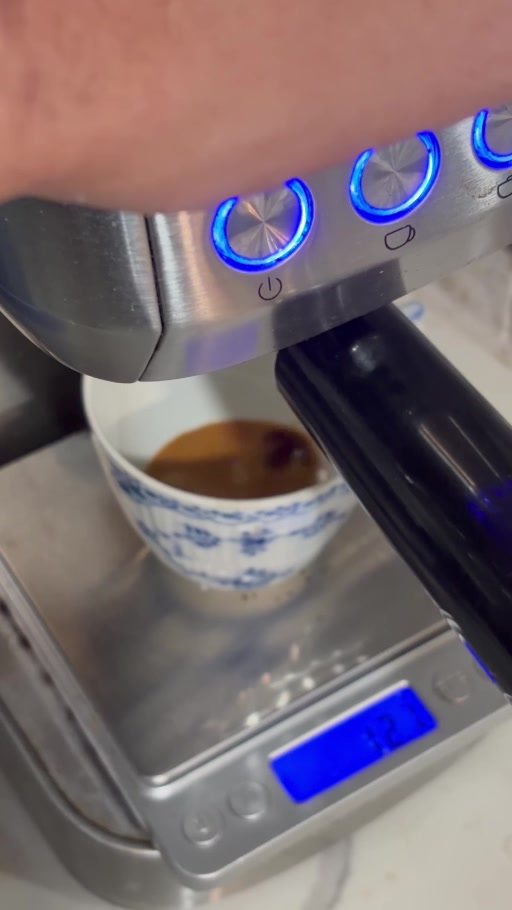
I then switched to a batch I had ground much finer. The result swung hard the other way: the same 14.5g dose produced only 11.3g by the end of the video.
My tasting note was: little crema, strong bitterness, noticeable acidity, little sweetness. It was also simply too little espresso for the iced latte I was making. This did not feel like a deliberate, balanced ristretto; the flow itself was too restricted.
5. Can an over-fine batch be rescued by lowering the dose?
Because the coffee was already ground, I could not make that batch coarser. I tried the practical salvage route instead: reduce the amount of coffee, make the puck thinner, and see whether flow came back.
| Trial | Dose | Yield visible in the video | Tasting note | Result |
|---|---|---|---|---|
| Over-fine baseline | 14.5g | 11.3g | Strong bitterness / acidity / little sweetness / little crema | Far too restricted |
| Rescue #1 | 14.0g | 8.3g near the end of the recording | Strong acidity / bitterness arrives later / no sweetness / little crema | No useful recovery |
| Rescue #2 | 13.0g | about 9.8g | Essentially the same impression | No useful recovery |
The 14.0g and 13.0g recordings do not start at exactly the same moment and have different total lengths, so I am not treating 8.3g vs. 9.8g as a precise flow-rate comparison. The useful conclusion is simpler: even after removing 1.5g of coffee, the shot never returned to a practical 20–30g range. On this batch, dose was not enough to rescue an overly fine grind.
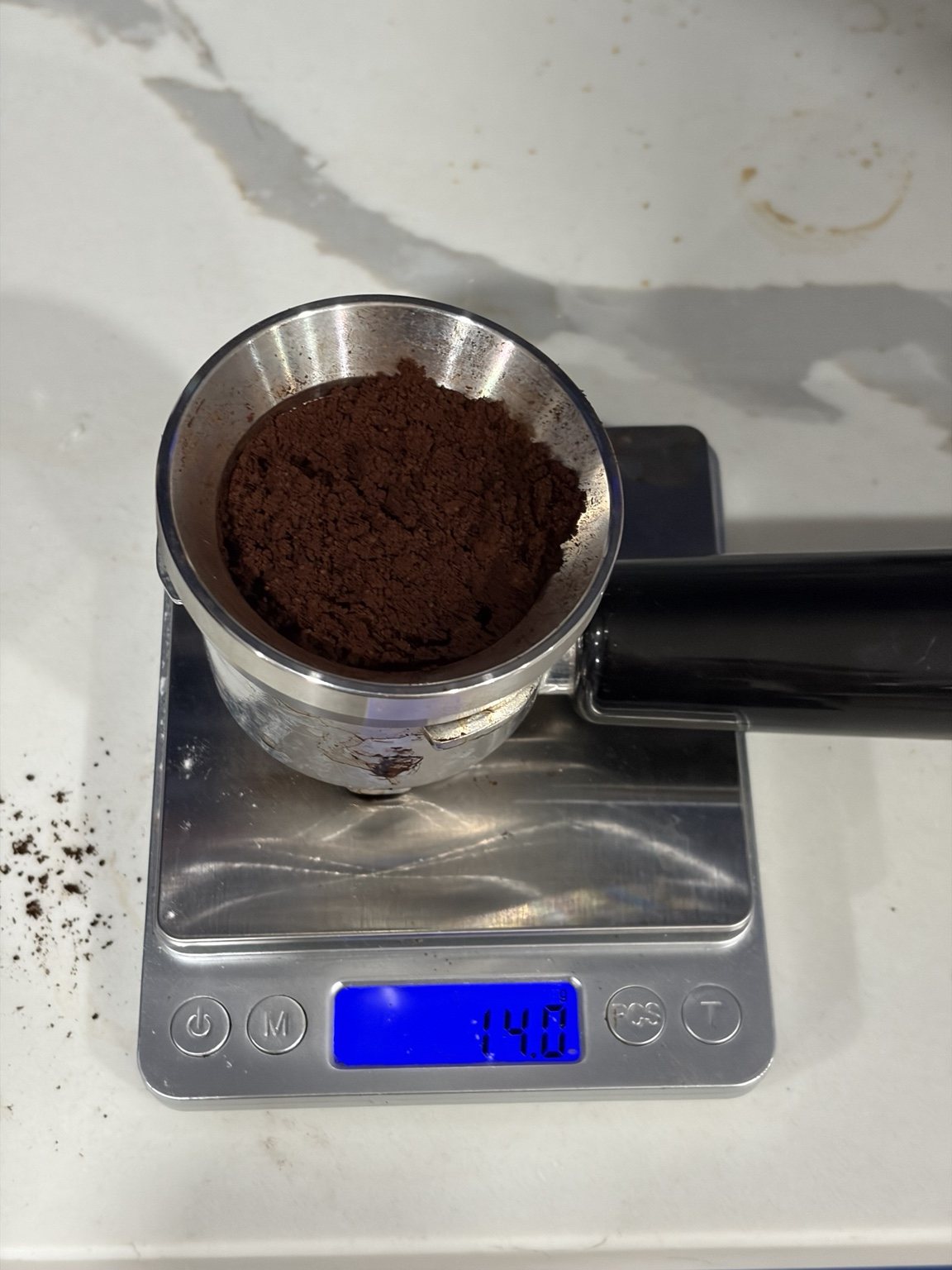
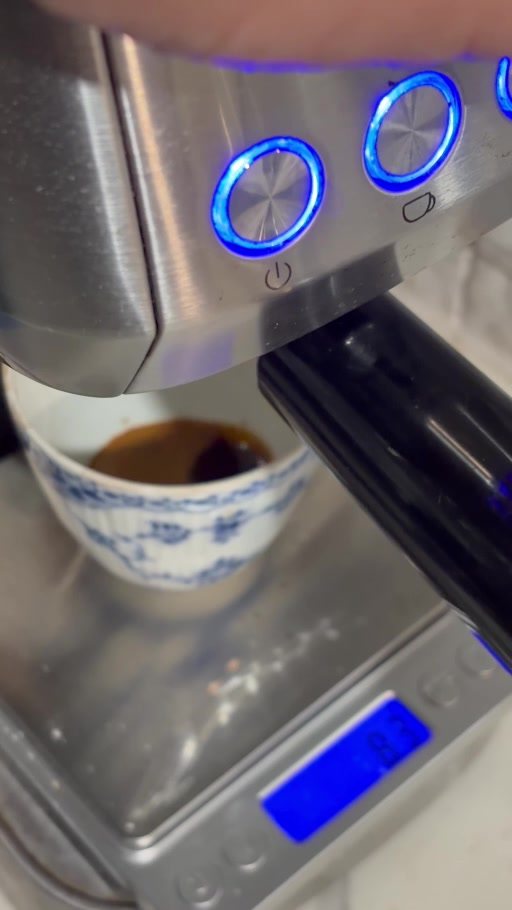
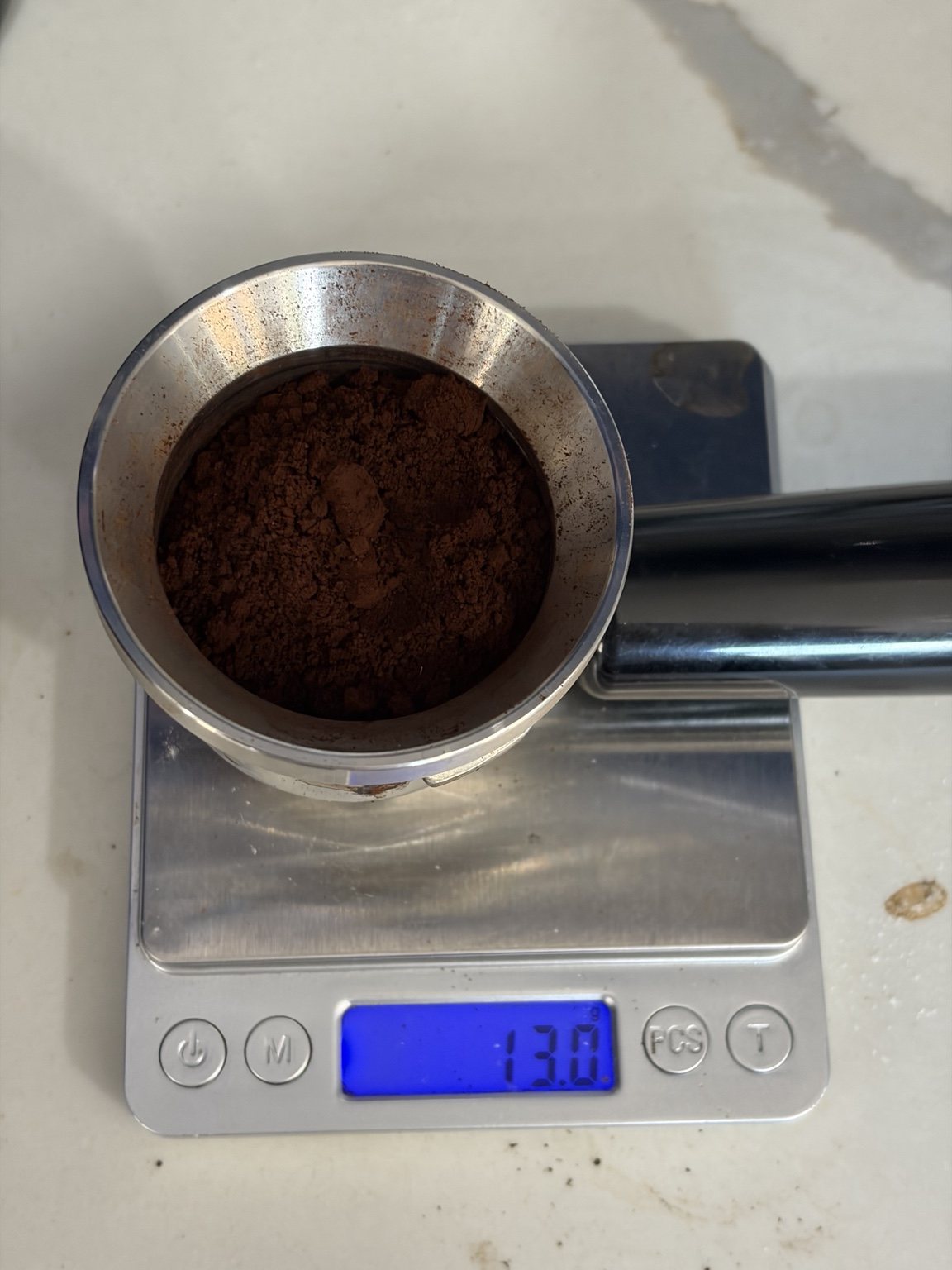
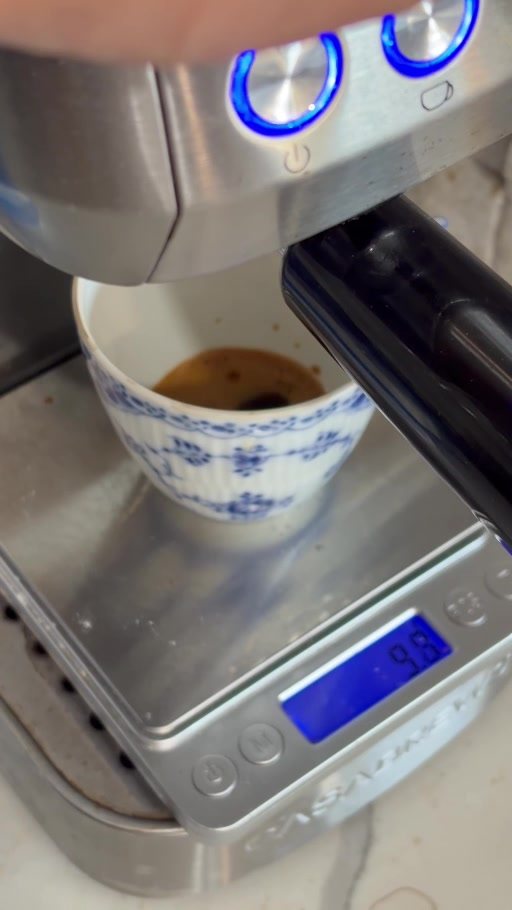
With the dose reduced to 13.0g, the beverage accumulated only slowly and reached about 9.8g by the end. The over-fine grind still restricted flow.
I returned to a 14.5g dose. From this point on, I weighed 14.5g of whole beans for every shot and changed only grind duration. Instead of trying to rescue the puck with dose, I went back to the grind itself.
6. Restarting with fresh 14.5g doses: 30 seconds of grinding gave only 6.7g
With 14.5g of fresh beans, a 30-second grind produced only about 6.7g in the cup. The beverage was too small and strongly bitter, although I could detect some sweetness.
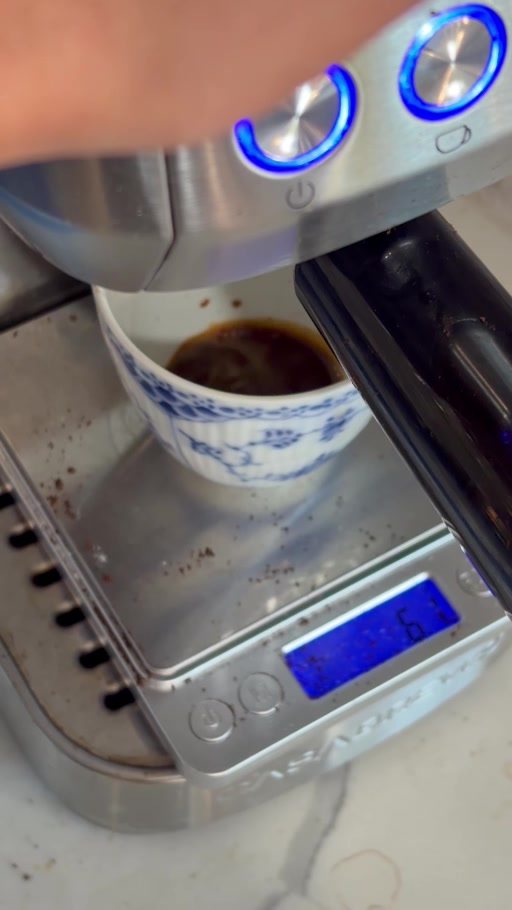
The 30-second grind produced a very slow extraction, yielding only about 6.7g by the end. The video shows how much the overly fine grind restricted flow.
So I made a large move in the opposite direction and shortened the blade-grind time.
| Grind time | Dose | Yield | Ratio | Taste / appearance |
|---|---|---|---|---|
| 12 s | 14.5g | 52.9g | 1:3.65 | Too much liquid / strong acidity / bitterness and sweetness were good / good crema |
| 14 s | 14.5g | 42.7g | 1:2.94 | Still high yield / acidity seemed lower / good bitterness and sweetness / very good crema |
| 15 s (single trial) | 14.5g | 20.3g | 1:1.40 | A single low result; cause not confirmed |
| 15 s (repeat 1) | 14.5g | 35.9g | 1:2.48 | Acidity felt balanced / bitterness and sweetness present / good crema |
| 15 s (repeat 2) | 14.5g | 39.8g | 1:2.74 | Slight acidity / normal bitterness / low sweetness / good crema; one spout dominated |
| 15 s (final) | 14.5g | 30.6g | 1:2.11 | Slight acidity / normal bitterness / a little sweetness / good crema / good volume |
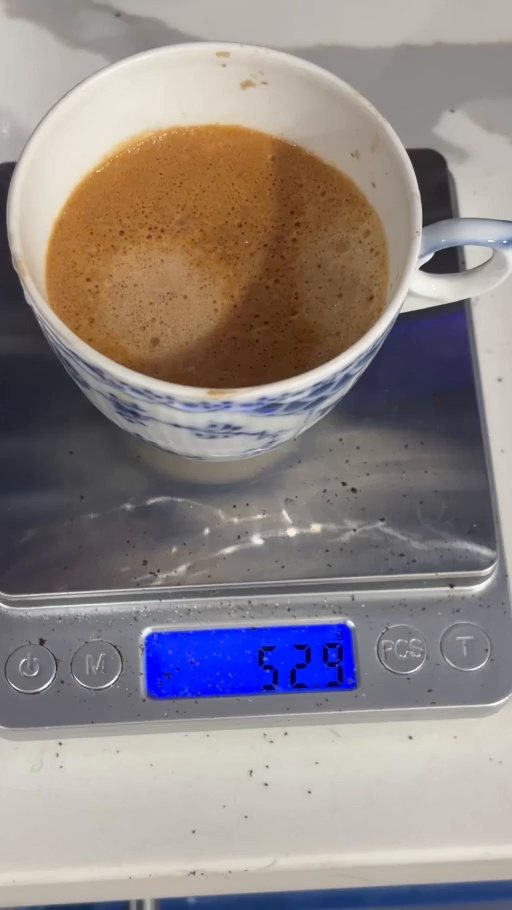
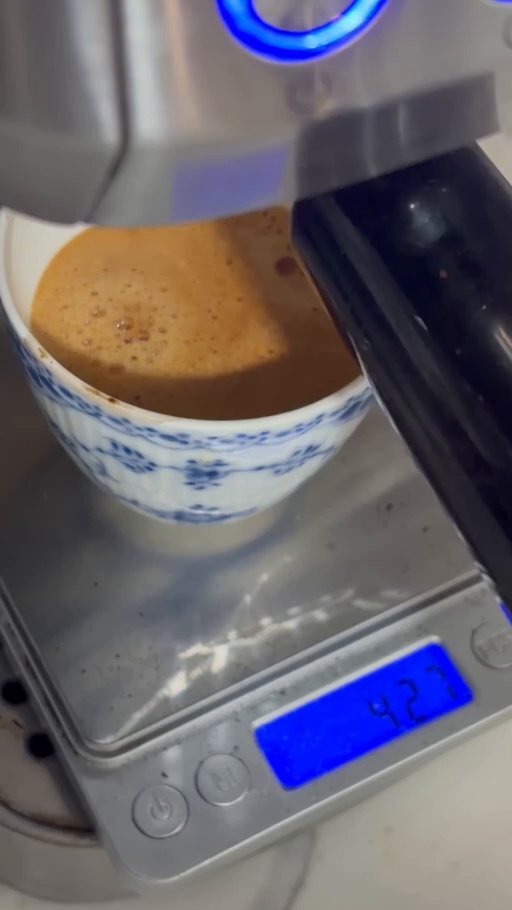
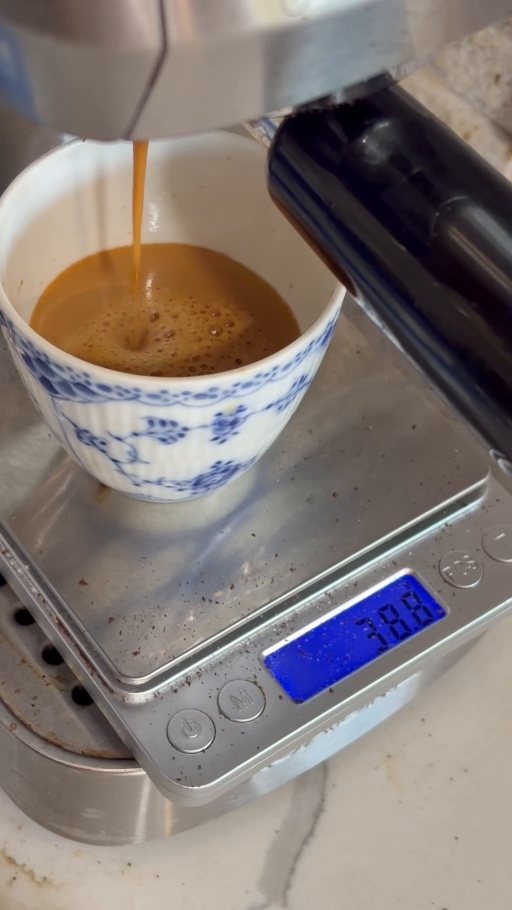
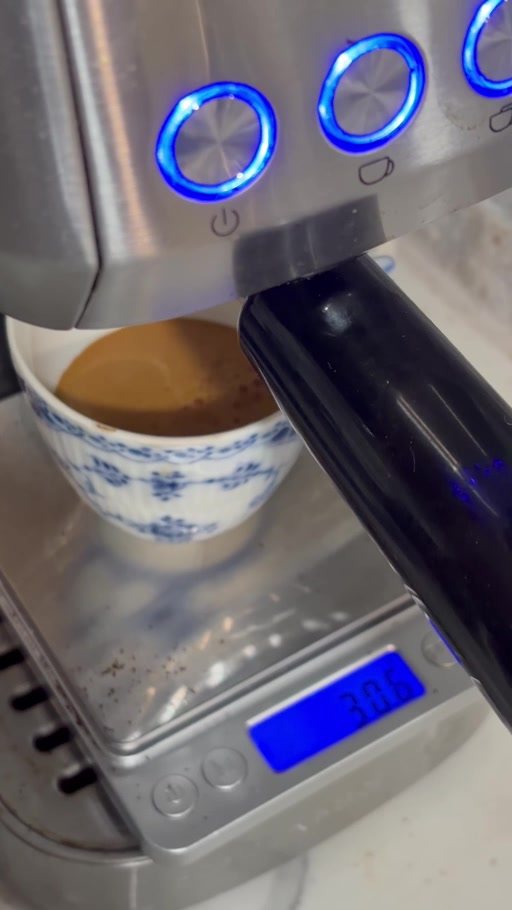
One 15-second trial yielded 20.3g, while the other three produced 35.9g, 39.8g, and 30.6g. The cause of the 20.3g result is unconfirmed, so I cannot label it a measurement error. I distinguish this single low value from the other three when discussing the trend, while keeping all four in the record.
7. Same 15-second grind, 20.3–39.8g: repeatability was still a challenge
Matching the blade-grind time did not make the shots identical. Across all four 15-second shots, yield ranged from 20.3g to 39.8g. Even separating the one unexplained 20.3g trial, the other three still varied from 30.6g to 39.8g. A blade grinder cannot mechanically lock particle size the way a burr grinder can; particle distribution, how beans interact with the blade, puck distribution, and tamping can all shift slightly. [4]
One repeat also flowed mostly from one side of the two-spout portafilter. I am not diagnosing channeling from spout asymmetry alone; I simply recorded it as another sign that repeatability was not perfect on this setup.
8. Final shot: 14.5g → 30.6g, about 1:2.1
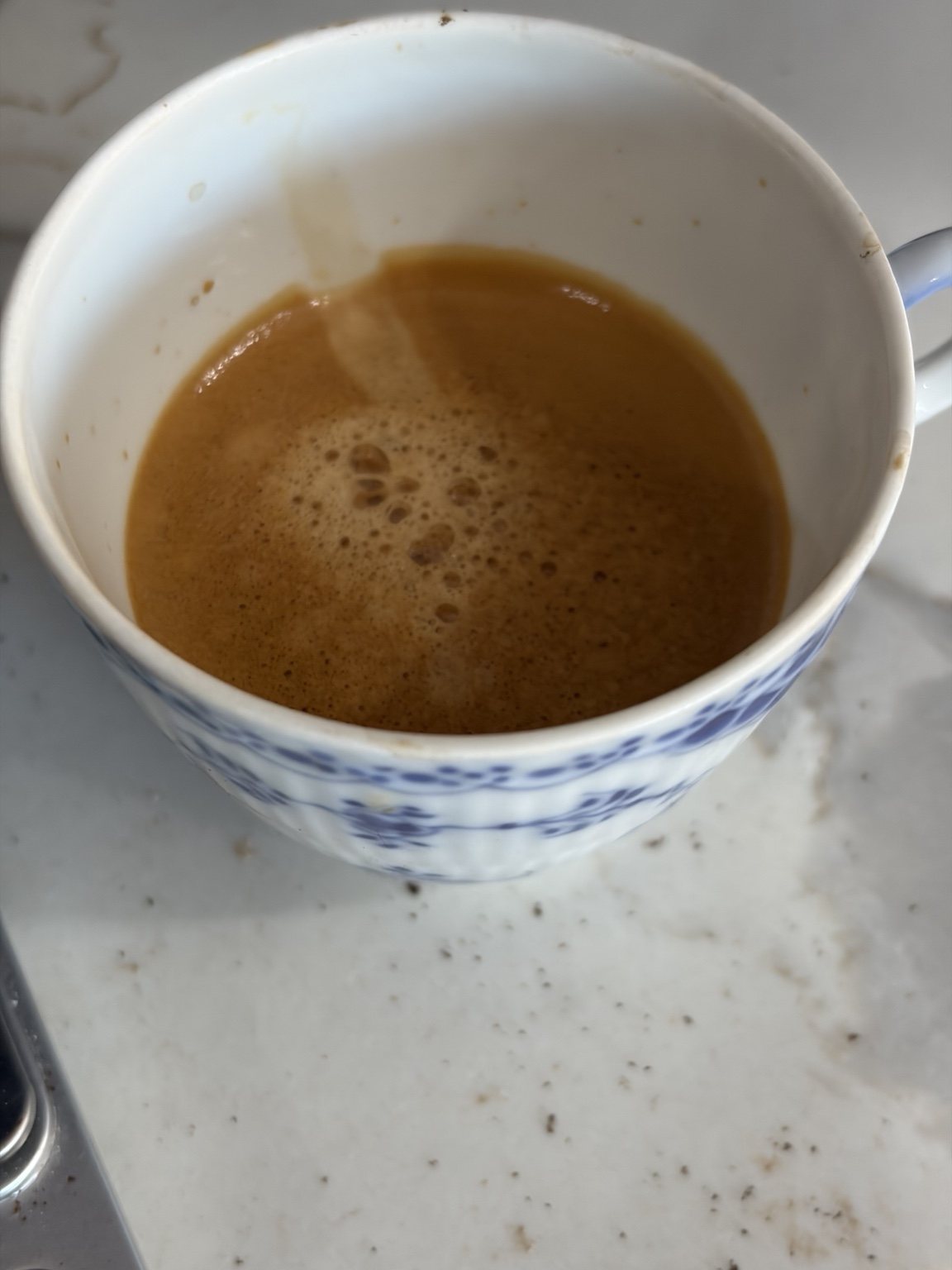
The final 15-second grind landed at 14.5g in → 30.6g out, a 1:2.11 ratio. The full video is about 31 seconds, putting it close to the numeric zone I originally set out to find.
The taste was slightly acidic, normally bitter, mildly sweet, with good crema. Compared with the severely restricted shots — where acidity was strong and sweetness disappeared — this was clearly more balanced to me.
Visually, the final shot started slowly and then developed into a thin continuous stream through the middle of the extraction. For this setup, I found it more useful to judge dose + yield + taste together rather than deciding that a few initial drips automatically meant something was wrong.
Final 15-second grind: the shot starts slowly, then develops a thin continuous stream through the middle. Yield reached 30.6g from 14.5g of coffee, about 1:2.1.
9. Is the remaining acidity still an extraction problem?
A little acidity remained even in the final shot. I do not think this experiment can cleanly assign that acidity to under-extraction. Costco identifies this coffee as a medium roast, and bean character, roast, freshness, water temperature and other variables all affect what reaches the cup. [3]
I did not run the same recipe with a second coffee or control water chemistry here, so the correct conclusion is limited: I cannot separate how much of the remaining acidity came from the coffee itself versus the rest of the brewing setup.
10. Takeaway: 1:2 was a coordinate, not an answer
- In the 2017 survey reported by SCA, the average brew ratio was 1:2 and 51% reported average shot times of 25–30 seconds. La Marzocco uses 1:2 and 25–35 seconds as a practical home starting point. [1][2]
- At a 14.5g dose, 1:2 means 29.0g out.
- The first shot ran to 57.0g. My over-correction then collapsed output to 11.3g.
- Trying to rescue that pre-ground fine batch by dropping dose to 14.0g and 13.0g did not restore useful flow.
- With fresh 14.5g single doses, 12 s → 52.9g, 14 s → 42.7g, and 15 s finally moved into the 30g range.
- The final shot was 14.5g → 30.6g = about 1:2.1 in about 30 seconds.
- The final taste was slightly acidic, normally bitter, mildly sweet, with good crema.
- The four 15-second trials ranged from 20.3g to 39.8g (three were 30.6–39.8g). The cause of the 20.3g result is unknown; blade-grind time is not a precise particle-size setting.
The biggest lesson was not “1:2 is the perfect espresso.” It was that a ratio gives me a coordinate that tells me what to adjust next. For this Costco coffee and this home setup, I will use roughly 14.5g in, 30g out, and a 15-second blade grind as my next baseline — then make the final decision by taste.
References
- Specialty Coffee Association, Defining the Ever-Changing Espresso. 2017 Barista Guild of America survey (275 respondents): average 1:2 brew ratio, 36.5g average yield, and 51% reporting average extraction times of 25–30 seconds.
- La Marzocco, Using Espresso Brew Ratios. Home dial-in example using a 1:2 ratio and a 25–35 second target window.
- Costco, Kirkland Signature Colombian Supremo Coffee, Whole Bean, 3 lbs. Listed as medium roast, whole bean, 3 lb.
- Breville, Burr grinder vs. blade grinder: What's the difference and does it matter?. Explains the lower particle-size consistency typical of blade grinders and the effect on extraction consistency.
Questions or comments?
Questions about the dial-in, dose-rescue attempt, grind-time comparison, or tasting notes are welcome.
I also posted the fast shots, choked shots, failed dose-rescue attempts and grind-time search as the experiment developed.