
How long should beef tongue cook sous vide at 63°C?
2h vs 4h vs 6h from the same tongue
My usual method is a whole root-to-middle section at 63°C / 145°F for 3 hours. It already works well, but I wanted to know whether more time would actually make it better.
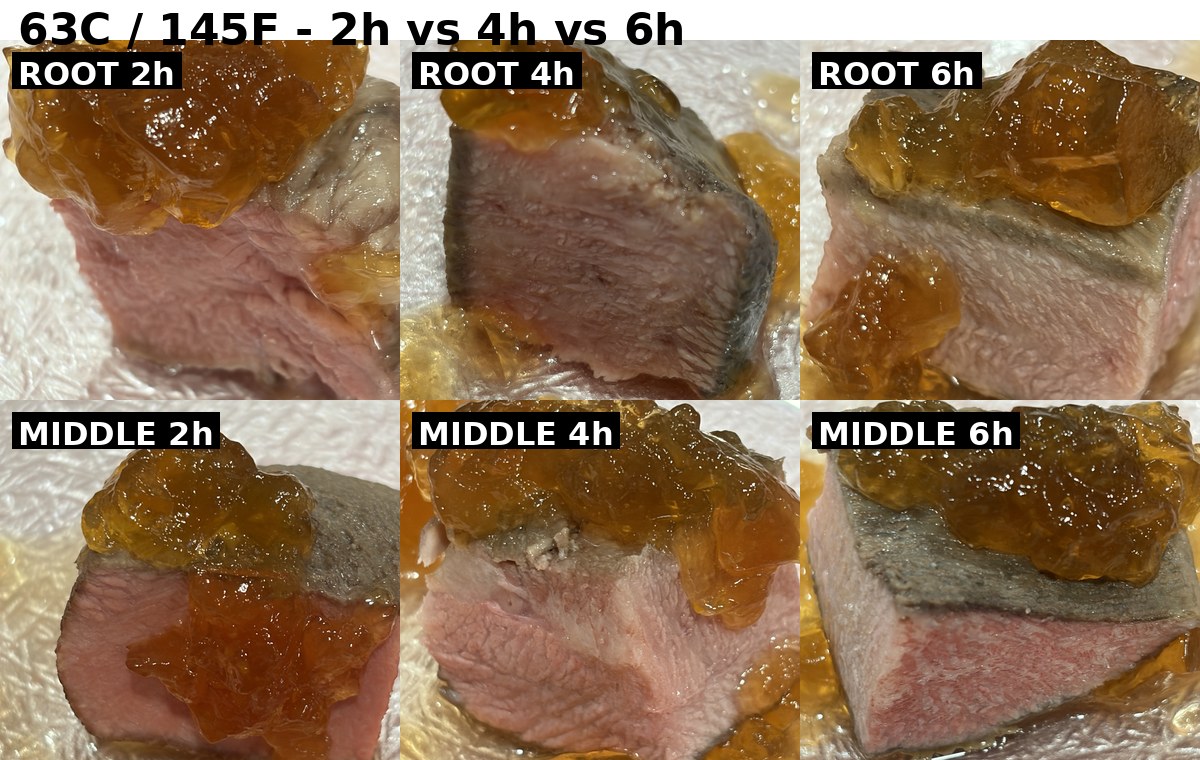
Bottom line first
I am keeping my usual whole-piece 63°C / 145°F × 3h method.
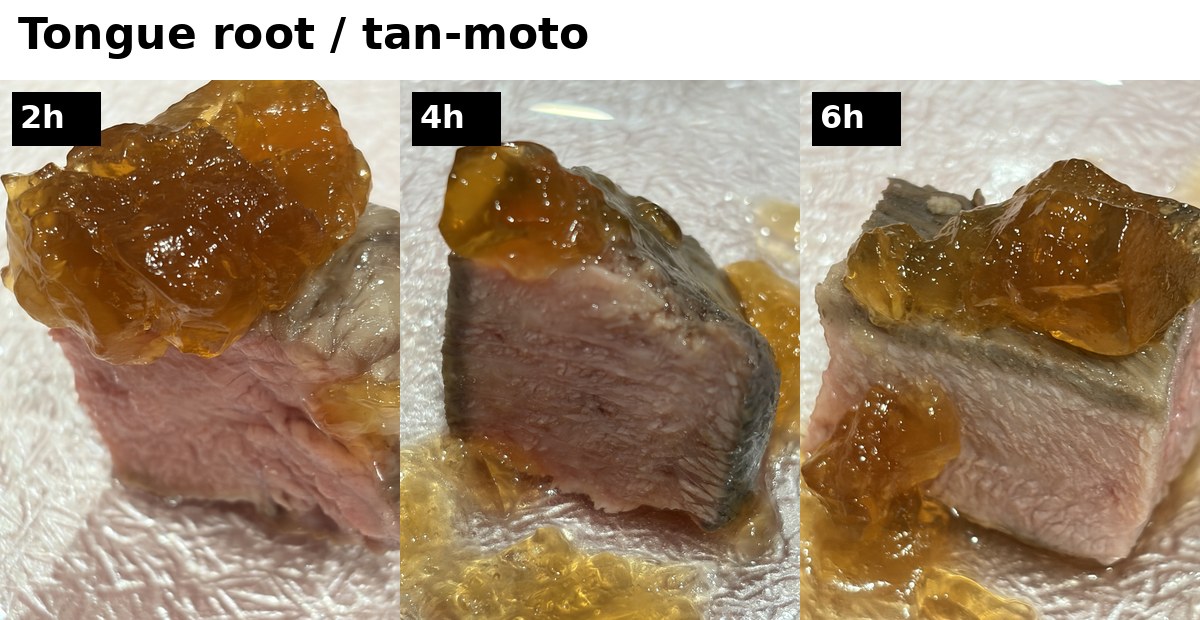
- Root: 2h stayed snappy and bouncy; 4h became much softer. I could not pick a clear winner.
- Middle: 6h produced a clearly softer bite and a less noticeable iron-like note.
- The longer cook worked, but the extra hours did not improve the whole piece enough to justify the wait for me.
This is a texture experiment at 63°C / 145°F, not a general safety recommendation. USDA consumer guidance lists tongue among organ / variety meats and recommends 160°F / 71.1°C.[3] If you replicate a low-temperature cook, follow current official guidance and a validated time-temperature method.
1. A practical U.S. tip: ask the meat counter to clean the tongue
Skinning a whole tongue is a chore. At H Mart and H‑E‑B, I have sometimes been able to ask the meat counter, “Can you clean this, please?” and have the skin removed. It depends on the store and the person working, so I treat it as a useful question rather than a guaranteed service.
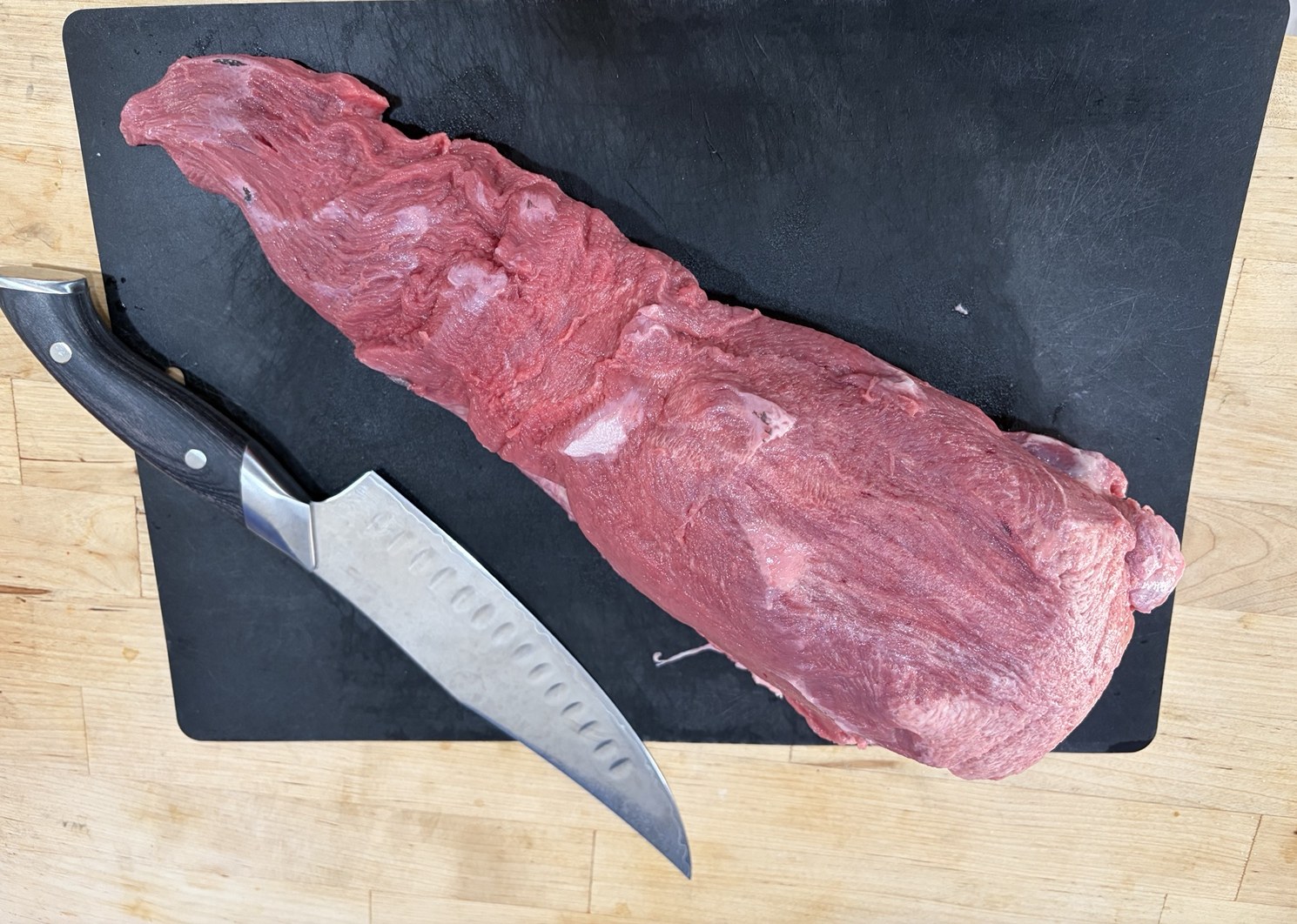
2. Split one tongue lengthwise so time is the main variable
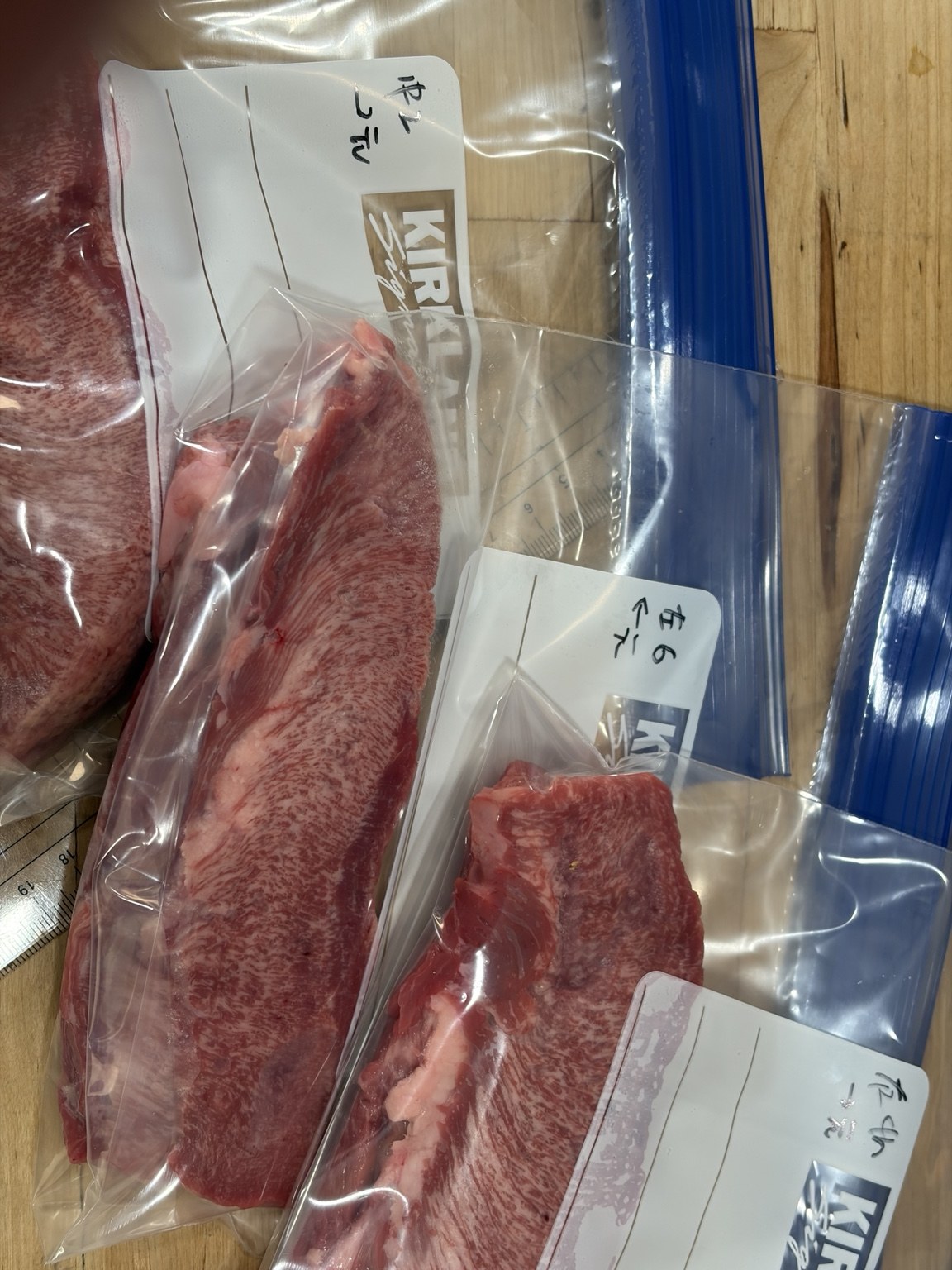
Testing on different days would mix in animal-to-animal variation and different positions along the tongue. I cut one root-to-middle section lengthwise into three strips so each sample still included both a root side and a middle side.
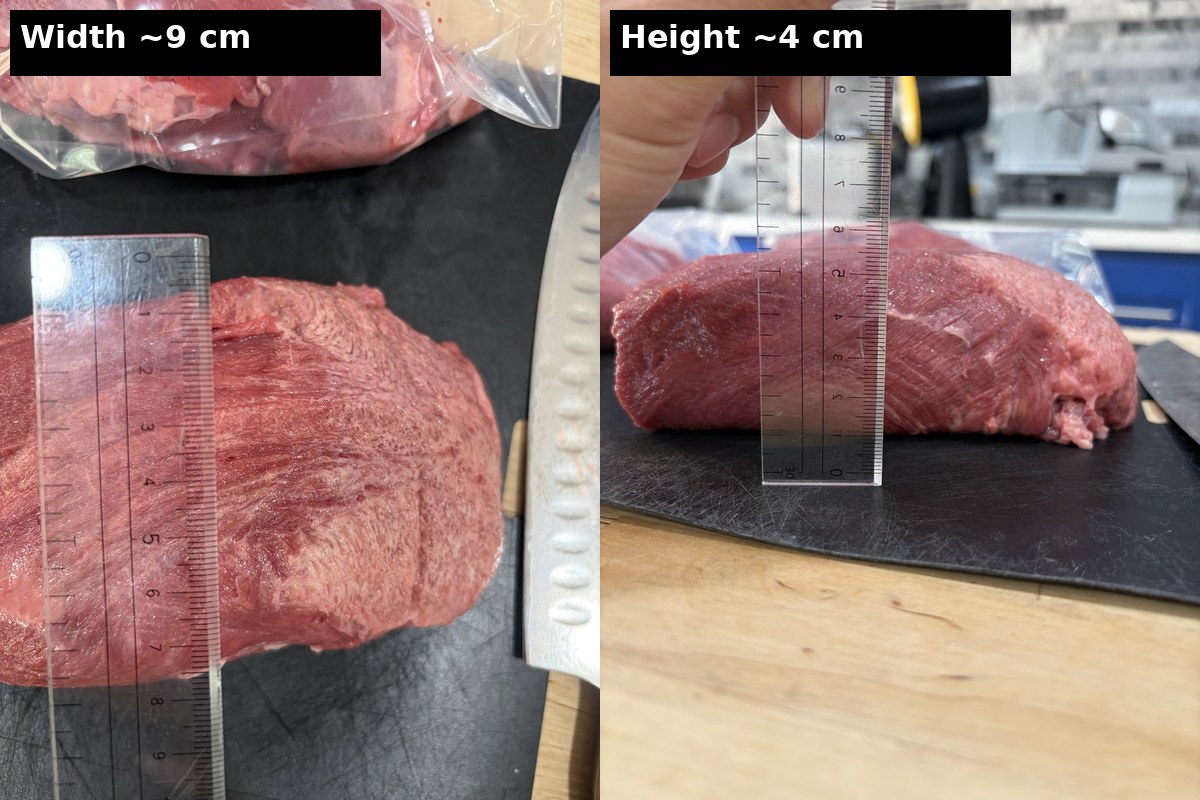
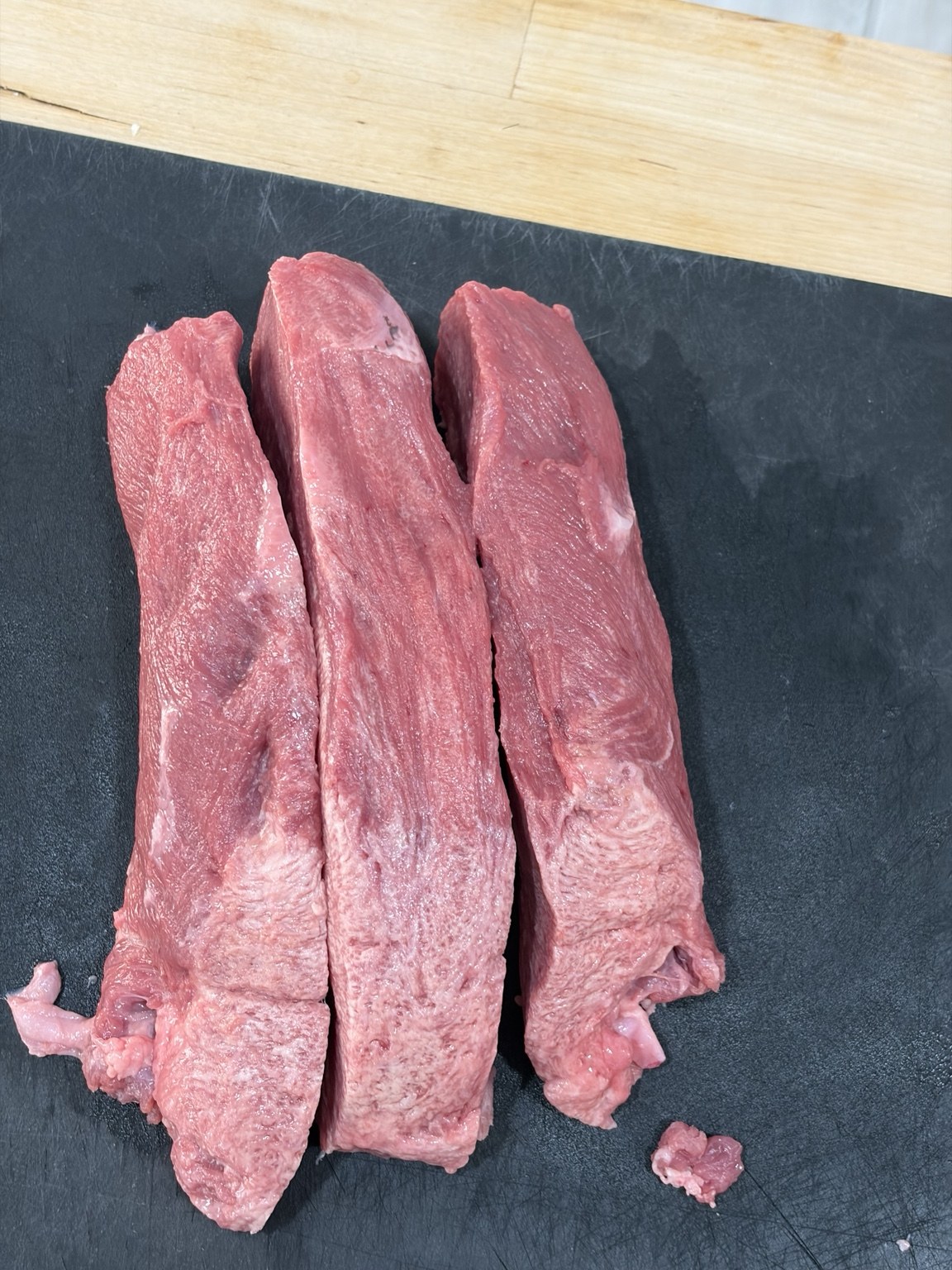
I also randomized the 2h, 4h and 6h assignments so I would not intentionally give the “best-looking” strip to a preferred time.
3. Same finish time: 6h first, then 4h, then 2h
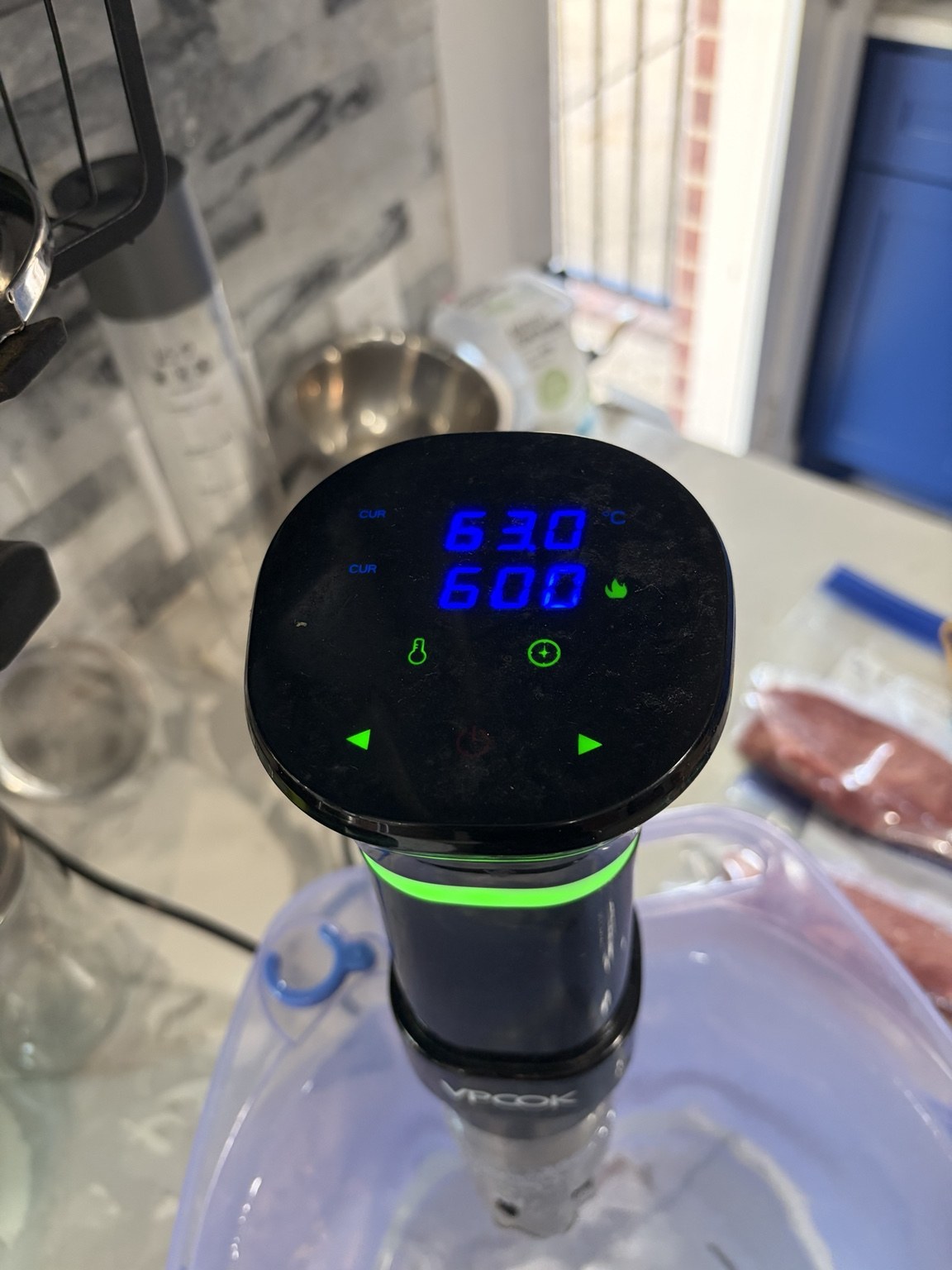
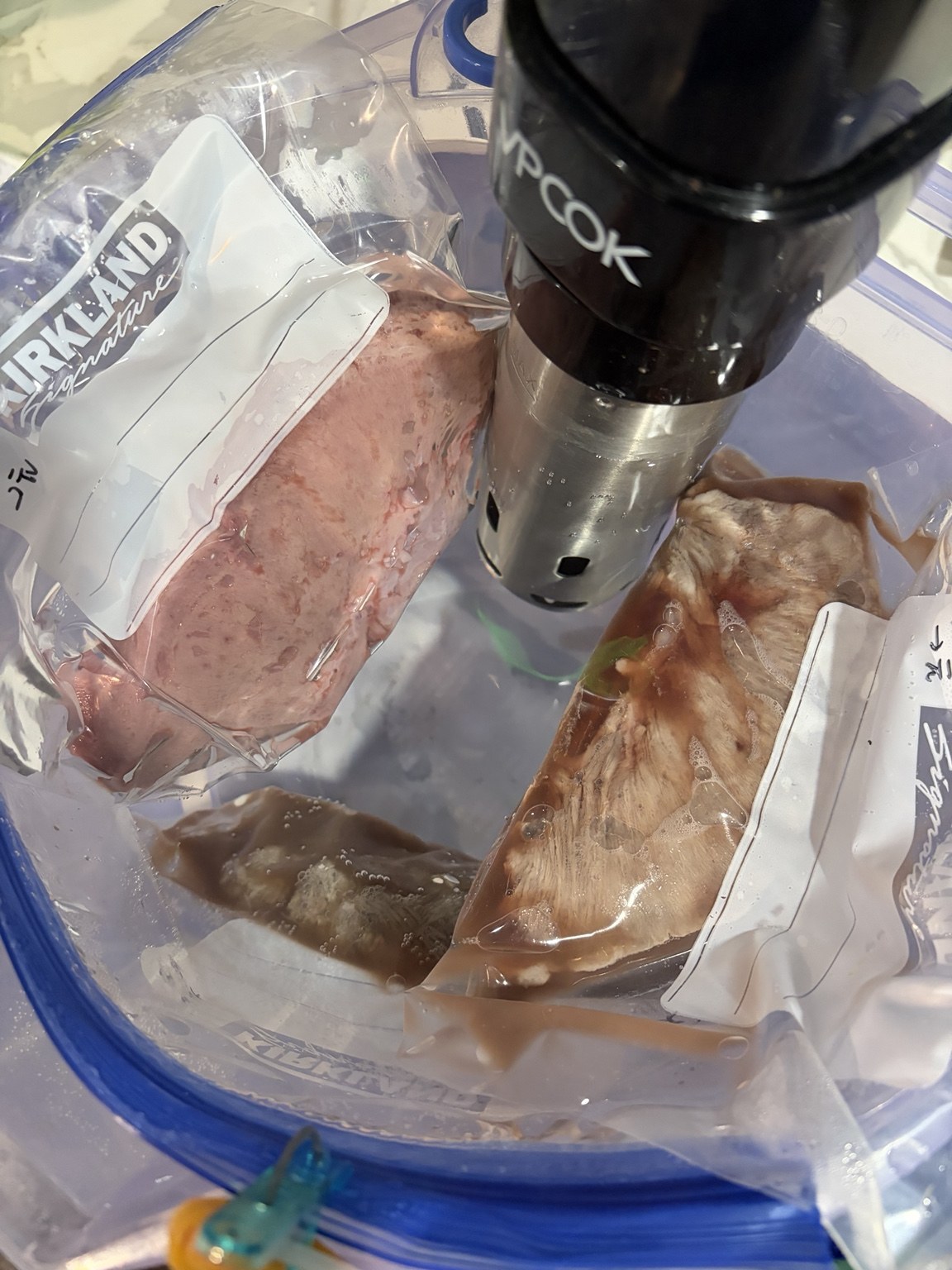
The bath stayed at 63°C / 145°F. I started the 6h strip first, added the 4h strip two hours later, then the 2h strip two hours after that. All three came out at the same time.
4. Why start at 2 hours?
BONIQ explains that sous-vide heating time should be based on the food's shortest dimension. After splitting, each strip was about 3 cm wide, so I used 2h as the short end of the comparison and checked BONIQ's current heating-time table as a reference.[1][2]
For this article I map the split-sample 2/4/6h results roughly to 3/6/9h for my usual whole piece because my usual 3h method corresponds most closely to the 2h split sample. This is not a strict heat-transfer equivalence; heating time does not scale linearly with thickness.
This article documents my texture experiment, not a general safety recommendation. USDA consumer guidance specifically lists tongue among organ / variety meats and recommends 160°F / 71.1°C.[3] BONIQ publishes a thickness-and-temperature sous-vide heating guide. If you replicate any low-temperature cook, follow the current official guidance for your location and a validated time-temperature method.
5. Root: 2h and 4h were different, but both good
| Time | Tasting note |
|---|---|
| 2h | Snappy, bouncy, classic beef-tongue bite. |
| 4h | Much softer, but still very tasty. |
| 6h | Tender, but it seemed a little less juicy. |
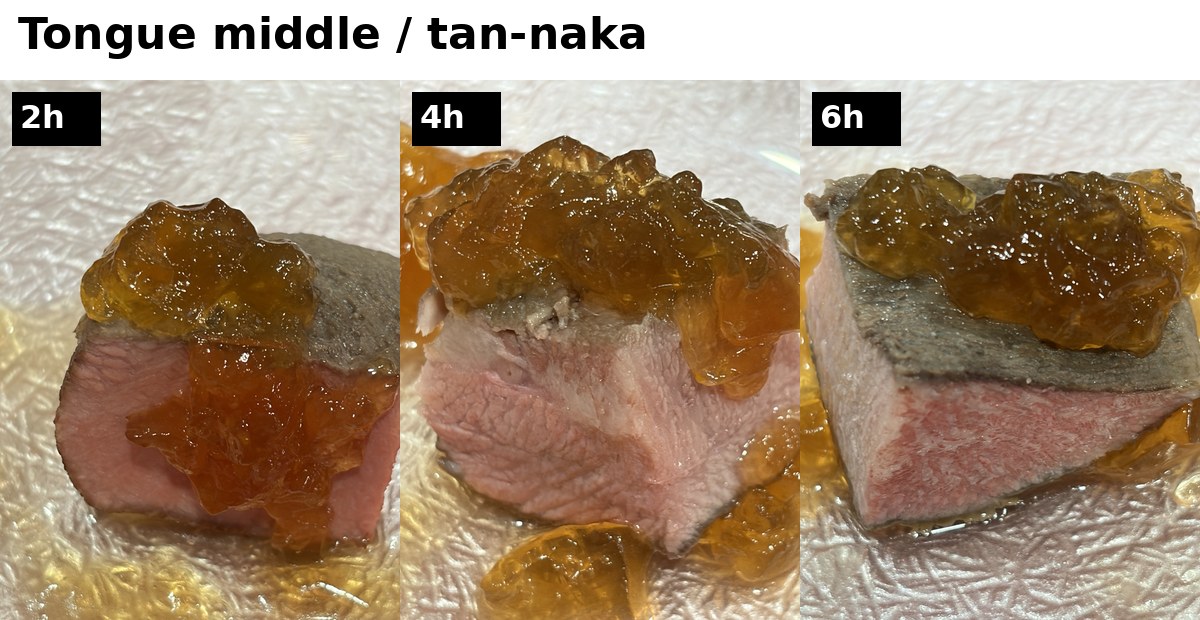
6. Middle: 6h finally made a clear difference
| Time | Tasting note |
|---|---|
| 2h | Firm, with a slight iron-like note, but still good. |
| 4h | Still fairly firm; not dramatically softer than 2h. The iron-like note was milder. |
| 6h | Clearly softer. Only a slight iron-like note remained at the end. |
7. Why I still choose the usual 3-hour whole-piece cook
If tenderness alone were the target, the longer time has a real benefit for the middle section. But I normally cook the root and middle together. The root was already excellent at the short end, while the longest sample seemed a little less juicy.
And practically, 6 hours or more is a much bigger commitment than 3 hours. The improvement was real, but not large enough for me to double or triple the cooking window every time.
So when I include flavor, the classic beef-tongue bite, juiciness and actual kitchen time, 63°C / 145°F × 3h remains my best overall balance.
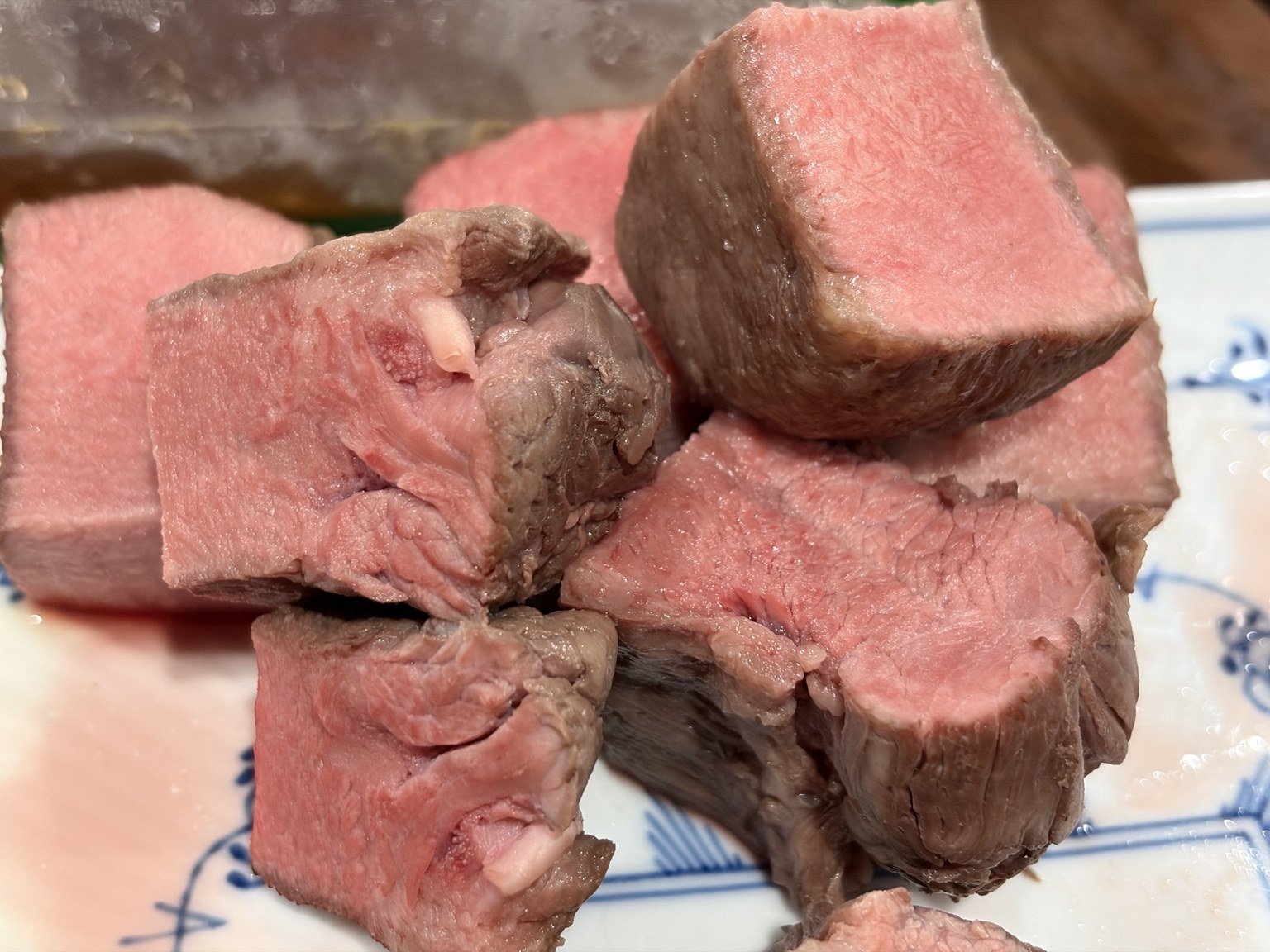
8. Equipment used
The immersion circulator used for the 63°C bath. My unit is a VPCOK Direct 1000W-class cooker.
Summary
Splitting one tongue lengthwise and changing only the cooking time showed that longer cooking affected the root and middle differently. The root was good at both 2h and 4h, while the middle became clearly softer by 6h. For a whole root-to-middle cook, though, the benefit of going much longer was limited.
I tested the idea that “longer must be better” and ended up back at my usual 3 hours. That is exactly the kind of result that only becomes convincing after a side-by-side comparison.
References
- BONIQ, Sous-vide rules / thickness guidance
- BONIQ, Heating-time guide
- USDA FSIS, Beef From Farm to Table
- VPCOK Direct, Sous Vide Cooker 1000W
Questions or comments?
Ask about the timing, section-by-section texture, or the experiment setup.
The whole-tongue prep, three-way split, staggered timing and tasting notes were documented there with photos before being organized here.