
Brewing Big Valley Haze in a BeerDroid | Dry Hopping, RAPT Data, EOF & First Tasting
Can a homebrew capture the characteristic haze and expressive hop aroma of a Hazy IPA? With a Big Valley Haze BrewPrint and BeerDroid Hop Filter provided by BrewArt, I brewed a batch in my BeerDroid and used a separate RAPT Pill to follow the gravity and temperature trends. Here is the process from pitching and fermentation to Citra–Mosaic dry hopping, chilling, and EOF. A small pre-conditioning taste was already delicious: bright citrus, tropical notes, sweetness and a bitter hop finish. But this was before keg conditioning and carbonation—not a final review of the finished beer.
BrewArt supplied the Big Valley Haze BrewPrint and BeerDroid Hop Filter for this brew. There was no obligation to publish. All observations, readings and opinions are my own. I also used a RAPT Pill for independent tracking.
The result at a glance
| Batch | BrewArt Big Valley Haze, a BeerDroid BrewPrint for an approximately 10 L (2.6 US gal) batch |
|---|---|
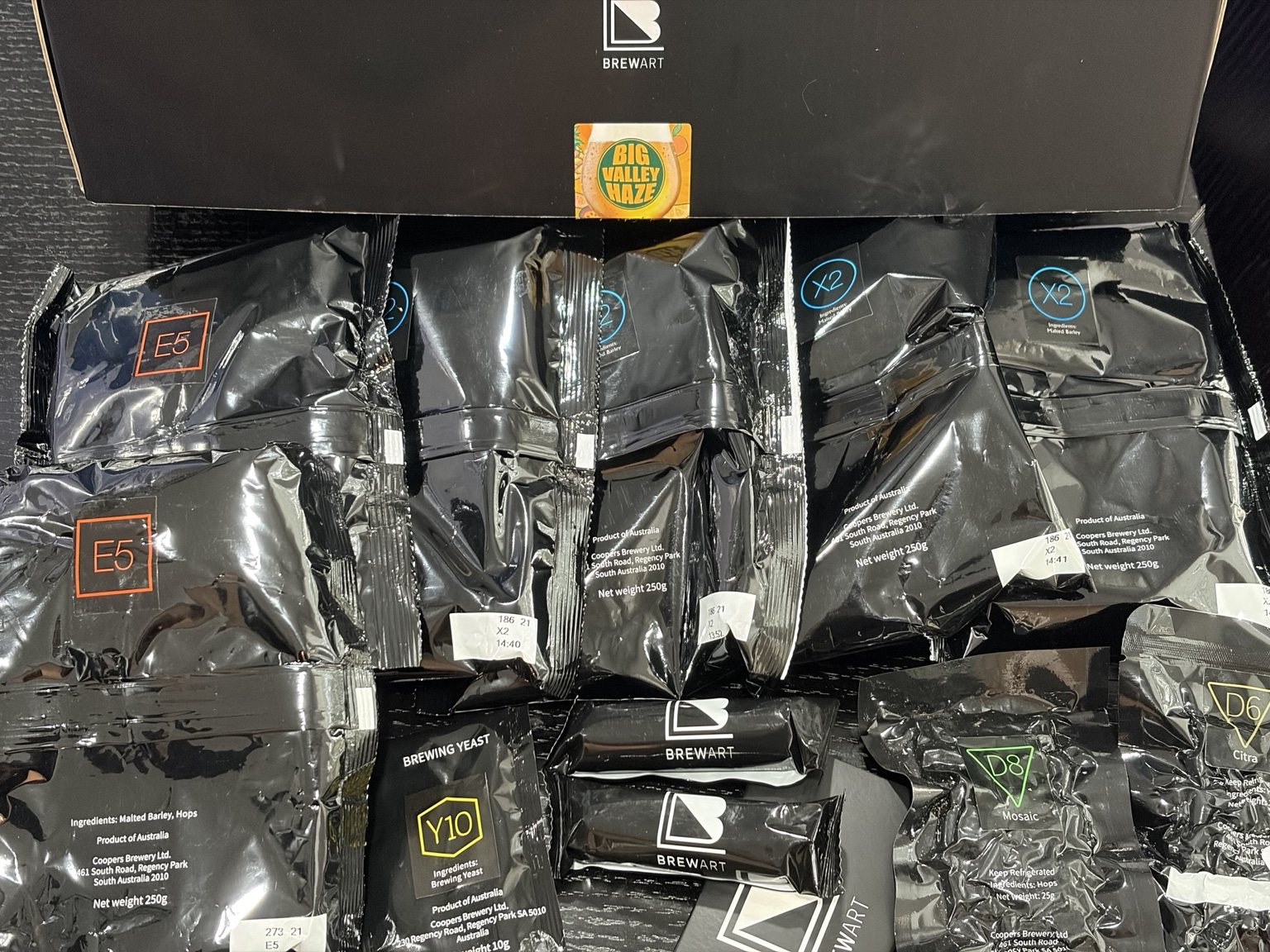
| Ingredients / hops | E5, X2 and Y10 yeast; Citra (D6) and Mosaic (D8) dry hops |
| BrewArt specifications | Target 6.5% ABV, bitterness 24, color 14, estimated 7–10-day brewing time [1] |
| Temperature program | 20°C (68°F) propagation, 19°C (66°F) fermentation; a later screen showed a 17°C (63°F) target, followed by cooling to 4°C (39°F) |
| RAPT gravity readouts | About 1.043 on DAY 1 → 1.029 on DAY 2 → 1.025 on DAY 5 → near 1.015 after chilling. All uncalibrated, provisional readings. |
| Dry hop / EOF | Citra + Mosaic around DAY 7; chilling toward 4°C around DAY 9; BeerDroid fermentation-complete and ready-to-keg notifications around DAY 11 |
| Early tasting | Citrus and tropical aromas, sweetness, and a hop-bitter finish. Delicious, but tasted before conditioning and carbonation |
Why Big Valley Haze?
My reason for choosing this BrewPrint was simple: I wanted to drink a proper, aromatic, hazy IPA at home—and I had also been wanting to try dry hopping for myself. Big Valley Haze offered both, with Citra and Mosaic hop pellets included. BrewArt lists a target ABV of 6.5% and a brewing program of Propagate 20°C (68°F), Ferment 19°C (66°F), Keg 18°C (64°F), and Store 4°C (39°F) [1].
The other experimental goal was to compare BeerDroid’s automatic temperature control and EOF alert with continuous gravity/temperature readings from a RAPT Pill. Activity visible through the window can slow before BeerDroid declares fermentation complete. Logging both signals would help me see the fermentation story behind the taste [2][3].
Ingredients and equipment
For this batch: Big Valley Haze BrewPrint (E5, X2, Y10, Citra and Mosaic dry hops), BeerDroid, RAPT Pill and the BeerDroid Dry Hop Filter. I also prepared BrewFlo keg and liner hardware for transfer.
Manufacturer and consumable links are collected at the end under Ingredients, equipment and consumables.
DAY 0 | Brew day: ingredients, yeast and RAPT Pill
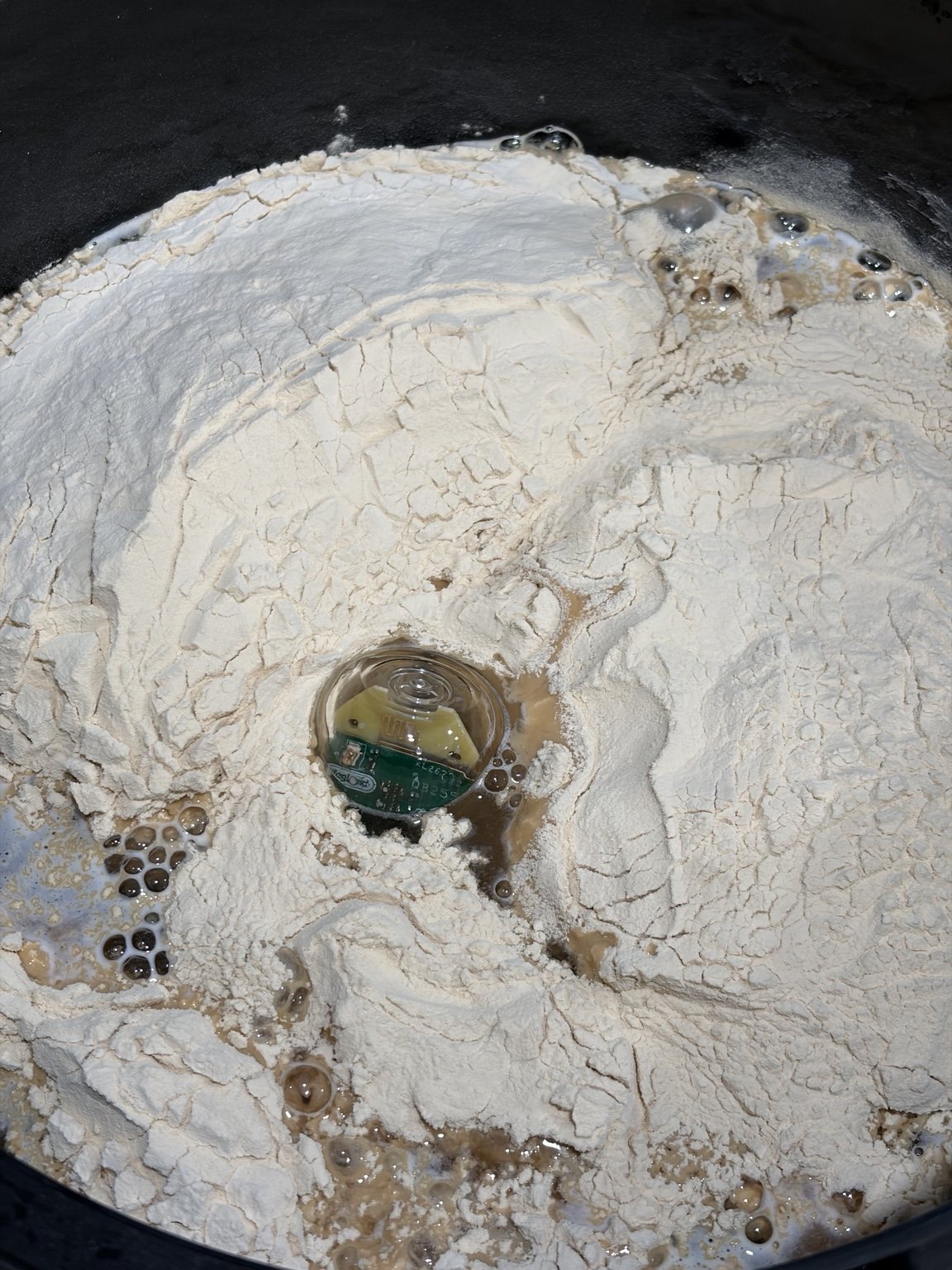
I checked the BeerDroid water-level markings and added the BrewPrint ingredients. A pale layer of powdered ingredients remained visibly on top of the liquid immediately after addition. I left the mixture to progress through the normal brewing process and watched how it changed through the viewing window.
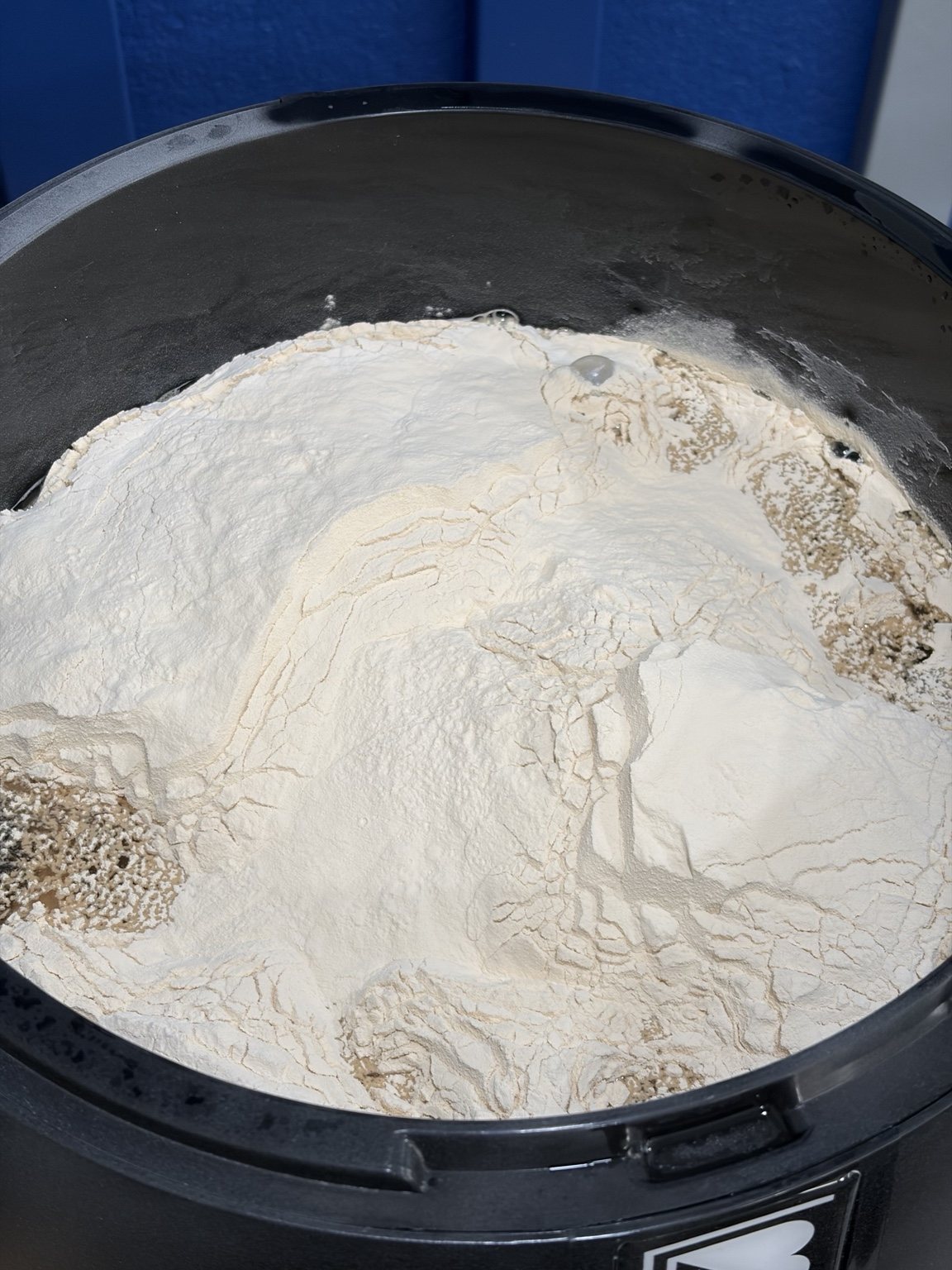
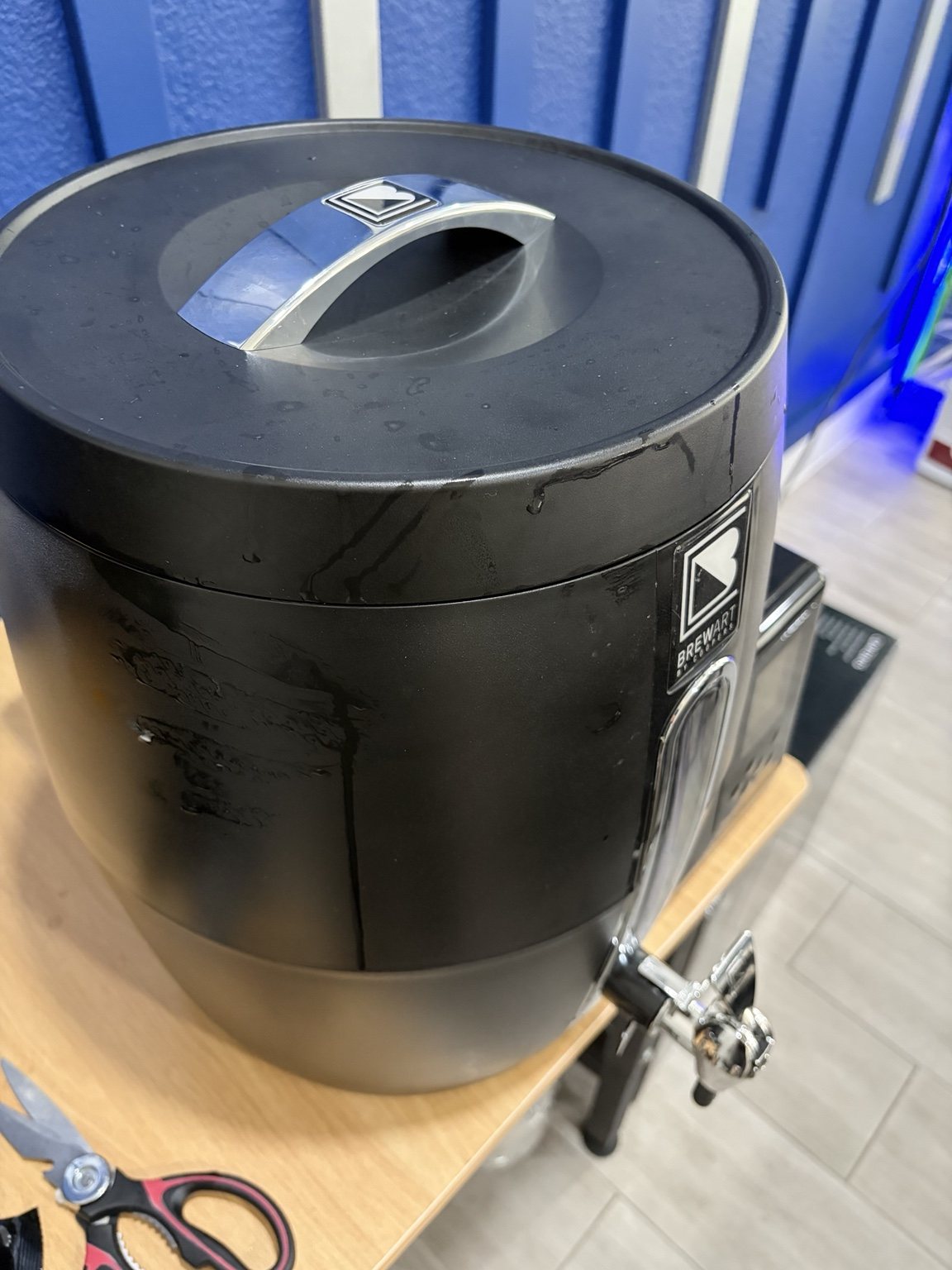
With the RAPT Pill added and the lid closed, I started the batch at 20°C (68°F) propagation followed by 19°C (66°F) fermentation. I then kept checking the BeerDroid brew timer and temperature alongside the RAPT readings.
Fermentation at a glance: RAPT gravity and liquid temperature
I plotted 261 sequential RAPT Pill readings on a shared DAY 0 timeline, from brew day through the kegging stage. Gravity is shown above liquid temperature. Numbers 1–6 mark major brewing steps; circled A–C mark the approximate points of the viewing-window videos. Together, the data and footage show how the batch changed over time.
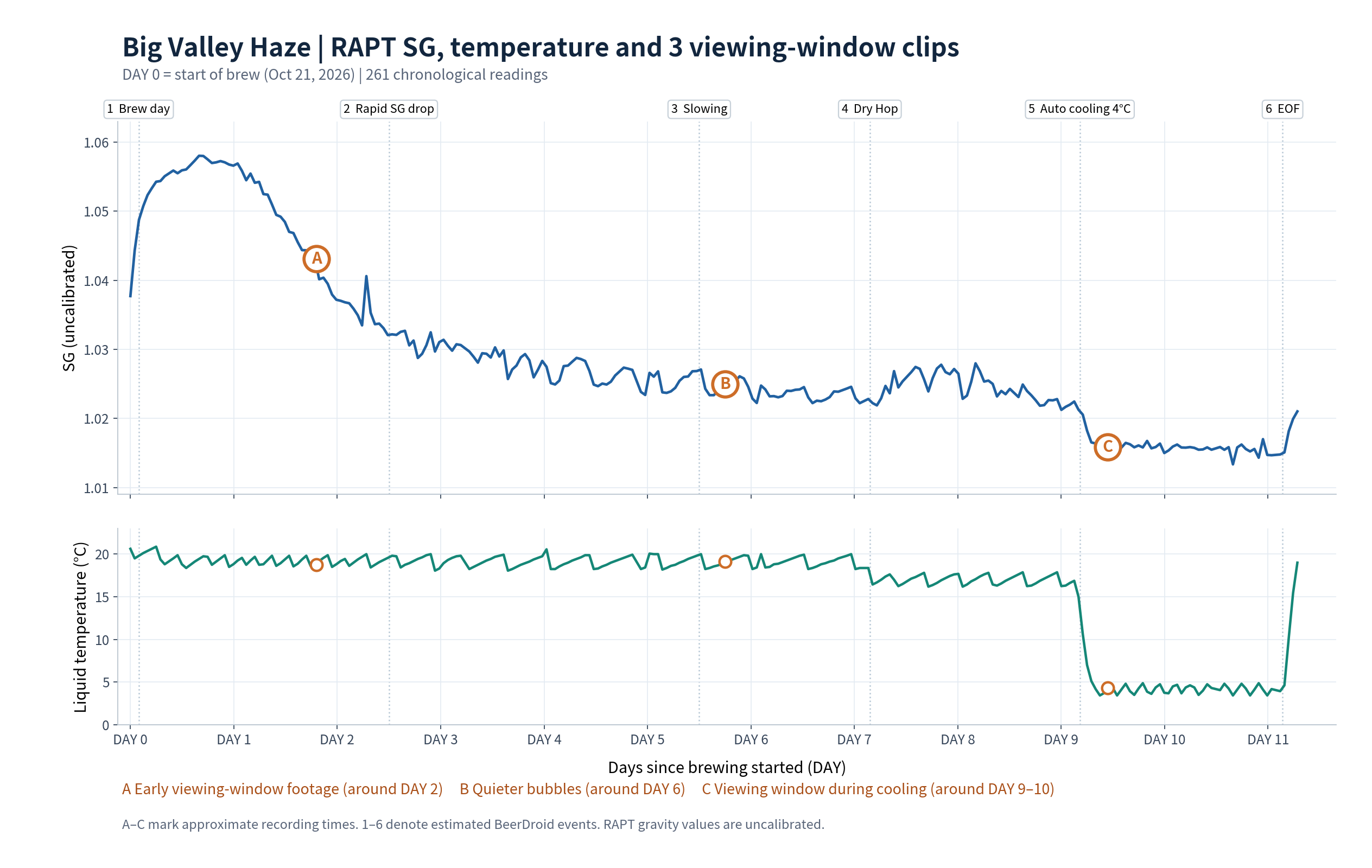
| DAY 0–1 | ① Brew start Displayed SG rose from about 1.038 to 1.058. Incomplete mixing or the Pill’s floating position may have contributed; this is not a verified original gravity. |
|---|---|
| DAY 1–3 | ② Rapid decline SG fell from about 1.058 to near 1.030, coinciding with visibly active fermentation. |
| DAY 5–6 | ③ Decline slows Displayed SG settled near 1.025 and the curve flattened, even though BeerDroid had not sent a dry-hop alert yet. |
| Around DAY 7 | ④ Dry hopping I added Citra and Mosaic after BeerDroid’s alert; SG changes alone cannot identify a hop effect. |
| DAY 9–10 | ⑤ Automatic cooling BeerDroid automatically chilled toward 4°C. RAPT showed a drop from roughly 19°C to near 4°C, accompanied by a displayed SG shift from about 1.021 to 1.015. |
| Around DAY 11 | ⑥ EOF and warming After EOF, the beer warmed toward kegging temperature; RAPT showed roughly 19°C and its displayed SG rose toward 1.021. That is not proof of fermentation reversing. |
The most striking pattern is that the displayed SG fell during chilling and rose again as the beer warmed. A floating hydrometer can be affected by temperature, orientation, and deposits. These RAPT readings were not calibrated; SG 1.015 and an estimated 5.87% ABV are not hydrometer-confirmed FG or ABV. A separate hydrometer measurement would be required to establish a confirmed FG [3].
DAY 1–3 | Gravity falls as fermentation picks up
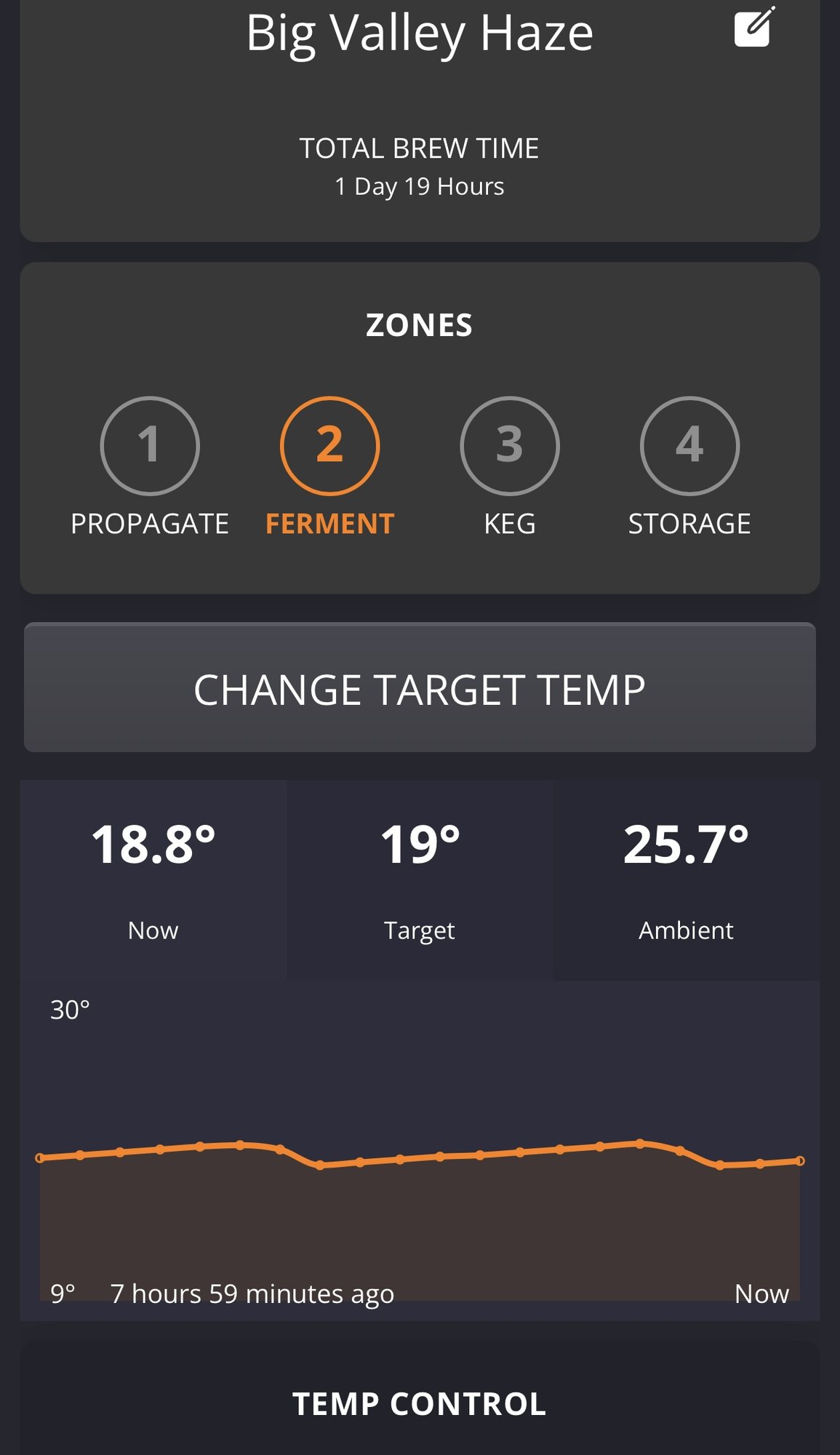
Late on DAY 1, BeerDroid was in Ferment at 18.8°C against a 19°C target. The RAPT display showed 1.043 SG and an estimated 2.06% ABV. By late DAY 2, it had moved to 1.029 SG and an estimated 3.84% ABV. This is consistent with a developing fermentation, but the uncalibrated displayed values are not verified ABV results.
DAY 5–6 | Fermentation looks quiet, but there is no dry-hop alert
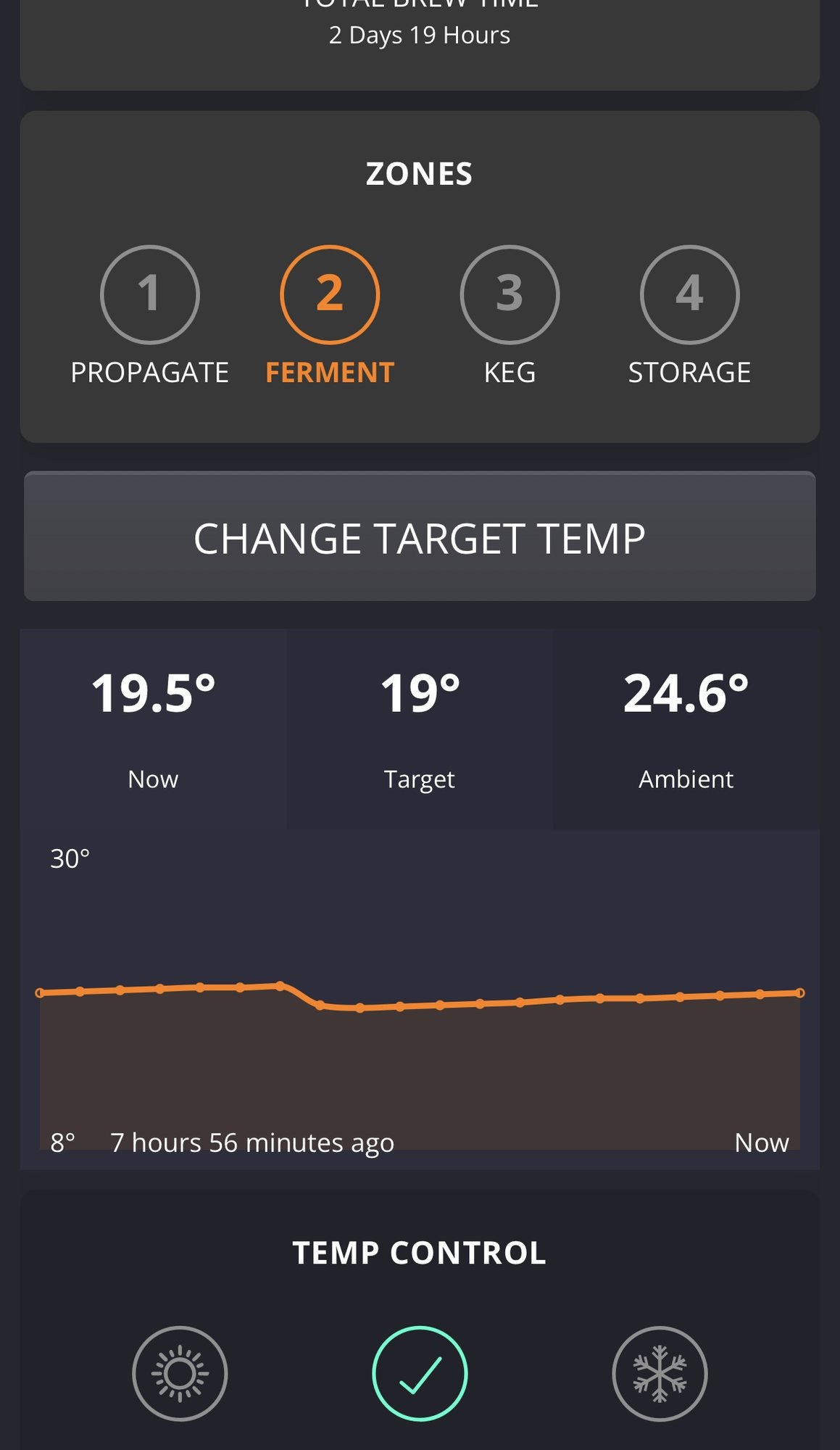
By late DAY 5, the RAPT display had reached roughly 1.025 SG, with a displayed gravity velocity of 0.0 points/day. Visible bubbling was calmer too. Yet BeerDroid remained in Ferment, and the dry-hop notification had not arrived. The bubbles visible on DAY 1–2 were much more active than at this stage; the contrast between the window and BeerDroid’s status was striking.
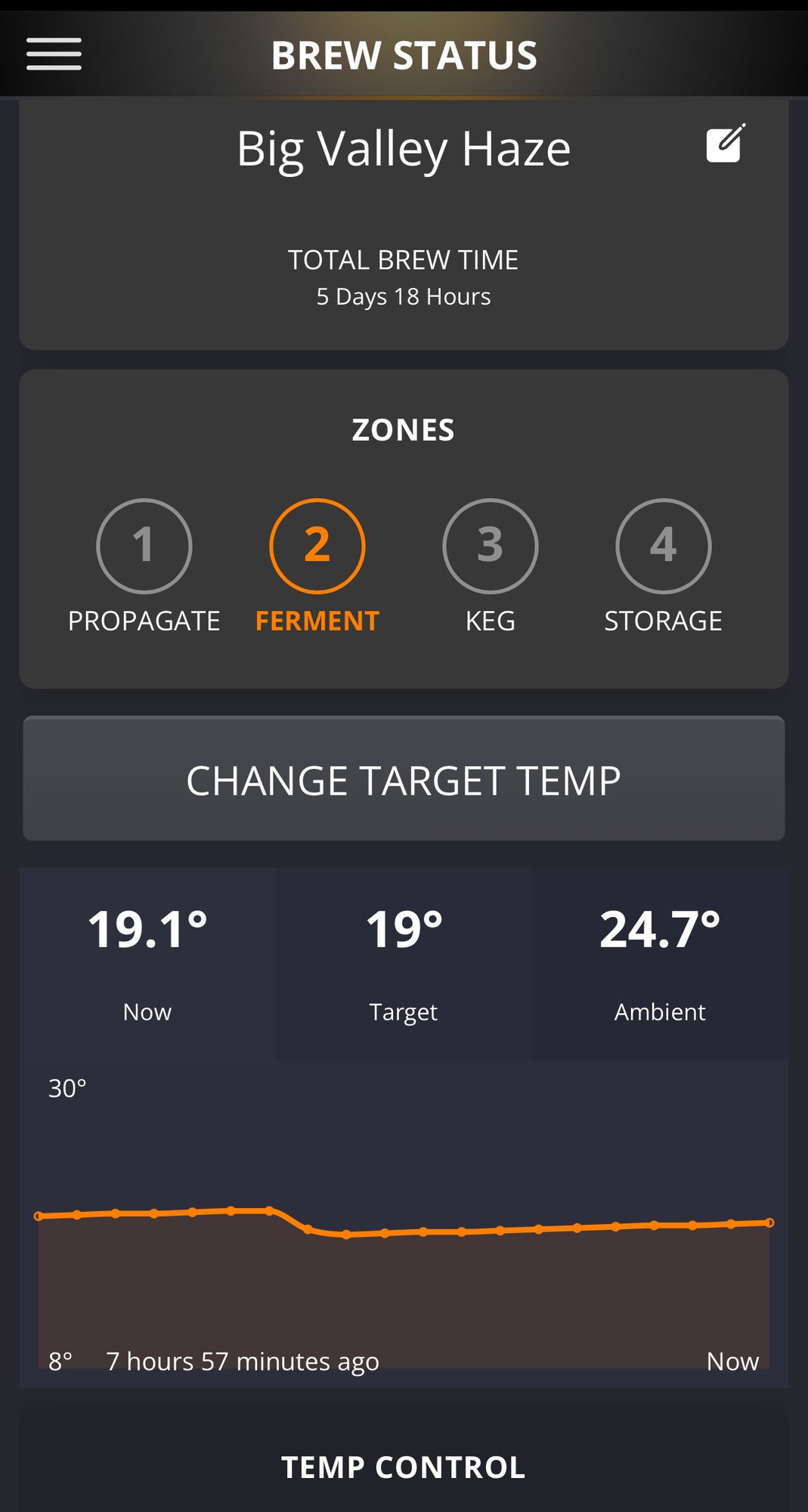
It was tempting to assume the batch was almost done based on its appearance. Instead, I waited for the next programmed notification.
Around DAY 7 | Finally, time for Citra and Mosaic
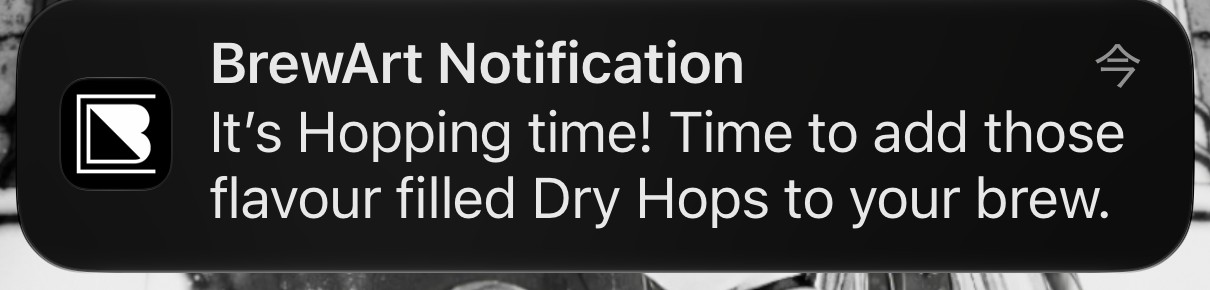
At last, the “It's Hopping time!” notification arrived. Opening the lid revealed a layer of foam despite the quieter appearance through the window. I added the Citra (D6) and Mosaic (D8) hop pellets, ready to see how the aromatic character would develop.
A subsequent BeerDroid screenshot at one week and seven hours showed a 17°C (63°F) target and 17.7°C actual. That confirms the setpoint differed from the original 19°C fermentation program. The screen alone does not explain why or how that change was triggered.
Around DAY 9 | Cold crashing to 4°C: how much haze remains?
Cold crashing means chilling beer late in the process so yeast and larger hop particles are more likely to settle. I did not manually change the temperature for this step: after dry hopping, BeerDroid automatically switched its target to 4°C (39°F) and began cooling. At about one week, two days and four hours, the unit showed 13°C (55°F); around six hours later it was at 4°C, with ambient temperature near 25°C (77°F). BeerDroid still displayed Ferment, so automatic cooling and the EOF alert were separate events.
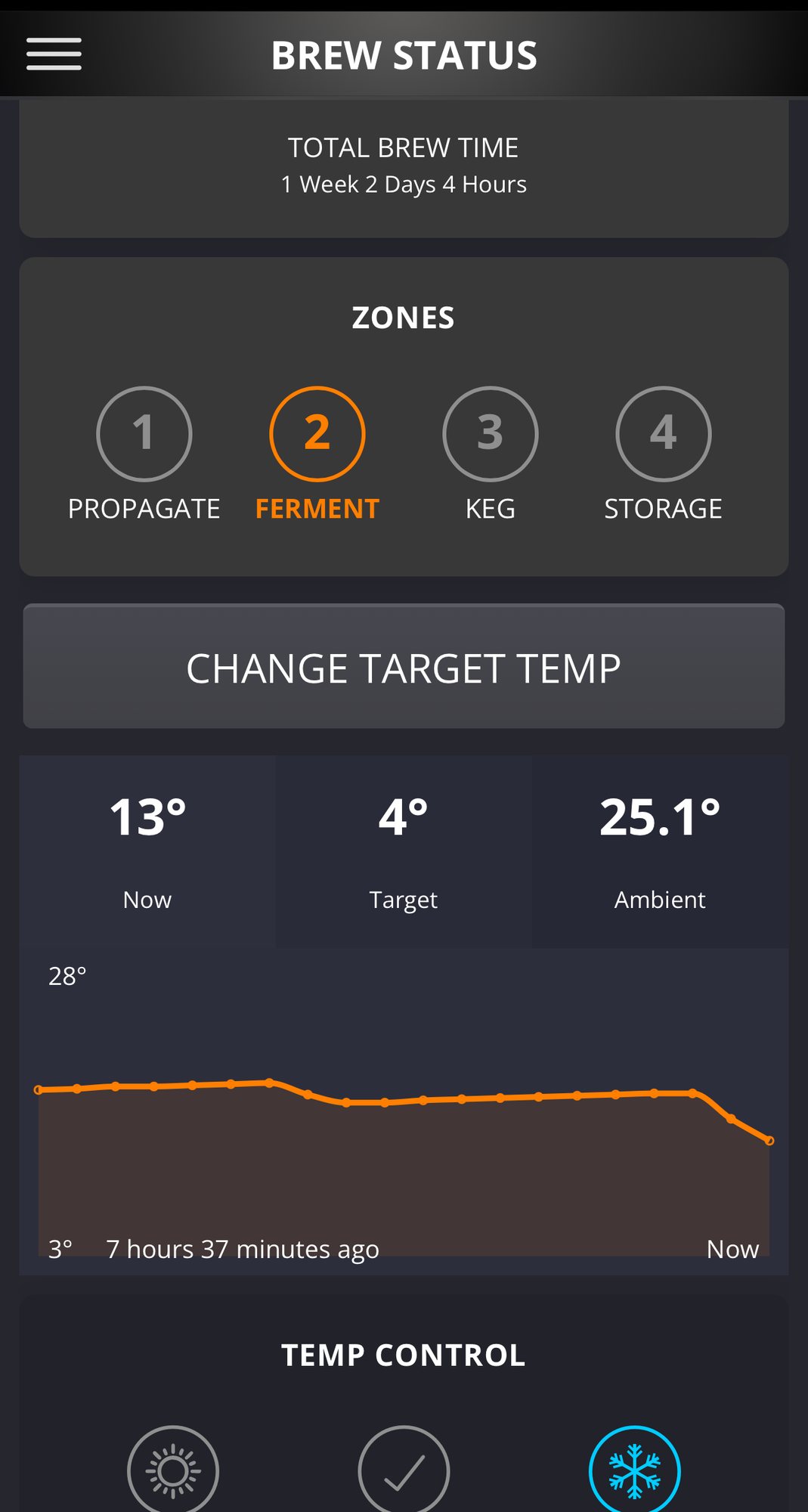
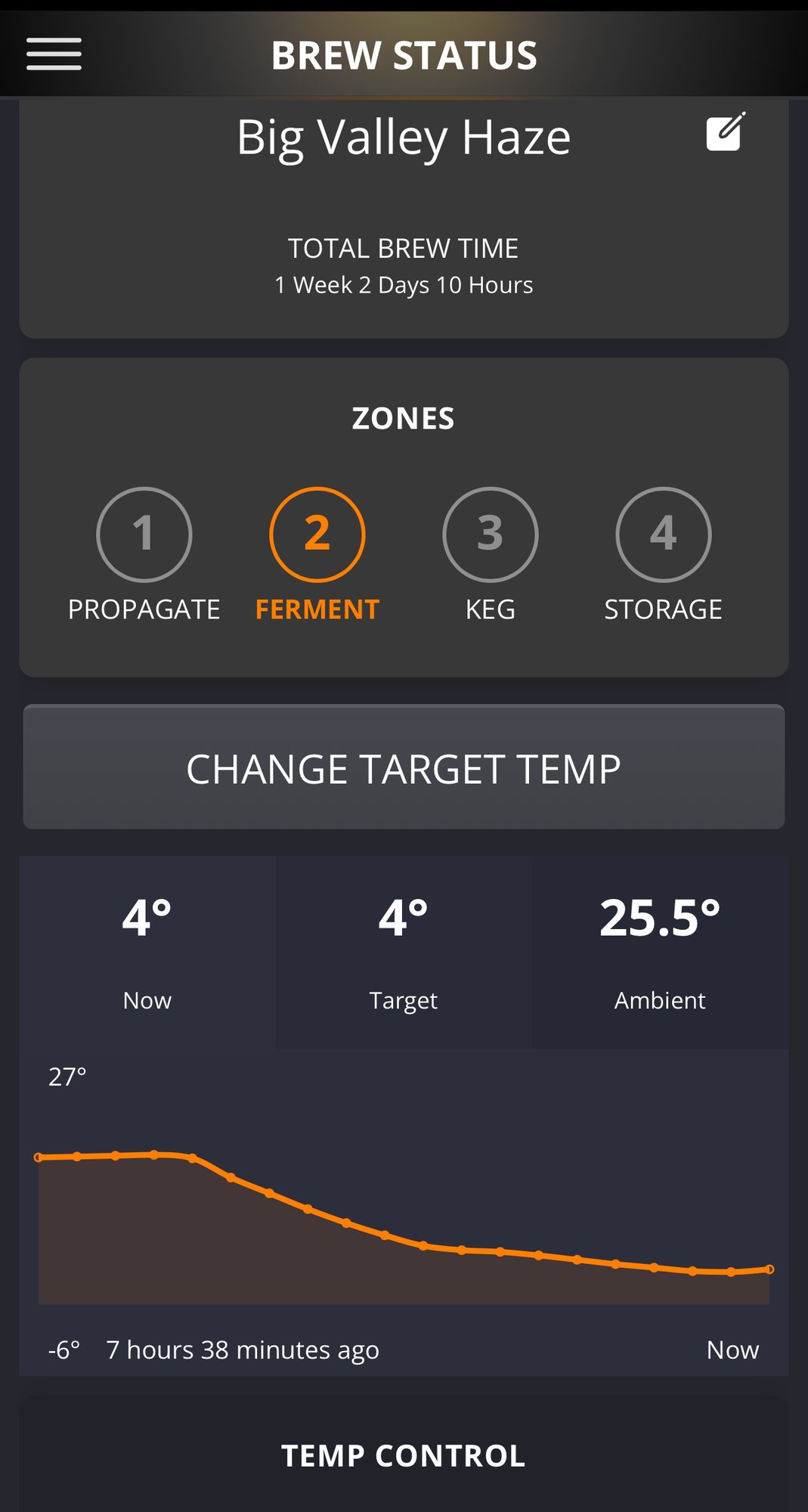
The view through the window was much quieter than on DAY 1–2. Chilling can help coarse particles settle without necessarily removing all of a Hazy IPA’s characteristic haze. I want to see how the appearance holds up after conditioning. The RAPT SG display also fell during cooling, but changes in temperature, sensor angle or deposits can affect a floating device: this is not, by itself, proof of extra fermentation [3].
Around DAY 11 | Fermentation complete, then Ready to Keg
On November 1, BrewArt first notified me that fermentation had finished and that it would let me know once the beer was ready for kegging. A later notification the same day said that the batch had reached kegging temperature. These were two separate messages, around DAY 11 after brew day.
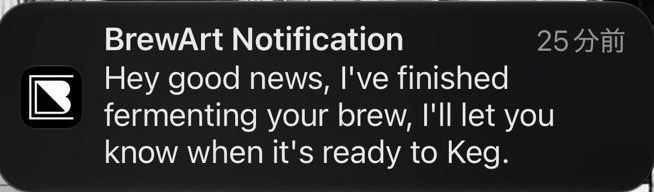
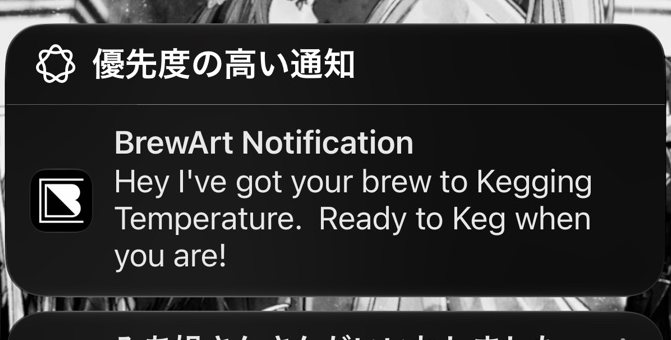
The RAPT Pill gravity curve had begun to flatten around DAY 5. Citra and Mosaic dry hopping, followed by the BeerDroid’s automatic cold crash, took place before the EOF notification around DAY 11. The RAPT gravity near 1.015 is uncalibrated, not a final gravity confirmed with a separate hydrometer. No hydrometer-verified FG or measured ABV is reported here.
Transferring to kegs and using the Hop Filter
After “Ready to Keg,” I prepared the transfer hardware. This batch received Citra and Mosaic dry-hop pellets, so keeping larger hop fragments out of the transfer fittings matters. I prepared the BeerDroid Hop Filter supplied by BrewArt. BrewArt also recommends it for this dry-hopped BrewPrint [1].
I transferred the beer through a tube from the BeerDroid tap into the lined kegs, as shown in the video. After the transfer, I added the supplied primer to each keg and fitted the caps to finish kegging. The primer supports secondary fermentation and carbonation inside the kegs. Compatible components and consumables are listed in the equipment and supplies section ↓.
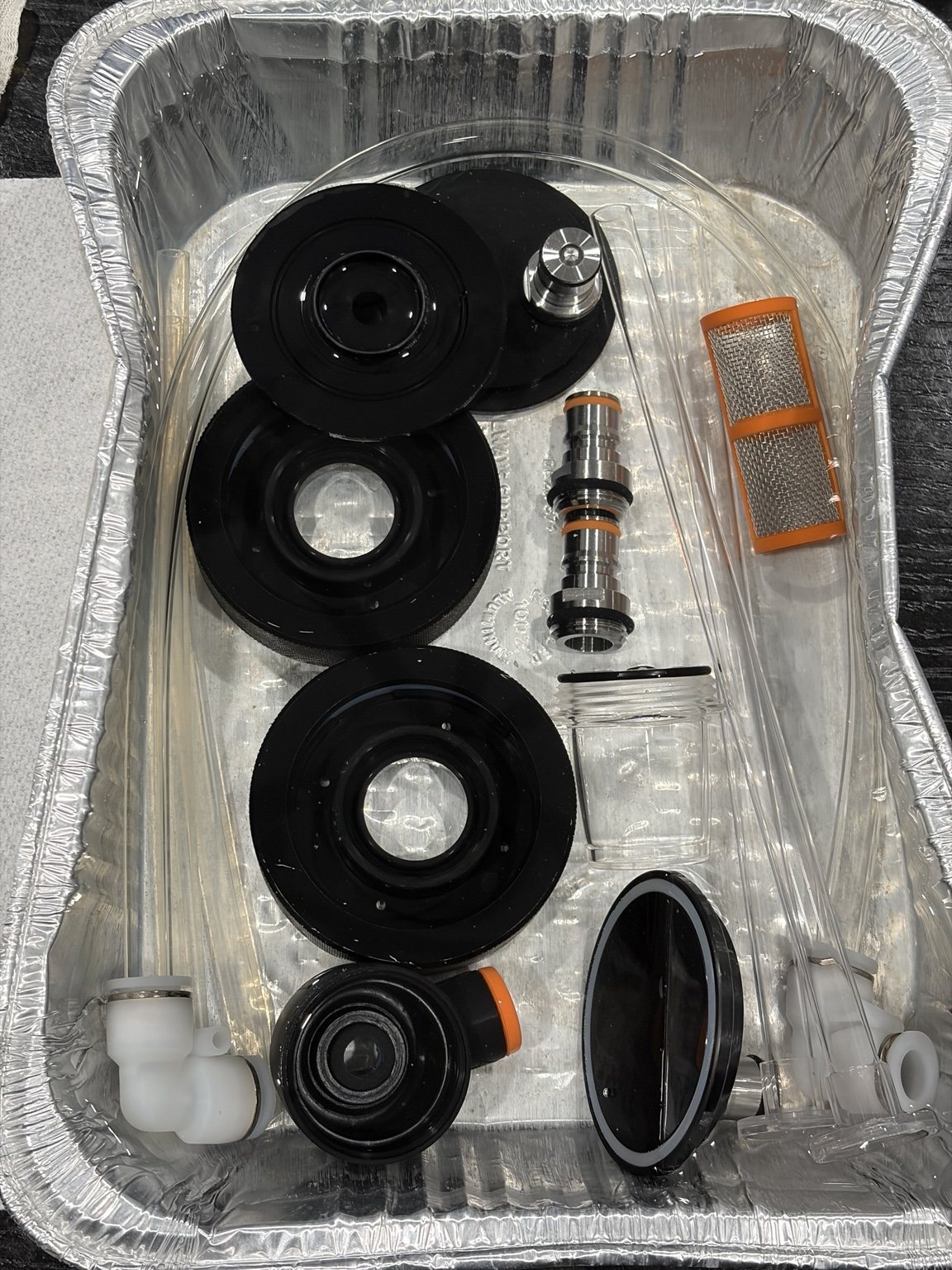
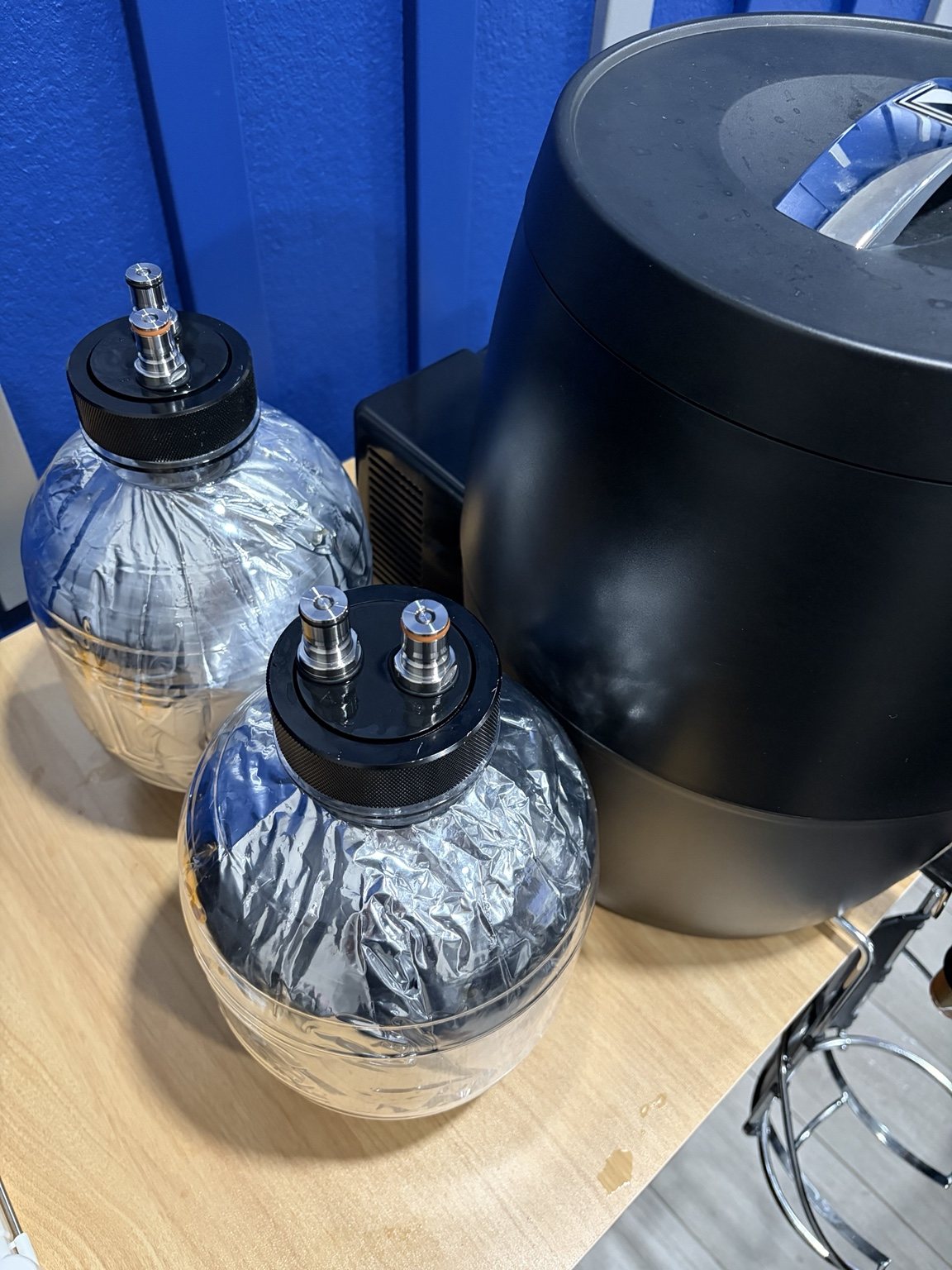
I did not measure how much hop material the filter captured or quantify its effect on clogging. The beer still needs to condition and carbonate, so the tasting notes here remain an early assessment.
First tasting before secondary fermentation: already delicious
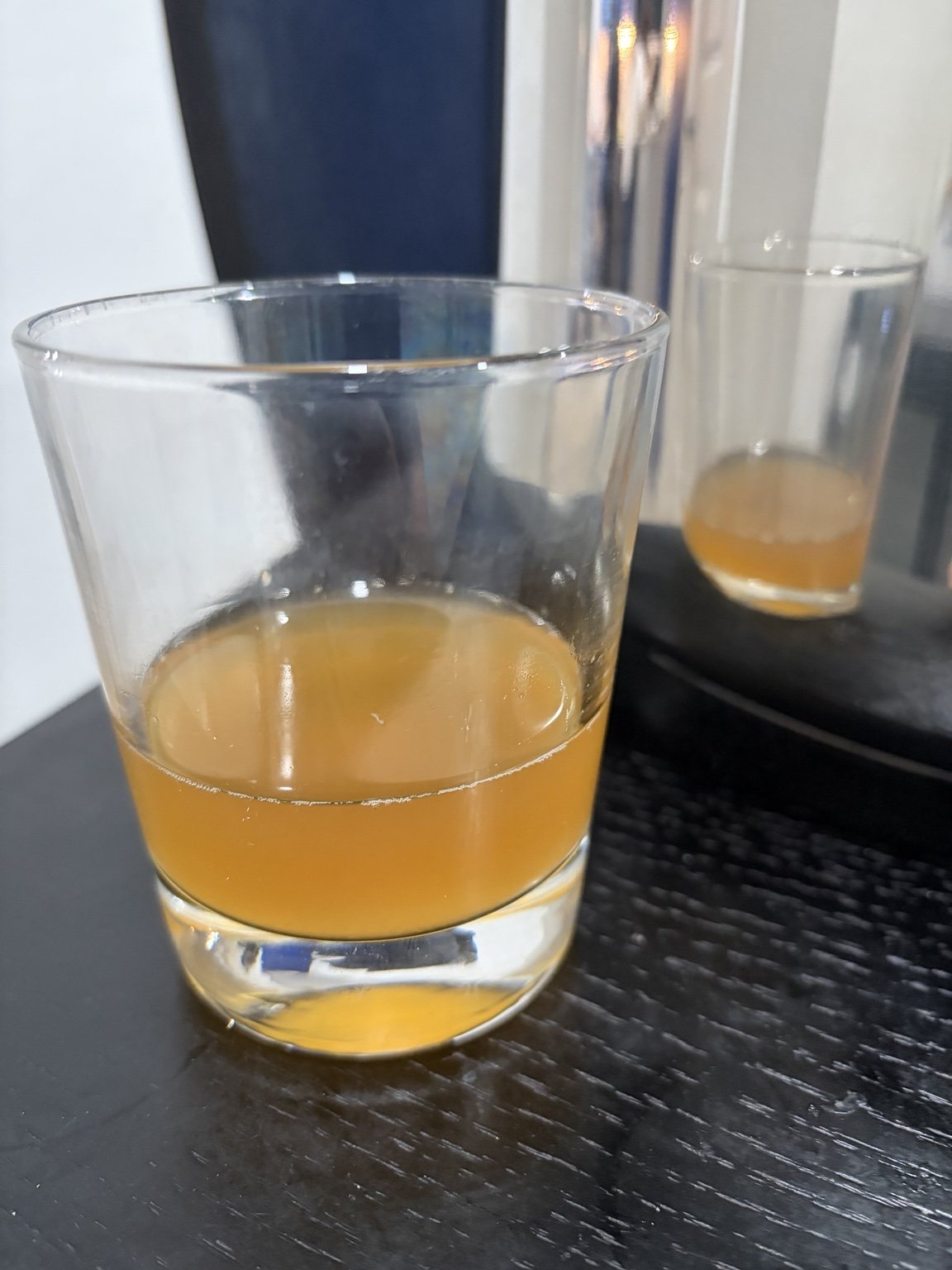
I sampled a little beer before secondary fermentation and carbonation in the keg. The liquid had a distinctly orange, hazy appearance.
“Bright citrus notes that remind me of Citra, tropical aromas reminiscent of Mosaic, a pleasant sweetness, and then hop bitterness arriving on the finish. This is delicious!”
I used both hops together, so I cannot isolate which individual hop caused each aroma; those attributions are sensory impressions rather than controlled identifications.
It already tasted very promising. However, the final conditioned and carbonated tasting has not been completed. Carbonation and conditioning could change the perceived aroma, sweetness, bitterness and head retention. That will be the next evaluation.
Conclusion | From brew day to EOF and an early sample
This batch provided a useful timeline: the steep SG drop early in fermentation followed by a slower rate of decline, the deceptively quiet DAY 5 fermenter, the wait for the dry-hop notification, a 4°C cold crash, and finally BeerDroid's EOF message around DAY 11. The temperature-linked step in RAPT's uncalibrated SG is a reminder not to confuse an instrument display with a confirmed change in fermentation.
The happiest result is that the pre-conditioning sample was already delicious, with citrus and tropical aromas, sweetness and a late hop-bitter finish. I'm leaving the final verdict until the carbonated beer is actually poured.
After keg conditioning and carbonation, I plan to revisit haze, foam, aroma, sweetness, bitterness, and food pairing. Thick-cut beef tongue steak is one pairing I want to try—a pairing I plan to evaluate after conditioning.
Ingredients, equipment and consumables: product links
These are the ingredients and monitoring tools involved in this batch, plus the kegging hardware relevant to the next conditioning step. The BrewPrint already includes its individual ingredients, Primer and Droid Cleanse, so you do not need to purchase those components separately when buying the kit. Links are provided for checking specifications and compatibility.
BrewPrint ingredients and dry hops
- BrewArt Big Valley Haze BrewPrint — supplied by BrewArt for this batch
- Element 5 (E5) / Enhancer 2 (X2) / Yeast 10 (Y10) — ingredients and yeast included in the kit (manufacturer category pages)
- Dry Hop 6 Citra (D6) / Dry Hop 8 Mosaic (D8) — the included dry-hop additions (manufacturer listing)
- Primer — included in the kit; added after transfer for keg conditioning and carbonation
- Droid Cleanse — the sanitising product included with the BrewPrint
Fermentation, measurement and hop-debris handling
- BeerDroid — temperature-controlled fermentation and EOF notification
- RAPT Pill Hydrometer & Thermometer — continuous gravity and temperature trend logging
- BrewArt Dry Hop Filter — transfer preparation with hop pellets (supplied by BrewArt)
Keg transfer, conditioning and dispensing
- BrewFlo — dispenser for the beer after conditioning
- Complete Kegging Pack — 5 L kegs, filling tube, liners and beer lines
- Keg Refill Pack — extra 5 L kegs for current BrewFlo models (not compatible with BrewFlo V1)
- Complete Kegging Pack V1 / Keg Refill Pack V1 — alternatives for BrewFlo V1 owners
- Keg Liners and Beer Lines (consumables) — choose the beer-line version that matches your dispenser
BrewFlo generations have different compatible keg caps and connectors, so check your exact model before purchasing. This article records a pre-conditioning tasting; links to later-stage supplies do not imply a completed conditioned-beer tasting.
References
- BrewArt, Big Valley Haze — published brewing program, target ABV, hops, timeline and Hop Filter recommendation.
- BrewArt, BeerDroid — automatic temperature control and EOF features.
- KegLand, RAPT Pill Hydrometer & Thermometer — gravity/temperature logging and sensitivity to calibration, deposits and other conditions.
The time, temperature, gravity and tasting observations in this article come from this batch's records. All uncalibrated RAPT gravity/ABV estimates are presented separately from BrewArt's published specifications.
Questions or comments about this article?
Questions about the Big Valley Haze batch, dry hopping, RAPT gravity logging, or keg preparation?
I post brew-day updates on @ConyDIYHouston, then collect the observations, photos and data here. See the Big Valley Haze starting point.